
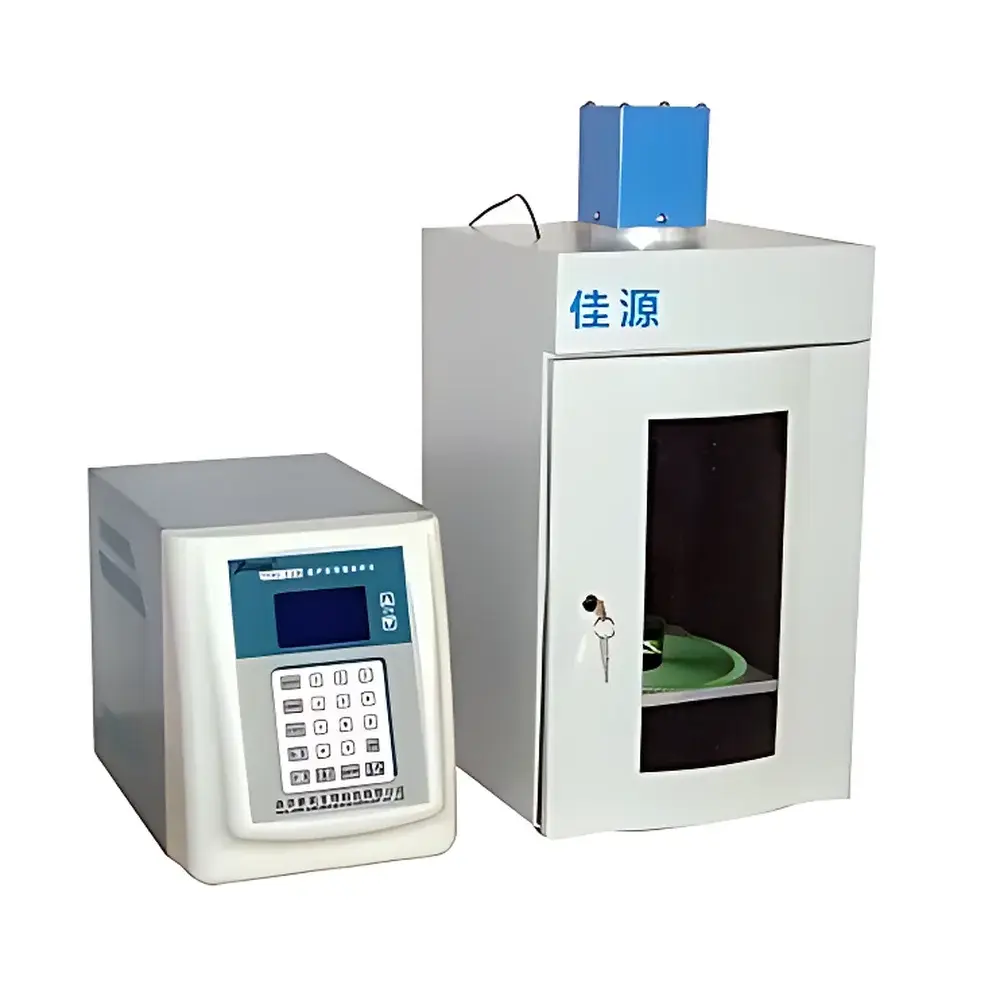
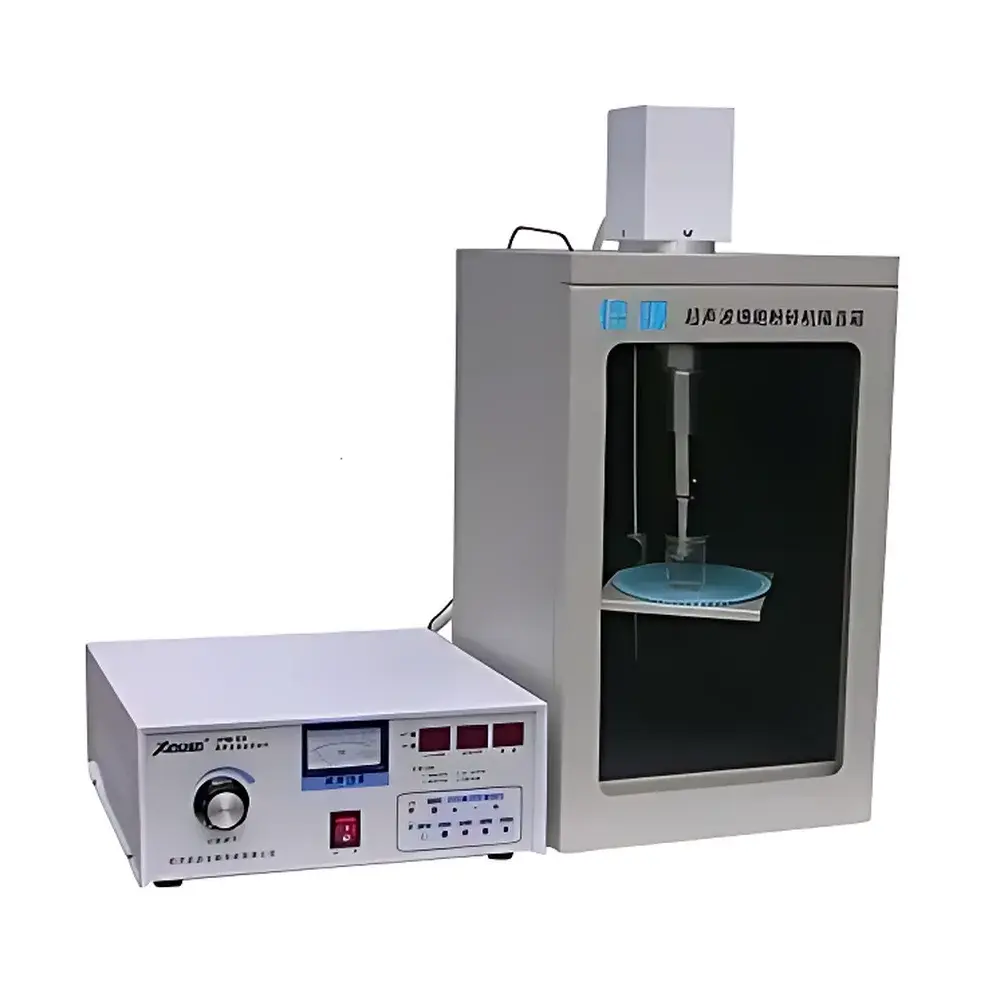
Jiayuan JY98-IIIDN Ultrasonic Cell Disruptor
| Brand | Jiayuan |
|---|---|
| Origin | Beijing, China |
| Model | JY98-IIIDN |
| Ultrasonic Frequency | 20–25 kHz (auto-frequency tracking) |
| Output Power | 1200 W (touch-key continuous adjustment) |
| Sonication Time Range | 0.1–99 s |
| Interval Time Range | 0.1–99 s |
| Total Working Time | 0.1–99 min |
| Temperature Monitoring Range | 0–100 °C |
| Standard Probe Diameter | Φ20 mm |
| Optional Probe Diameters | Φ15, Φ22, Φ25 mm |
| Sample Volume Capacity | 50–1000 mL |
| Duty Cycle | 0.1–99.9% |
| Input Voltage | 220/110 V, 50/60 Hz |
Overview
The Jiayuan JY98-IIIDN Ultrasonic Cell Disruptor is an engineered benchtop sonicator designed for high-efficiency mechanical lysis of biological samples through controlled acoustic cavitation. Operating at a fundamental frequency range of 20–25 kHz with real-time auto-frequency tracking, the instrument maintains stable resonance across varying load conditions and sample viscosities—ensuring consistent energy delivery into liquid media. Its 1200 W nominal output power enables scalable disruption of diverse biological matrices including mammalian cells, bacterial cultures, yeast, plant tissues, subcellular organelles, and viral particles. Unlike fixed-frequency systems, the JY98-IIIDN dynamically adjusts its operating frequency to compensate for probe wear, temperature-induced impedance shifts, and changes in suspension density—critical for reproducible lysis across multi-day experimental series or QC workflows.
Key Features
- Integrated digital temperature monitoring (0–100 °C) with real-time display and optional over-temperature cutoff—essential for preserving labile protein complexes and nucleic acid integrity during extended sonication.
- Programmable pulse mode with independent control of sonication duration (0.1–99 s), interval time (0.1–99 s), and total cycle count—enabling precise thermal management and minimizing sample denaturation.
- Touch-sensitive interface with non-volatile memory for up to 10 user-defined protocols, supporting GLP-compliant documentation of parameter history per run.
- Robust titanium alloy probe (standard Φ20 mm) optimized for high-amplitude transmission and corrosion resistance in aqueous and mild organic solvent environments.
- Modular probe compatibility: supports interchangeable solid-tipped probes (Φ15, Φ22, Φ25 mm) for applications ranging from micro-volume lysates (50 mL) to bulk homogenization (1000 mL), without requiring recalibration.
- Duty cycle fine-tuning (0.1–99.9%) allows optimization of cavitation intensity versus thermal load—particularly valuable for heat-sensitive targets such as membrane proteins or CRISPR ribonucleoprotein complexes.
Sample Compatibility & Compliance
The JY98-IIIDN is validated for use with suspensions, emulsions, and colloidal dispersions across life science laboratories. It accommodates standard laboratory glassware (e.g., 50–500 mL conical tubes, beakers, and jacketed vessels) and integrates seamlessly with ice-water baths or recirculating chillers via external temperature sensor input. While not certified to IEC 61000-4 electromagnetic immunity standards out-of-box, its electrical design complies with CE marking requirements for Class II laboratory equipment when operated within specified voltage (220/110 V ±10%) and ambient temperature (5–40 °C) ranges. For regulated environments, the instrument supports audit-ready operation when paired with external electronic lab notebooks (ELNs) that capture timestamped parameter logs—meeting foundational expectations of FDA 21 CFR Part 11 for electronic records in pharmaceutical development and quality control labs.
Software & Data Management
The JY98-IIIDN operates as a standalone hardware platform with no proprietary software dependency. All operational parameters—including time stamps, duty cycles, power levels, and temperature readings—are retained in internal flash memory and viewable on-device. For traceability, users may manually export protocol configurations via USB-stored CSV logs (optional accessory). The system does not feature network connectivity or remote API access; however, its deterministic timing architecture ensures full repeatability between instruments—facilitating inter-laboratory method transfer under ISO/IEC 17025 or ASTM E2500-17 guidelines for analytical instrument qualification.
Applications
- Cell lysis for protein extraction (e.g., His-tagged recombinant expression in E. coli, nuclear protein isolation from cultured HEK293 cells)
- Chromatin shearing in ChIP-seq workflows (optimized using low-duty-cycle pulses to preserve fragment size distribution)
- Preparation of liposomes and nanoemulsions for drug delivery formulation studies
- Disruption of biofilms and microbial aggregates in environmental microbiology
- Homogenization of plant leaf tissue for metabolite profiling and RNA extraction
- Inactivation and fragmentation of bacteriophages and enveloped viruses for vaccine antigen preparation
- Dispersion of carbon nanotubes and graphene oxide in aqueous surfactant systems
FAQ
Does the JY98-IIIDN support continuous ultrasonic operation?
Yes—continuous mode is available, though not recommended for heat-sensitive samples without active cooling. Pulse mode is strongly advised for biological applications.
Is probe calibration required before each use?
No. The auto-frequency tracking system eliminates the need for manual tuning; however, visual inspection of probe tip erosion and periodic amplitude verification using calibrated hydrophone measurements are recommended per ISO 13347-2.
Can this instrument be used for nanoparticle synthesis?
Yes—its controllable cavitation field supports sonochemical reduction and acoustic dispersion protocols described in literature for gold, silver, and metal oxide nanoparticles.
What safety certifications does the unit carry?
It conforms to GB 4793.1–2007 (Chinese national standard equivalent to IEC 61010-1) for electrical safety in laboratory equipment.
Is the temperature sensor immersion-type or surface-mounted?
The built-in sensor is a stainless-steel encapsulated PT100 element designed for direct immersion in sample vessels, providing representative bulk-phase temperature feedback.





