
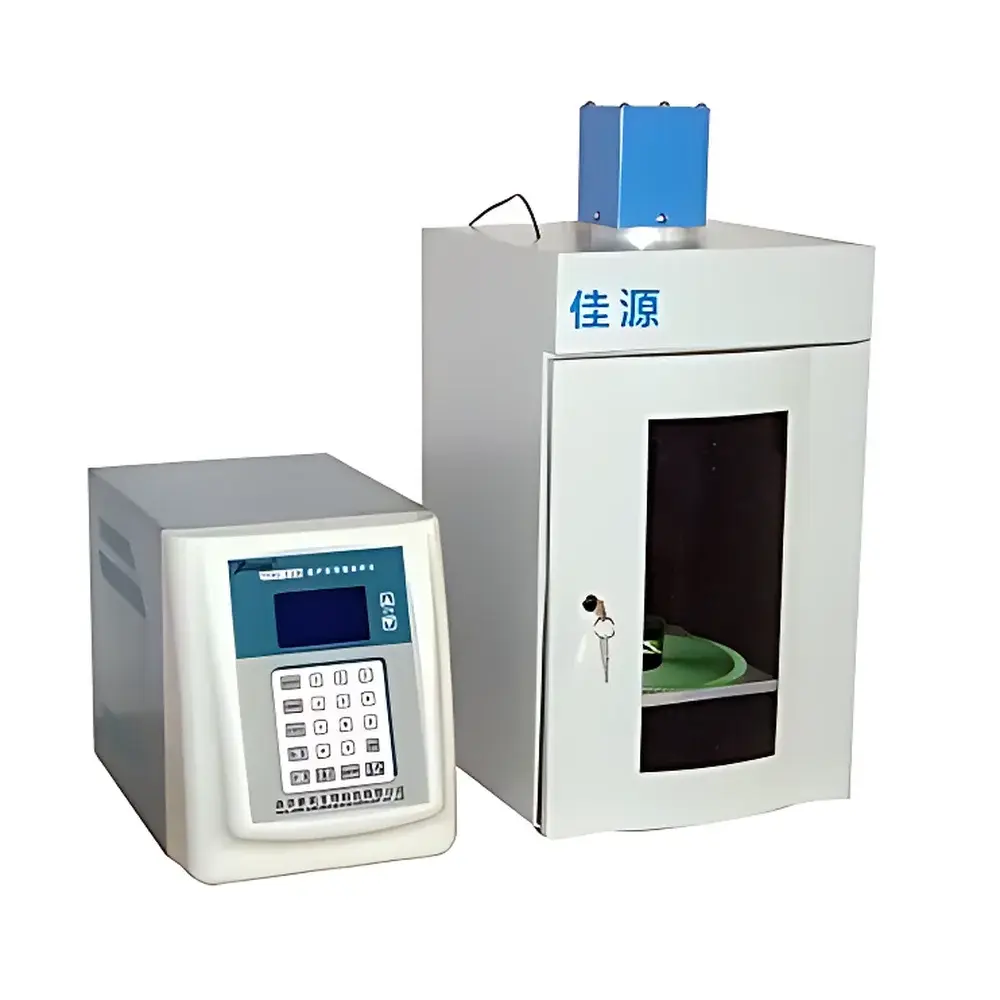
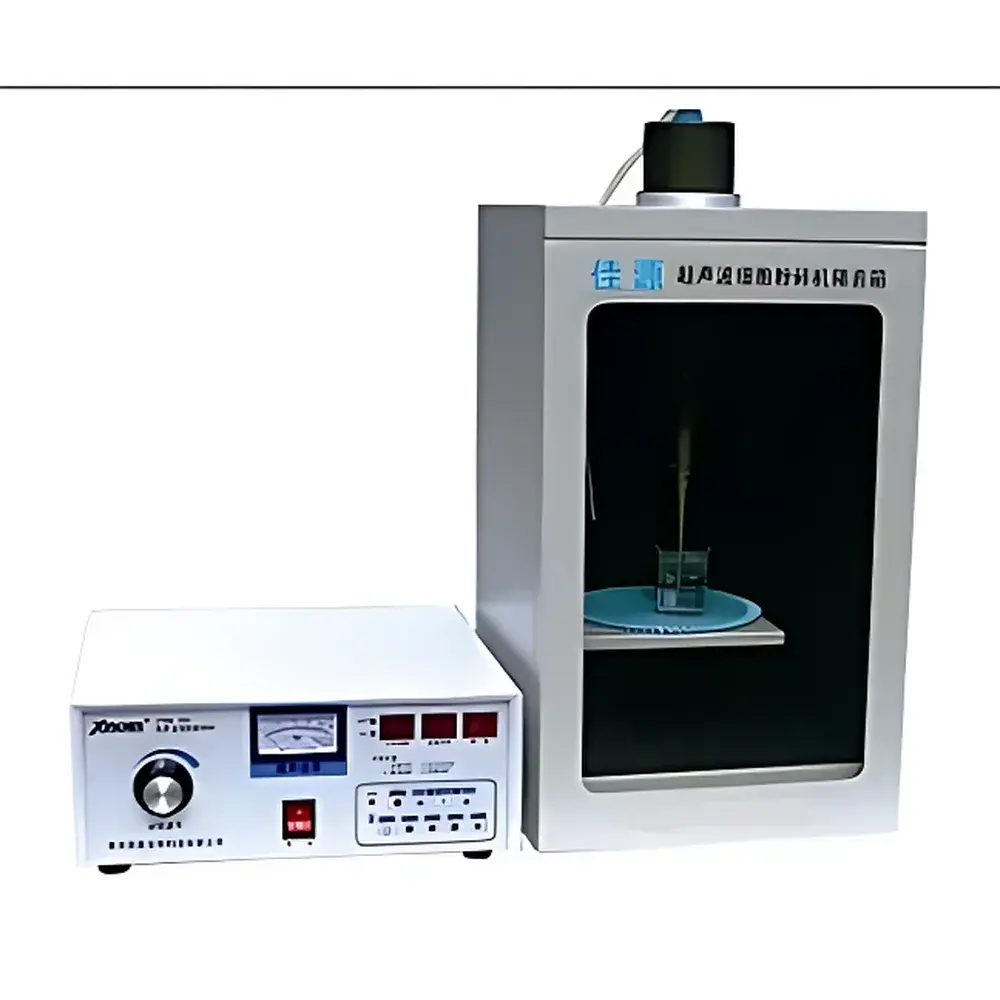
Jiayuan JY96-IIN Ultrasonic Cell Disruptor
| Brand | Jiayuan |
|---|---|
| Origin | Beijing, China |
| Model | JY96-IIN |
| Ultrasonic Frequency | 20–25 kHz with automatic frequency tracking |
| Output Power | 150 W (touch-key adjustable, continuous) |
| Pulse Mode | Duty Cycle 0.1–99.9% |
| Sonication Time | 0.1–99.9 s |
| Interval Time | 0.1–99.9 s |
| Total Operating Time | 0.1–99 min |
| Standard Probe Diameter | Φ6 mm |
| Optional Probes | Φ2, Φ3, Φ2–Φ15, Φ18–Φ25 mm |
| Sample Volume Capacity | 0.2–100 mL |
| Input Voltage | 220/110 V, 50/60 Hz |
Overview
The Jiayuan JY96-IIN Ultrasonic Cell Disruptor is a benchtop ultrasonic processor engineered for precise, reproducible cell lysis and sample homogenization in life science laboratories. It operates on the principle of high-intensity ultrasonic cavitation—where rapid pressure fluctuations in a liquid medium generate microbubbles that collapse violently, producing localized shear forces, shockwaves, and transient temperatures exceeding 5,000 K. This physical mechanism enables efficient disruption of membranes and cellular structures without chemical or thermal denaturation, preserving biomolecular integrity for downstream applications including protein extraction, nucleic acid isolation, organelle purification, and nanoparticle dispersion.
Key Features
- Intelligent Frequency Tracking: Real-time automatic resonance frequency adjustment (20–25 kHz range) ensures stable acoustic output and optimal energy transfer across varying sample viscosities and volumes.
- Programmable Pulse Control: Independent adjustment of sonication duration (0.1–99.9 s), interval time (0.1–99.9 s), and duty cycle (0.1–99.9%) allows fine-tuned optimization for heat-sensitive samples and reproducible protocol development.
- Touch-Interface Power Regulation: Continuous 0–150 W power control via capacitive touch keys enables stepless amplitude modulation—critical for balancing lysis efficiency against macromolecular degradation.
- Modular Probe Architecture: Standard Φ6 mm titanium alloy probe provides broad compatibility with microcentrifuge tubes and small-volume cuvettes; optional probes (Φ2–Φ25 mm) support scalable processing from microliter lysates to 1 L batches.
- Benchtop Robustness: Cast aluminum housing with integrated cooling fins, IP20-rated electrical enclosure, and overload protection circuitry ensure long-term operational stability under routine laboratory conditions.
Sample Compatibility & Compliance
The JY96-IIN is validated for use with diverse biological matrices—including mammalian and insect cell cultures, bacterial suspensions (e.g., E. coli, Bacillus), yeast, plant tissues, viral particles, and subcellular fractions. Its non-contact, solvent-free operation aligns with green chemistry principles and avoids cross-contamination risks associated with mechanical homogenizers. While not certified to ISO/IEC 17025 or FDA 21 CFR Part 11 out-of-the-box, the instrument supports GLP/GMP-aligned workflows when integrated into validated SOPs. Its pulse-mode capability facilitates compliance with ASTM E2873-22 (Standard Guide for Ultrasonic Processing of Biological Samples) and USP <1043> guidelines for controlled lysis in biopharmaceutical process development.
Software & Data Management
The JY96-IIN operates via an embedded microcontroller with non-volatile memory storing up to 10 user-defined protocols. All parameter settings—including power level, time sequences, and probe ID—are retained after power cycling. While it does not feature USB or Ethernet connectivity, its tactile interface and visual LED feedback enable unambiguous parameter verification prior to run initiation—minimizing operator error in regulated environments. For audit-trail requirements, manual logbook documentation of protocol IDs, operator initials, date/time stamps, and sample identifiers is recommended per ALCOA+ principles.
Applications
- Preparative lysis of suspension and adherent mammalian cells for Western blotting, ELISA, and mass spectrometry.
- Routine plasmid DNA and genomic DNA extraction from E. coli and Gram-negative bacteria.
- Chromatin shearing for ChIP-seq and ATAC-seq library preparation (when combined with optimized buffer systems).
- Homogenization of plant leaf tissue for metabolite profiling and RNA extraction.
- Nanoparticle synthesis and dispersion stabilization in aqueous colloids (e.g., liposomes, polymeric micelles).
- Emulsification of oil-in-water formulations in preclinical formulation development.
- Cleaning and decontamination of microfluidic channels and reusable labware.
FAQ
What is the maximum recommended sample volume for the standard Φ6 mm probe?
The Φ6 mm probe is optimized for volumes between 0.2 mL and 100 mL. For consistent energy distribution and minimal foaming, volumes below 10 mL should be processed in microcentrifuge tubes with immersion depth ≥10 mm.
Can this instrument be used for temperature-sensitive samples?
Yes—pulse mode operation (e.g., 2 s on / 8 s off at 30% duty cycle) significantly reduces net thermal load. For extended runs, external ice-water baths or chilled sample holders are advised.
Is calibration traceable to national standards?
The JY96-IIN does not include factory calibration certificates. Users may verify acoustic output using calorimetric methods (ASTM E2873-22 Annex A1) or calibrated hydrophone measurements in accredited facilities.
How often should the titanium probe tip be inspected?
Inspect visually before each use for pitting, erosion, or bending. Replace if tip diameter deviation exceeds ±0.1 mm or if surface roughness increases noticeably—especially after processing abrasive samples (e.g., soil extracts, silica-containing tissues).
Does the instrument support regulatory-compliant data archiving?
No native electronic record retention is provided. To meet 21 CFR Part 11 requirements, integrate the device into a validated LIMS or ELN system with procedural controls for protocol execution logging and electronic signatures.




