
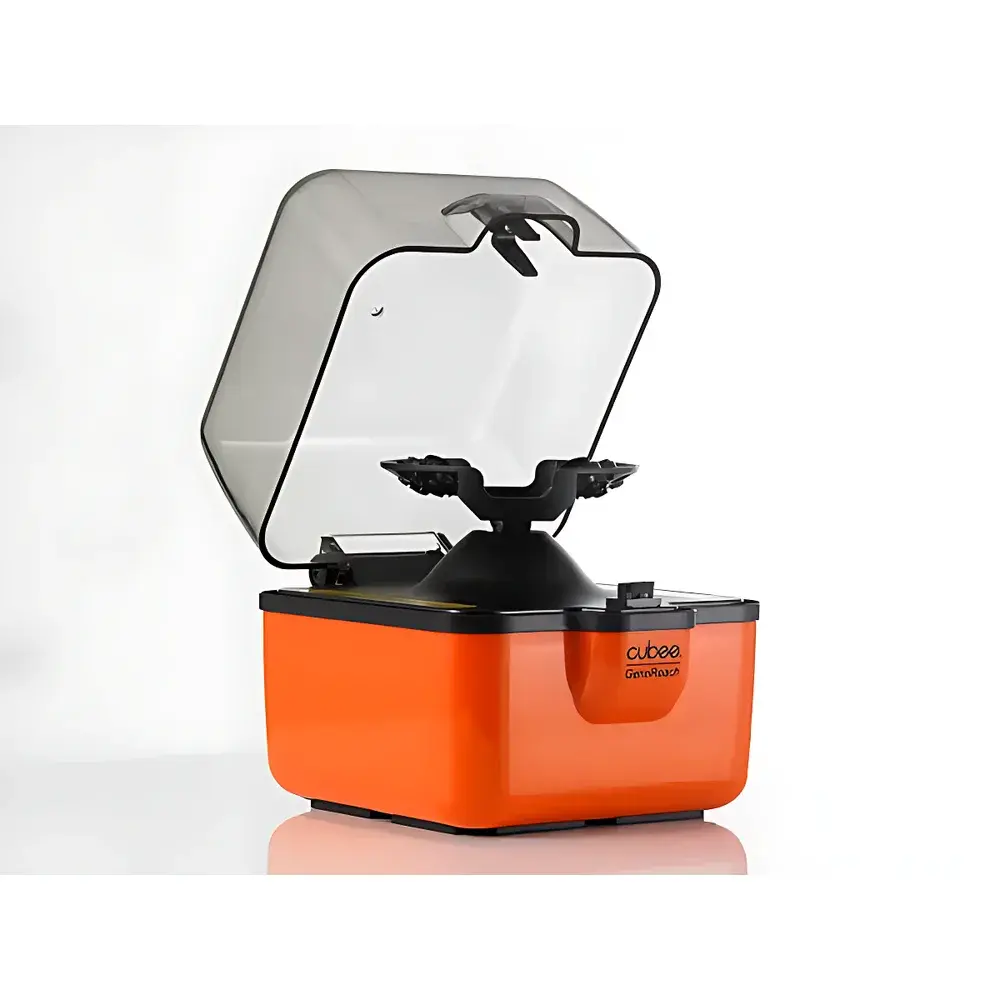
Cubee APBD-I Mini Centrifuge
| Origin | Taiwan |
|---|---|
| Manufacturer Type | Distributor |
| Origin Category | Domestic |
| Model | APBD-I |
| Instrument Type | Palm-Sized Centrifuge |
| Speed Range | Up to 7200 rpm |
| Max RCF | 6000 × g |
| Capacity | 8 × 1.5–2.0 mL tubes |
| Dimensions | 183 × 151 × 153 mm |
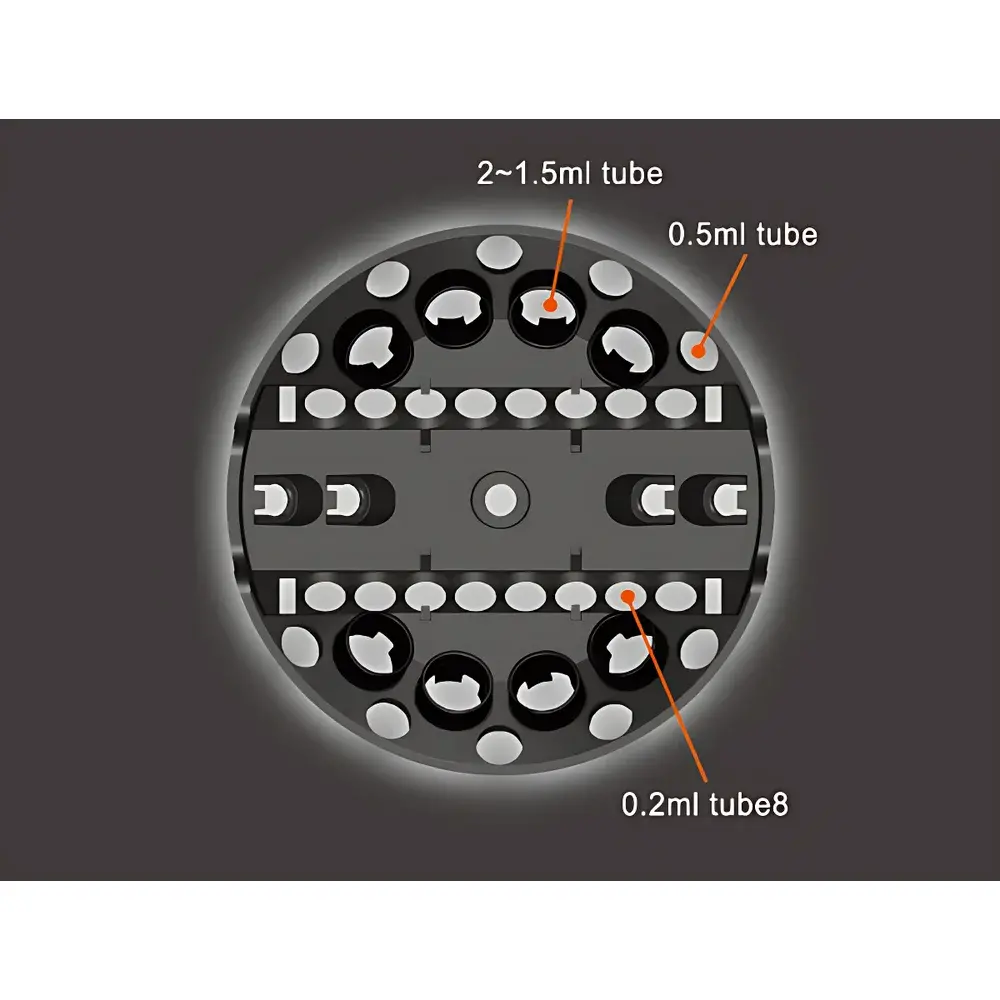
| Rotor Type | Universal Fixed-Angle Rotor (Patented) |
| Lid Mechanism | Spring-Loaded One-Hand Opening |
Overview
The Cubee APBD-I Mini Centrifuge is a compact, high-efficiency palm-sized centrifuge engineered for rapid, reliable micro-volume sample separation in resource-constrained or high-throughput laboratory environments. Designed and assembled in Taiwan, it operates on the principle of fixed-angle centrifugation—generating radial acceleration to sediment particles based on density, size, and shape within small-format tubes. With a maximum rotational speed of 7200 rpm and a corresponding relative centrifugal force (RCF) of 6000 × g, the APBD-I delivers sufficient g-force for routine nucleic acid pelleting, cell debris removal, column-based purification spin-downs, and reagent mixing prior to downstream analysis. Its robust brushless DC motor ensures consistent torque delivery across speed ranges, minimizing thermal drift and enabling repeatable performance during extended operation cycles.
Key Features
- Universal Fixed-Angle Rotor (Patented): A single, precision-machined rotor accommodates multiple tube formats without adapter swaps—including 1.5 mL and 2.0 mL microcentrifuge tubes, 0.5 mL snap-cap tubes, 0.2 mL PCR tubes, 0.2 mL 8-tube PCR strips, and iPCR-specific capillary arrays—reducing cross-contamination risk and optimizing workflow continuity.
- One-Hand Spring-Loaded Lid Mechanism: Engineered for ergonomic efficiency, the lid opens with minimal force and auto-latches securely during operation, complying with IEC 61010-1 safety standards for mechanical interlock integrity.
- Compact Footprint & Low Thermal Load: Measuring only 183 × 151 × 153 mm (W × D × H), the unit fits seamlessly into biosafety cabinets, cold rooms, and mobile lab carts. Its thermally optimized housing and low-power motor (<25 W typical consumption) limit ambient heat generation—critical for temperature-sensitive samples and benchtop space conservation.
- Speed Stability & Rotor Recognition: Digital speed control maintains ±30 rpm accuracy across the 1000–7200 rpm range. Though rotor identification is manual (non-electronic), the fixed-angle design eliminates imbalance-related vibration at rated speeds when loaded symmetrically per manufacturer specifications.
Sample Compatibility & Compliance
The APBD-I supports standard microvolume consumables used in molecular biology, clinical diagnostics, and point-of-care testing workflows. It is validated for use with polypropylene and polyethylene tubes meeting ISO 10993-5 biocompatibility requirements. While not certified for clinical diagnostic use under FDA 510(k) or CE-IVD directives, its mechanical architecture aligns with GLP-aligned lab practices—particularly where centrifugation is a non-critical preparatory step. The device complies with electromagnetic compatibility (EMC) per EN 61326-1 and electrical safety per EN 61010-1:2010+A1:2019. No refrigeration or vacuum capability is integrated; ambient operation is specified for 10–40 °C environments at ≤80% non-condensing humidity.
Software & Data Management
As a manually operated, analog-digital hybrid instrument, the APBD-I does not incorporate embedded software, touchscreen interface, or data logging functionality. All operational parameters—speed, run time (timer range: 10 s to 99 min), and start/stop—are controlled via physical push-button interface with LED indicators. This architecture eliminates firmware dependencies, reduces cybersecurity exposure, and ensures uninterrupted operation in settings where IT infrastructure is limited or regulated (e.g., field labs, GMP ancillary prep areas). For audit-trail compliance, users are advised to record run parameters manually in lab notebooks or integrate usage logs into LIMS via external timestamped entries.
Applications
- Routine spin-down of spin-column DNA/RNA extraction kits (e.g., silica-membrane binding steps)
- Clarification of PCR master mixes and enzyme stock solutions
- Centrifugal filtration in microdialysis or desalting workflows
- Pre-analytical preparation for lateral flow assays and microfluidic cartridge loading
- Field-deployable sample concentration in environmental water testing or veterinary rapid diagnostics
- Teaching laboratories requiring intuitive, low-risk centrifugation platforms for undergraduate instruction
FAQ
Is the APBD-I suitable for blood separation or serum harvesting?
No. Its maximum RCF (6000 × g) and tube capacity are insufficient for effective phase separation of whole blood; dedicated clinical centrifuges with swing-out rotors and higher RCF (>10,000 × g) are required.
Can the rotor be autoclaved?
The aluminum rotor is compatible with dry-heat sterilization (160 °C for 2 hours) but not steam autoclaving due to thermal expansion mismatch risks and potential anodization degradation.
Does it support timer-based automatic shutdown?
Yes. The built-in mechanical timer allows preset run durations from 10 seconds to 99 minutes, after which the motor stops and the rotor decelerates freely.
What maintenance is required?
Routine cleaning of the rotor chamber with 70% ethanol and visual inspection of rotor threads and lid latch mechanism every 200 operating hours; no lubrication or calibration is specified by the manufacturer.
Is it compliant with ISO/IEC 17025 documentation requirements?
While the device itself lacks digital traceability, its consistent mechanical performance and documented operating specifications enable inclusion in method validation protocols when paired with user-generated calibration records and preventive maintenance logs.
Related Products



