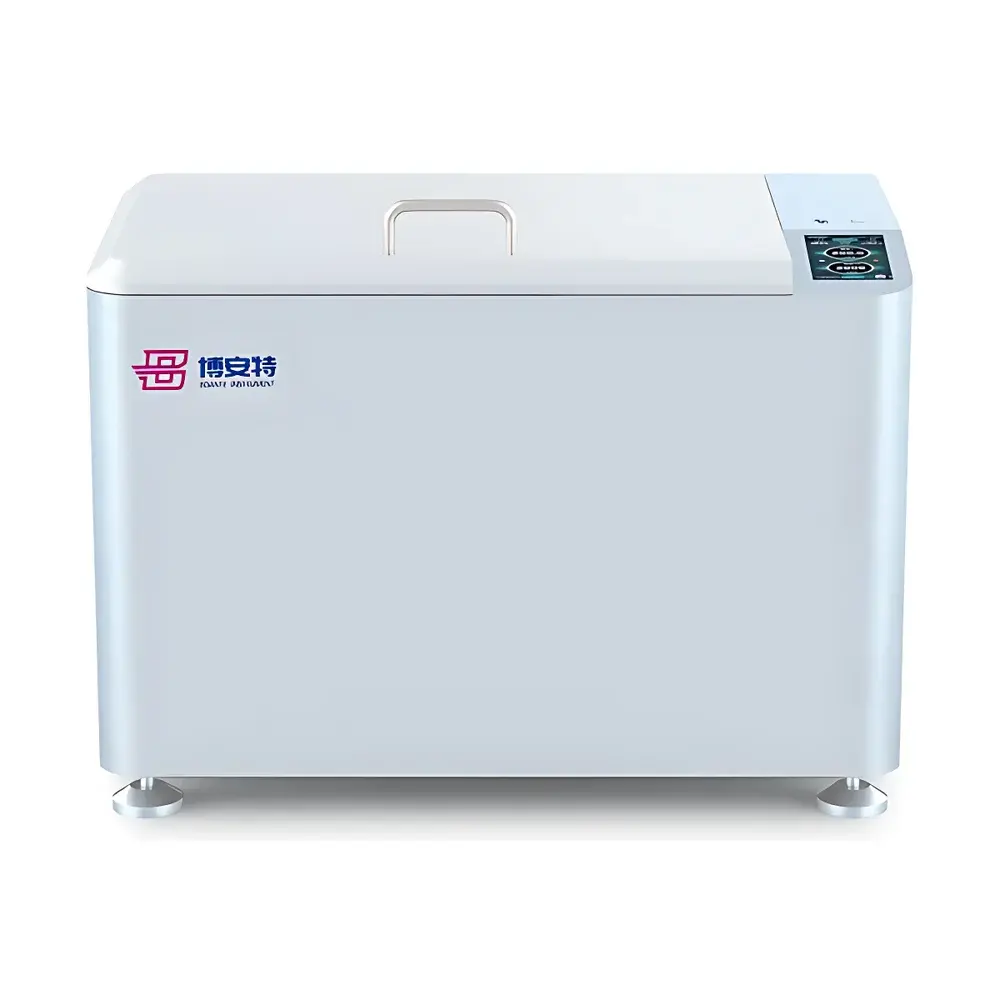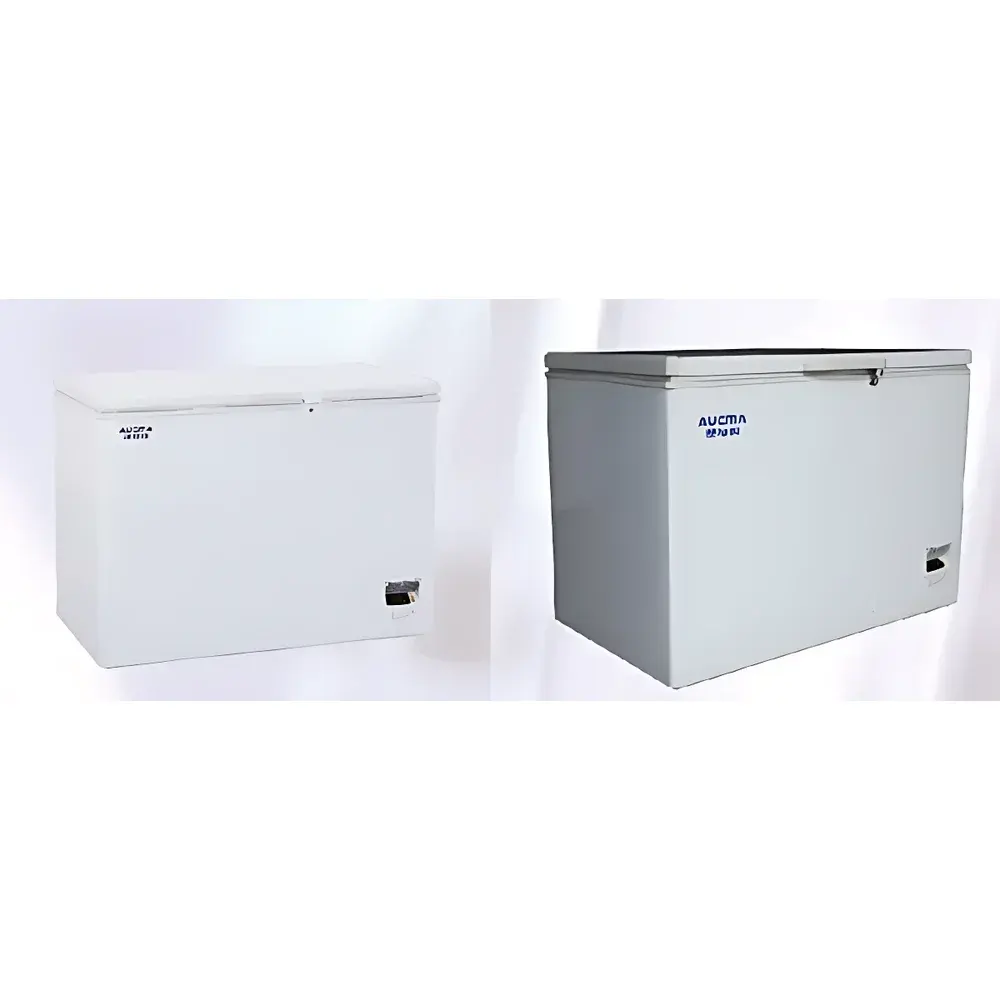
AUCMA DW-25W322 Ultra-Low Temperature Storage Cabinet
| Brand | AUCMA |
|---|---|
| Origin | Shandong, China |
| Model | DW-25W322 |
| Temperature Range | –10 °C to –25 °C |
| Net Capacity | 322 L |
| Internal Dimensions (W×D×H) | 1097 × 450 × 707 mm |
| External Dimensions (W×D×H) | 1219 × 625 × 920 mm |
| Power Supply | 220 V / 50 Hz |
| Refrigerant & Insulation | CFC-free refrigerant and polyurethane foam insulation |
Overview
The AUCMA DW-25W322 Ultra-Low Temperature Storage Cabinet is an engineered solution for stable, energy-efficient cold chain preservation of temperature-sensitive biological materials in regulated laboratory and clinical environments. Designed for operation within a controlled temperature range of –10 °C to –25 °C, the unit employs a forced-air circulation system with dual-sensor microprocessor-based temperature control to maintain uniform thermal distribution across the entire storage volume. Its architecture follows fundamental principles of vapor-compression refrigeration, utilizing an environmentally compliant hydrocarbon or HFC-based refrigerant (R290/R404A equivalent) and high-density CFC-free polyurethane insulation (≥100 mm thickness in side/wall panels) to minimize thermal leakage and ensure long-term stability under continuous duty cycles. The cabinet meets baseline structural and safety requirements for Class II medical device storage per ISO 13485–aligned manufacturing practices and supports compliance with GLP (Good Laboratory Practice) and GCP (Good Clinical Practice) cold storage validation protocols when integrated into documented qualification workflows.
Key Features
- Microprocessor-controlled dual-display temperature monitoring with independent setpoint adjustment for operational verification
- Acoustic and visual alarm system with real-time fault diagnostics—including high/low temperature deviation, door-open duration (>30 s), sensor failure, and compressor overheat detection
- Intelligent power management: programmable start-up delay and compressor cycle protection to extend service life and reduce grid load stress
- Wide-input voltage tolerance (±10% of 220 V AC), enabling reliable operation in variable utility conditions common in regional research facilities and field-deployed labs
- Secure locking mechanism with tamper-resistant key access—essential for controlled substance and bio-specimen inventory integrity
- Ergonomic horizontal design with reinforced stainless-steel drawer assembly and smooth-glide rails for repeated access without mechanical fatigue
- Energy-optimized evaporator-fan configuration and low-emissivity interior surfaces to improve coefficient of performance (COP) and reduce annual kWh consumption
Sample Compatibility & Compliance
The DW-25W322 accommodates standard cryovial racks (e.g., 2 mL, 5 mL, 15 mL formats), plasma bags (up to 500 mL), vaccine carriers, and sealed reagent containers without thermal bridging or condensation interference. Its uniformity profile (±2.5 °C at steady state, per IEC 61000-4-2 validated test methodology) ensures reproducible storage conditions for blood derivatives (e.g., fresh frozen plasma per AABB standards), monoclonal antibodies, cell lysates, and RNA-stabilized tissue samples. While not certified to UL 471 or NSF/ANSI 7 for food-grade use, the unit conforms to electromagnetic compatibility (EMC) requirements per IEC 61326-1 and electrical safety standards per IEC 61010-1 for laboratory equipment. It supports IQ/OQ documentation packages required for FDA-regulated biobanking applications when paired with external data loggers meeting 21 CFR Part 11 audit-trail specifications.
Software & Data Management
The cabinet operates via embedded firmware with non-volatile memory for parameter retention during power interruption. Though it does not include onboard Ethernet or USB connectivity, its analog/digital sensor outputs (PT1000 thermistors, relay-status signals) are compatible with third-party environmental monitoring systems (EMS) such as Sensiplus, TempTale, or DicksonWare. Optional RS-485 Modbus RTU interface kits enable integration into centralized facility management platforms for automated temperature trending, alarm forwarding via SMTP/SNMP, and electronic record generation aligned with ALCOA+ data integrity principles. All alarm events are timestamped and stored locally for ≥30 days, supporting retrospective root-cause analysis during internal audits.
Applications
- Hospital blood banks: long-term storage of FFP, cryoprecipitate, and platelet concentrates prior to transfusion
- Vaccinology labs: holding of lyophilized antigen preparations and adjuvant formulations requiring strict thermal history control
- Public health institutes: archiving of epidemiological specimens (serum, swabs, isolates) under national biospecimen repository guidelines
- Veterinary diagnostic centers: preservation of animal-derived monoclonal antibodies and pathogen reference strains
- Industrial QC laboratories: intermediate storage of stability-test samples per ICH Q5C guidance for biopharmaceuticals
FAQ
What is the recommended calibration frequency for the internal temperature sensors?
Annual verification against NIST-traceable reference probes is advised; semi-annual checks are recommended in high-throughput clinical settings.
Can this unit be validated for GxP-compliant storage?
Yes—when combined with qualified external data loggers and documented mapping studies (per ISO 14644-3 and WHO TRS 961 Annex 9), it supports full IQ/OQ/PQ execution.
Is the cabinet suitable for storing dry ice or liquid nitrogen-cooled samples?
No—this is a mechanical refrigeration unit only; direct contact with cryogens may damage seals and insulation integrity.
Does the unit support remote monitoring via cloud platform?
Not natively; however, integration with third-party EMS platforms via optional Modbus gateway enables secure cloud-based alerting and dashboard visualization.
What maintenance intervals are specified for optimal performance?
Condenser coil cleaning every 6 months, door gasket inspection quarterly, and compressor oil analysis annually (if operated >8,000 hours/year).