
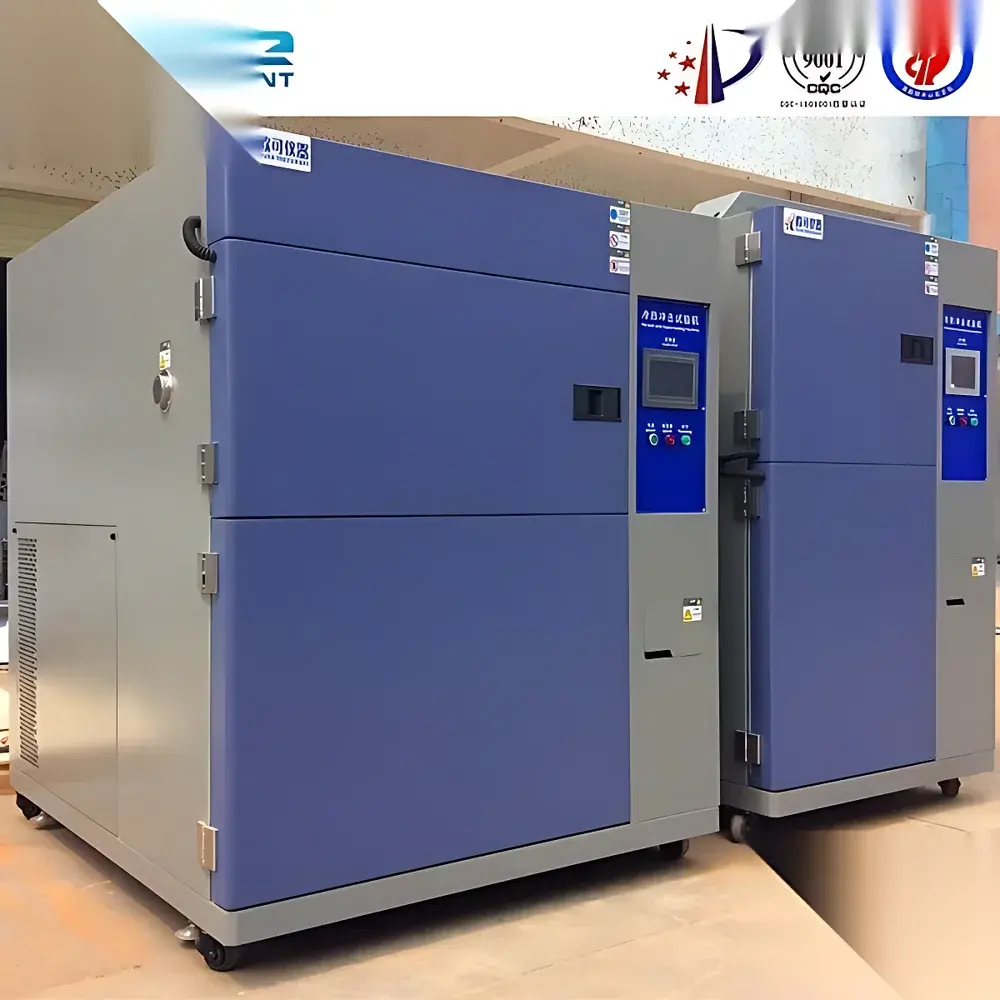
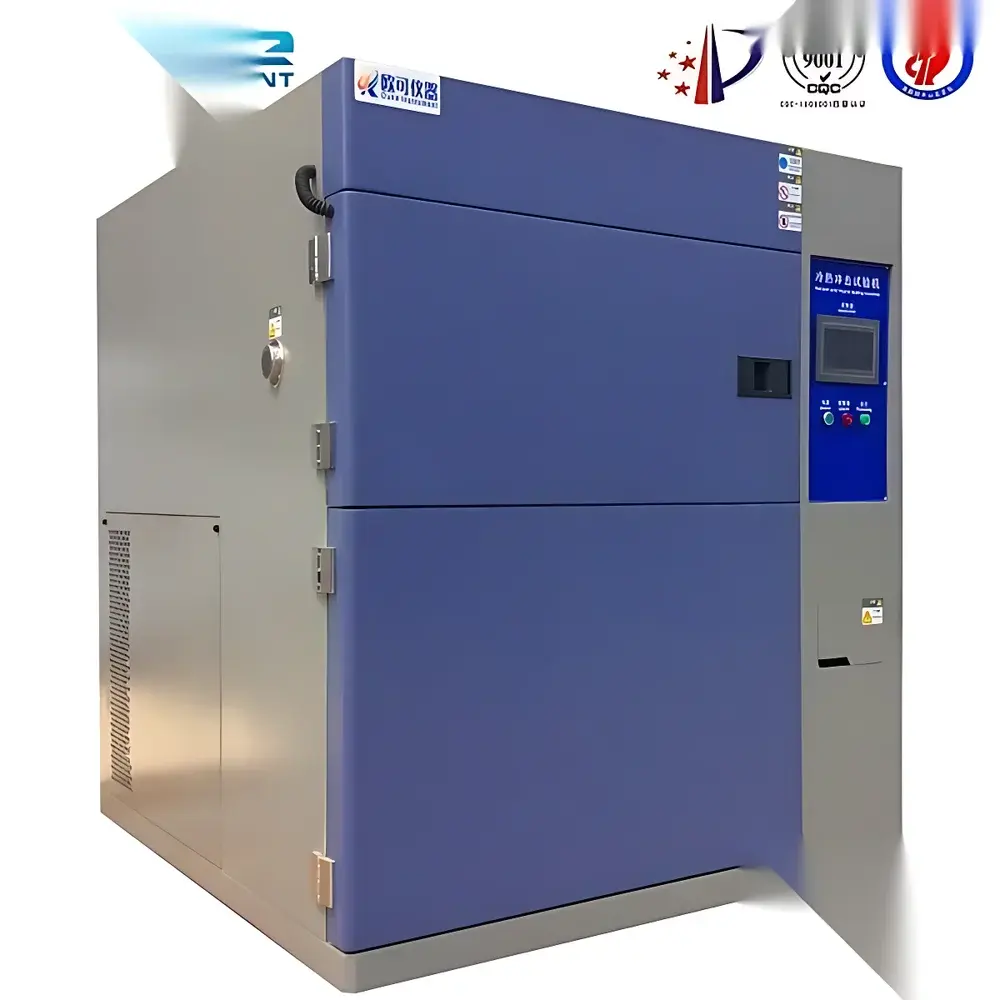
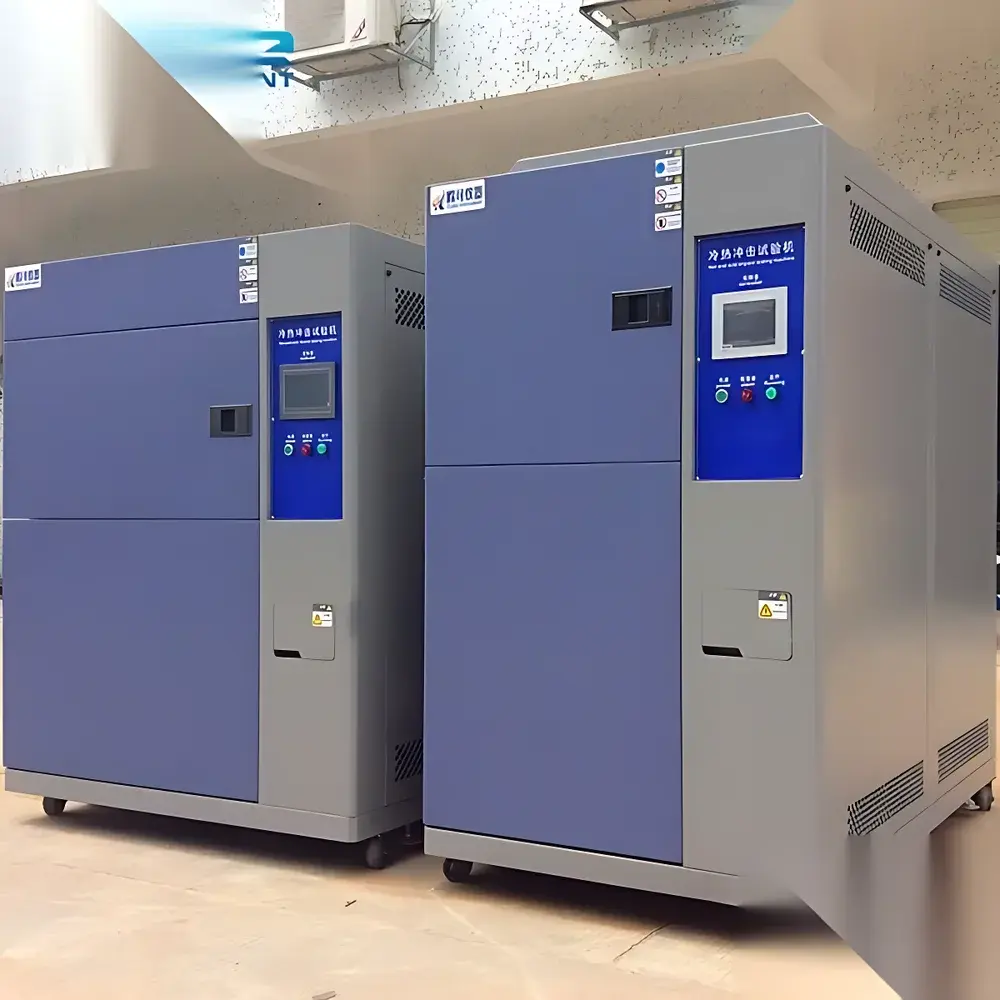
Thermal Shock Test Chamber – High-Low Temperature Cycling Environmental Test System
| Brand | OEM / Custom-Built |
|---|---|
| Origin | Imported |
| Manufacturer Type | Authorized Distributor |
| Pricing | USD 14,200 (FOB) |
| Operating Ambient | 15–35 °C, ≤85% RH |
| Safety Protections | Overcurrent, Ground Fault, Overtemperature, Compressor High-Pressure & Overload Cut-off |
| Compliance | IEC 60068-2-14, MIL-STD-810H Method 503.7, GB/T 2423.22 |
Overview
The Thermal Shock Test Chamber – High-Low Temperature Cycling Environmental Test System is an engineered solution for accelerated reliability evaluation of electronic components, aerospace assemblies, automotive ECUs, and polymer-based packaging under rapid thermal transients. Based on the two-chamber (hot/cold) or single-chamber (air-blast) thermal shock methodology per IEC 60068-2-14 and MIL-STD-810H Method 503.7, this system subjects test specimens to controlled, high-rate temperature transitions—typically between −65 °C and +150 °C—with transfer times ≤15 seconds and dwell stabilization within ±0.5 °C. Its robust architecture integrates dual independent refrigeration circuits (cascade low-temp stage + high-temp electric heating), precision PID-controlled air circulation, and insulated chamber walls with low-thermal-conductivity polyurethane foam (≥120 mm thickness). Designed for laboratory and production-line validation environments, the chamber delivers repeatable thermal stress profiles essential for identifying latent defects such as solder joint fatigue, delamination in multilayer PCBs, sealant cracking, and coefficient-of-thermal-expansion (CTE) mismatch failures.
Key Features
- Dual-zone configuration with independent hot (up to +200 °C) and cold (down to −70 °C) chambers, enabling programmable dwell/transfer cycles without thermal cross-contamination
- High-velocity pneumatic transfer mechanism with stainless-steel lift basket, achieving specimen transfer in ≤10 seconds (standard), configurable to ≤5 seconds for ultra-fast shock protocols
- Industrial-grade PLC controller with 7-inch color touchscreen HMI, supporting up to 999-step programmable profiles with ramp rate control (0.5–25 °C/min), soak time definition, and cycle repetition count
- Real-time monitoring of chamber temperatures via calibrated Class A PT100 sensors (traceable to NIST standards), with data logging at user-defined intervals (1–60 sec)
- Integrated safety interlocks including compressor discharge temperature cutoff, phase-sequence protection, door-open alarm, and automatic power disconnect upon any fault condition
- Compliance-ready design: meets structural, electrical, and operational requirements of IEC 61000-6-2 (EMC immunity) and IEC 61000-6-4 (EMC emissions); optional factory calibration certificate available
Sample Compatibility & Compliance
This thermal shock system accommodates standard test specimens up to 500 mm × 500 mm × 500 mm (W×D×H) with maximum payload of 30 kg. Compatible with JEDEC-standard trays, SMEMA conveyors (optional interface), and custom fixtures for board-level or module-level testing. All operational parameters—including transition time, dwell duration, temperature tolerance bands, and cycle count—are fully configurable to align with qualification standards such as AEC-Q200 (passive components), IPC-9701 (solder joint reliability), and NASA-SSP 30238 (space electronics screening). The chamber’s thermal uniformity (±2.0 °C across working volume) and stability (±0.3 °C over 30 min) are verified per ASTM E742 and documented in the Factory Acceptance Test (FAT) report supplied with each unit.
Software & Data Management
Bundled PC-based software enables remote setup, real-time visualization, and post-test analysis via USB or Ethernet connection. The application supports CSV export of time-stamped temperature logs (hot/cold chamber, specimen surface if equipped with optional thermocouple input), automated report generation (PDF/Excel), and password-protected user roles (Operator, Engineer, Administrator). Audit trail functionality records all parameter changes, manual interventions, and alarm events with timestamps and operator IDs—fully compliant with GLP and GMP documentation requirements under FDA 21 CFR Part 11 when configured with digital signature and electronic record modules. Firmware updates and controller firmware patches are provided free of charge for the lifetime of the product.
Applications
- Qualification testing of semiconductor packages (QFN, BGA, CSP) per JESD22-A104
- Reliability screening of automotive ADAS sensors and battery management systems (BMS)
- Failure mode analysis of conformal-coated PCBAs exposed to field-relevant thermal cycling
- Material compatibility assessment for adhesives, encapsulants, and thermal interface materials (TIMs)
- Process validation of reflow soldering and underfill cure cycles
- Accelerated life testing of medical device housings and sterilizable components
FAQ
What ambient conditions are required for safe and accurate operation?
The chamber must be installed in a climate-controlled room maintained between 15 °C and 35 °C, with relative humidity ≤85% RH, no direct solar exposure, minimal ambient vibration (<0.5 g), and adequate ventilation (minimum 1 m² floor area clearance around all sides). Grounding resistance must not exceed 4 Ω.
Is ISO/IEC 17025-compliant calibration included?
Factory calibration using NIST-traceable reference sensors is performed prior to shipment and documented in the FAT report. Full ISO/IEC 17025 accreditation is available through third-party labs; we provide technical support for on-site calibration coordination.
Can the system be integrated into an existing MES or test automation framework?
Yes. Standard Modbus TCP and RS-485 interfaces are provided for SCADA/MES integration. Optional OPC UA server license enables seamless connectivity with Siemens SIMATIC, Rockwell FactoryTalk, or custom LabVIEW-based platforms.
What maintenance is required during the first year of operation?
Routine tasks include monthly condenser coil cleaning, quarterly verification of door gasket integrity, and annual inspection of refrigerant charge and electrical terminations. No scheduled lubrication or consumable replacement is required under normal use.
Does the system support user-defined failure criteria triggering automatic test abort?
Yes. Up to eight programmable alarm thresholds can be assigned to chamber temperatures, specimen sensor inputs, or system status flags (e.g., compressor discharge >120 °C), initiating immediate power cut-off and event logging.



