
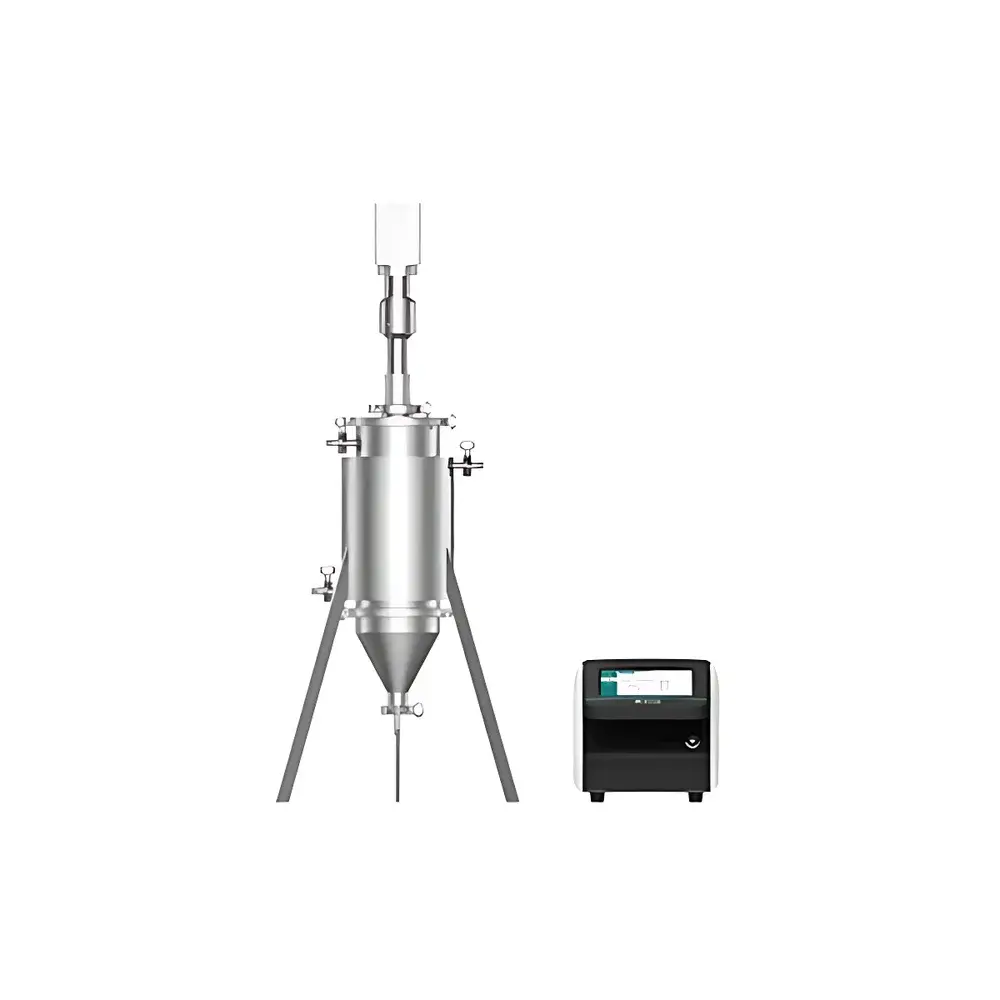
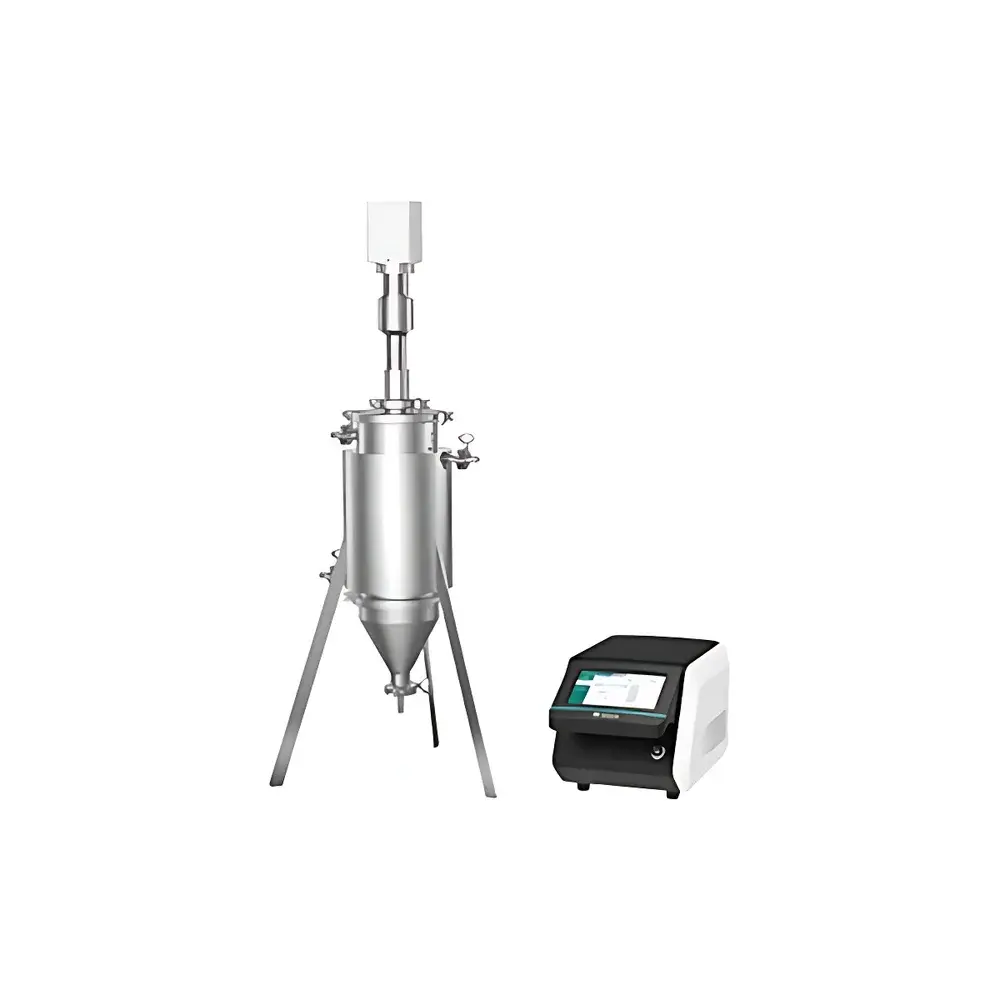
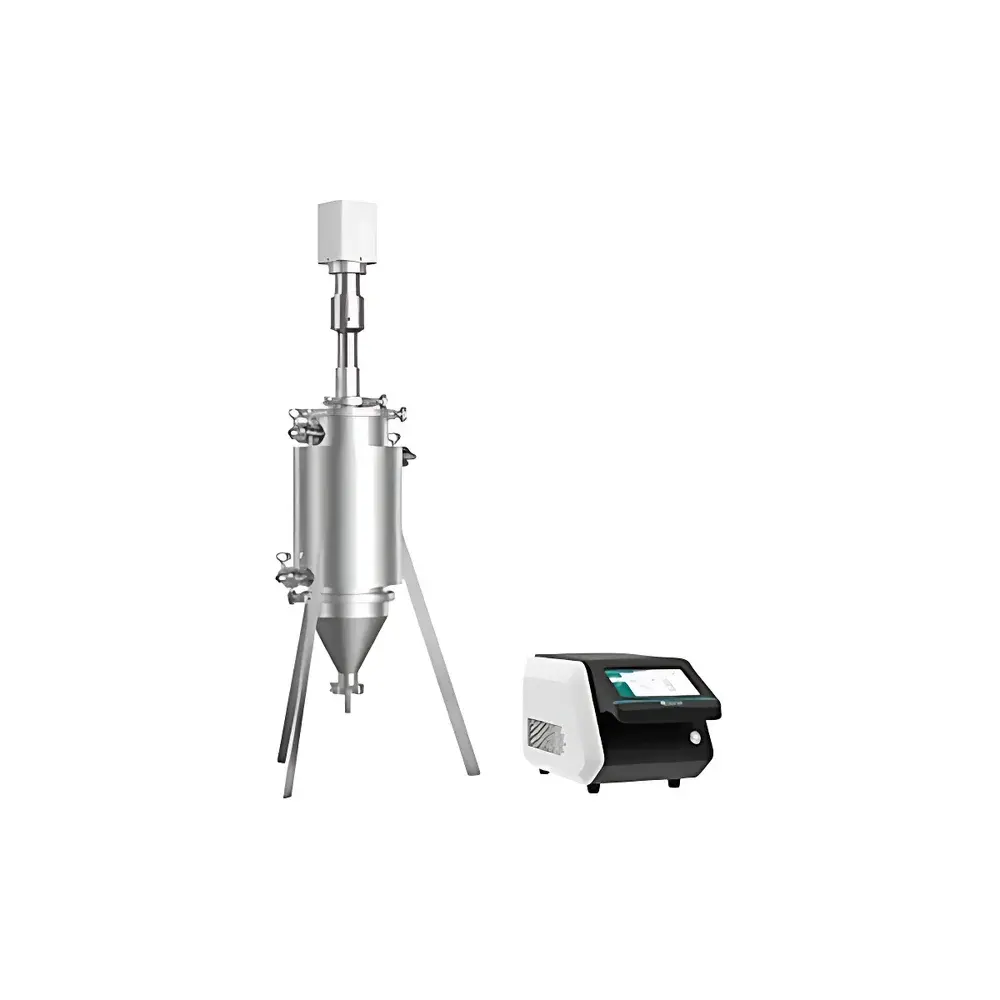
Scientz CFU-3000W Continuous-Flow Ultrasonic Cell Disruptor
| Brand | Scientz |
|---|---|
| Origin | Zhejiang, China |
| Manufacturer Type | Direct Manufacturer |
| Instrument Type | Ultrasonic Cell Disruptor |
| Model | CFU-3000W |
| Operating Frequency | 20 kHz ± 1 kHz |
| Ultrasonic Power Output | 750 W |
| Sample Throughput | 5–50 L/h |
Overview
The Scientz CFU-3000W Continuous-Flow Ultrasonic Cell Disruptor is an industrial-grade, bench-to-pilot scale bioprocessing instrument engineered for high-throughput, reproducible cell lysis and particle processing via acoustic cavitation. It operates on the physical principle of high-intensity ultrasonic energy transmission through liquid media—where rapid pressure oscillations induce transient microcavitation, generating localized shockwaves, extreme shear gradients (>10⁶ s⁻¹), and interfacial turbulence sufficient to disrupt cellular membranes, disintegrate aggregates, and facilitate molecular-level mixing. Unlike batch-mode sonicators, the CFU-3000W employs a recirculating flow path with precisely controlled residence time, enabling consistent energy delivery across large-volume samples (5–50 L/h), making it suitable for scalable downstream processing in biomanufacturing, nanomaterial synthesis, and formulation development.
Key Features
- Continuous-flow architecture with integrated peristaltic or centrifugal feed system, supporting steady-state operation at throughput rates from 5 to 50 L/h
- 750 W nominal ultrasonic power output delivered via titanium alloy (Grade 5) transducer and horn assembly—resistant to corrosion, erosion, and thermal fatigue under prolonged duty cycles
- Self-tuning digital ultrasonic generator operating at 20 kHz ± 1 kHz, automatically tracking resonant frequency drift due to temperature or load variation—eliminating manual impedance matching
- ARM-based embedded control system with 7-inch capacitive touch interface; supports creation, naming, versioning, and recall of up to 50 user-defined protocols including amplitude (%), duration, pulse mode (continuous/intermittent), and flow rate synchronization
- Monolithic stainless steel ultrasonic reactor chamber (≈5 L internal volume) with electropolished interior surface (Ra ≤ 0.4 µm), zero crevices, and full CIP/SIP compatibility—including steam-in-place (SIP) validation up to 121°C/20 min and autoclave sterilization after transducer detachment
- Real-time monitoring of transducer temperature, forward/reflected power, and flow continuity via onboard sensors with configurable alarm thresholds and event logging
Sample Compatibility & Compliance
The CFU-3000W accommodates aqueous, organic, and viscous suspensions—including microbial cultures (E. coli, yeast, bacilli), mammalian cell lines, plant tissue homogenates, nanoparticle colloids (e.g., TiO₂, SiO₂, Fe₃O₄), emulsion precursors (oil-in-water, water-in-oil), and reactive chemical mixtures. Its fluid path complies with ASME BPE-2022 surface finish standards for biopharmaceutical equipment. The system supports GLP/GMP-aligned workflows: all protocol executions are timestamped and logged with operator ID, parameter set hash, and hardware status; audit trails meet FDA 21 CFR Part 11 requirements when integrated with validated LIMS or MES platforms. It conforms to IEC 61000-6-2 (immunity) and IEC 61000-6-4 (emission) electromagnetic compatibility directives.
Software & Data Management
The embedded firmware provides local data storage (≥16 GB internal flash) for operational logs, fault diagnostics, and protocol histories. Optional Ethernet or RS-485 interfaces enable integration with SCADA systems or laboratory informatics infrastructure. Raw sensor data (power, temperature, flow) is exportable in CSV or HDF5 format. No proprietary cloud dependency—data sovereignty remains fully under user control. Firmware updates are performed via signed USB image files with SHA-256 verification to ensure integrity and traceability.
Applications
- Vaccine manufacturing: Continuous-phase emulsification of antigen-adjuvant systems (e.g., MF59-like squalene-in-water emulsions), achieving sub-200 nm droplet size distribution with narrow PDI (<0.15) and improved immunogenicity consistency
- Nanomaterial processing: Deagglomeration and surface functionalization of metal oxide nanoparticles in polar solvents, enabling stable dispersions for catalytic ink formulation or conductive coating preparation
- Biocatalysis & synthetic biology: In situ lysis of engineered E. coli during continuous enzymatic cascade reactions, minimizing protease-mediated degradation and improving cofactor recycling efficiency
- Food-grade emulsification: Cold-process stabilization of oil-water interfaces for clean-label dressings and dairy alternatives—reducing reliance on synthetic surfactants while enhancing shelf-life stability
- Environmental sample preparation: Rapid disruption of biofilm matrices or algal aggregates for metagenomic DNA extraction, reducing mechanical shearing artifacts common in bead-beating methods
FAQ
What is the maximum allowable viscosity for continuous processing?
Viscosity should not exceed 500 mPa·s at processing temperature; higher viscosities require reduced flow rate or pre-dilution to maintain cavitation efficiency and avoid horn tip overheating.
Can the system be validated for GMP production use?
Yes—the reactor geometry, material certifications (3.1 EN 10204), surface finish documentation, and IQ/OQ templates are provided; PQ execution requires user-defined acceptance criteria aligned with process-specific critical quality attributes.
Is remote monitoring supported out-of-the-box?
Basic Modbus TCP support is built-in; full OPC UA or MQTT integration requires optional communication module installation and configuration by certified field engineers.
How often does the titanium horn require recalibration?
No periodic calibration is required; however, annual verification of power output accuracy against NIST-traceable acoustic calibrators is recommended for regulated environments.
What maintenance intervals are specified for the transducer assembly?
Visual inspection and torque verification of horn mounting every 500 operational hours; replacement of O-rings and cooling jacket seals every 2,000 hours or per leak test results.
Related Products




