
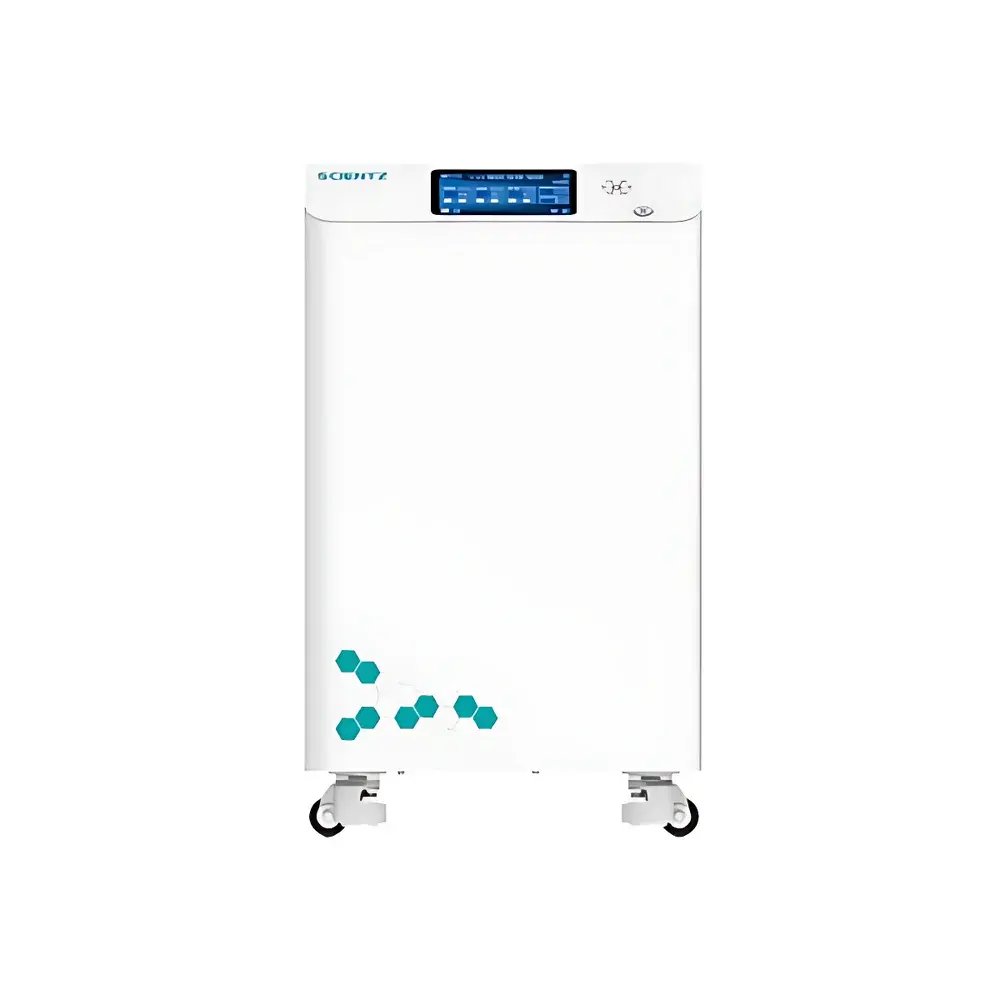
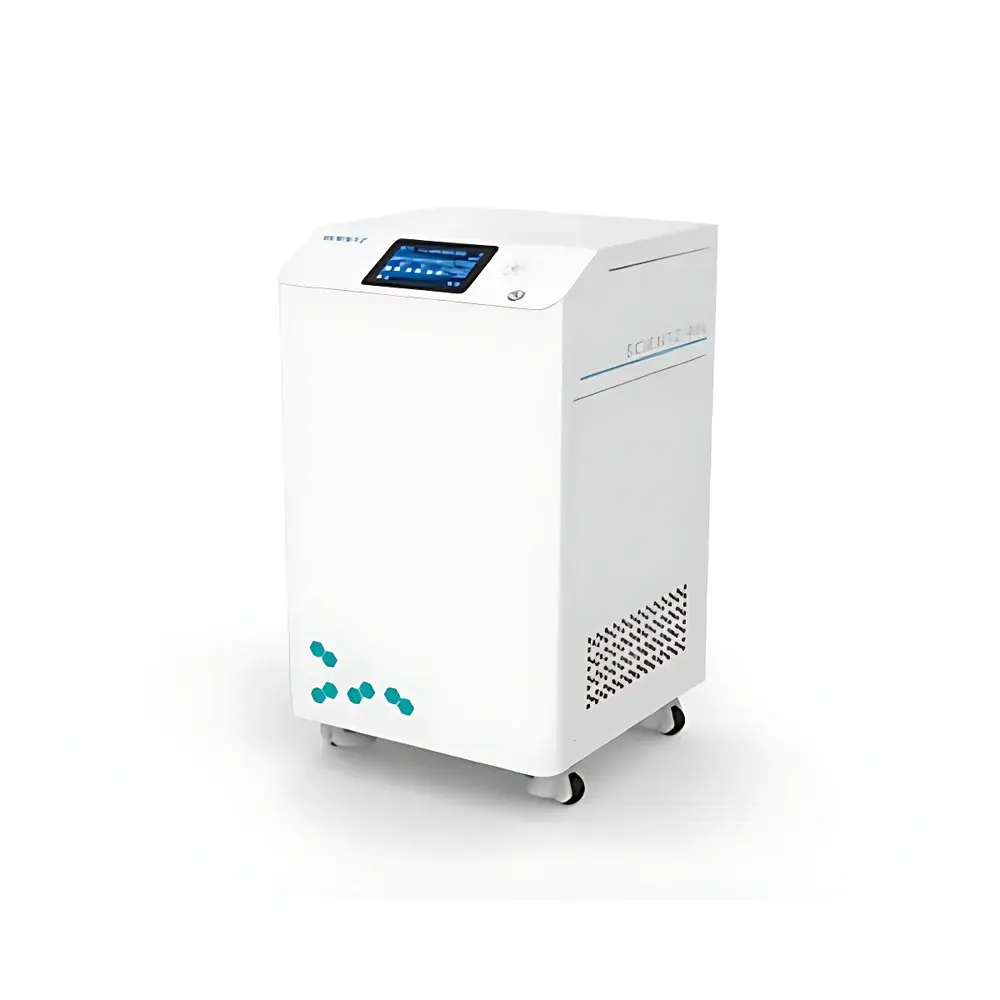
Ningbo Scientz SCIENTZ-48L Cryogenic High-Throughput Tissue Grinder
| Brand | Ningbo Scientz |
|---|---|
| Origin | Zhejiang, China |
| Manufacturer Type | Original Equipment Manufacturer (OEM) |
| Country of Origin | China |
| Model | SCIENTZ-48L |
| Pricing | Upon Request |
Overview
The Ningbo Scientz SCIENTZ-48L Cryogenic High-Throughput Tissue Grinder is an engineered solution for rapid, reproducible, and contamination-free homogenization of biological and non-biological samples under controlled low-temperature conditions. It operates on the principle of high-frequency vertical oscillation—generating intense mechanical energy through collision and shear forces between grinding beads and sample material inside sealed centrifuge tubes. Integrated refrigeration via a dedicated compressor maintains sample temperatures typically between –10 °C and +4 °C during operation, effectively suppressing enzymatic degradation, nucleic acid shearing, and protein denaturation commonly induced by frictional heat. Designed for laboratories requiring parallel processing without compromise in integrity or consistency, the SCIENTZ-48L accommodates up to 48 samples simultaneously in standard 2 mL or 5 mL tubes, making it suitable for large-scale genomics, proteomics, metabolomics, and quality control workflows across academic research, pharmaceutical development, agricultural science, food safety testing, and environmental analysis.
Key Features
- Integrated cryogenic cooling system with independent compressor ensures stable sub-ambient temperature control throughout grinding cycles
- Intuitive 7-inch color touchscreen interface with pre-programmed and customizable protocols for time, frequency (Hz), and cycle count
- Vertical oscillation architecture delivers uniform energy distribution across all tube positions—minimizing inter-sample variability
- Full enclosure with electromagnetic safety interlock: automatic motor shutdown upon lid opening, compliant with IEC 61010-1 laboratory safety standards
- Low-noise design (<65 dB at 1 m) enables deployment in shared lab spaces without acoustic interference
- Direct pre-cooling compatibility: tubes may be loaded while frozen; no external cryo-transfer required
- Modular adapter system supports multiple tube formats (e.g., 2 mL, 5 mL, 15 mL) and optional deep-well plates
Sample Compatibility & Compliance
The SCIENTZ-48L processes diverse sample matrices—including mammalian tissues (liver, brain, kidney, muscle), plant organs (roots, leaves, seeds), microbial cells (E. coli, yeast, spores), environmental specimens (soil, sludge, feces), food matrices (meat, dairy, grains), polymers (PE, PS, resins), and forensic or paleontological samples. Its closed-tube configuration eliminates cross-contamination risks and meets ISO/IEC 17025 requirements for traceability in accredited testing labs. When used with appropriate bead materials and validated protocols, the system supports RNA integrity numbers (RIN) >8.0 and DNA fragment sizes >10 kb—enabling downstream applications such as qRT-PCR, NGS library prep, and LC-MS/MS. The instrument’s operational parameters align with GLP and GMP documentation practices, and its software audit trail functionality (via optional USB export) supports FDA 21 CFR Part 11 compliance when integrated into regulated environments.
Software & Data Management
The embedded controller stores up to 100 user-defined methods with timestamped execution logs, including start/stop times, actual frequency deviation, and total runtime. All settings are saved non-volatilely and can be exported via USB for protocol archiving or QA review. No proprietary software installation is required—method transfer occurs via plain-text CSV files readable in Excel or LIMS platforms. Optional firmware updates maintain alignment with evolving laboratory informatics standards. While the base unit does not include network connectivity, its deterministic timing engine ensures method reproducibility across instruments—a critical requirement for multi-site studies or contract research organizations (CROs).
Applications
- High-yield extraction of intact RNA, genomic DNA, and native proteins from fibrous or lipid-rich tissues
- Cell lysis and organelle isolation prior to subcellular fractionation or electron microscopy
- Homogenization of recalcitrant plant cell walls for metabolite profiling and phytochemical analysis
- Routine QC grinding of pharmaceutical tablets, dietary supplements, and nutraceutical powders
- Preparation of representative subsamples from heterogeneous environmental solids (e.g., soil composites, sediment cores)
- Fragmentation of polymer pellets and composite materials for FTIR, DSC, or rheological characterization
FAQ
What types of grinding beads are compatible with the SCIENTZ-48L?
Stainless steel, hardened steel, tungsten carbide, zirconium oxide, alumina, agate, and PTFE beads are supported—each selected based on sample hardness, required purity, and downstream analytical sensitivity.
Can the instrument operate without active cooling?
Yes—refrigeration is optional and can be disabled via the touchscreen interface for ambient-temperature protocols.
Is the SCIENTZ-48L suitable for CLIA- or CAP-accredited clinical labs?
While not FDA-cleared as an IVD device, its mechanical consistency, closed-tube workflow, and audit-ready logging support use in clinical research settings adhering to CAP checklist GEN.40800 and CLIA §493.1253.
How is calibration verified?
Frequency accuracy is factory-validated using laser tachometry; users may perform periodic verification with external digital tachometers per ISO 17025 Section 6.5.
What maintenance is required?
Annual inspection of drive belt tension, refrigerant pressure, and door interlock responsiveness is recommended; no routine lubrication is needed due to sealed bearing design.



