
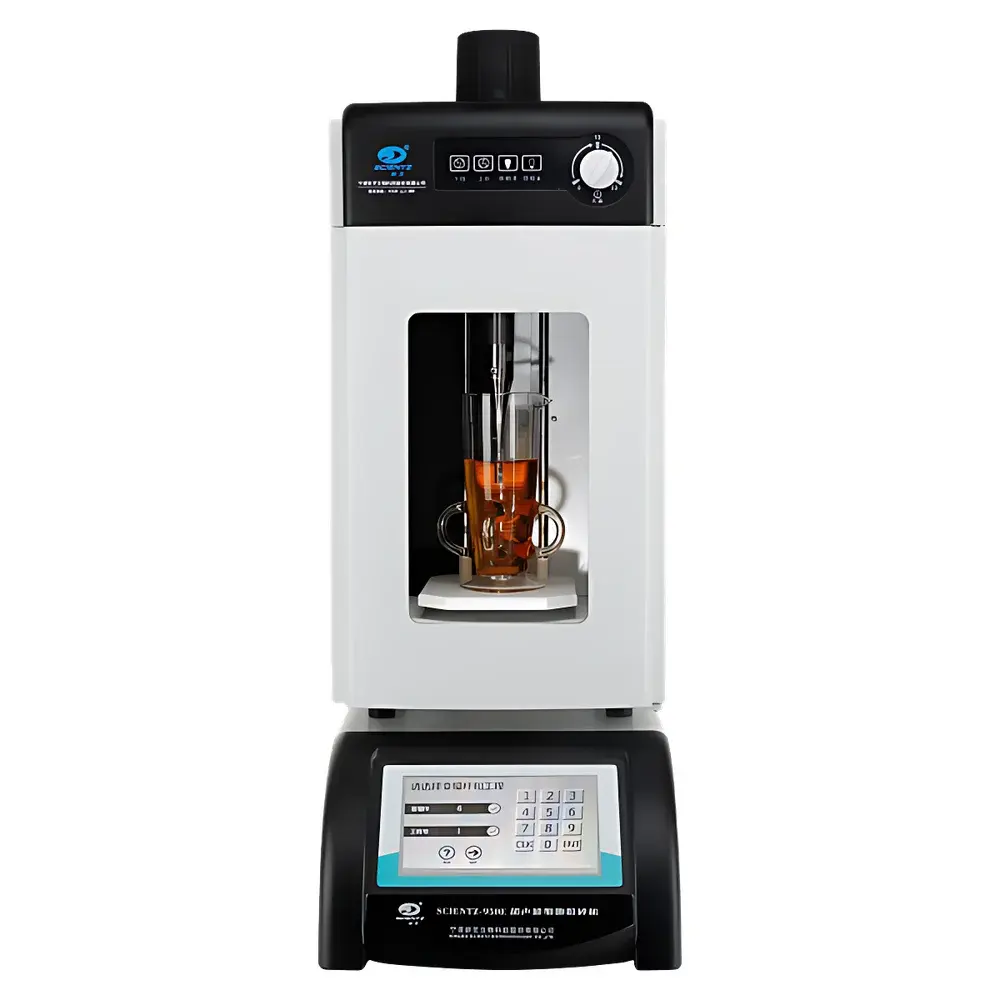
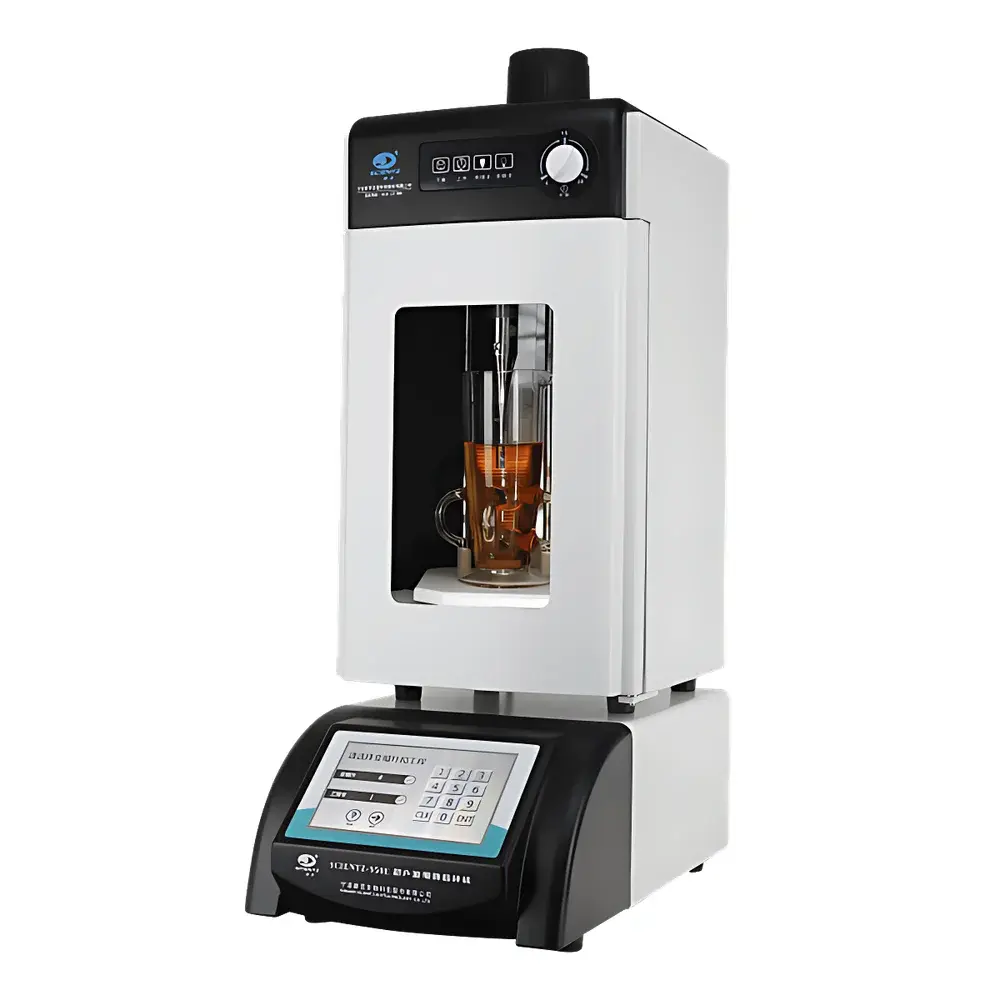
Ningbo Scientz SCIENTZ-950E Intelligent Ultrasonic Cell Disruptor
| Brand | Ningbo Scientz |
|---|---|
| Origin | Zhejiang, China |
| Manufacturer Type | Direct Manufacturer |
| Instrument Type | Ultrasonic Cell Disruptor |
| Ultrasonic Power Range | 5–950 W (continuously adjustable) |
| Operating Frequency | 20–25 kHz (auto-tracking & self-adaptive) |
| Temperature Control Range | 0–99 °C |
| Sample Volume Capacity | 100 µL–600 mL |
| Multi-sample Processing Capability | Yes |
| Safety Features | Overtemperature, overload, and time-out alarms |
| Control Interface | Remote network control (RS485/Ethernet) |
| Mechanical Design | Motorized vertical lift stage |
Overview
The Ningbo Scientz SCIENTZ-950E Intelligent Ultrasonic Cell Disruptor is an engineered solution for controlled mechanical lysis of biological samples using high-intensity ultrasonic cavitation. It operates on the physical principle of acoustic cavitation—where rapid pressure fluctuations generated by 20–25 kHz ultrasonic waves induce transient microbubble formation, growth, and violent collapse in liquid media. This implosive process produces localized shear forces exceeding 10⁴ Pa, hydrodynamic microjets (>100 m/s), and extreme transient temperatures (>5,000 K), collectively enabling efficient disruption of cell membranes, bacterial walls, viral envelopes, and subcellular organelles without chemical or enzymatic intervention. Designed for reproducible, scalable, and operator-safe sample preparation, the SCIENTZ-950E supports both routine laboratory workflows and method-development applications requiring precise thermal and energy input control.
Key Features
- Intelligent frequency auto-tracking and real-time amplitude compensation ensure stable cavitation output across varying load conditions and sample viscosities.
- Wide power range (5–950 W) with 1-W resolution enables fine-tuned energy delivery—from gentle lysis of fragile mammalian cells to robust disruption of Gram-positive bacteria or yeast spores.
- Integrated Peltier-based temperature regulation (0–99 °C) with external coolant port compatibility allows active thermal management during extended sonication cycles, critical for preserving labile biomolecules such as native proteins or chromatin complexes.
- Motorized vertical lift stage eliminates manual probe alignment errors and ensures repeatable immersion depth—essential for inter-lab protocol transfer and GLP-compliant documentation.
- Network-enabled RS485/Ethernet interface supports remote monitoring, centralized instrument fleet management, and integration into LIMS environments compliant with FDA 21 CFR Part 11 requirements when paired with audit-trail-capable software.
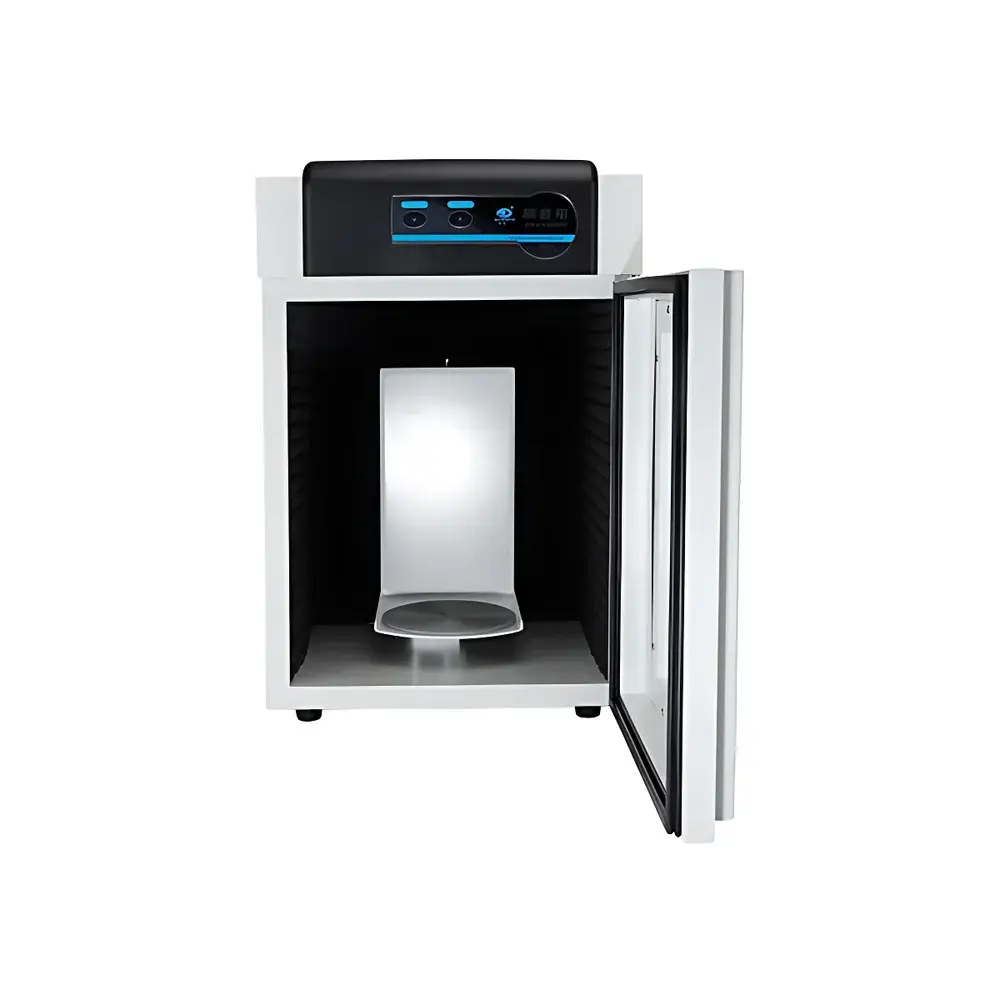
- Dual-safety architecture includes hardware-level overtemperature cutoff, current-sensing overload protection, real-time duty-cycle monitoring, and a mechanically interlocked UV-sterilized chamber door.
Sample Compatibility & Compliance
The SCIENTZ-950E accommodates diverse sample formats—including suspension cultures (bacterial, yeast, insect, mammalian), tissue homogenates, plant extracts, soil slurries, and nanoparticle dispersions—within volumes ranging from 100 µL (microcentrifuge tube adapters) to 600 mL (jacketed beakers). Its non-contact probe design minimizes cross-contamination risk and supports ASTM E2994-15 guidelines for ultrasonic device validation in microbiological applications. All electrical components conform to IEC 61010-1 safety standards for laboratory equipment. The UV-C (254 nm) sterilization module meets ISO 15883-1 requirements for auxiliary decontamination in biosafety Level 2 (BSL-2) environments.
Software & Data Management
The instrument firmware supports storage of up to 20 user-defined protocols, each configurable with ramp-up profiles, pulse-on/pulse-off timing (duty cycle: 0.1–99.9%), total duration, target temperature, and power setpoint. Exportable log files include timestamped event records (start/stop, alarm triggers, parameter changes), cumulative energy delivery (J), and thermal history (°C vs. time). When deployed with Scientz’s optional LabControl Suite, data export complies with ALCOA+ principles—ensuring Attributable, Legible, Contemporaneous, Original, Accurate, Complete, Consistent, Enduring, and Available records suitable for regulatory submissions under USP , ISO/IEC 17025, or GMP Annex 11.
Applications
- Nucleic acid shearing for ChIP-seq, ATAC-seq, and cfDNA fragmentation without enzymatic bias.
- Preparation of soluble antigen extracts from recombinant E. coli or baculovirus-infected Sf9 cells.
- Dispersion and surface functionalization of carbon nanotubes, graphene oxide, and metal–organic frameworks (MOFs) in aqueous or organic solvents.
- Accelerated solvent extraction of bioactive alkaloids and flavonoids from botanical matrices per AOAC 995.13.
- Homogenization of environmental sediment cores for metagenomic DNA recovery and heavy-metal speciation analysis.
- Physical stabilization of nanoemulsions in pharmaceutical formulations and functional food development.
FAQ
What is the maximum recommended continuous operating time per cycle?
The system supports up to 60 minutes of continuous sonication per cycle, with automatic cooldown intervals enforced if internal transducer temperature exceeds 65 °C.
Can the SCIENTZ-950E be validated for GMP production use?
Yes—when operated with documented IQ/OQ protocols, calibrated temperature/power sensors, and audit-trail-enabled software, it satisfies key elements of Annex 15 and PIC/S PE 009-14 for equipment qualification in regulated biomanufacturing.
Is probe tip geometry standardized across Scientz models?
All probes adhere to ISO 13765-2 specifications for ultrasonic horn taper and nodal point positioning; however, tip diameters (2–25 mm) and material grades (titanium alloy Grade 5 or custom-coated variants) are model- and application-specific.
Does the instrument support third-party software integration via API?
A RESTful API is available under NDA for integration with ELN platforms (e.g., LabArchives, Benchling) and automated liquid handling systems via TCP/IP handshake and JSON payload exchange.
How often should the ultrasonic horn be inspected for fatigue or pitting?
Visual inspection and amplitude verification are recommended every 200 hours of accumulated operation; replacement is advised upon detection of >5% amplitude loss at rated power or visible surface erosion exceeding ISO 4287 Ra 3.2 µm roughness threshold.
Related Products



