
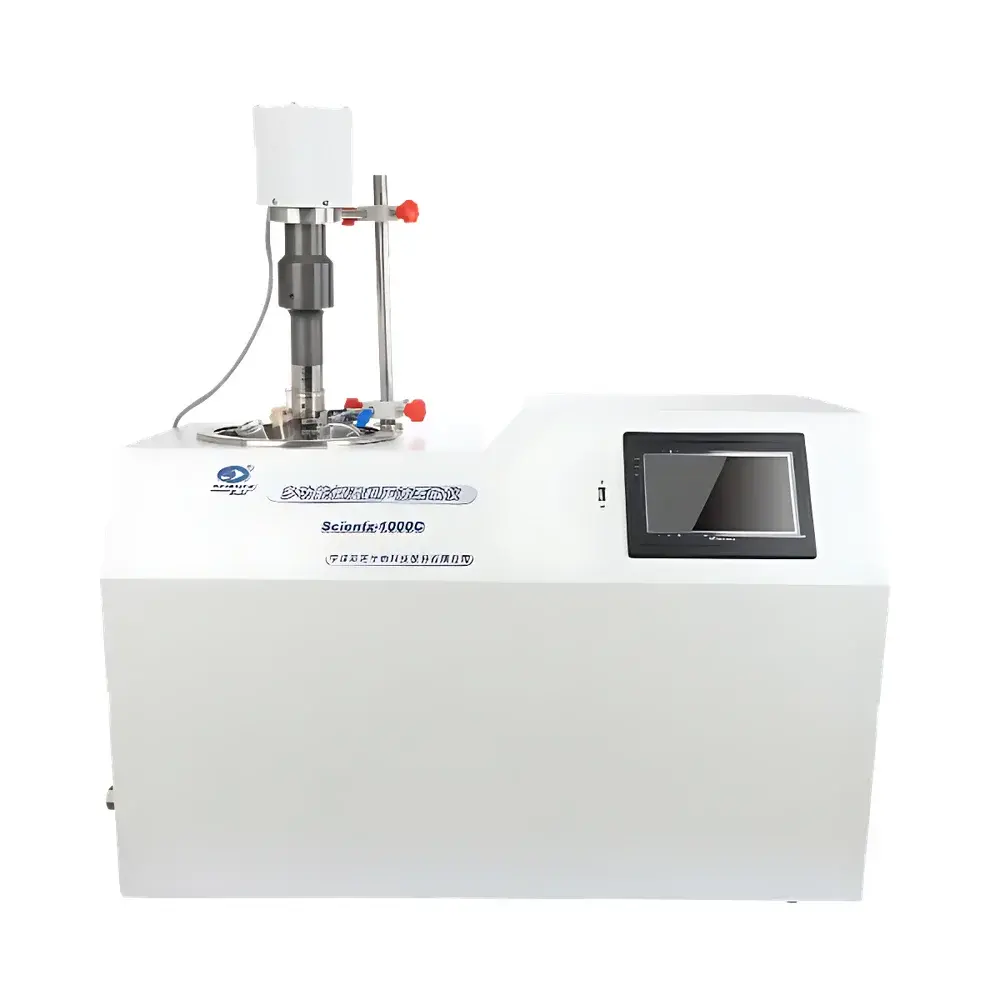
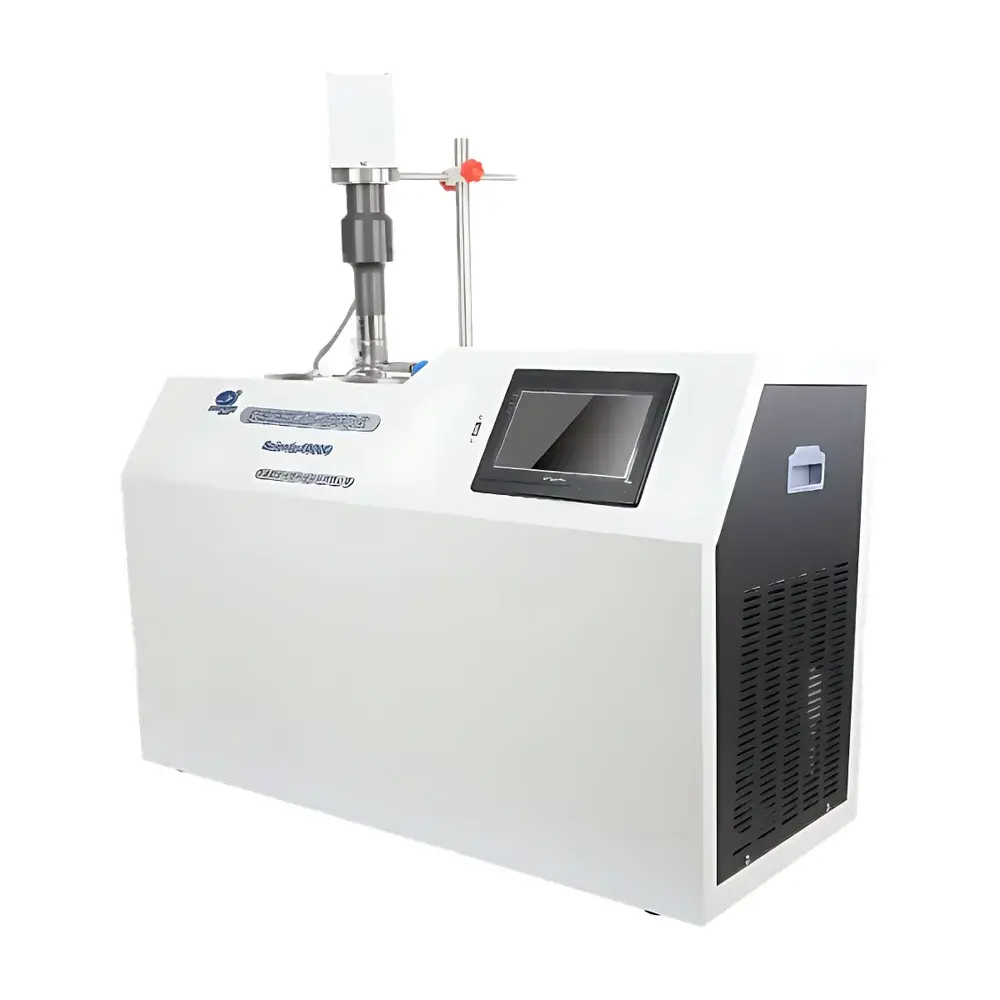
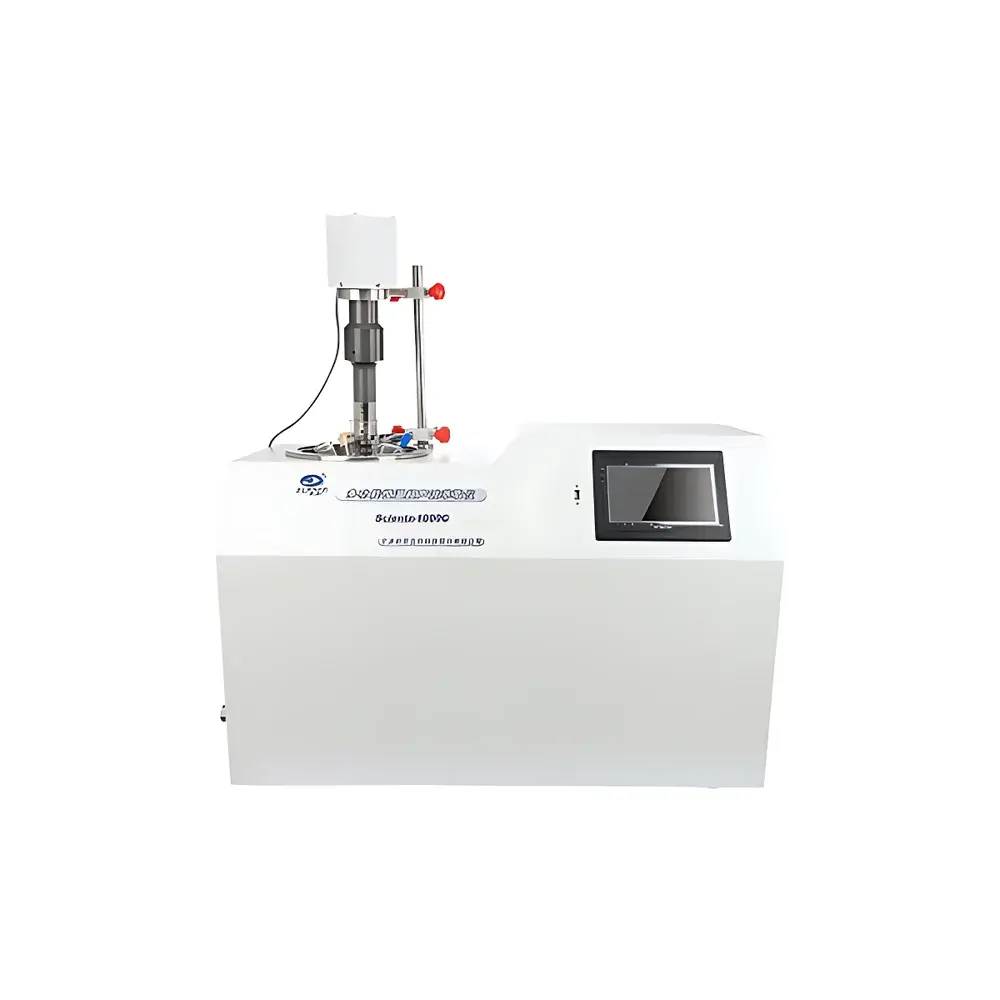
Ningbo Scientz SCIENTZ-500C Intelligent Temperature-Controlled Ultrasonic Extractor
| Brand | Ningbo Scientz |
|---|---|
| Origin | Zhejiang, China |
| Manufacturer Type | Direct Manufacturer |
| Country of Origin | China |
| Model | SCIENTZ-500C |
| Ultrasonic Power | 900 W |
| Ultrasonic Frequency | 22 ± 1 kHz |
| Maximum Heating Power | 1000 W |
| Temperature Range | 0–99 °C |
| Chamber Volume | 500 mL |
Overview
The Ningbo Scientz SCIENTZ-500C Intelligent Temperature-Controlled Ultrasonic Extractor is a laboratory-grade benchtop system engineered for reproducible, controllable solid–liquid and liquid–liquid extraction processes. It operates on the physical principle of acoustic cavitation—where high-intensity ultrasonic waves (22 ± 1 kHz) generate transient microbubbles in the solvent medium; their rapid collapse produces localized extreme conditions (up to ~5000 K and ~1000 atm), enhancing mass transfer, cell membrane disruption, and solute desorption. Unlike conventional thermal or mechanical extraction methods, this instrument integrates real-time temperature regulation (0–99 °C) with precise ultrasonic power delivery (0–900 W), enabling researchers to decouple thermal effects from sonochemical activation—a critical requirement in thermolabile compound isolation (e.g., flavonoids, alkaloids, polyphenols) and nanomaterial synthesis.
Key Features
- Intelligent frequency tracking circuitry maintains optimal resonance across varying load conditions and solvent compositions, ensuring consistent cavitation intensity without manual tuning.
- Dual-mode operation: ultrasonic transduction and heating can be engaged simultaneously, independently, or in sequence—supporting protocols requiring staged thermal activation followed by sonication or vice versa.
- Integrated PID-controlled heating system (max. 1000 W) delivers ±0.5 °C temperature stability over the full 0–99 °C range, validated per ASTM E2251–22 for laboratory thermal instrumentation.
- Corrosion-resistant stainless-steel ultrasonic horn and titanium alloy probe (standard configuration) ensure long-term durability in aqueous and mildly acidic/alkaline media.
- Microprocessor-based controller with LCD interface supports programmable multi-step protocols—including ramp-hold cycles, power modulation, and timed shutdown—with non-volatile memory for up to 10 user-defined methods.
- Comprehensive safety architecture includes overtemperature cutoff, ultrasonic overload protection, dry-run detection, and audible/visual fault alerts compliant with IEC 61010-1:2010 for electrical safety in laboratory equipment.
Sample Compatibility & Compliance
The SCIENTZ-500C accommodates heterogeneous samples in volumes up to 500 mL using standardized conical or flat-bottom reaction vessels (compatible with standard 50–500 mL glassware). It supports extraction from plant matrices (leaves, roots, seeds), soil slurries, textile fibers, polymer composites, and colloidal suspensions—including TiO₂ nanoparticle dispersion studies. The system meets essential regulatory prerequisites for GLP-compliant laboratories: audit-trail-capable parameter logging (via optional RS232/USB export), traceable calibration records, and adherence to ISO/IEC 17025:2017 requirements for method validation. While not certified for GMP manufacturing environments, its design aligns with USP Analytical Instrument Qualification principles for Category B instruments.
Software & Data Management
The extractor operates autonomously via embedded firmware; optional Scientz LabLink software (Windows-compatible) enables remote monitoring, real-time graphing of temperature/power profiles, and CSV-formatted data export for post-acquisition analysis in MATLAB, Python (Pandas), or statistical packages. All logged parameters—including actual ultrasonic output (W), bath temperature (°C), elapsed time (s), and error codes—are time-stamped with millisecond resolution. Data files include digital signatures verifying integrity and origin, satisfying basic FDA 21 CFR Part 11 requirements for electronic records when used with validated IT infrastructure.
Applications
- Accelerated extraction of bioactive constituents from herbal materials (e.g., ginsenosides from Panax ginseng, curcumin from Curcuma longa) under sub-boiling conditions to minimize degradation.
- Preparation of stable aqueous nanosuspensions for pharmaceutical formulation development, including surface-modified TiO₂ and ZnO nanoparticles.
- Soil and sediment analysis: quantitative recovery of halogenated organics (e.g., PCBs, PBDEs) and water-soluble salts (Na⁺, K⁺, NO₃⁻) for agronomic and environmental monitoring.
- Textile testing: extraction of regulated substances (e.g., chlorinated phenols, azo dyes) per Oeko-Tex Standard 100 and ISO 14389 protocols.
- Chemical synthesis support: ultrasound-assisted esterification, transesterification, and Suzuki coupling reactions where mixing efficiency limits yield.
FAQ
What is the recommended maintenance interval for the ultrasonic transducer?
Routine visual inspection and cleaning of the probe surface should be performed after each use. Full transducer performance verification—including impedance matching and power output calibration—is advised every 6 months or after 500 operating hours.
Can the SCIENTZ-500C be used with organic solvents such as chloroform or acetone?
Yes—provided appropriate ventilation (fume hood use) and compatibility verification with vessel material (e.g., borosilicate glass or PTFE-lined containers). Avoid prolonged exposure to strong oxidizers or halogenated solvents above 60 °C.
Is external cooling required during extended sonication?
Not inherently—the built-in cooling jacket port (optional accessory) allows connection to a recirculating chiller for applications demanding sustained sub-ambient temperatures (e.g., 4–10 °C extractions), but the standard air-cooled design suffices for most ≤60-minute protocols at ≤60 °C.
Does the instrument support GLP-compliant electronic signature functionality?
The base unit does not include biometric or multi-level electronic signatures; however, when paired with validated third-party LIMS or ELN systems via exported timestamped logs, it satisfies ALCOA+ data integrity criteria for raw data archiving.
What is the warranty coverage and service response time?
Ningbo Scientz provides a 24-month limited warranty covering parts and labor for defects in materials and workmanship. Technical support response time is ≤2 business hours during CET working days; on-site service dispatch is available within 5 business days in major EU/NA metropolitan areas via authorized partners.



