
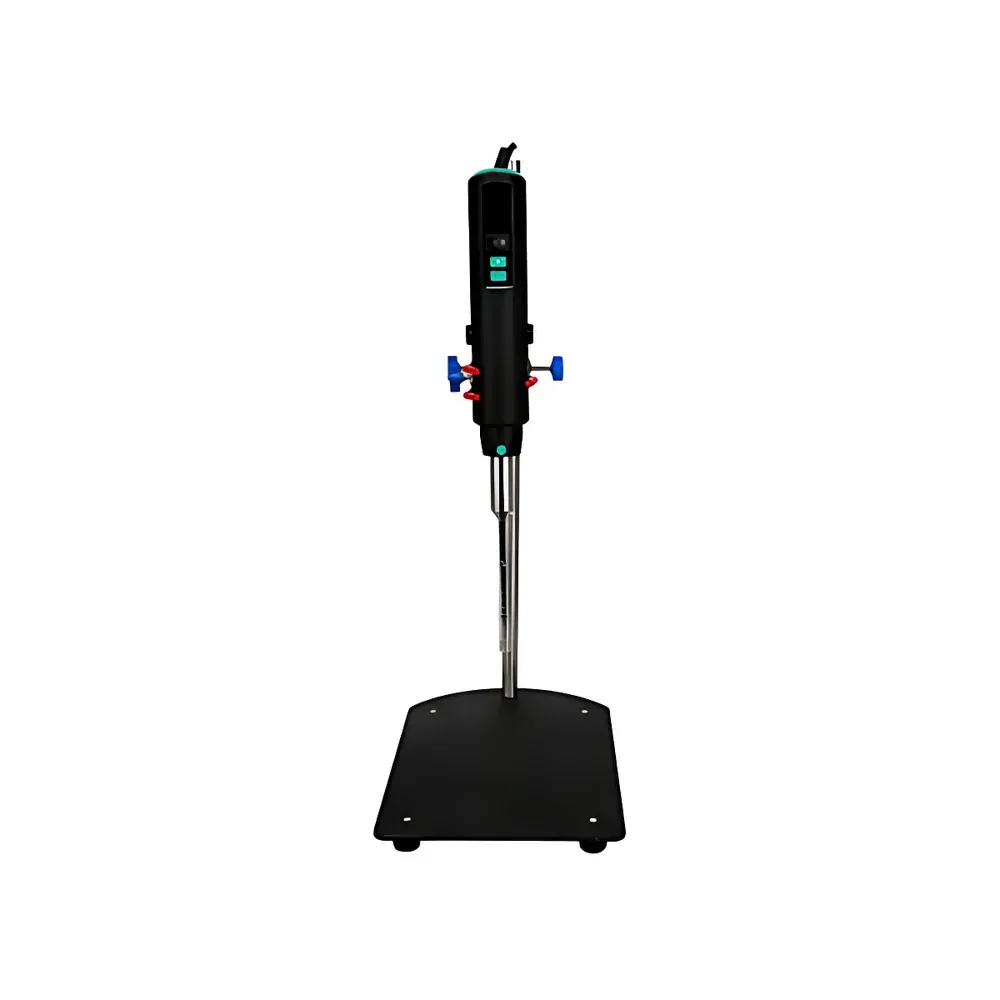
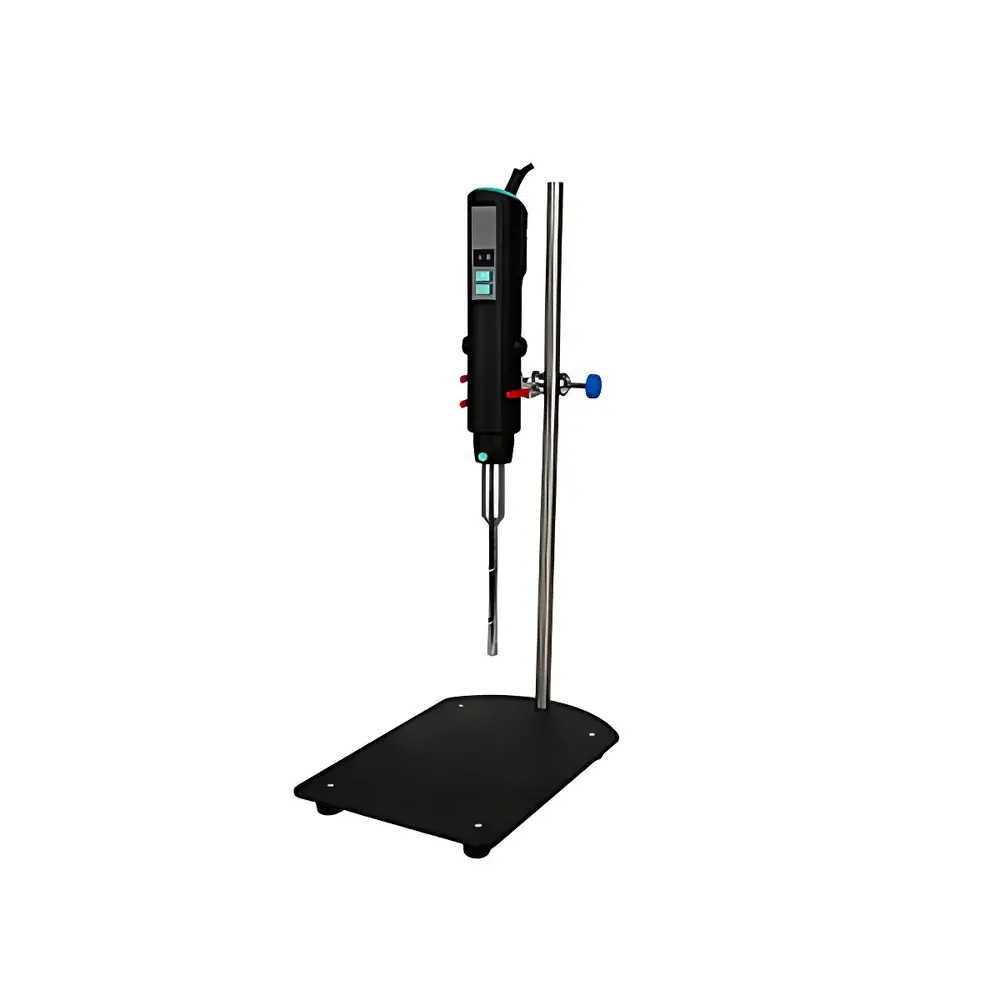
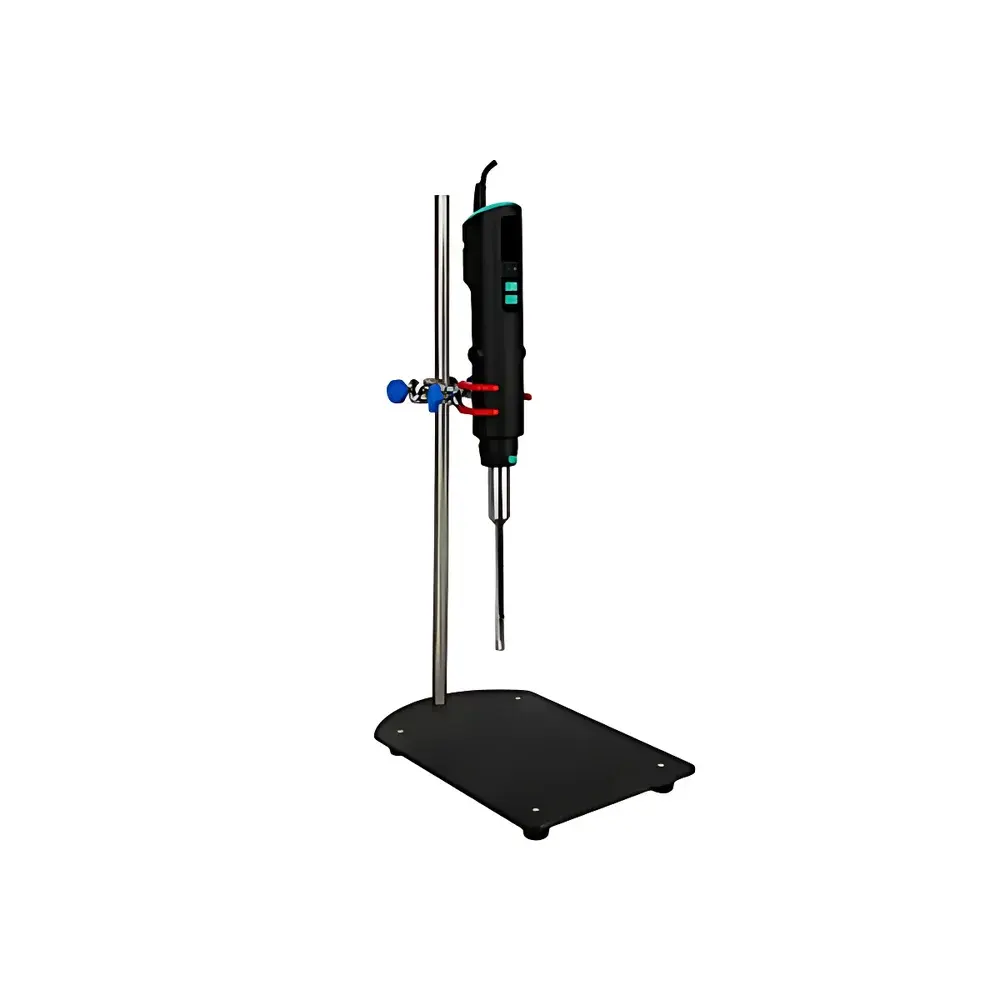
Ningbo Scientz S10 Handheld High-Speed Homogenizer
| Brand | Ningbo Scientz |
|---|---|
| Origin | Zhejiang, China |
| Manufacturer Type | Direct Manufacturer |
| Product Category | Domestic |
| Model | S10 |
| Instrument Type | Handheld Homogenizer |
| Instrument Subtype | Variable-Speed High-Shear Disperser |
| Sample Volume Range | 1.2–120 mL |
| Output Power | 160 W |
Overview
The Ningbo Scientz S10 Handheld High-Speed Homogenizer is an engineered solution for laboratory-scale mechanical homogenization and high-shear dispersion based on rotor-stator fluid dynamics. It operates on the principle of hydrodynamic cavitation and intense shear forces generated by the relative motion between a rapidly rotating rotor and a fixed stator. As the sample is drawn axially into the working head, it undergoes repeated acceleration, radial ejection, and turbulent recirculation—effectively disrupting cellular structures, deagglomerating nanoparticles, and achieving sub-micron emulsification or uniform suspension in viscous or heterogeneous matrices. Designed for precision benchtop use rather than industrial throughput, the S10 delivers reproducible results in applications requiring controlled mechanical energy input without thermal runaway or cross-contamination risks.
Key Features
- Variable-Speed Control: Continuously adjustable speed from 5,000 to 35,000 rpm via analog dial, enabling optimization across sample viscosities and particulate loadings.
- Modular Rotor-Stator Heads: Interchangeable stainless-steel probes (including narrow-tip, wide-bore, and tissue-specific geometries) support scalable processing—from soft mammalian tissues to fibrous plant material or high-viscosity polymer solutions.
- Ergonomic Handheld Architecture: Weighing only 1.0 kg with balanced center-of-gravity design, the unit minimizes operator fatigue during extended operation and enables precise positioning within conical tubes, beakers, or microcentrifuge vials.
- Thermal & Electrical Safety: Dual-layer insulation (reinforced housing + internal thermal cutoff) prevents overheating during continuous duty cycles; IPX2-rated enclosure resists incidental liquid ingress.
- Maintenance Efficiency: Tool-free probe attachment/detachment system allows rapid head replacement and full disassembly for autoclaving or ultrasonic cleaning—critical for GLP-compliant workflows.
Sample Compatibility & Compliance
The S10 accommodates aqueous, organic, and mildly corrosive media across volumes from 1.2 mL (e.g., single-cell lysates in 1.5 mL Eppendorf tubes) up to 120 mL (e.g., bacterial culture suspensions in 250 mL beakers). It is routinely validated for use in ISO 13485-aligned bioprocessing labs and supports method development compliant with USP <729> (light scattering for emulsion droplet sizing) and ASTM D2703 (dispersion stability testing). While not certified for IEC 61000-4 EMC immunity, its low electromagnetic emission profile ensures stable operation near sensitive analytical instrumentation such as mass spectrometers or electrophoresis rigs.
Software & Data Management
As a manually operated analog instrument, the S10 does not incorporate digital control interfaces or onboard data logging. However, its consistent speed-torque response enables integration into regulated environments through external validation protocols: RPM can be verified using calibrated optical tachometers traceable to NIST standards, and process parameters (speed, duration, probe type, sample volume) are documented per SOP in paper-based or electronic lab notebooks (ELN) meeting FDA 21 CFR Part 11 requirements for audit trails and user authentication. Calibration certificates for speed verification may be issued upon request for IQ/OQ documentation packages.
Applications
- Life Sciences: Rapid lysis of animal tissues (liver, muscle), plant leaves, and microbial pellets; preparation of subcellular fractions prior to Western blotting or enzyme assays.
- Pharmaceutical Development: Formulation of nanoemulsions for oral or topical delivery; dispersion of poorly water-soluble APIs in surfactant systems; homogenization of vaccine adjuvant suspensions.
- Materials Research: Exfoliation of 2D materials (e.g., graphene oxide dispersions); deagglomeration of metal oxide nanoparticles (TiO₂, ZnO) in coating formulations; stabilization of conductive polymer colloids.
- Food & Agriculture Analytics: Extraction of metabolites from fruit pulp or grain matrices; homogenization of pesticide residue standards in acetonitrile/water blends per QuEChERS methodology.
FAQ
Is the S10 suitable for sterilization?
Yes—stainless-steel probe assemblies and PTFE-sealed housings withstand standard autoclaving cycles (121°C, 20 min, saturated steam) and compatible with ethylene oxide or hydrogen peroxide vapor sterilization protocols.
Can the S10 be used with corrosive solvents?
Probes are constructed from AISI 316 stainless steel; avoid prolonged exposure to halogenated acids (e.g., HCl, HF) or strong oxidizers (e.g., concentrated HNO₃) to prevent pitting corrosion.
What is the recommended maintenance interval?
Inspect rotor-stator alignment and bearing play every 200 operating hours; replace carbon brushes after approximately 500 hours of cumulative runtime under rated load.
Does the S10 meet CE or UL safety certifications?
The device complies with GB 4793.1–2019 (Chinese equivalent of IEC 61010-1) for laboratory electrical equipment safety but is not CE-marked or UL-listed for export to EU/US markets without additional regional conformity assessment.
How is speed accuracy verified during qualification?
Use a non-contact laser tachometer calibrated against a primary frequency standard; measure at three setpoints (10k, 20k, 30k rpm) with ≥5 readings per point, accepting ±2% deviation as acceptable per internal validation SOPs.



