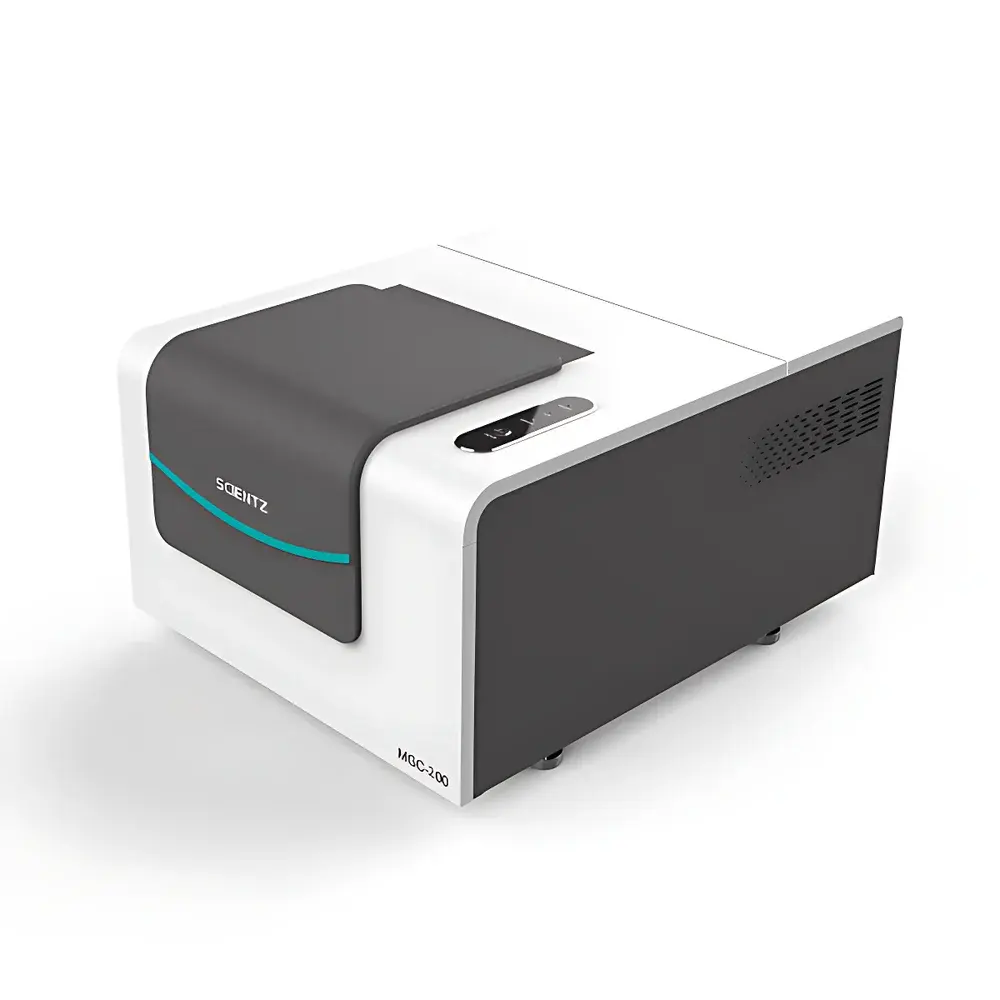
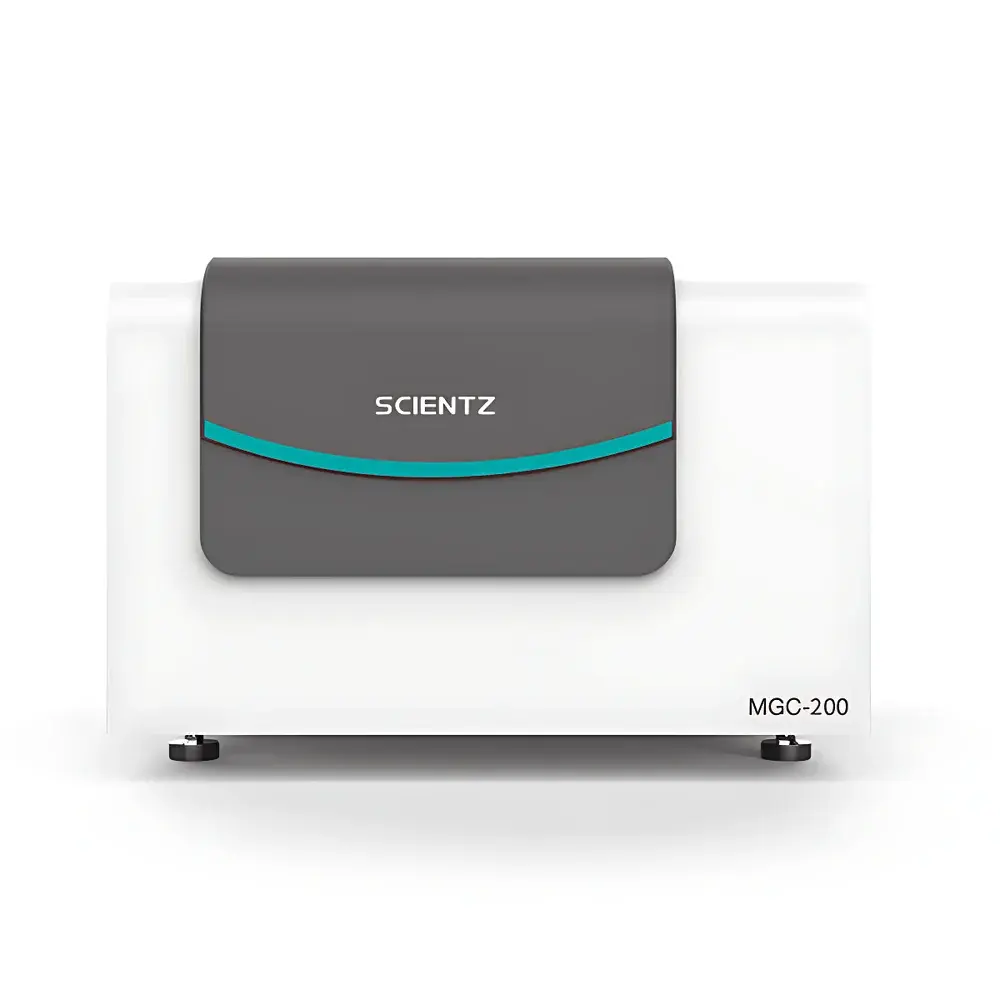
Scientz MGC-200 Automated Microbial Growth Curve Analyzer
| Brand | Scientz |
|---|---|
| Origin | Zhejiang, China |
| Manufacturer Type | Direct Manufacturer |
| Product Origin | Domestic (China) |
| Model | MGC-200 |
| Pricing | Upon Request |
Overview
The Scientz MGC-200 Automated Microbial Growth Curve Analyzer is an integrated, real-time optical density (OD)-based monitoring system engineered for high-precision, non-invasive kinetic profiling of microbial growth under dynamically controlled environmental conditions. It operates on the principle of multi-wavelength absorbance measurement (300–850 nm), enabling label-free, continuous quantification of culture turbidity as a proxy for cell density. Unlike conventional manual sampling methods—prone to contamination, sample depletion, and operator variability—the MGC-200 maintains fully sealed microplate-based cultivation while performing automated, time-resolved OD readings at user-defined intervals (as frequent as every 20 minutes). This architecture supports rigorous adherence to Good Laboratory Practice (GLP) by eliminating open handling, ensuring data integrity, and facilitating full audit trails in regulated environments. Designed for life science research laboratories, bioprocess development groups, and academic microbiology facilities, the MGC-200 accommodates diverse physiological classes—including obligate aerobes (e.g., Bacillus subtilis), facultative anaerobes (e.g., Lactobacillus rhamnosus, Schizosaccharomyces pombe), and strict anaerobes (e.g., Bifidobacterium spp.)—through programmable gas control, temperature modulation, agitation regimes, and optional spectral illumination.
Key Features
- Programmable dual-gas control (O2/CO2) with precision regulation across broad ranges—O2: 0.5–20% v/v; CO2: 1–20% v/v—enabling reproducible microaerobic and anaerobic cultivation via catalytic O2 scavenging (Pd-catalyst integration).
- Adjustable orbital shaking (200–1250 rpm) with static incubation mode, supporting both sedimentation-prone cultures (e.g., fission yeast) and shear-sensitive strains (e.g., lactic acid bacteria).
- Full-spectrum scanning (300–850 nm) for empirical wavelength optimization, followed by simultaneous multi-wavelength (up to 6 channels) kinetic absorbance acquisition—enhancing assay specificity and cross-sample comparability.
- High-throughput compatibility with 12-, 24-, 48-, and 96-well microplates; dual plate positions enable parallel processing of up to 192 independent cultures per run.
- Stable xenon flash lamp illumination—zero warm-up delay, high photon flux consistency, and >10,000-hour operational lifetime—ensuring long-term measurement repeatability and reduced maintenance downtime.
- Optional RGBW LED illumination module for programmable photoperiods and spectral tuning (400–700 nm), supporting photosynthetic organism studies (e.g., cyanobacteria, microalgae) under ecologically relevant light regimes.
- Wide-range temperature control (15–60 °C, ±0.2 °C accuracy at 37 °C) with ramp-and-hold programming and anti-condensation heated lid—critical for metabolic shift experiments and long-duration anaerobic assays.
Sample Compatibility & Compliance
The MGC-200 is validated for use with bacterial, fungal, yeast, phage, protozoan, mammalian cell, and algal cultures across standard suspension-based microplate formats. Its closed-loop design meets ISO 13485-aligned engineering requirements for contamination prevention and aligns with FDA 21 CFR Part 11 expectations for electronic record integrity when paired with Scientz’s compliant data management software. All hardware components comply with IEC 61010-1 safety standards for laboratory equipment. Gas control performance adheres to ASTM D3960-21 guidelines for trace oxygen measurement in inert atmospheres. The system supports GLP/GMP workflows through timestamped, user-locked raw data export (CSV, Excel), configurable access permissions, and immutable measurement logs.
Software & Data Management
The embedded Windows-based control interface provides intuitive protocol configuration, real-time OD visualization, and automatic curve fitting (logistic, Gompertz, or exponential models). Raw absorbance data are stored with metadata including temperature setpoint, gas composition, agitation speed, and illumination status. Export options include normalized growth rate (μmax), lag phase duration, doubling time, and area under the curve (AUC)—all traceable to NIST-traceable calibration references. Software supports batch analysis across multiple plates, statistical comparison (ANOVA, t-test), and integration with LIMS via secure API endpoints. Audit trail functionality records all user actions, parameter changes, and instrument events—fully compliant with ALCOA+ principles (Attributable, Legible, Contemporaneous, Original, Accurate, Complete, Consistent, Enduring, Available).
Applications
- Antimicrobial susceptibility testing (AST) and MIC determination under physiologically relevant O2/CO2 conditions.
- Strain phenotyping and comparative fitness assessment across nutrient gradients or stress conditions.
- Bioprocess optimization for probiotic fermentation, bacteriophage propagation, or recombinant protein expression.
- Metabolic adaptation studies—e.g., diauxic shifts, anaerobic respiration onset, or photoautotrophic growth kinetics.
- Quality control of starter cultures in food, pharmaceutical, and biotech manufacturing.
- Education and training in microbial physiology, where reproducible, hands-off demonstration of growth dynamics is essential.
FAQ
Does the MGC-200 support true anaerobic conditions below 0.1% O2?
Yes—when operated with the integrated palladium catalyst and certified inert gas supply (N2/H2 mix), the system achieves and sustains O2 concentrations <0.05% for ≥72 h, verified by onboard electrochemical O2 sensor calibration.
Can I export raw data for third-party statistical analysis?
Absolutely—all time-series absorbance values, environmental parameters, and derived metrics are exportable in CSV and XLSX formats without proprietary encoding.
Is the xenon lamp user-replaceable, and what is its expected service interval?
The lamp module is field-serviceable with no optical recalibration required; typical lifespan exceeds 10,000 hours under standard 30-min measurement intervals.
How does the MGC-200 prevent condensation during extended low-temperature incubations?
A thermally regulated heated lid maintains surface temperature within ±0.5 °C of the chamber setpoint, suppressing dew formation on plate lids—even during 72-hr 37 °C anaerobic runs.
Are validation documents (IQ/OQ/PQ) available for regulated environments?
Yes—Scientz provides customizable qualification protocols, factory-verified test reports, and on-site installation/commissioning support upon request.