
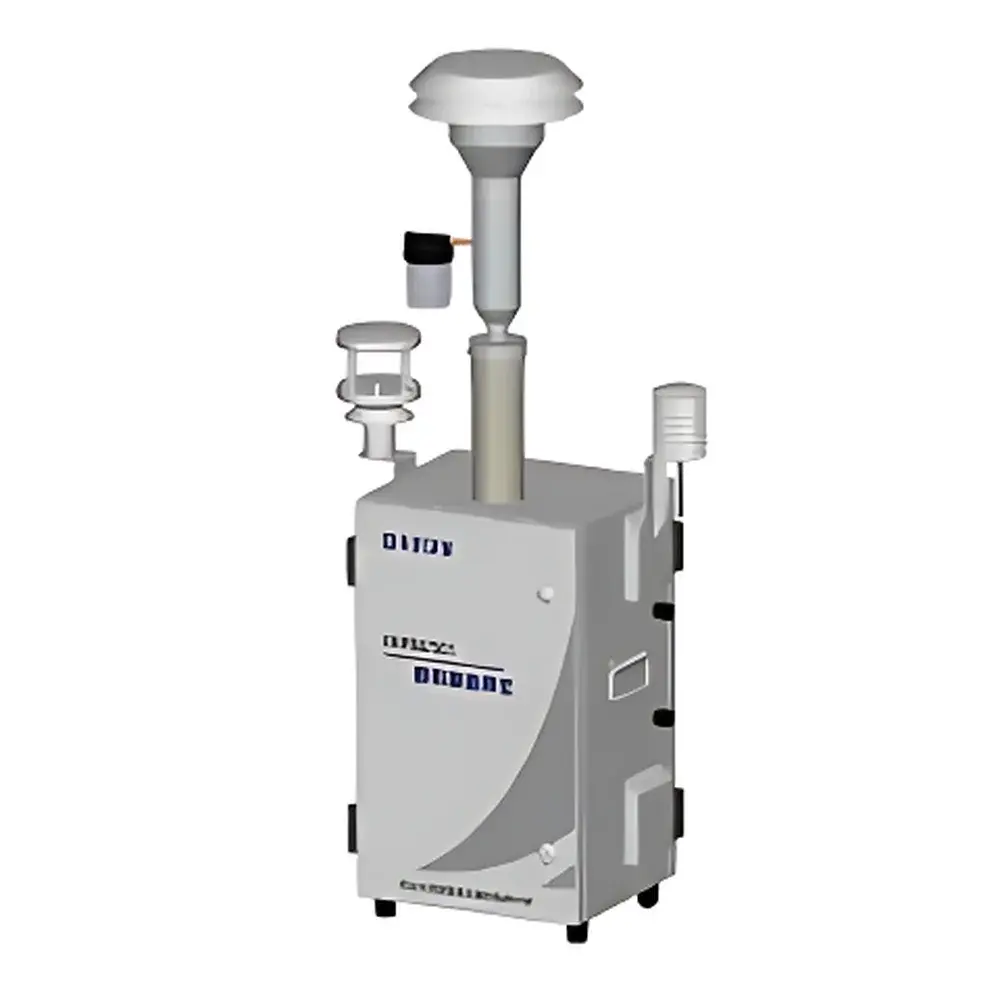
SAIL HERO XHPM2001 Portable Atmospheric Particulate Matter Monitor
| Brand | SAIL HERO |
|---|---|
| Origin | Hebei, China |
| Manufacturer Type | Manufacturer |
| Country of Origin | China |
| Model | XHPM2001 |
| Measurement Principle | Beta-ray Absorption (β-ray) |
| Measured Parameters | TSP, PM10, PM2.5, PM1 |
| Sampling Flow Rate | 16.7 L/min |
| Display | 7-inch High-Brightness TFT Touchscreen with Windows-based GUI |
| Calibration Method | Standardized Calibration Foil |
| Compliance | Certified by China Environmental Monitoring Station (CEMS) for PM10 Portability |
Overview
The SAIL HERO XHPM2001 Portable Atmospheric Particulate Matter Monitor is an engineered solution for field-deployable, real-time ambient particulate mass concentration measurement. It operates on the beta-ray absorption principle — a gravimetrically traceable physical method in which airborne particles are collected on a filter tape, and the attenuation of beta radiation (typically from a 14C source) through the deposited mass is quantified to determine particulate mass loading. This technique provides high reproducibility, minimal interference from volatile components (especially when coupled with integrated humidity control), and compliance with internationally recognized reference methodologies including ISO 10473:2001 and EN 12341:2014 for PM monitoring. Designed for unattended outdoor operation under variable environmental conditions, the XHPM2001 supports continuous or scheduled periodic sampling across four standardized size fractions: Total Suspended Particulates (TSP), PM10, PM2.5, and PM1. Its compact footprint and lightweight construction enable rapid deployment in mobile monitoring networks, construction site perimeter surveillance, roadside air quality assessment, and emergency response scenarios.
Key Features
- Compact, ruggedized portable architecture optimized for field logistics — net weight under 15 kg and integrated carrying handle for single-operator transport.
- Dual operational modes: programmable timed sampling (e.g., hourly or event-triggered) and continuous real-time acquisition, with configurable sampling duration (in minutes) and beta-counting integration time (in seconds).
- Intelligent humidity management system utilizing PID-controlled heating elements to maintain sample gas dew point below instrument-specified thresholds (typically ≤15 °C), minimizing hygroscopic bias in mass readings.
- Pulse-width modulation (PWM)-driven mass flow controller ensuring stable sampling at 16.7 L/min ±2% over ambient temperature ranges from −20 °C to +50 °C and pressure variations up to 80–106 kPa.
- On-site calibration capability using NIST-traceable calibration foils; full calibration verification completed in <90 seconds without disassembly or external tools.
- 7-inch sunlight-readable TFT touchscreen with intuitive Windows-style graphical user interface, supporting multilingual menu navigation (English firmware available upon request) and local data visualization including time-series plots and statistical summaries (mean, max, min, SD).
Sample Compatibility & Compliance
The XHPM2001 is validated for ambient air matrices containing typical urban, industrial, and fugitive dust aerosols. It meets the performance requirements outlined in the China Environmental Monitoring Station’s “Applicability Testing Specifications for Portable Ambient Air PM10 Monitors” (HJ 93–2013, HJ 653–2013). It holds CAEPI Environmental Product Certification (Certificate No. CEP-XXXXX) and the Chinese National Metrology Type Approval (CPA) under JJF 1658–2017. While not CE-marked or EPA EQPM-listed, its beta-ray methodology aligns conceptually with U.S. EPA Reference Method PS-4 and EU Reference Method EN 12341, facilitating technical equivalence assessments for international procurement or collaborative studies. The instrument’s design supports GLP-aligned data integrity practices, including operator login tracking, audit trail logging of configuration changes, and tamper-evident calibration records stored in non-volatile memory.
Software & Data Management
Data output conforms to MODBUS RTU and TCP/IP protocols, enabling seamless integration into SCADA, EMS, or cloud-based environmental information systems (e.g., MQTT-compatible platforms). Internal storage retains ≥30 days of 1-minute averaged data (including raw beta counts, flow rate, temperature, RH, and diagnostic flags). Firmware supports remote OTA updates and secure TLS 1.2 encrypted transmission when paired with optional 4G/LTE or NB-IoT communication modules. All exported datasets include ISO 8601 timestamps, instrument serial number, and measurement uncertainty metadata per GUM (JCGM 100:2008) conventions. Optional software packages provide automated QA/QC reporting, drift correction algorithms, and alignment with China’s “Environmental Air Quality Standards” (GB 3095–2012) regulatory thresholds.
Applications
- Mobile source emission impact assessment along highways and rail corridors.
- Construction and demolition site boundary monitoring per local dust control ordinances.
- Supplemental network expansion for national ambient air quality monitoring systems (e.g., CNEMC stations).
- Short-term epidemiological exposure studies requiring spatially dense, temporally resolved PM data.
- Pre-compliance screening for stationary source permits and environmental impact assessments (EIAs).
- Calibration transfer and field validation of low-cost sensor networks.
FAQ
What particle size fractions does the XHPM2001 measure?
It measures TSP, PM10, PM2.5, and PM1 simultaneously using certified size-selective inlets compliant with ISO 25239 and GB/T 15432–1995.
Is the instrument suitable for unattended long-term deployment?
Yes — it features wide-temperature-range electronics, internal battery backup (optional), and watchdog circuitry to recover from power interruptions without data loss.
Does it support remote diagnostics and firmware updates?
Yes — via embedded web server interface or dedicated maintenance software using Ethernet or cellular connectivity.
Can raw beta-count data be exported for independent analysis?
Yes — binary and CSV export options include unprocessed detector counts, background subtraction values, and filter tape position indices.
What maintenance intervals are recommended?
Filter tape replacement every 30 days under typical urban conditions; annual source activity verification and flow sensor recalibration advised per manufacturer service protocol.







