
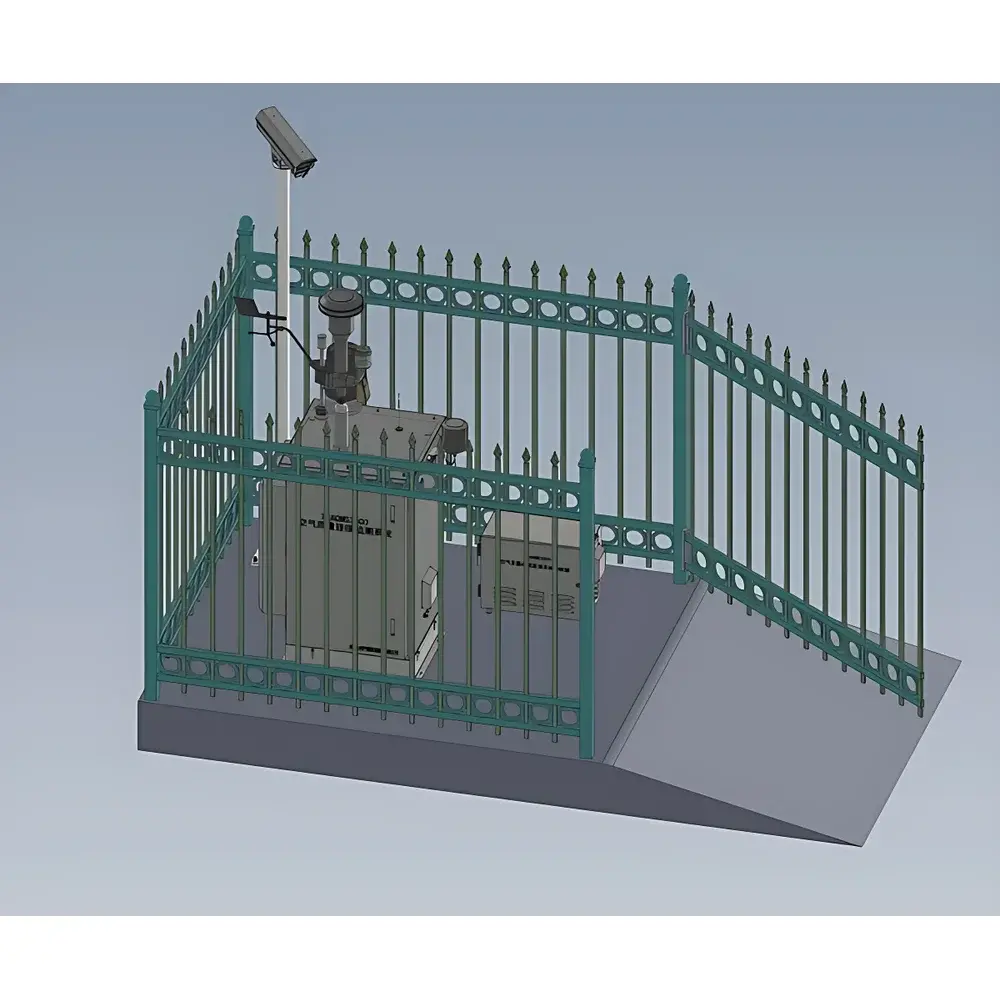
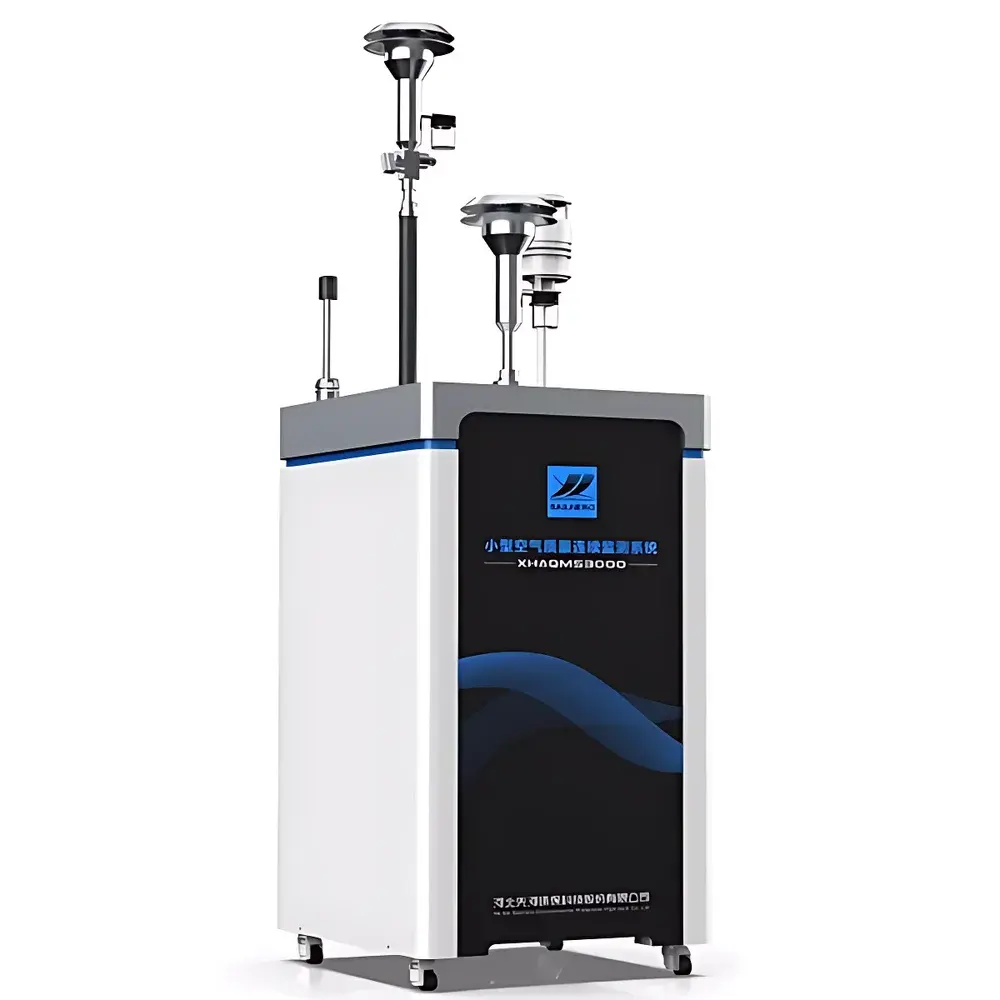
SAIL HERO XHAQMS3000 Compact Continuous Ambient Air Quality Monitoring System
| Brand | SAIL HERO |
|---|---|
| Origin | Hebei, China |
| Manufacturer Type | Original Equipment Manufacturer (OEM) |
| Country of Origin | China |
| Model | XHAQMS3000 |
| Pollutants Measured | SO₂, NOₓ (NO, NO₂), CO, O₃, TSP, PM₁₀, PM₂.₅, PM₁ |
| Operating Temperature Range | −40 °C to +45 °C |
| Operating Humidity Range | 0–100 % RH |
| Enclosure Dimensions | ≤1800 × 850 × 950 mm |
| Enclosure IP Rating | IP65 |
| Data Acquisition & Transmission | Integrated DAQ with wired (RS485/Ethernet) and wireless (4G/LTE) support |
Overview
The SAIL HERO XHAQMS3000 is a compact, self-contained continuous ambient air quality monitoring system engineered for unattended, long-term deployment in diverse outdoor environments—from urban traffic corridors and industrial perimeters to rural background stations and regional airshed networks. Built upon standardized reference measurement principles compliant with ISO 12103-1 (for gravimetric PM calibration), EN 14625 (O₃), EN 14626 (CO), EN 14211 (NO₂/SO₂), and US EPA equivalency criteria for Federal Reference Methods (FRMs) and Federal Equivalent Methods (FEMs), the XHAQMS3000 integrates certified analyzers for gaseous pollutants (SO₂, NO, NO₂, NOₓ, CO, O₃) and particulate matter (TSP, PM₁₀, PM₂.₅, PM₁) within a single climate-controlled enclosure. Its modular architecture supports traceable multi-point internal calibration using permeation tubes, dynamic gas dilution, and NIST-traceable zero/span standards—enabling routine verification without field technician intervention.
Key Features
- Integrated climate-controlled outdoor cabinet (IP65-rated) with active thermal management, maintaining analyzer operating conditions across −40 °C to +45 °C ambient and 0–100 % RH.
- Compact footprint (≤1800 × 850 × 950 mm) optimized for rooftop, pole-mount, or constrained-site installation without civil works.
- Onboard data acquisition unit with dual-mode telemetry: Ethernet/RS485 for LAN integration and embedded 4G/LTE module for remote SIM-based transmission—supporting MQTT, FTP, and HTTP(S) protocols.
- Automated internal calibration system featuring programmable zero/span cycles, pressure- and temperature-compensated mass flow controllers, and electrochemical or UV photometric reference checks.
- Redundant power architecture with optional solar-ready DC input (12–48 V) and battery backup (72 h nominal runtime at full load).
- Firmware-upgradable embedded OS with secure boot, TLS 1.2 encryption, and configurable alarm thresholds for real-time exceedance notification.
Sample Compatibility & Compliance
The XHAQMS3000 is validated for ambient air matrices meeting ISO 19231:2022 (air quality—performance criteria for automated measuring systems) and aligned with EU Directive 2008/50/EC requirements for continuous monitoring networks. Gaseous analyzers employ proven detection technologies: pulsed UV fluorescence (SO₂), chemiluminescence (NO/NO₂), non-dispersive infrared (CO), and UV photometry (O₃). Particulate measurement utilizes β-ray absorption (PM₁₀/PM₂.₅) and tapered element oscillating microbalance (TEOM) or optical scattering (PM₁/TSP) modules—each independently certified to EN 12341 and EN 16450. All sensors undergo factory calibration against NIST-traceable standards, with documented uncertainty budgets per ISO/IEC 17025:2017 requirements. The system supports audit-ready metadata logging—including flow rate, pressure, temperature, humidity, and calibration event timestamps—for GLP/GMP-aligned environmental reporting.
Software & Data Management
The system ships with SAIL HERO AirView™ v3.2—a web-based platform accessible via secure HTTPS. It provides real-time dashboard visualization, historical trend analysis (hourly/daily/monthly aggregates), QA/QC flagging (e.g., “calibration in progress”, “flow out of spec”), and automated report generation compliant with China’s HJ 653–2013 and EU Air Quality Directive Annex XI templates. Raw and processed data are stored locally (≥30 days) and synchronized to cloud repositories with role-based access control (RBAC), audit trails, and electronic signature capability meeting FDA 21 CFR Part 11 and EU Annex 11 expectations for regulated environments. API endpoints enable integration with national air quality information systems (e.g., CNEMC platform) or third-party GIS and modeling tools.
Applications
- Urban ambient monitoring networks requiring high spatial density and low infrastructure dependency.
- Industrial fence-line monitoring for compliance with local emission limits and community air toxics reporting.
- Mobile monitoring deployments on trailers or vehicles where rapid setup and environmental resilience are critical.
- Research-grade field studies investigating diurnal pollutant dynamics, secondary aerosol formation, or source apportionment using co-located PM speciation modules.
- Supplemental monitoring during construction, demolition, or temporary events under regulatory mitigation plans.
FAQ
Does the XHAQMS3000 meet international regulatory equivalence requirements for official air quality reporting?
Yes—the system’s individual analyzers hold CE marking per EN 14625/14626/14211 and are designated as FEMs by the U.S. EPA for CO, O₃, NO₂, and SO₂. PM modules comply with EN 12341 and ISO 20985:2017.
Can the system operate autonomously for extended periods without maintenance?
It supports unattended operation for up to 90 days between consumables (e.g., ozone scrubber cartridges, filter tapes) and 180 days between full calibration verifications—subject to site-specific ambient conditions and data quality objectives.
Is remote firmware update and diagnostic access supported?
Yes—via encrypted SSH or HTTPS session; all updates require cryptographic signature validation and rollback capability.
What cybersecurity protocols are implemented to protect data integrity?
The system enforces TLS 1.2+ for data transmission, implements secure boot with hardware-rooted trust anchors, disables unused ports/services by default, and logs all authentication attempts with tamper-evident storage.
How is traceability maintained for calibration standards used onsite?
Each internal calibration event records the unique ID, expiration date, and NIST traceability certificate number of the reference standard employed—automatically appended to the QA/QC metadata stream.







