
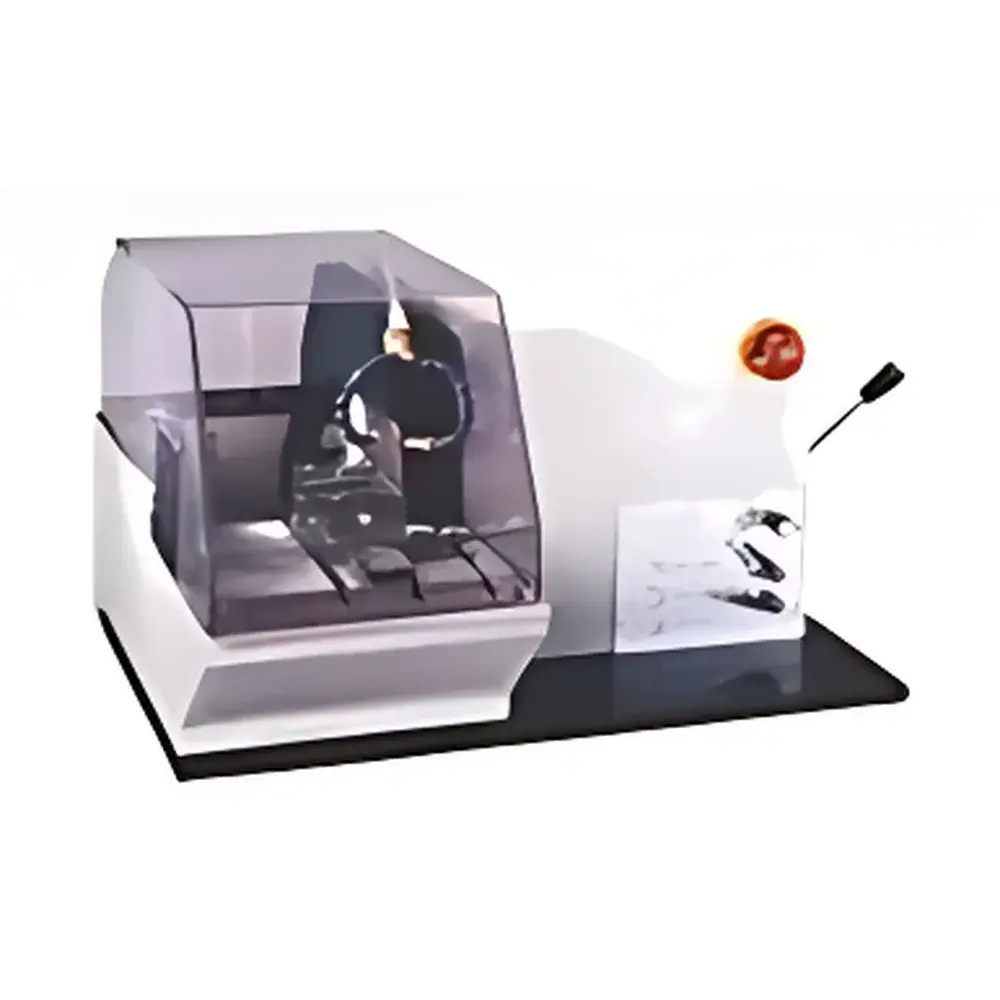
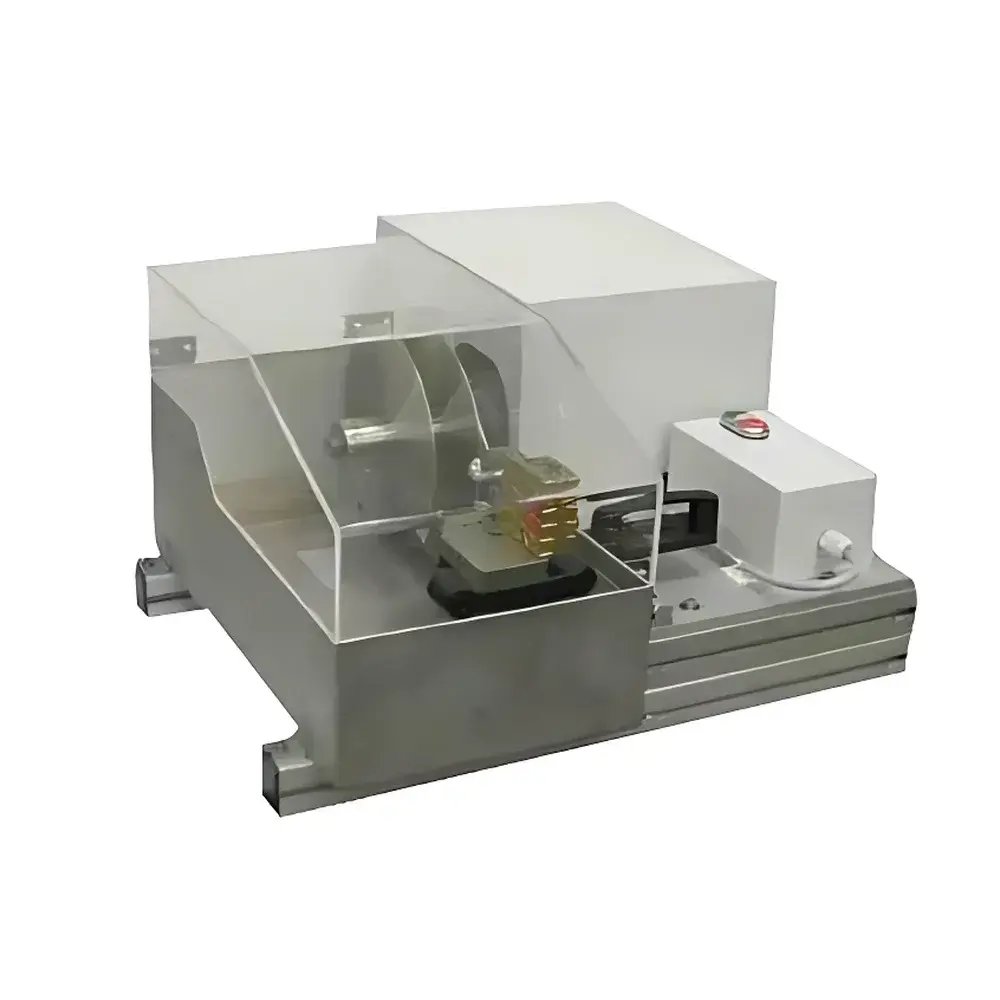
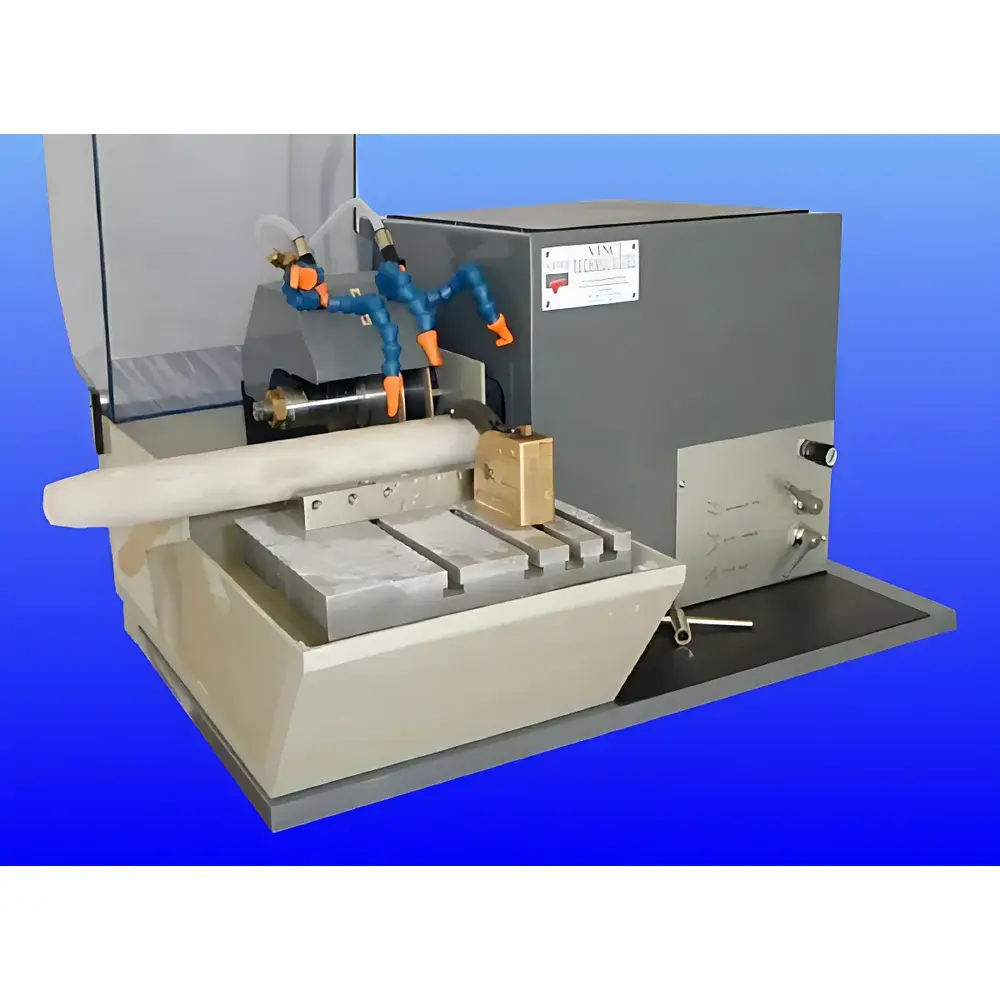
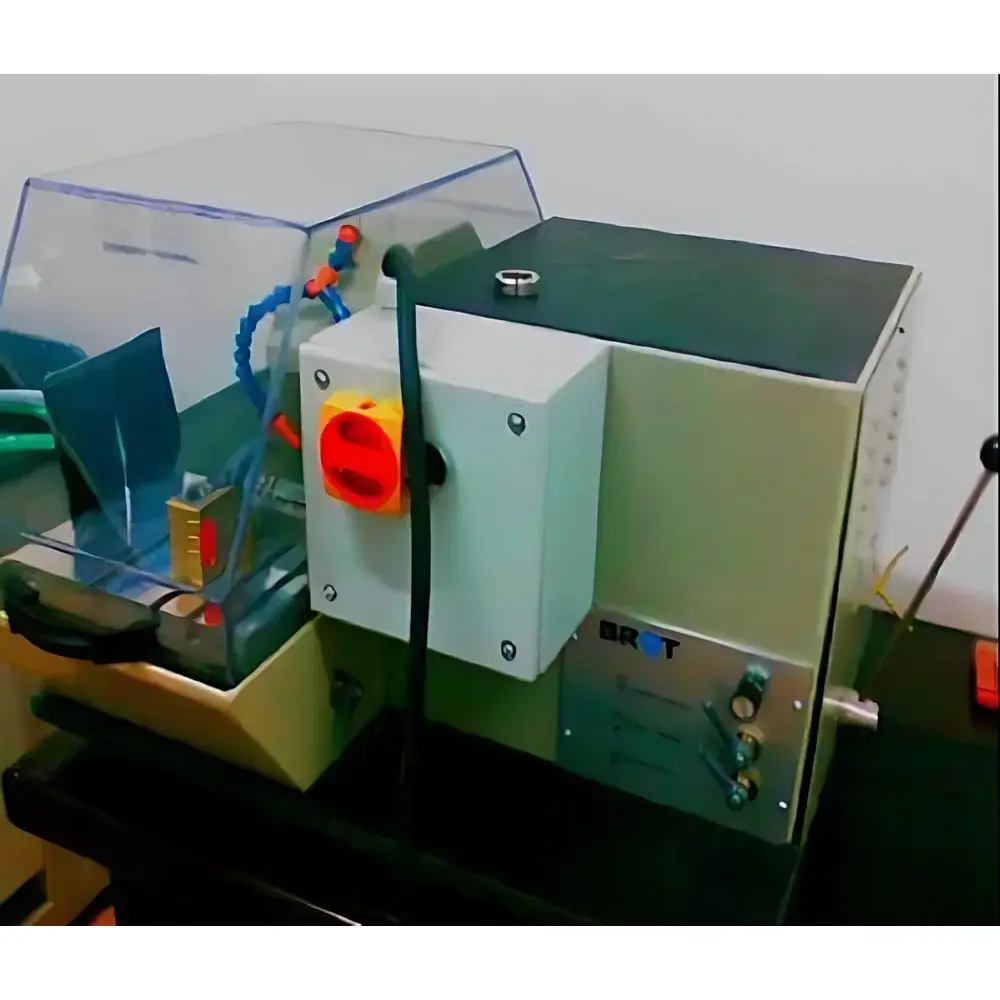
BROT-LAB D02022D Precision Core Cutting Machine for Cylindrical Rock and Geological Specimens
| Brand | French BROT-LAB |
|---|---|
| Origin | France |
| Manufacturer Type | Authorized Distributor |
| Import Status | Imported |
| Model | D02022D |
| Instrument Type | Precision Core Cutting Machine |
| Blade Diameter | 200 mm |
| Motor | 3-phase, 0.5 kW, 3000 rpm |
| Grinding Disc | 150 mm, Grit D30 |
| Compatible Core Lengths | 25.4 mm, 50 mm, 60 mm, 80 mm (1", 2", 2.36", 3.15") |
| Cutting System | Dual-Blade Parallel Configuration |
Overview
The BROT-LAB D02022D Precision Core Cutting Machine is an engineered solution for the reproducible, orthogonal sectioning of cylindrical geological core samples—primarily rock, concrete, ceramic, and composite cores obtained via coring drills or sampling augers. Designed around a dual-blade parallel cutting principle, it enables single-pass segmentation of intact core specimens into precisely dimensioned cylindrical segments with minimal kerf loss and high geometric fidelity. Unlike conventional saws relying on manual feed or oscillating motion, this machine employs a rigid, horizontally aligned dual-disk configuration where both abrasive blades rotate synchronously at 3000 rpm, ensuring simultaneous top-and-bottom contact across the full cross-section. This geometry eliminates taper, bow, or edge chipping—critical for downstream thin-section preparation, petrographic analysis, or mechanical testing per ASTM D4543 and ISO 14688-1. The system is not intended for general-purpose material cutting but specifically optimized for brittle, heterogeneous, and often abrasive geological matrices requiring micron-level planarity and axial perpendicularity.
Key Features
- Rigid cast-iron base and linear guide rails ensure dimensional stability during high-torque cutting cycles, minimizing vibration-induced surface deviation.
- Dual 200 mm diamond-impregnated or silicon-carbide abrasive blades mounted on precision-machined spindles deliver consistent kerf width (< 0.8 mm typical) and parallelism within ±0.05° across 80 mm core lengths.
- Adjustable specimen holder with calibrated micrometer stop allows repeatable positioning for segment thickness control from 1 mm to 30 mm in 0.1 mm increments—essential for standardized thin-sectioning workflows.
- Integrated coolant delivery system (compatible with water or low-viscosity synthetic coolants) suppresses thermal cracking and extends blade life while meeting OSHA 1910.212 dust suppression requirements.
- CE-compliant safety enclosure with interlocked access door, emergency stop circuit, and automatic blade brake (stopping time < 2 s) satisfies EN 62061 functional safety standards for laboratory machinery.
Sample Compatibility & Compliance
The D02022D accommodates standard NQ, HQ, and PQ-sized core diameters (up to 85 mm OD) with optional custom collet inserts. It supports core lengths of 25.4 mm (1″), 50 mm (2″), 60 mm (2.36″), and 80 mm (3.15″)—aligned with common petrographic slide and plug-test specimen dimensions per ASTM D3967 and ISO 13503-2. All cutting surfaces are validated for flatness ≤ 3 µm over 50 mm span (measured via optical interferometry). The system complies with EU Machinery Directive 2006/42/EC and is supplied with Declaration of Conformity, EC Type Examination Certificate, and full traceable calibration documentation. For regulated environments, optional audit-ready operation logs (timestamped cut events, blade usage hours, coolant flow verification) support GLP/GMP compliance and FDA 21 CFR Part 11 data integrity requirements when paired with certified software modules.
Software & Data Management
While the D02022D operates as a standalone electromechanical instrument, its digital interface (RS-485 + optional USB-to-serial adapter) enables integration with laboratory information management systems (LIMS) or custom SCADA platforms. Firmware v2.1+ supports programmable cut sequences—including multi-step thickness profiles, dwell time per pass, and automatic blade wear compensation based on cumulative runtime. All operational parameters (motor current draw, coolant pressure, cycle count) are logged internally with UTC timestamps and exportable via CSV. Optional BROT-LAB LabLink Suite provides GUI-based protocol templating, electronic signature capture for SOP adherence, and automated report generation compliant with ISO/IEC 17025 clause 7.8.2.
Applications
- Preparation of cylindrical rock core segments for uniaxial compressive strength (UCS) testing per ASTM D7012.
- Production of planar end-faces prior to polishing for SEM-EDS or micro-CT scanning alignment.
- Sectioning of cementitious or asphaltic cores for binder extraction and volumetric analysis (ASTM D5444, AASHTO T 324).
- Generation of standardized plugs for permeability assays (ISO 11277, ASTM D5084).
- High-reproducibility slicing of mineralogical reference materials used in XRD quantitative phase analysis (QPXRD).
FAQ
What core diameters does the D02022D support?
Standard configuration accepts cores from 25 mm to 85 mm OD; custom collet sets extend compatibility to 100 mm upon request.
Is blade alignment recalibration required between batches?
No—dual-spindle geometry is factory-laser-aligned and locked with dowel pins; routine verification uses included optical alignment gauge (certified traceable to NIST SRM 2192).
Can the machine be integrated into an automated sample prep line?
Yes—modbus RTU protocol support enables PLC-level coordination with robotic core handlers and downstream grinding/polishing stations.
What maintenance intervals are recommended for the motor and spindle bearings?
Motor: 5000-hour service interval (grease replenishment); Spindle bearings: 10,000-hour replacement cycle documented in maintenance logbook per ISO 13374 condition monitoring guidelines.



