
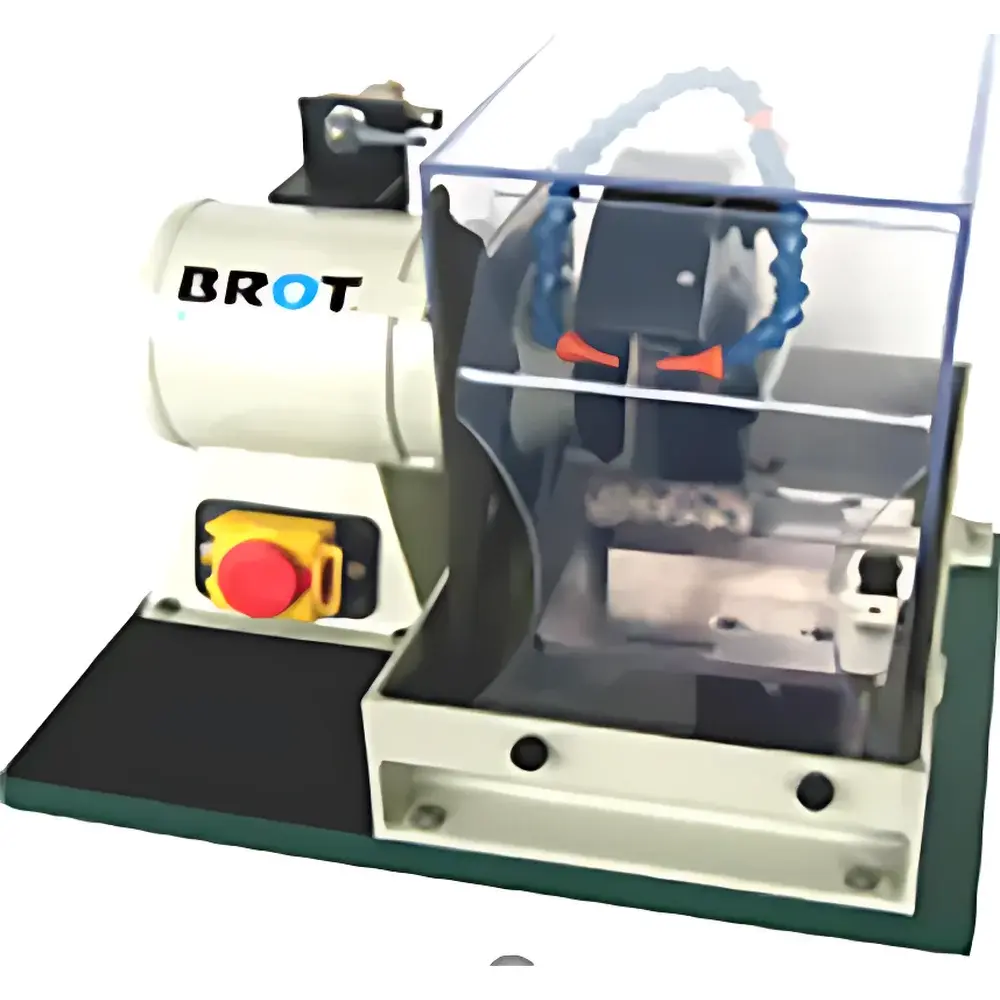
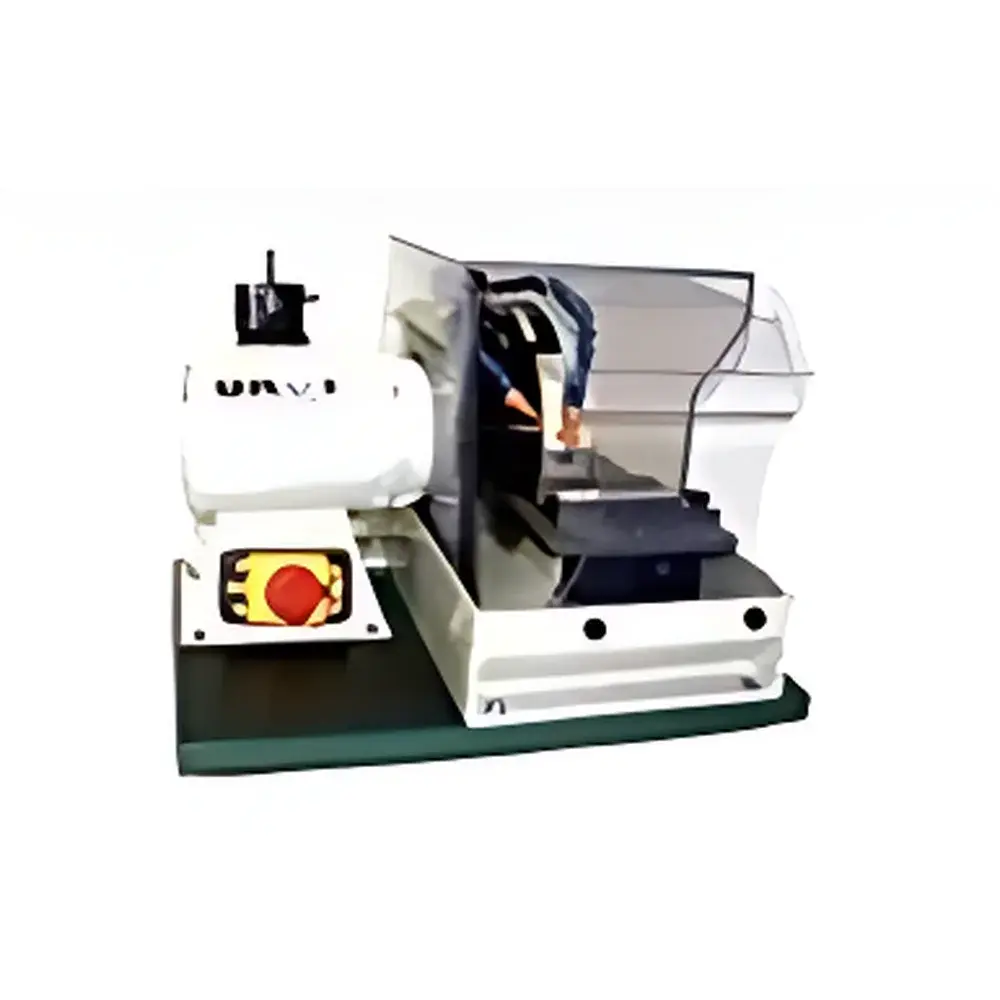
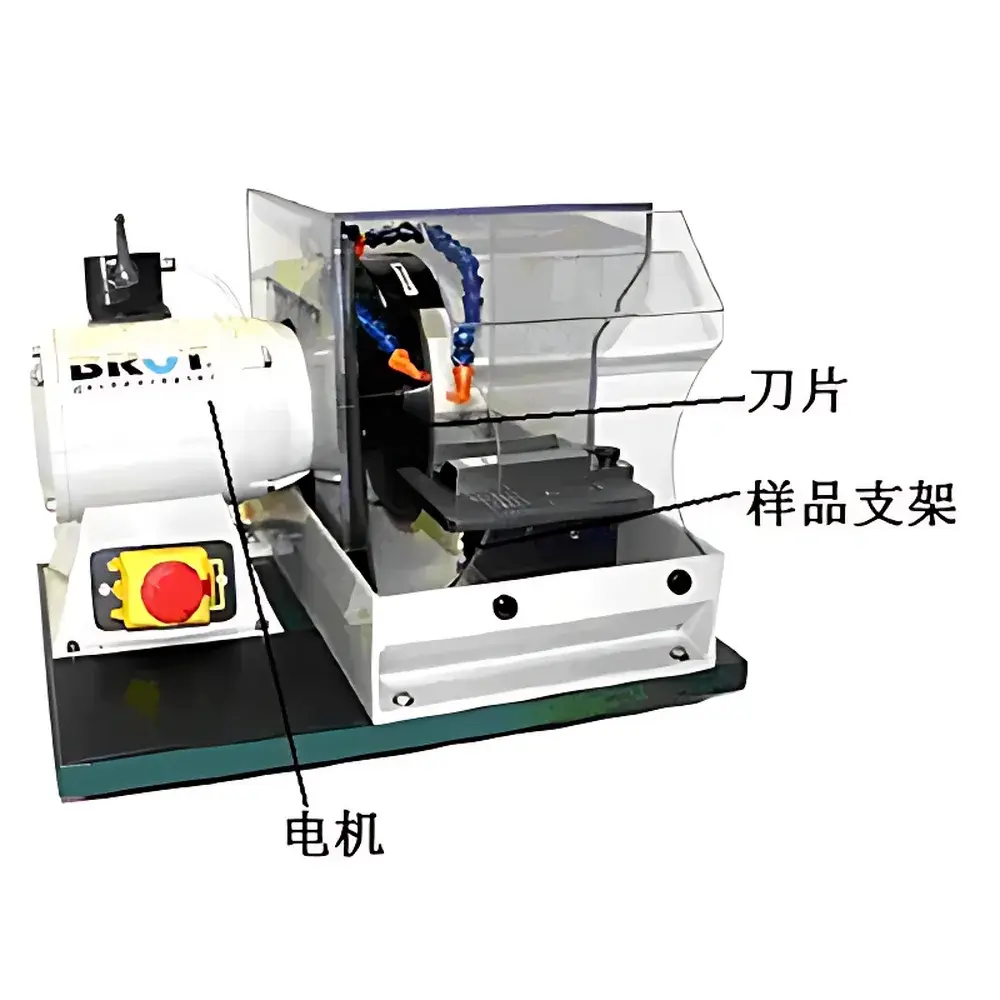
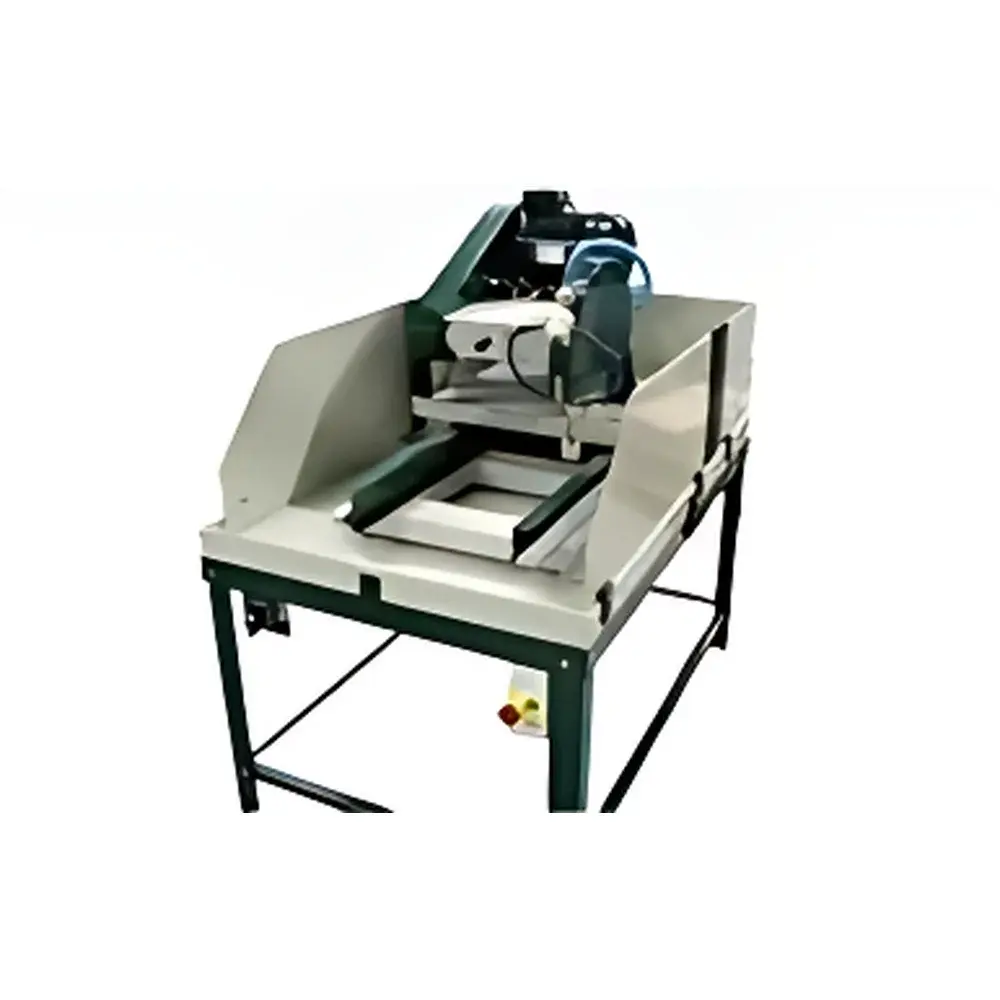
BROT-LAB 10224 Precision Rock Cutting System
| Brand | French BROT-LAB |
|---|---|
| Origin | France |
| Model | 10224 |
| Instrument Type | Precision Rock Cutting Machine |
| Motor | 3-phase, 230/400 V, 50 Hz |
| Diamond Blade Diameter | Ø150–250 mm (standard Ø200 mm) |
| No-Load Speed | 2950 rpm |
| Power Output | 0.5 hp |
| Cooling | External tap water supply (inlet Ø12 mm, outlet Ø25 mm) |
| Maximum Sample Diameter | Ø250 mm |
| Core Length Adjustment | Fully Manual, Continuous |
| Fixture Mold Dimensions | 30 × 45 mm |
| Overall Dimensions (W×D×H) | 460 × 400 × 360 mm |
| Weight | 27 kg |
| Operating Modes | Dry-cutting (with dust extraction port) or Wet-cutting (with integrated water spray & recirculation option) |
| Safety Features | IP54-rated electrical enclosure, anti-vibration base, splash guard, emergency stop circuit |
Overview
The BROT-LAB 10224 Precision Rock Cutting System is a benchtop, manually operated rock preparation instrument engineered for high-reproducibility sectioning of geological specimens in petrographic, geochemical, and reservoir characterization laboratories. Designed according to the mechanical principles of controlled-feed diamond abrasive cutting, it employs a rigid cast-iron frame and precision-machined spindle assembly to ensure minimal runout (<0.05 mm) and axial stability during operation. The system operates on standard industrial three-phase power (230/400 V, 50 Hz), delivering consistent rotational torque at 2950 rpm—optimized for efficient kerf formation with minimal thermal distortion or micro-fracturing in brittle silicate, carbonate, and metamorphic matrices. Its primary function is the first-stage preparation of cylindrical core plugs, irregular outcrop samples, and drill cuttings into standardized cross-sections suitable for subsequent thin-section mounting, SEM-EDS analysis, or porosity/permeability testing. Unlike high-speed automated saws, the 10224 prioritizes operator control, tactile feedback, and geometric fidelity—making it especially suited for low-volume, high-value sample workflows common in academic geoscience labs and upstream core analysis centers.
Key Features
- Rigid structural architecture with vibration-damped base plate and corrosion-resistant epoxy-polyester coating for long-term lab durability.
- Manually adjustable vertical blade carriage with fine-thread lead screw (0.5 mm pitch), enabling precise depth-of-cut control from 0.1 mm to full penetration.
- Interchangeable diamond blade mount compatible with Ø150–250 mm blades (standard Ø200 mm, segment-bonded, 10–12 µm grit); blade arbor accepts ISO 2391-1 flange standards.
- Dual cooling mode: dry-cutting configuration includes a dedicated 50 mm diameter dust extraction port (compatible with standard laboratory vacuum systems); wet-cutting mode integrates a regulated water spray nozzle and optional closed-loop recirculation pump (not included).
- Modular sample fixture system featuring a 30 × 45 mm precision-ground aluminum mold insert with T-slot clamping rails, allowing secure positioning of cylindrical cores (Ø ≤ 250 mm), irregular fragments, and pre-mounted resin-impregnated blocks.
- IP54-rated motor housing with thermal overload protection, dual-pole circuit breaker, and certified emergency stop button compliant with IEC 60204-1 safety directives.
Sample Compatibility & Compliance
The 10224 accommodates heterogeneous geological materials including but not limited to quartzite, basalt, limestone, shale, sandstone, granite, and cemented sediments. Its low-vibration kinematics preserve structural integrity in weakly consolidated or laminated samples—critical for preserving bedding plane orientation and fracture network geometry. The system supports ASTM D5430-18 (Standard Test Method for Determining Rock Core Specimen Dimensions) and ISO 14688-1:2017 (Geotechnical investigation and testing — Identification and classification of soil — Part 1: Identification and description) sample dimensioning requirements. All electrical components meet CE marking criteria under the Low Voltage Directive (2014/35/EU) and EMC Directive (2014/30/EU). Optional accessories—including calibrated digital depth gauge, laser alignment guide, and GMP-compliant documentation package—are available for GLP-regulated core logging facilities.
Software & Data Management
As a fully manual, non-motorized feed instrument, the BROT-LAB 10224 does not incorporate embedded firmware or digital control interfaces. However, its mechanical repeatability enables seamless integration into traceable sample preparation workflows. Operators may log cutting parameters—including blade type, coolant mode, feed rate estimate, and specimen ID—in laboratory notebooks or LIMS platforms such as LabWare LIMS or Thermo Fisher SampleManager. For audit readiness, the unit’s serial-numbered nameplate and factory calibration certificate support 21 CFR Part 11–compliant recordkeeping when paired with electronic signature-enabled SOP documentation.
Applications
- Preparation of 30 mm × 45 mm oriented rock slabs for polarized light microscopy and thin-section fabrication.
- Sectioning of hydrocarbon-bearing core plugs prior to porosimetry (e.g., mercury intrusion) and CT scanning.
- Isolation of representative subsamples from heterogeneous drill core for XRF bulk chemistry screening.
- Controlled trimming of fossiliferous or vesicular volcanic samples to expose diagnostic textures without edge chipping.
- Supporting ASTM D3967-20 (Splitting Tensile Strength of Intact Rock Core Specimens) specimen conditioning protocols.
FAQ
What is the maximum recommended rock hardness for use with the 10224?
The system is rated for rocks with Mohs hardness ≤ 7.5 (e.g., quartz-rich sandstones, granites, basalts). For harder materials such as tungsten-carbide-impregnated ores or synthetic ceramics, blade wear increases significantly; use only with premium-grade diamond segments and reduced feed rates.
Can the 10224 be configured for continuous unattended operation?
No—it is strictly a manual-feed instrument requiring active operator supervision per cut. This design ensures real-time assessment of cut quality and immediate intervention if binding or deflection occurs.
Is the water cooling system supplied with the base unit?
A basic water spray nozzle and inlet/outlet fittings are included. The optional closed-loop recirculation unit (model RC-10224) must be ordered separately and requires external 12 V DC power and 5 L reservoir capacity.
Does the fixture accommodate non-cylindrical specimens?
Yes—the T-slot mold base allows custom jig fabrication using standard M6 fasteners; users routinely mount irregular fragments using epoxy putty or low-melt solder within the 30 × 45 mm footprint.
What maintenance intervals are recommended?
Lubrication of the vertical lead screw and blade flange threads every 50 operational hours; visual inspection of belt tension and electrical connections prior to each shift; annual verification of blade runout using dial indicator (tolerance ±0.03 mm).



