
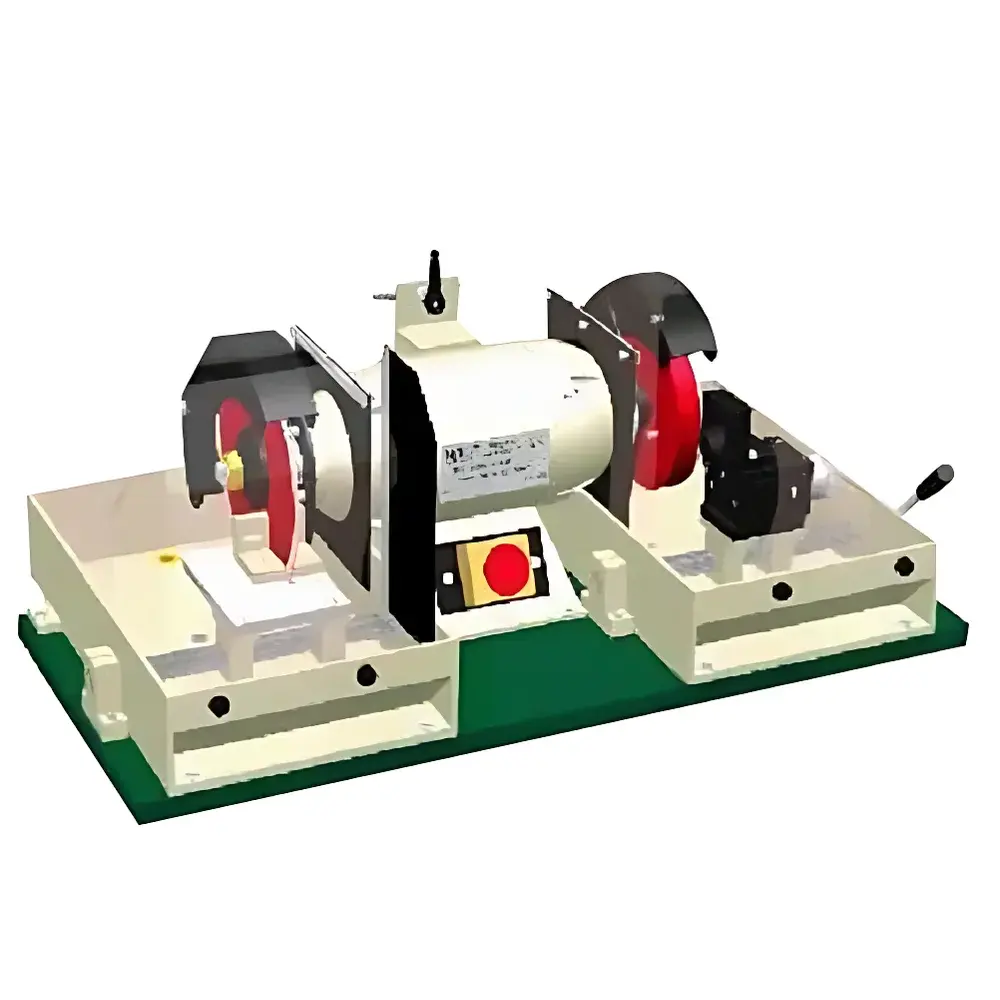
English Product Name
| Brand | French BROT-LAB |
|---|---|
| Origin | France |
| Model | J-02-15 |
| Blade Diameter | 175 mm |
| Maximum Stroke | 30 mm |
| Thickness Adjustment Resolution | 0.01 mm |
| Thickness Range (Standard Mode) | 100 µm (adjustable down to ±5 µm repeatability) |
| Vacuum Chuck System | Integrated, electric vacuum pump with solvent-resistant construction |
| Cooling System | Closed-loop recirculating water system (30 L capacity), direct nozzle spray onto blade |
| Frame Material | Corrosion-resistant steel chassis |
| Sample Holding | Vacuum suction platen with sealed gasket interface |
| Waste Collection | Polypropylene catch basin for coolant, slurry, and particulate debris |
| Compliance | Designed for ISO/IEC 17025-aligned lab environments |
Overview
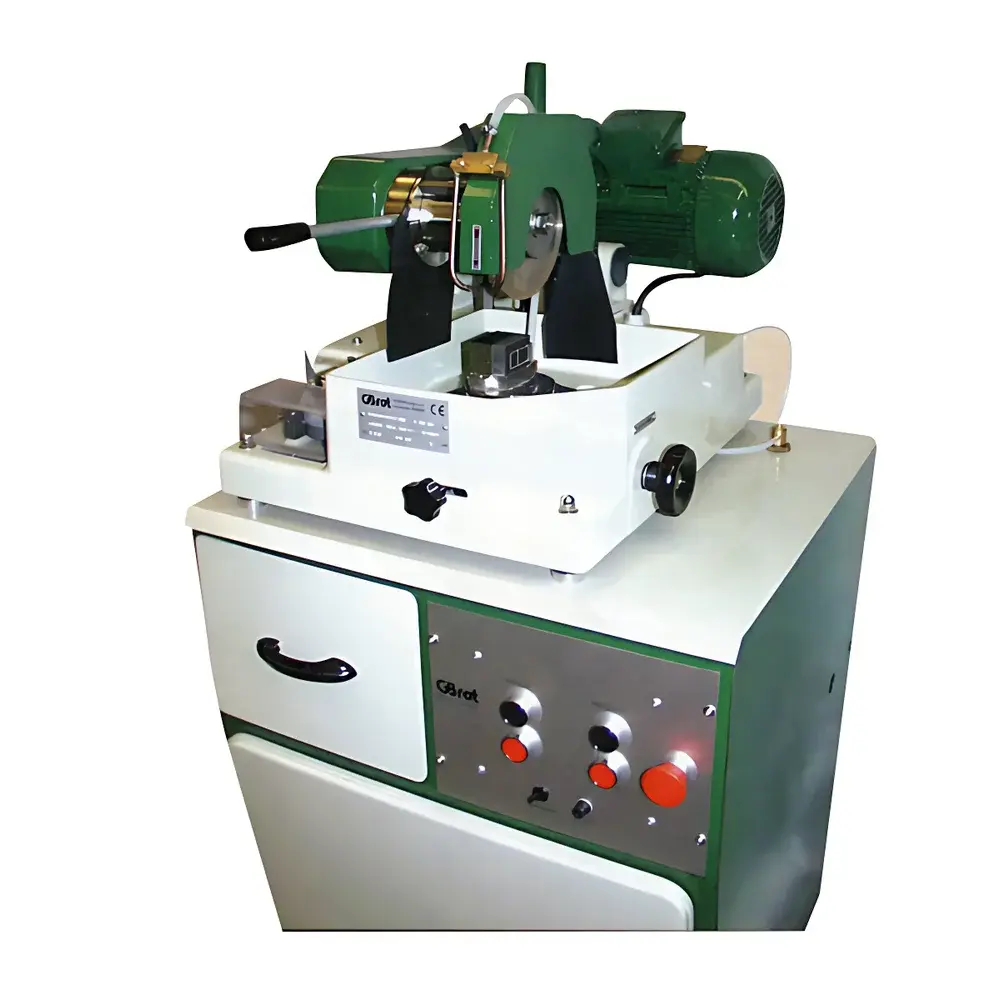
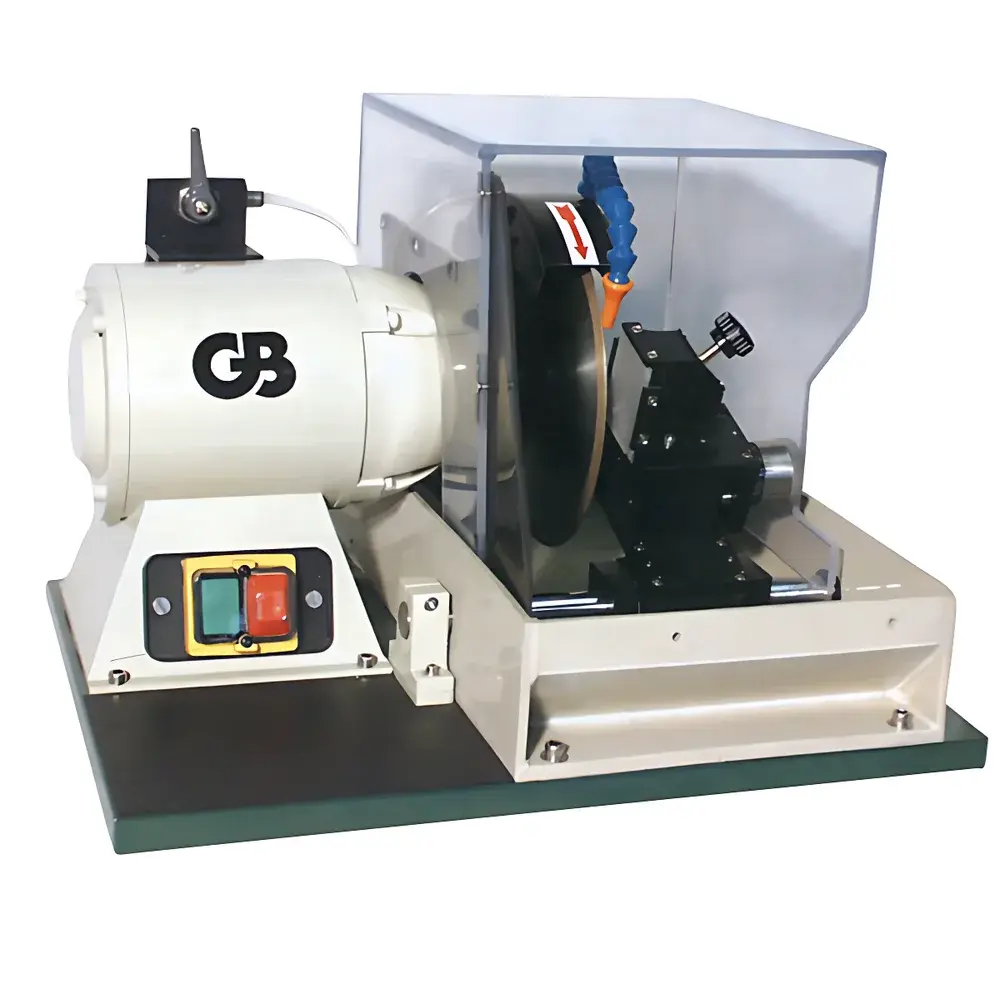
The BROT-LAB J-02-15 is a vertically oriented precision microtome engineered specifically for the controlled sectioning of dense, brittle, or heterogeneous solid specimens—including geological rock cores, ceramic composites, hardened concrete, and mineralogical standards—into thin, planar slices with metrological consistency. Unlike conventional rotary or sliding microtomes optimized for soft biological tissues, the J-02-15 employs a gravity-assisted, hydraulically damped vertical descent mechanism combined with manual fine-feed actuation to deliver deterministic control over slice thickness in the 100–350 µm range. Its core architecture centers on a rigid steel frame isolated from coolant pathways, ensuring long-term dimensional stability and eliminating thermal drift or corrosion-induced calibration drift during extended operation. The system operates on the principle of orthogonal blade advancement relative to a stationary, vacuum-clamped specimen—enabling uniform shear removal without lateral compression or edge chipping, critical for downstream petrographic analysis, SEM sample preparation, or thin-section XRD quantification.
Key Features
- Vertical slicing geometry with calibrated micrometer-driven feed screw (0.01 mm resolution), enabling reproducible slice thickness targeting within ±3 µm across repeated cuts under consistent load conditions.
- Integrated 30 L closed-loop water recirculation system with adjustable nozzle positioning for targeted blade cooling—minimizing thermal degradation of heat-sensitive mineral phases and suppressing dust generation during abrasive cutting.
- Vacuum chuck assembly featuring a chemically resistant elastomeric sealing gasket and dedicated solvent-tolerant electric vacuum pump, capable of holding specimens up to 150 × 150 mm with ≤0.5 kPa pressure differential stability over 8-hour sessions.
- 175 mm diameter diamond-impregnated or tungsten-carbide segmented blades mounted in a quick-release holder; blade alignment verified via built-in optical reference plane and mechanical zero-stop indexing.
- Damped piston descent mechanism incorporating progressive hydraulic resistance—eliminating impact shock, reducing operator fatigue, and preventing micro-fracturing in cleavage-prone samples such as shale or basalt.
- Polypropylene waste containment basin with integrated slurry filtration port and coolant level sensor, compliant with IEC 61000-6-3 EMC emission standards for laboratory instrumentation.
Sample Compatibility & Compliance
The J-02-15 accommodates specimens ranging from 25 × 25 mm to 120 × 120 mm in footprint and up to 60 mm in height, provided surface flatness remains within 15 µm TIR. It supports mounting substrates including glass slides, aluminum stubs, and phenolic resin blocks. All wetted components—including pump housing, tubing, and spray nozzles—are constructed from polypropylene or stainless steel 316L to resist degradation from common coolants (e.g., 5% ethylene glycol/water mixtures or low-conductivity deionized water). The system meets mechanical safety requirements per EN 61000-6-2 (immunity) and EN 61000-6-4 (emissions), and its vacuum control logic includes fail-safe pressure monitoring aligned with ISO 13849-1 PLc functional safety integrity level for operator protection.
Software & Data Management
While the J-02-15 operates as a manually supervised analog-digital hybrid instrument (no embedded touchscreen or cloud connectivity), it supports full traceability through optional integration with laboratory information management systems (LIMS) via RS-232 or USB-to-serial interface. A companion Windows-based utility enables logging of cut count, cumulative stroke displacement, vacuum pressure history, and coolant temperature—exportable as CSV or PDF reports compliant with FDA 21 CFR Part 11 audit trail requirements when paired with validated electronic signature modules. All firmware updates are delivered via signed binary packages verified using SHA-256 checksums.
Applications
- Petrographic thin-section preparation for transmitted-light microscopy and cathodoluminescence imaging.
- Sectioning of cementitious materials prior to mercury intrusion porosimetry or backscattered electron imaging.
- Production of planar cross-sections from additive-manufactured metal alloys for grain structure analysis.
- Preparation of reference standards for quantitative X-ray fluorescence (XRF) and wavelength-dispersive spectroscopy (WDS).
- Controlled decapsulation of encapsulated electronic components for failure analysis.
FAQ
What is the minimum achievable slice thickness with certified repeatability?
The system achieves routine 100 µm sections with ≤±3 µm standard deviation across ten consecutive cuts under stabilized environmental conditions (23 ± 1°C, 45–55% RH). Sub-100 µm capability requires blade recalibration and is not part of factory validation.
Is the vacuum system compatible with porous or low-density specimens?
Yes—vacuum parameters are adjustable between 10–80 kPa absolute pressure; for highly porous samples (e.g., aerated concrete), optional vacuum-seal enhancement kits with conformal silicone gaskets are available.
Can the coolant system be operated with non-aqueous fluids?
No—the recirculation pump and seals are rated exclusively for aqueous solutions with pH 5.5–8.5 and conductivity < 100 µS/cm. Use of oils or alcohols voids warranty and risks seal swelling.
Does the J-02-15 support automated sequential sectioning?
Not natively; automation requires third-party motion controller integration via the provided 0–10 V analog input/output port and digital trigger lines. BROT-LAB provides pinout documentation and timing specifications upon request.
What maintenance intervals are recommended for sustained accuracy?
Blade inspection every 200 cuts; vacuum pump oil replacement every 1,000 operating hours; micrometer screw lubrication with Dow Corning 111 every 6 months; annual calibration verification using NIST-traceable step gauges (certification service available).



