
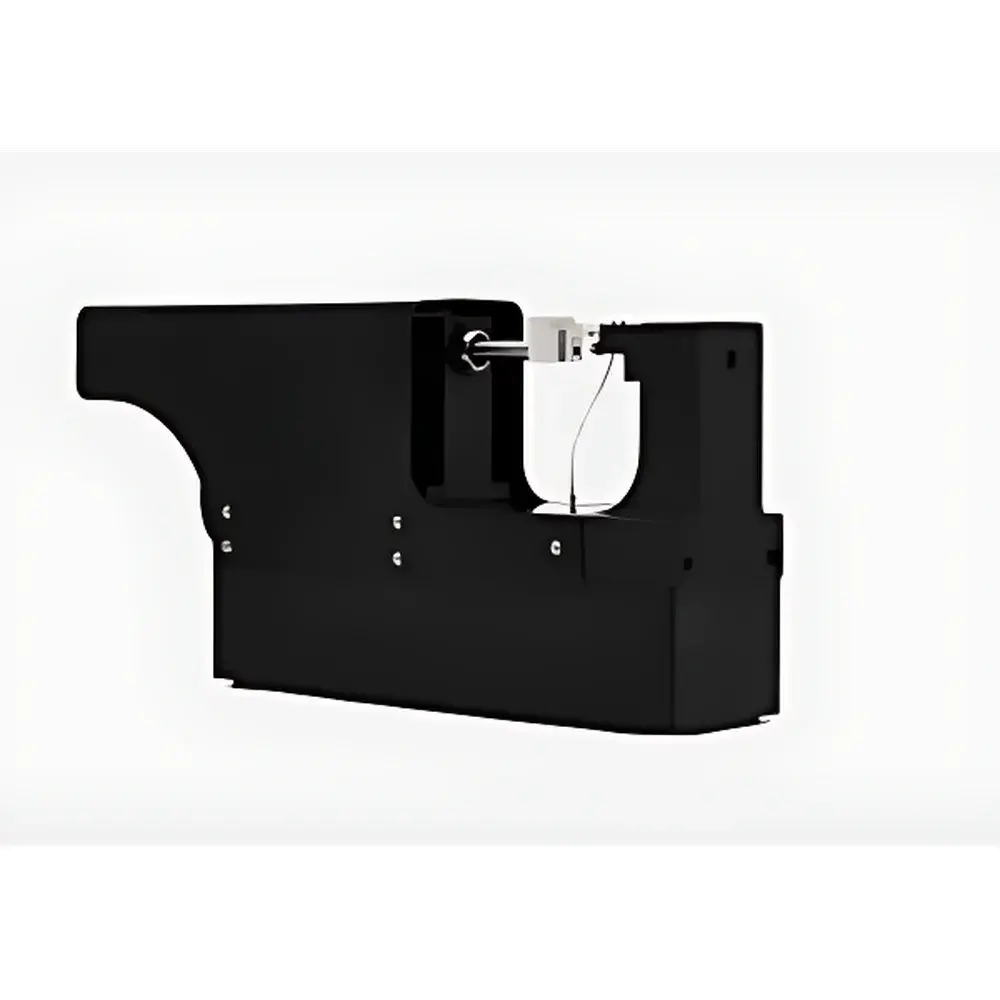
Dia-stron LEX820 High-Precision Fiber Tensile Tester
| Brand | Dia-stron |
|---|---|
| Origin | United Kingdom |
| Model | LEX820 |
| Drive System | DC micrometer actuator |
| Strain Resolution | Sub-micron positional repeatability |
| Force Measurement | High-linearity load cell with low compliance |
| Frame Design | Open-frame architecture for in situ synchrotron XRD and neutron scattering integration |
| Compliance | ASTM D3822, ISO 5079, ISO 11357-3 compatible |
Overview
The Dia-stron LEX820 High-Precision Fiber Tensile Tester is an engineered mechanical testing platform designed specifically for the quasi-static uniaxial tensile characterization of single filaments, microfibers, and brittle polymeric or ceramic fibers. Operating on fundamental principles of Hookean elasticity and stress–strain continuum mechanics, the LEX820 delivers high-fidelity force–displacement data under controlled displacement rates ranging from 0.01 µm/s to 5 mm/min. Its core measurement architecture integrates a high-stability DC micrometer-driven actuation system with sub-micron positional repeatability—enabling precise strain control down to 0.001% for materials exhibiting failure at low total elongation (<2%). The open-frame mechanical configuration eliminates structural interference, facilitating simultaneous in situ structural analysis via synchrotron-based X-ray diffraction (XRD), small-angle X-ray scattering (SAXS), or time-of-flight neutron scattering—critical for correlating real-time molecular orientation, crystallinity evolution, and lattice strain with macroscopic mechanical response.
Key Features
- DC micrometer actuator with closed-loop position feedback ensures smooth, jerk-free motion and exceptional positional reproducibility (< ±0.1 µm over full stroke)
- High-sensitivity load cell (capable of measuring forces from 0.1 mN to 50 N) featuring <0.02% full-scale linearity and minimal mechanical compliance (<0.1 µm/N)
- Modular sample mounting stage with interchangeable grips optimized for fibers ranging from 5 µm to 500 µm in diameter—including tungsten carbide serrated jaws, vacuum chucks, and adhesive tabs
- Open-access geometry accommodating beamline instrumentation: minimum clearance of 120 mm × 120 mm × 180 mm (W × D × H) around the active gauge length
- Thermally stable aluminum alloy frame with vibration-damped base plate, reducing ambient noise contribution to measured displacement uncertainty
- Integrated digital encoder with 0.01 µm resolution and real-time sampling up to 1 kHz for transient event capture during brittle fracture
Sample Compatibility & Compliance
The LEX820 supports standardized tensile evaluation of monofilaments, electrospun nanofibers, carbon nanotube yarns, aramid microfilaments, bioresorbable sutures, and mineral fibers. Sample lengths from 10 mm to 50 mm are accommodated using adjustable gauge length settings (10–30 mm standard, custom options available). All test protocols align with internationally recognized standards including ASTM D3822 (tensile properties of single textile fibers), ISO 5079 (determination of tensile properties of chemical fibers), and ISO 11357-3 (plastics — differential scanning calorimetry — part 3: determination of melt and crystallization temperatures). The system architecture permits GLP-compliant operation when paired with validated software modules supporting 21 CFR Part 11 audit trails, electronic signatures, and raw data immutability.
Software & Data Management
Control and analysis are performed via Dia-stron’s proprietary TensilePro v4.2 software suite, which runs on Windows 10/11 platforms. The interface provides real-time force–strain curve visualization, automated yield point detection using second-derivative inflection algorithms, modulus calculation via ISO 527-1 secant method, and fracture energy integration. Raw data files (.tdf binary format) include timestamped metadata (operator ID, environmental temperature/humidity, calibration certificate ID, grip separation history). Export options include CSV, MATLAB .mat, and universal HDF5 formats. Software validation documentation—including IQ/OQ/PQ protocols—is provided upon request for regulated laboratory environments.
Applications
- In situ synchrotron XRD/SAXS studies of strain-induced crystalline phase transitions in polyethylene terephthalate (PET) and polypropylene (PP) fibers
- Mechanical benchmarking of bioengineered collagen and silk fibroin scaffolds under physiological humidity conditions
- Quality assurance testing of aerospace-grade PBO (poly-p-phenylene benzobisoxazole) and carbon fiber precursors
- Fundamental research into size effects in strength and toughness of sub-10 µm diameter metallic glass microwires
- Development and validation of constitutive models for viscoelastic fiber networks used in nonwovens and filtration media
FAQ
What is the minimum measurable fiber diameter supported by the LEX820?
The system routinely handles fibers as thin as 5 µm in diameter using vacuum-assisted micro-grips and optical alignment aids.
Can the LEX820 be integrated into a synchrotron beamline hutch?
Yes—the open-frame design, non-magnetic construction (aluminum and titanium components), and absence of ferromagnetic actuators or enclosures meet standard beamline safety and compatibility requirements.
Is force calibration traceable to national standards?
All load cells ship with UKAS-accredited calibration certificates traceable to NPL (National Physical Laboratory, UK) and NIST.
Does the system support environmental control options?
Humidity-controlled chambers (10–95% RH) and Peltier-based temperature stages (−20 °C to +80 °C) are available as factory-integrated accessories.
How is data integrity ensured in regulated laboratories?
TensilePro v4.2 includes configurable user roles, electronic signature workflows, automatic audit logs, and write-protected raw data archives compliant with FDA 21 CFR Part 11 and EU Annex 11 requirements.




