
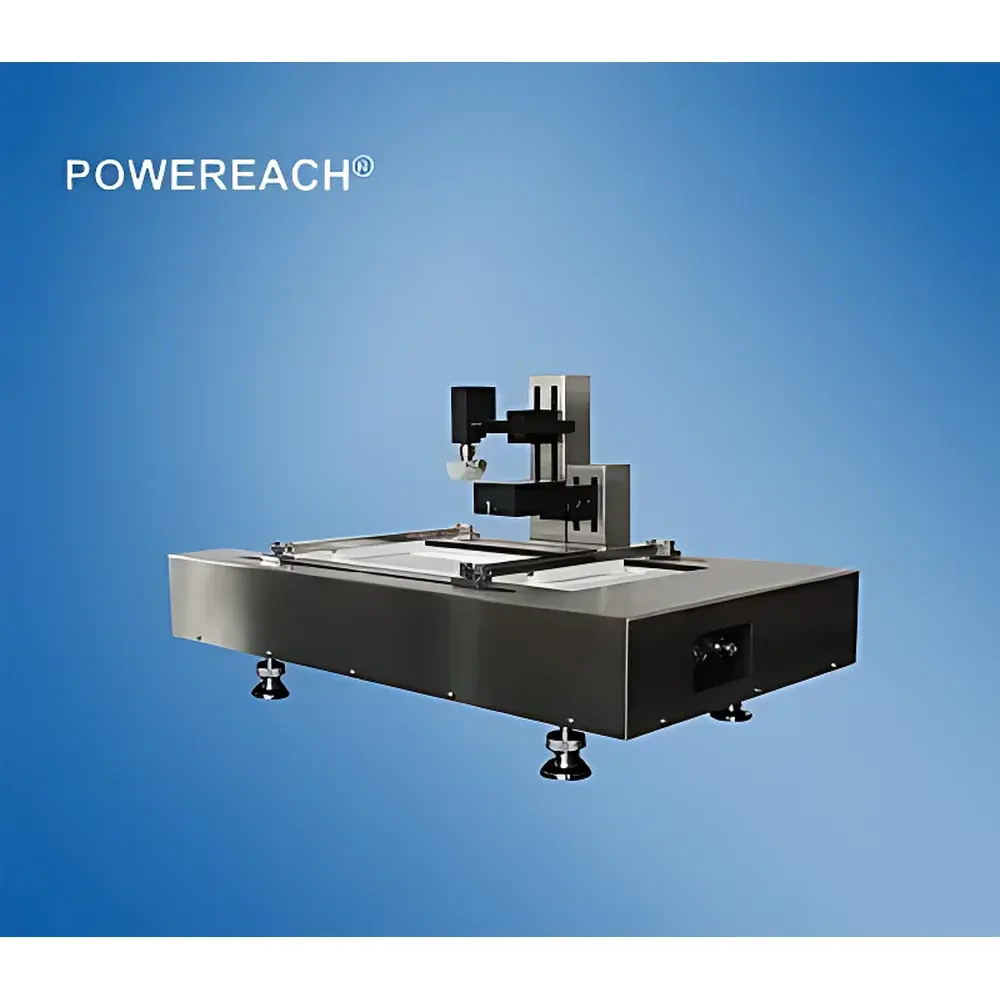
JML04S Langmuir-Blodgett Trough with Dual-Drive Barrier System
| Origin | Beijing, China |
|---|---|
| Manufacturer Type | Authorized Distributor |
| Origin Category | Domestic (China) |
| Model | JML04S |
| Pricing | Available Upon Request |
Overview
The JML04S Langmuir-Blodgett Trough with Dual-Drive Barrier System is a precision surface science instrument engineered for quantitative monolayer characterization at the air–liquid interface. It operates on the fundamental principles of Langmuir film balance mechanics, utilizing Wilhelmy plate tensiometry to measure surface pressure (π) and surface excess area (A) in real time. Unlike full LB deposition systems, the JML04S is configured exclusively for Langmuir monolayer analysis—supporting compression/expansion cycles, isotherm acquisition (π–A and r–A), and dynamic surface tension evaluation—without vertical dipping capability. Its dual-motor synchronized barrier architecture enables high-fidelity, low-drift area control across large-area troughs, making it suitable for studying amphiphilic molecules (e.g., phospholipids, fatty acids, polymers, nanoparticles) under controlled thermodynamic conditions. Designed for integration into academic surface chemistry labs, pharmaceutical formulation R&D, and materials science facilities, the system meets foundational requirements for GLP-aligned experimental reproducibility and traceable interfacial property quantification.
Key Features
- Dual independent stepper motor drive system ensures synchronized, backlash-free barrier motion with programmable speed ranging from 0.48 to 97 mm/min—enabling precise isothermal or isobaric compression protocols.
- High-resolution Wilhelmy plate tensiometer with ±0.05 mN/m resolution and 0–150 mN/m measurement range, calibrated using certified reference liquids per ISO 6295 and ASTM D971 standards.
- Modular trough configuration: standard options include 300 × 200 mm, 300 × 100 mm, and 200 × 80 mm PTFE-coated stainless steel liquid subphases; custom multi-compartment or dual-trough configurations available upon specification.
- Leak-proof barrier design minimizes subphase evaporation and lateral leakage, ensuring long-term stability during extended isotherm scans (>24 h).
- Fully automated operation via embedded microcontroller and Windows-based host software—eliminating manual intervention and reducing operator-induced variability.
- Integrated environmental adaptability: compatible with external thermostatic water jackets (±0.1 °C control) and operable within 30–85% RH ambient conditions without condensation risk.
Sample Compatibility & Compliance
The JML04S accommodates aqueous, organic, and mixed subphases—including buffered saline, chloroform/methanol mixtures, and ionic liquid interfaces—for monolayers composed of lipids, surfactants, block copolymers, graphene oxide dispersions, and functionalized nanomaterials. All wetted components are constructed from chemically inert, non-wetting PTFE to prevent contamination and ensure baseline stability. The system supports compliance with ISO 9001 quality management workflows and provides audit-ready data logs required for internal GLP documentation. While not FDA 21 CFR Part 11–certified out-of-the-box, raw data export (CSV, TXT) and metadata tagging enable integration into validated LIMS environments.
Software & Data Management
The native Windows application delivers intuitive graphical control of barrier position, surface pressure setpoints, and scan parameters. Real-time π–A and r–A isotherms are rendered with auto-scaling axes, overlay capability, and annotation tools. All acquired data—including timestamped pressure, area, temperature, and barrier velocity—are stored in structured ASCII format for post-acquisition processing in MATLAB, Origin, or Python-based analysis pipelines. Software supports batch export, derivative calculation (dπ/dA), phase transition identification, and compressibility modulus (Cs⁻¹ = −A·dπ/dA) derivation. Firmware updates and calibration utilities are provided directly by the manufacturer under perpetual support terms.
Applications
- Quantitative phase behavior analysis of lipid bilayer precursors (e.g., DPPC, POPC) for membrane biophysics modeling.
- Surface rheology assessment of protein–surfactant co-adsorption layers in pulmonary drug delivery formulations.
- Monolayer stability screening of perfluorinated compounds (PFCs) under environmental regulatory frameworks.
- Interfacial packing density evaluation of conjugated polymers prior to Langmuir–Schaefer transfer.
- Quality control of commercial surfactants via critical micelle concentration (CMC) and collapse pressure validation.
- Teaching laboratory deployment for undergraduate physical chemistry courses covering Gibbs adsorption, two-dimensional equations of state, and Marangoni effects.
FAQ
Does the JML04S support Langmuir–Blodgett film transfer?
No—the JML04S is a Langmuir-only trough. It lacks vertical translation stages and substrate immersion mechanisms required for LB deposition.
Can the trough accommodate aggressive solvents such as chloroform or hexane?
Yes—PTFE-lined construction and fluoropolymer seals ensure chemical compatibility with halogenated and aromatic solvents per ASTM D471 guidelines.
Is third-party software integration possible?
Yes—serial (RS-232) and USB virtual COM port interfaces allow bidirectional communication with LabVIEW, Python (PySerial), or MATLAB for custom automation scripts.
What maintenance is required for long-term accuracy?
Annual recalibration of the Wilhelmy plate sensor and mechanical verification of barrier parallelism are recommended; no consumables beyond standard cleaning reagents are needed.
Is remote monitoring supported?
The system does not include built-in Ethernet/WiFi, but local network sharing of the control PC enables remote desktop access for supervised operation.



