
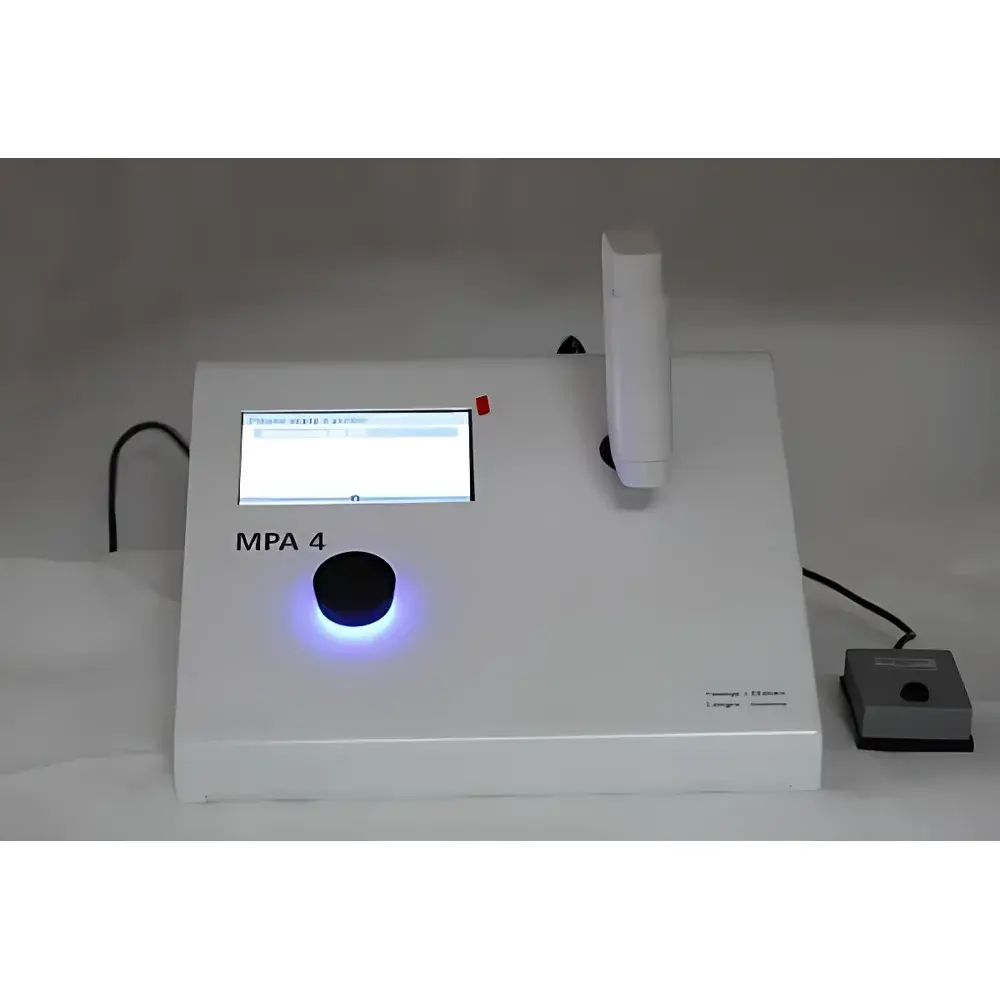
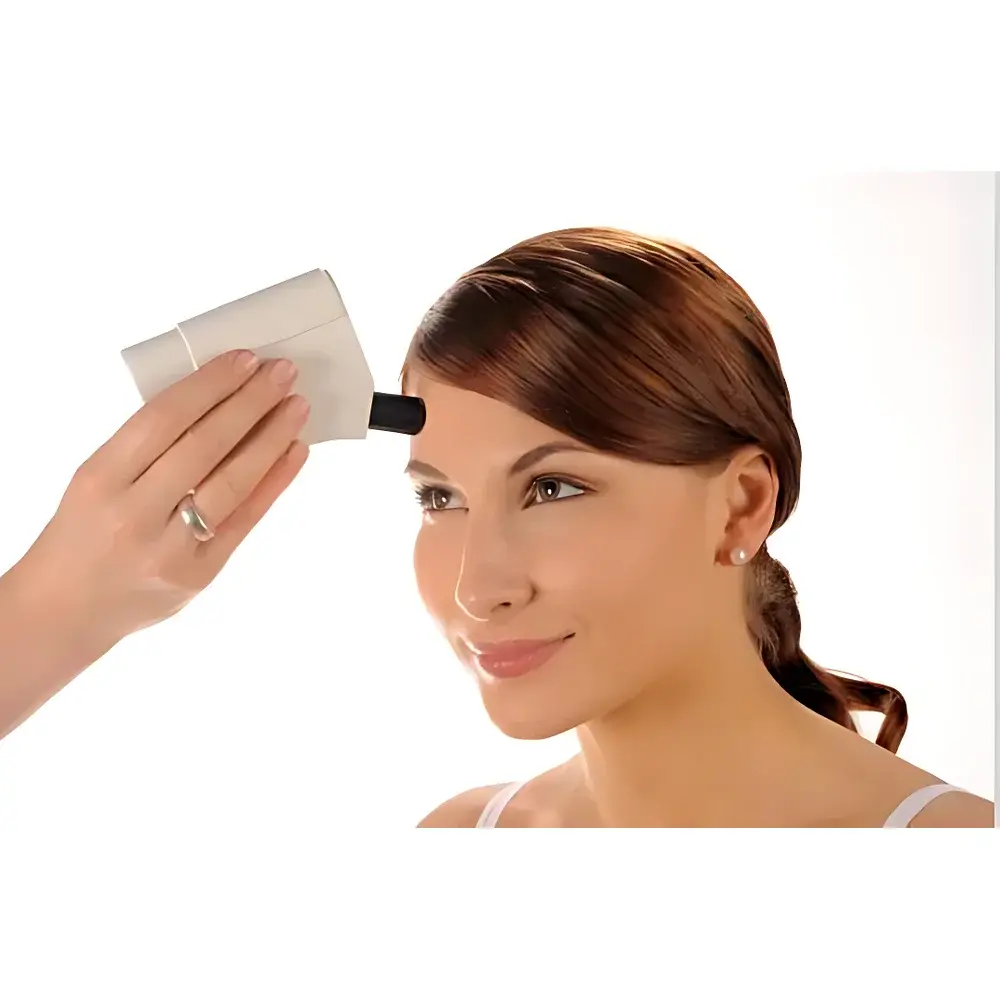
CK Sebumeter SM815 Skin Sebum Analyzer
| Brand | CK |
|---|---|
| Origin | Germany |
| Manufacturer Status | Authorized Distributor |
| Origin Category | Imported |
| Model | SM815-MPA |
| Pricing | Upon Request |
Overview
The CK Sebumeter SM815 is a precision optical instrument engineered for the quantitative, non-invasive assessment of sebum secretion on human skin surfaces. It operates on the well-established SEBUMETER® principle—a standardized photometric method defined and validated by CK Electronic GmbH (Cologne, Germany) for clinical and cosmetic research applications. Unlike direct lipid extraction or gravimetric analysis, the Sebumeter employs differential light absorption measurement: a standardized glass probe with a defined surface area is pressed gently against the skin for a fixed contact time (typically 30 seconds), allowing sebum to diffuse into a calibrated, optically transparent measurement zone. The device then quantifies the change in light transmission through this zone using a stable LED light source and photodiode detector. The resulting signal—expressed in arbitrary Sebumeter Units (SU)—correlates linearly with sebum load under controlled environmental conditions (temperature: 20–25 °C; relative humidity: 40–60 %). This methodology enables high inter-operator reproducibility and longitudinal tracking of sebaceous activity across facial zones (e.g., forehead, nose, cheeks), making it a cornerstone tool in dermatological trials, cosmeceutical efficacy studies, and regulatory-compliant skin barrier assessments.
Key Features
- Compact, handheld ergonomic design with integrated probe and display unit—enabling rapid point-of-care measurements without external power sources or calibration fluids.
- Standardized 1.2 cm² measurement aperture ensures consistent sampling area across all users and study sites, supporting multi-center trial harmonization.
- Real-time digital readout with automatic zeroing function and memory storage for up to 999 measurement values per session.
- Probe surface engineered from medical-grade borosilicate glass—chemically inert, autoclavable, and compliant with ISO 10993-5 for biological safety.
- No consumables required: eliminates variability introduced by adhesive tapes, blotting papers, or solvent-based extraction kits.
- Calibration traceable to CK’s internal reference standards; annual recalibration recommended per ISO/IEC 17025-aligned laboratory practice.
Sample Compatibility & Compliance
The Sebumeter SM815 is validated for use on intact, non-lesional human skin—including oily, combination, dry, and sensitive phenotypes—as defined by Fitzpatrick skin typing. It is not intended for use on mucosal surfaces, open wounds, or post-procedural skin (e.g., within 72 hours of chemical peels or laser resurfacing). The instrument conforms to IEC 61000-4 electromagnetic compatibility standards and carries CE marking under the EU Medical Device Regulation (MDR 2017/745) Class I (non-invasive, non-measuring device per Annex VIII). While not a diagnostic device per FDA 21 CFR Part 809, its measurement protocol aligns with ASTM E2915-22 (“Standard Practice for Evaluating Cosmetic Product Efficacy Using Objective Instrumental Methods”) and supports GLP-compliant data acquisition when paired with audit-trail-enabled software (see Software section).
Software & Data Management
The SM815-MPA variant includes USB interface support for direct data export to Windows-based workstations. CK’s proprietary SebumSoft v4.2 (Windows 10/11 compatible) provides full traceability features including user ID assignment, timestamped measurement logs, customizable region tagging (e.g., “T-zone”, “malar”), statistical summaries (mean, SD, CV%), and export to CSV, Excel, or PDF formats. All data entries include immutable metadata (device serial number, firmware version, ambient temperature/humidity input), satisfying requirements for FDA 21 CFR Part 11 compliance when configured with electronic signatures and role-based access control. Raw SU values are stored unprocessed—no algorithmic smoothing or normalization is applied—ensuring transparency and audit readiness.
Applications
- Dermatological clinical trials evaluating anti-acne, sebo-regulatory, or retinoid-based therapies (baseline vs. endpoint sebum load comparison).
- Cosmetic product development: quantifying immediate and cumulative effects of cleansers, mattifying agents, and oil-control serums.
- Environmental exposure studies: monitoring sebum response to UV radiation, pollution particulates, or climate-controlled chamber conditions.
- Educational dermatology labs: teaching principles of sebaceous gland physiology and objective biometric assessment methodology.
- Regulatory submissions: generating instrumental endpoints accepted by EMA CHMP and Health Canada for OTC topical claims substantiation.
FAQ
What does a Sebumeter reading represent, and how is it interpreted?
A Sebumeter Unit (SU) reflects the optical density change caused by sebum diffusion into the probe’s measurement zone. Higher SU values indicate greater sebum load. Interpretation requires contextualization: population norms vary by age, sex, anatomical site, and circadian rhythm (peak secretion occurs ~12–2 PM). Absolute thresholds for “oily” vs. “normal” skin are study-specific and must be established via cohort calibration.
Can the Sebumeter be used on acne-prone or inflamed skin?
Yes—provided lesions are closed (non-exudative) and the probe is applied with minimal pressure. Avoid active pustules or crusted areas to prevent artifact or discomfort. Studies confirm high intra-subject repeatability even in moderate inflammatory acne (J Invest Dermatol. 2018;138(5):1123–1130).
How often does the device require recalibration?
CK recommends annual factory recalibration or verification against certified reference standards. Field verification can be performed using CK’s Sebumeter Calibration Kit (Cat. No. 200-001), which includes three traceable optical density filters simulating low/mid/high sebum loads.
Is the probe reusable, and how should it be cleaned?
Yes—the borosilicate glass probe is fully reusable. Clean with 70% isopropyl alcohol followed by distilled water rinse and air-drying. Do not use acetone, chlorinated solvents, or ultrasonic baths, as these may degrade optical coatings or adhesives.
Does ambient humidity affect measurement accuracy?
Yes. Relative humidity >70% may cause condensation on the probe surface, leading to artificially elevated readings. CK specifies optimal operation at 40–60% RH. For field use outside controlled environments, record ambient conditions and apply correction factors derived from site-specific validation protocols.




