
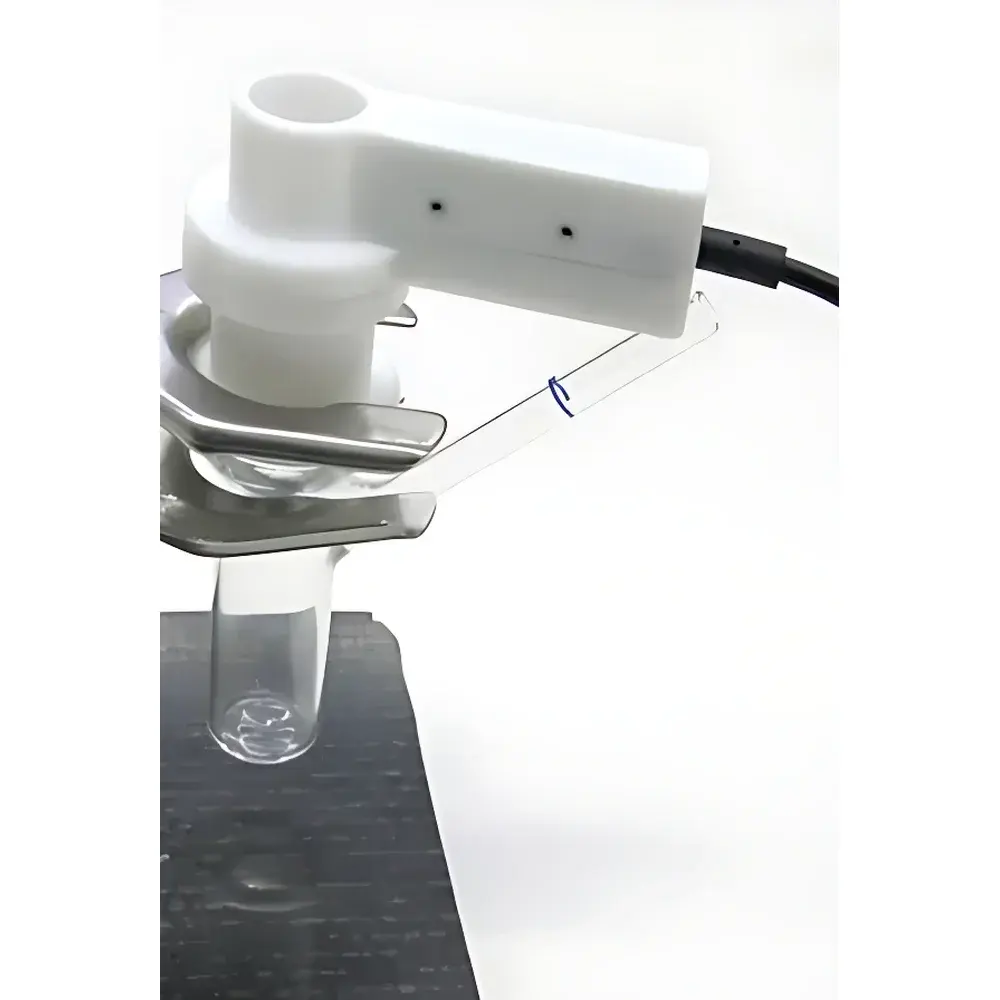
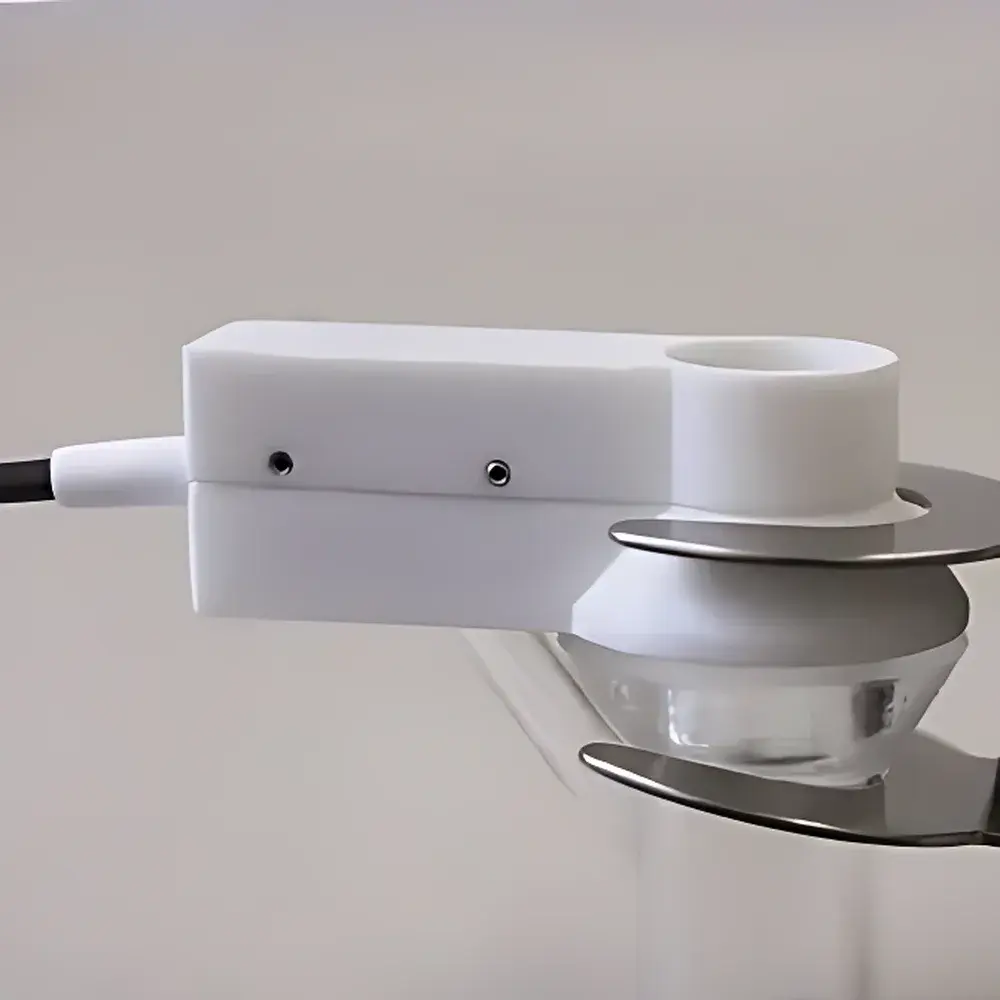
CK VT310 In Vitro Transepidermal Water Loss (TEWL) Probe
| Brand | CK |
|---|---|
| Origin | Germany |
| Manufacturer Status | Authorized Distributor |
| Origin Category | Imported |
| Model | VT310 |
| Pricing | Upon Request |
Overview
The CK VT310 In Vitro Transepidermal Water Loss (TEWL) Probe is a precision-engineered instrument designed for quantitative, non-invasive assessment of water vapor flux across synthetic and reconstructed epidermal membranes under controlled laboratory conditions. Unlike in vivo TEWL measurement systems—such as the CK TM300—which rely on human volunteer studies, the VT310 is specifically optimized for standardized in vitro diffusion cell assays, including the Frenz Cell configuration. It operates on the principle of open-chamber gradient measurement: two high-accuracy capacitive humidity sensors positioned at defined axial distances within a thermally stabilized probe head detect the vertical water vapor concentration gradient above the membrane surface. Using Fick’s first law of diffusion and integrated temperature/pressure compensation algorithms, the system calculates absolute TEWL values in g/h/m² with traceable metrological integrity. This method provides a physiologically relevant surrogate for stratum corneum barrier function evaluation without ethical review board approval, subject recruitment, or inter-subject biological variability.
Key Features
- Designed exclusively for in vitro TEWL quantification across artificial skin models (e.g., Episkin™, EpiDerm™, SkinEthic™ RHE) and synthetic membranes used in Frenz Cell diffusion studies.
- Thermally regulated probe head with active Peltier-based temperature control (±0.1 °C stability) to maintain consistent boundary layer conditions during prolonged assays.
- Dual-capacitive humidity sensor architecture calibrated against NIST-traceable hygrometric standards; enables linear response across 5–95% RH at 25 °C.
- Modular mechanical interface compatible with standard Franz-type diffusion cells (vertical or horizontal orientation), accommodating membrane diameters from 9 mm to 25 mm.
- Real-time analog output (0–10 V) and digital RS-232/USB connectivity for integration into automated test platforms and LIMS environments.
- Compliant with ISO 13766:2021 (Cosmetics — Evaluation of percutaneous absorption — In vitro methods using human or animal skin or skin models) and OECD TG 428 (In Vitro Percutaneous Absorption).
Sample Compatibility & Compliance
The VT310 supports reproducible TEWL measurement across a broad range of barrier-mimetic substrates, including collagen-based hydrogels, silicone membranes (e.g., Strat-M®), and full-thickness reconstructed human epidermis (RHE). Its open-chamber geometry eliminates pressure-induced artifacts common in closed-chamber probes, ensuring fidelity in low-flux scenarios typical of intact barrier models. All measurements adhere to Good Laboratory Practice (GLP) documentation requirements, with timestamped raw sensor data export supporting audit trails. The probe meets essential requirements of EU Regulation (EC) No 1223/2009 on cosmetic products and aligns with FDA guidance for in vitro dermal absorption testing in preclinical development.
Software & Data Management
The VT310 operates with CK’s proprietary TEWL Control Suite v4.x, a Windows-based application enabling protocol-driven assay sequencing, multi-channel synchronization (e.g., concurrent TEWL + pH + impedance), and automated pass/fail thresholding per ICH Q5C stability criteria. Data files are saved in CSV and XML formats compliant with 21 CFR Part 11—supporting electronic signatures, user access levels, and immutable audit logs. Export modules integrate directly with JMP, MATLAB, and LabArchives for statistical modeling and regulatory submission packages.
Applications
- Preliminary screening of topical formulations for barrier-modulating activity (e.g., ceramide-enriched emulsions, occlusive polymers) prior to clinical trials.
- Quantifying time-dependent changes in TEWL following exposure to surfactants, solvents, or preservatives in safety assessment protocols.
- Correlating TEWL kinetics with mass balance data from receptor fluid analysis in dual-endpoint Franz cell experiments.
- Validating batch-to-batch consistency of reconstructed skin equivalents used in efficacy testing.
- Supporting QbD (Quality by Design) initiatives in dermatological product development through Design Space mapping of formulation variables vs. barrier function endpoints.
FAQ
Can the VT310 be used for in vivo human measurements?
No—the VT310 is engineered exclusively for in vitro membrane configurations. For human subject studies, CK recommends the TM300 or TM310 series probes.
Is calibration traceable to national standards?
Yes—each VT310 unit ships with a factory calibration certificate referencing NIST SRM 2370 humidity standards and includes annual recalibration service options.
What sample preparation steps are required before measurement?
Membranes must be equilibrated at 32 °C and 40% RH for ≥30 minutes prior to probe placement; surface condensation must be removed using sterile lint-free wipes.
Does the probe require consumables or replacement parts?
The humidity sensors are field-replaceable with a 24-month service life under continuous operation; no other consumables are required.
How does VT310 TEWL data relate to clinical outcomes?
While not predictive of individual patient responses, population-level TEWL trends from VT310 assays demonstrate strong correlation (r² > 0.87) with in vivo barrier recovery metrics published in Journal of Investigative Dermatology and British Journal of Dermatology studies.




