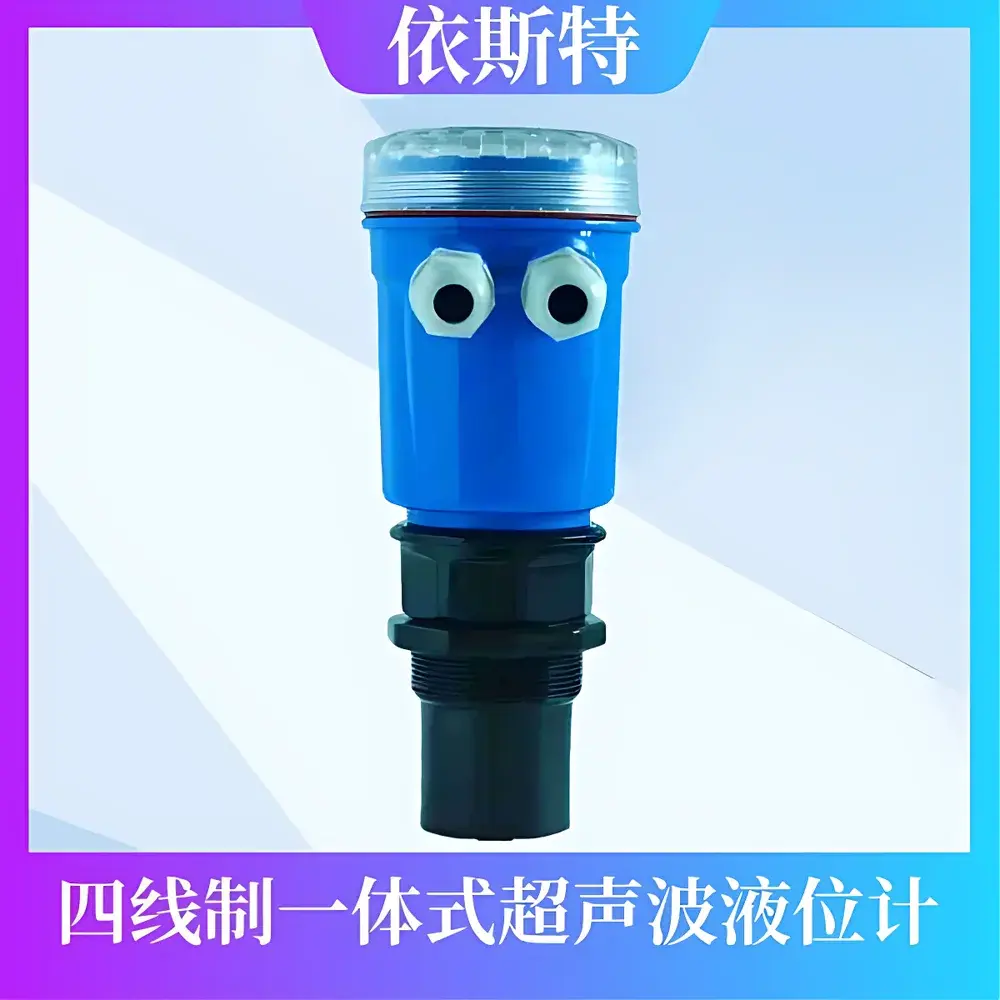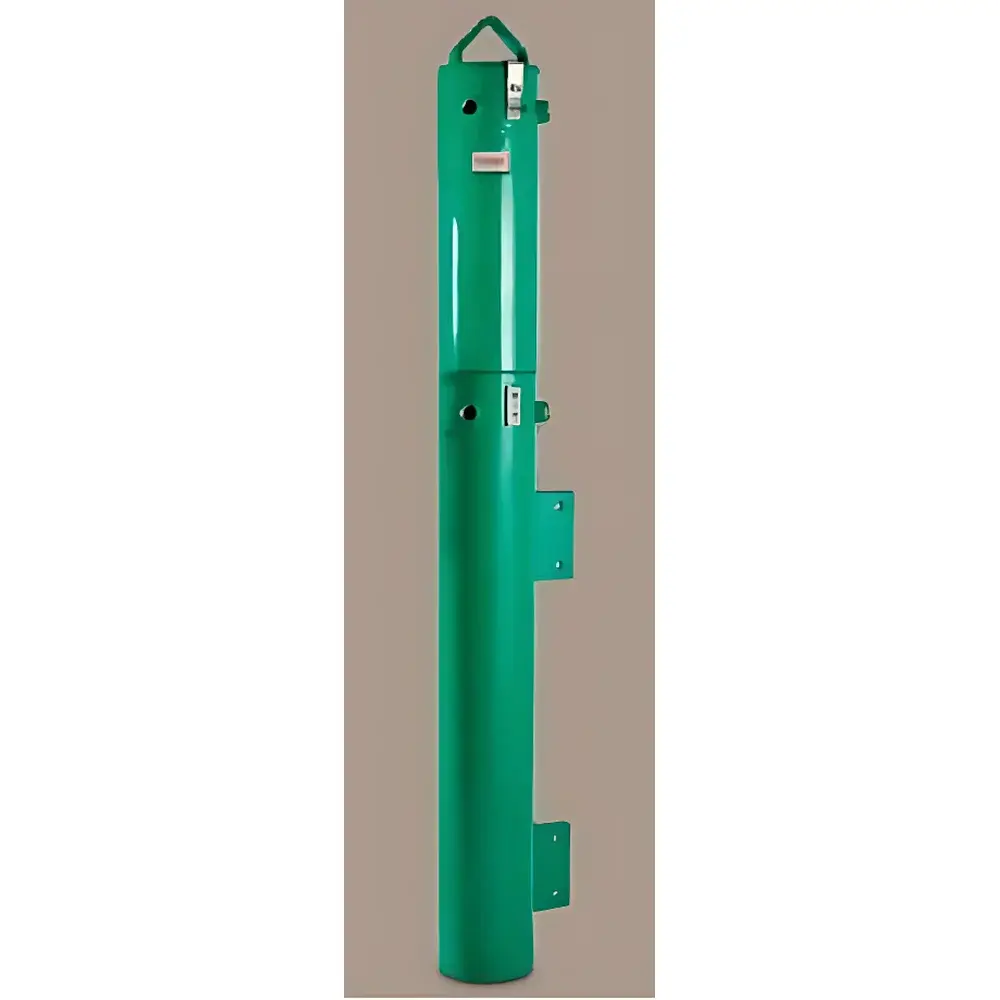
Thermo Scientific Nitus Non-Contact Gamma Backscatter Level, Density & Interface Analyzer
| Brand | Thermo Fisher |
|---|---|
| Origin | USA |
| Manufacturer | Thermo Fisher Scientific |
| Product Type | Level Meter |
| Model | Nitus |
| Compliance | Designed for industrial process environments requiring non-intrusive, radiation-based measurement |
| Radiation Source | Low-activity gamma emitter (e.g., Am-241 or Cs-137, configured per regional regulatory approval) |
| Installation | Single-side mounting (source and detector co-located) |
| Maximum Cable Length | 50 ft (15.2 m) between detector and secondary instrument |
| Operating Temperature Range | –20 °C to +60 °C (–4 °F to +140 °F) |
| Measurement Principle | Gamma backscatter spectroscopy |
| Regulatory Alignment | Compliant with ANSI N43.3, IEC 61000-6-2/6-4, and applicable national radiation safety codes (e.g., NRC 10 CFR 34, UK IR(ME)R) |
Overview
The Thermo Scientific Nitus Non-Contact Gamma Backscatter Level, Density & Interface Analyzer is an engineered solution for continuous, real-time monitoring of material level, bulk density, and phase interface in challenging industrial process vessels and pipelines. Unlike conventional contact-based or nuclear transmission systems, the Nitus employs gamma backscatter spectroscopy — a physics-based technique where low-energy gamma photons emitted from a sealed radioactive source interact with atomic electrons in the target medium, producing characteristic backscattered radiation proportional to electron density. This signal is captured by a high-sensitivity scintillation detector mounted on the same side of the vessel as the source, eliminating the need for opposing access points. The system delivers stable, drift-free performance across wide ambient temperature ranges (–20 °C to +60 °C), enabling reliable operation in outdoor skids, refinery environments, and mineral processing plants without recalibration or thermal compensation hardware.
Key Features
- Non-intrusive, single-side installation: Source and detector mounted externally on one vessel or pipe wall — no penetration, no process shutdown required during commissioning or maintenance.
- Low-activity gamma source configuration: Optimized for ALARA (As Low As Reasonably Achievable) compliance; typical activity levels meet Class III or IV licensing thresholds in most jurisdictions, reducing shielding requirements and operational oversight burden.
- High-stability detector architecture: Uses temperature-compensated NaI(Tl) or LaBr3(Ce) scintillation crystals coupled to low-noise photomultiplier tubes or silicon photomultipliers (SiPMs), ensuring consistent count-rate linearity over extended service life.
- Zero-drift electronics: Digital pulse-height analysis (PHA) with adaptive baseline restoration minimizes thermal and long-term electronic drift, supporting <1% full-scale stability over 12 months under continuous operation.
- Extended remote connectivity: Secondary instrument supports up to 50 ft (15.2 m) separation from field detector via shielded coaxial or fiber-optic cable — facilitating safe, accessible location of operator interface and power supply.
- Integrated diagnostics: Real-time source decay correction, detector health monitoring, and spectral quality metrics embedded in firmware for predictive maintenance planning.
Sample Compatibility & Compliance
The Nitus analyzer is validated for use with heterogeneous slurries, dense suspensions, viscous liquids, and solid-liquid interfaces encountered in hydrometallurgy, coal washing, oil sands extraction, and chemical refining. It is insensitive to foam, vapor space composition, coating buildup, or electromagnetic interference — making it suitable for applications where radar, ultrasonic, or capacitance technologies exhibit signal attenuation or false triggering. The system conforms to international radiation safety standards including ANSI N43.3 (USA), IEC 61000-6-2/6-4 (EMC), and ISO 2919 (sealed source classification). Documentation packages support GLP/GMP-aligned validation protocols and are compatible with FDA 21 CFR Part 11-compliant data archiving when integrated with Thermo’s DeltaV™ or DCS-agnostic SCADA interfaces.
Software & Data Management
The Nitus integrates with Thermo Fisher’s Process Analytics Suite (PAS), providing configurable engineering units, multi-point calibration curves (level/density/interface), and time-synchronized trend logging at user-defined intervals (1 s to 1 hr). All raw spectra and processed parameters are timestamped with millisecond precision and stored locally in non-volatile memory. Data export supports OPC UA, Modbus TCP, and HART 7 protocols for seamless ingestion into MES, APC, or historian platforms (e.g., OSIsoft PI, AspenTech IP.21). Audit trails include operator actions, calibration events, and firmware updates — fulfilling traceability requirements for ISO 9001, API RP 1173, and process safety management (PSM) programs.
Applications
- Control of flocculant dosing and underflow discharge in thickeners and clarifiers — maintaining optimal solids concentration while preventing overflow.
- Density regulation in hydroprocessing reactors to ensure consistent catalyst bed loading and reaction kinetics.
- Interface tracking between immiscible phases (e.g., bitumen/water/sand) in gravity separation vessels, enabling automated decant control.
- Real-time monitoring of soda ash slurry density in large-diameter transport pipelines to prevent plugging and optimize pumping energy.
- Tailings pipeline characterization — quantifying solids volume fraction and detecting settling anomalies before blockage formation.
- Heavy media separation (HMS) circuits — closed-loop feedback for magnetite or ferrosilicon suspension density control within ±0.005 g/cm³ accuracy.
FAQ
Is the Nitus system approved for use in hazardous (classified) areas?
Yes — models certified to ATEX II 2G Ex db IIB T4 Gb, IECEx Ex db IIB T4 Gb, and UL Class I, Div 1, Groups B, C, D are available upon request.
What radiation safety documentation is provided with the system?
Each unit ships with a complete radiation safety dossier: source certificate, shielding evaluation report, dose rate survey data, and jurisdiction-specific licensing templates.
Can the Nitus distinguish between multiple layers (e.g., oil/water/emulsion) in a single vessel?
It detects interface position and average density per measurement zone; multi-layer resolution requires strategic detector zoning or complementary techniques such as dual-energy backscatter (available in custom configurations).
How often does the system require recalibration?
Factory calibration remains valid for 24 months under normal operating conditions; field verification using reference density blocks or known-level benchmarks is recommended annually.
Does the system support SIL2-rated safety functions?
When integrated with certified safety PLCs and configured per IEC 61511, the Nitus can serve as a SIL2-capable input device for high-integrity level or density trip logic.