
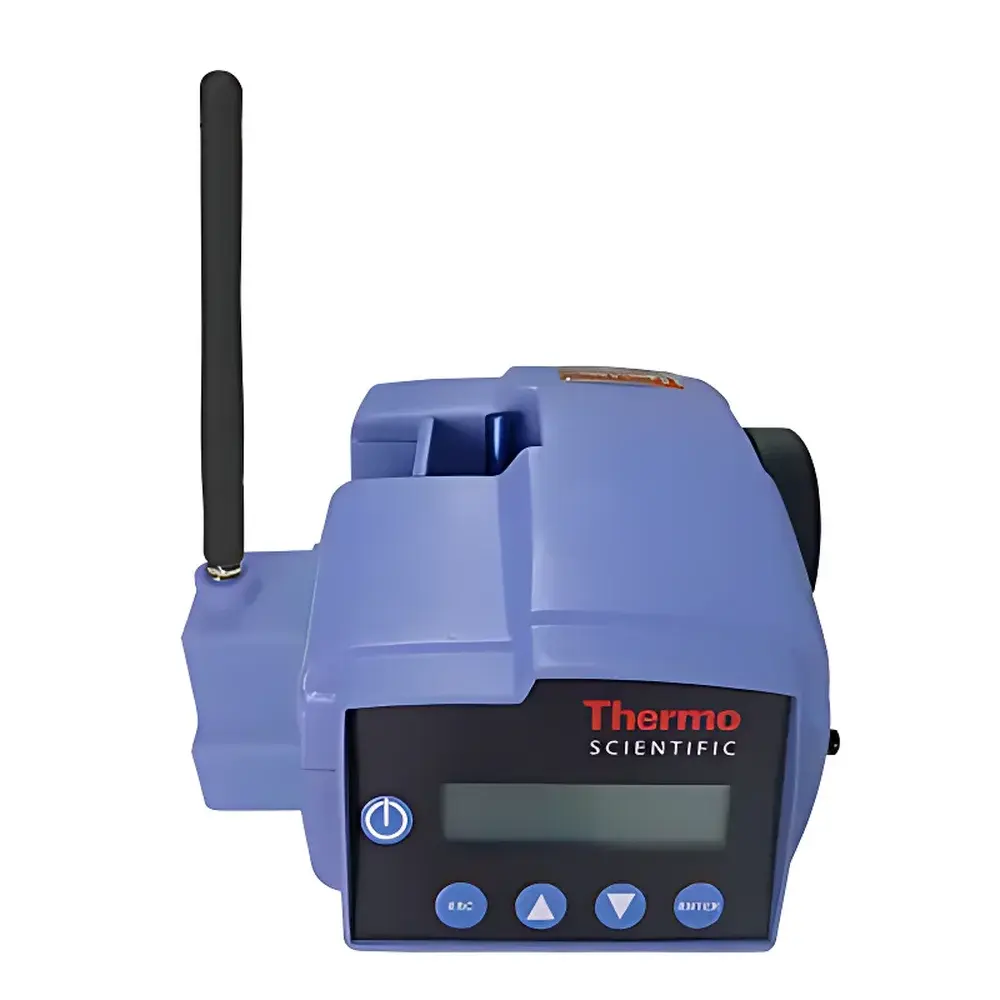
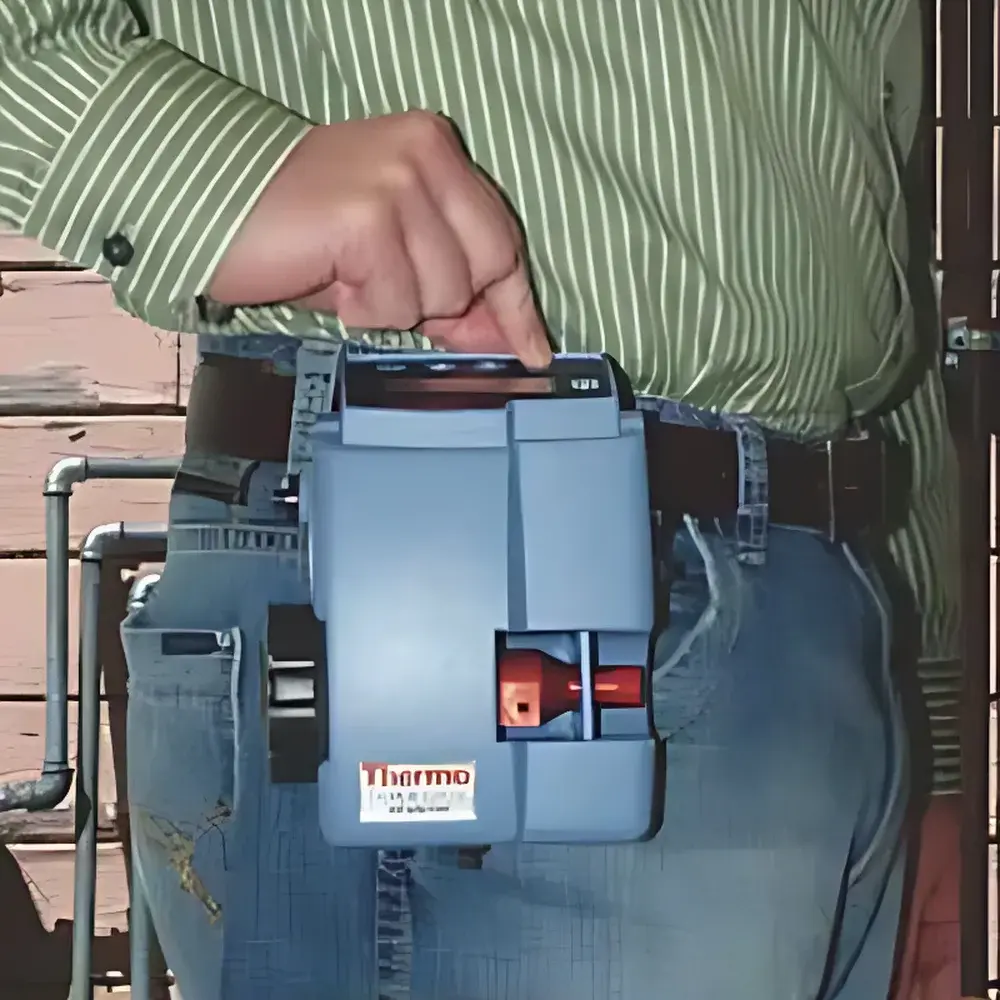
Thermo Scientific pDR-1500 Portable Particulate Matter Monitor
| Brand | Thermo Fisher |
|---|---|
| Origin | USA |
| Manufacturer | Thermo Fisher Scientific |
| Product Type | Imported Instrument |
| Model | pDR-1500 |
| Measurement Principle | Optical Light Scattering (880 nm IR) with Gravimetric Calibration Capability |
| Measured Parameters | PM₁₀, PM₂.₅ (with optional cyclone cutters) |
| Measurement Range | 0.001–400 mg/m³ (auto-ranging) |
| Sampling Flow Rate | 1.0–3.5 L/min |
| Minimum Detectable Concentration | 0.1% of reading or 0.001 mg/m³ (whichever is greater) |
| Flow Stability | ±5% of reading (traceable to SAE test protocols) |
| Resolution | 0.1% of reading or 0.001 mg/m³ (whichever is greater) |
| Accuracy | ±5% of reading (traceable to SAE standards) |
| Precision | ±2% of reading or ±0.005 mg/m³ (1-s avg) |
| Scattering Coefficient Range | ~1.5×10⁻⁶–0.6 m⁻¹ @ λ = 880 nm |
| Aerodynamic Particle Size Range | 1–10 µm |
| Optical Detection Angle | 90° |
| RH Compensation | Built-in relative humidity correction algorithm |
| Operating Temperature | –10°C to +50°C |
| Storage Temperature | –20°C to +70°C |
| Humidity Range | 10–95% RH (non-condensing) |
| Data Logging Interval | 1 s to 1 h |
| Total Memory Capacity | >500,000 data points |
| Power Supply | Internal rechargeable Li-ion battery (≥12 h field operation) + external DC input |
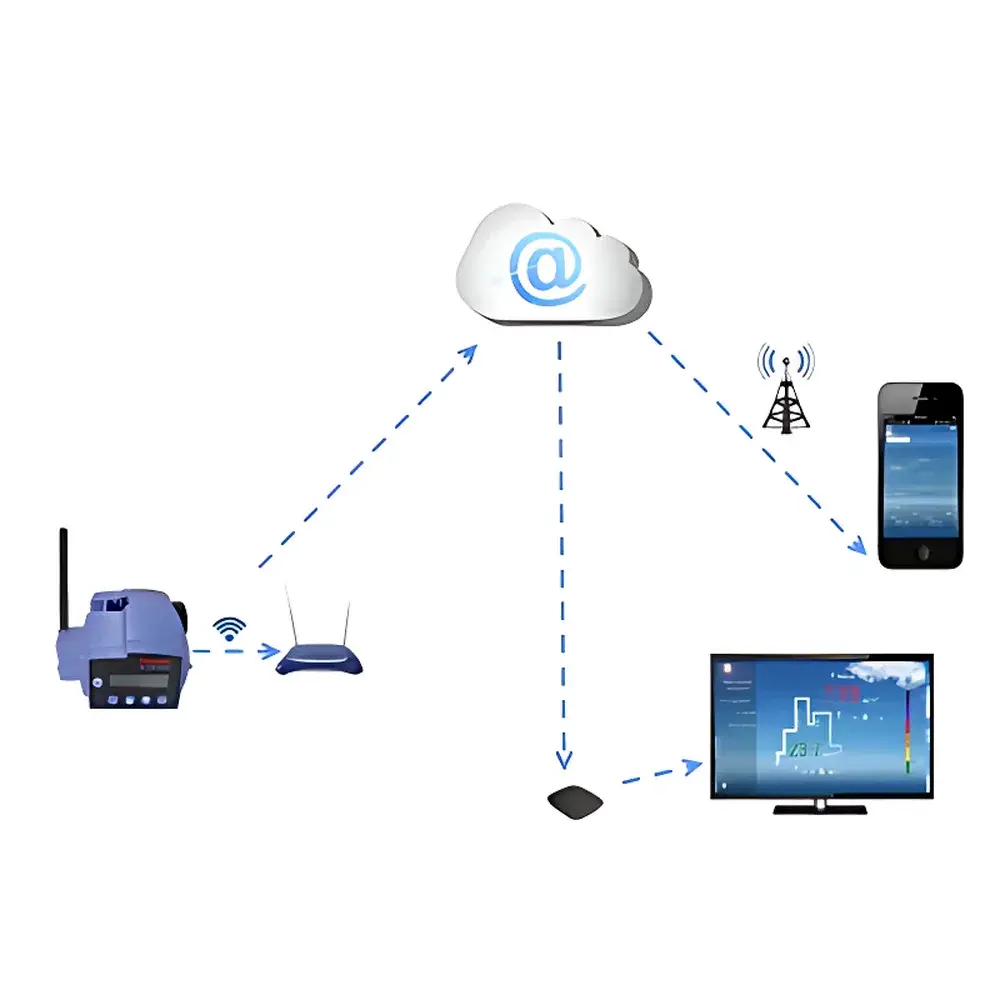
| Connectivity | Wi-Fi 802.11 b/g/n, iOS/Android mobile app support |
| Physical Dimensions | 181 mm (H) × 143 mm (W) × 84 mm (D) |
| Weight | 1.2 kg |
| Filter Medium | 37 mm glass fiber filter (for gravimetric validation) |
| Flow Control | Active volumetric flow control with linear flow path design |
| Inlet Configuration | Helical inlet for representative sampling without cyclone |
| Zero Calibration | Integrated HEPA-filtered zero air source |
Overview
The Thermo Scientific pDR-1500 Portable Particulate Matter Monitor is a field-deployable, real-time optical aerosol monitor engineered for high-fidelity measurement of airborne particulate mass concentrations across occupational, environmental, and research applications. It operates on the principle of 90° forward-angle light scattering using an 880 nm infrared laser source. As aerosol-laden air passes through the optical sensing chamber, particles scatter incident light proportionally to their surface area and refractive index. The scattered intensity is converted to mass concentration (mg/m³) via a calibration factor (k-factor) established through concurrent gravimetric analysis of collected material on a 37 mm glass fiber filter. This dual-mode architecture—combining real-time optical response with traceable gravimetric verification—ensures metrological rigor and supports regulatory-grade exposure assessment under ISO 7708, ACGIH TLV®, and OSHA Method ID-253 guidelines.
Key Features
- Volumetric flow control: Maintains precise, user-selectable sampling flow (1.0–3.5 L/min) independent of ambient pressure or filter loading—critical for compliant PM₂.₅/PM₁₀ monitoring per EPA Reference Method EQPM-0505-105.
- ACGIH-traceable cyclone compatibility: Supports interchangeable impactor cutpoints (PM₁, PM₂.₅, PM₄, PM₁₀) with documented aerodynamic cutoff performance validated against ISO 13795 and EN 12341.
- Integrated RH compensation: Dynamically corrects scattering response for ambient relative humidity effects between 10–95% RH, minimizing hygroscopic bias in urban or indoor environments.
- Zero-air calibration system: Onboard HEPA filtration enables automated zero-point verification without external gas cylinders—essential for GLP-compliant field audits.
- Helical inlet geometry: Ensures isokinetic sampling efficiency across particle sizes ≥1 µm even without cyclones, improving representativeness during construction or industrial site surveys.
- Wireless telemetry & mobile interface: Embedded Wi-Fi module streams time-stamped concentration data to iOS/Android devices; supports geotagged logging and remote configuration via secure HTTPS API.
Sample Compatibility & Compliance
The pDR-1500 is validated for use with standard 37 mm diameter glass fiber filters (e.g., Pallflex T60A20), enabling post-sampling gravimetric mass determination per ISO 12103-1 A2 test dust or NIST SRM 1648a urban particulate matter. Its optical detection range spans 0.1–10 µm aerodynamic diameter, with peak sensitivity aligned to respirable and thoracic fractions defined in ISO 7708. All flow calibration procedures are traceable to SAE J1211 test protocols, and instrument accuracy is verified against reference gravimetric samplers per ASTM D6245 and EN 12341 Annex B. The device meets CE marking requirements for electromagnetic compatibility (EN 61326-1) and carries IP54 ingress protection for outdoor deployment.
Software & Data Management
Data acquisition, visualization, and export are managed through the Thermo pDR Connect mobile application (iOS/Android) and desktop-compatible CSV export. Each recorded value includes timestamp, GPS coordinates (when enabled), temperature, RH, flow rate, and averaging interval. The internal memory stores >500,000 records with configurable logging intervals from 1 second to 1 hour. For regulated environments, the firmware supports audit-trail-enabled operation compliant with FDA 21 CFR Part 11 requirements—including electronic signatures, user access levels, and immutable data logs. Raw scattering coefficients (m⁻¹) and k-factor adjustment history are retained for method validation reporting.
Applications
- Ongoing exposure assessment in occupational settings (e.g., mining, foundries, pharmaceutical manufacturing) per NIOSH Method 0600 and ACGIH BEI® guidance.
- Real-time evaluation of engineering controls during demolition, excavation, or abrasive blasting operations.
- Long-term ambient air quality trend analysis at community monitoring stations or near-roadway sites.
- Indoor air quality diagnostics in schools, hospitals, and office buildings—particularly where HVAC performance or mold remediation efficacy must be quantified.
- Field validation of low-cost sensor networks using co-located pDR-1500 reference measurements.
- Personal exposure monitoring for epidemiological studies involving asthma, COPD, or cardiovascular outcomes.
FAQ
Does the pDR-1500 meet U.S. EPA equivalency requirements for PM₂.₅ monitoring?
No—it is not designated as a Federal Equivalent Method (FEM) or Federal Reference Method (FRM). However, it is widely used for supplemental monitoring, exposure science, and control verification where real-time resolution and portability outweigh regulatory certification needs.
Can the instrument be operated continuously for unattended monitoring?
Yes—when connected to external DC power (12 V), the pDR-1500 supports indefinite operation with scheduled data uploads via Wi-Fi; battery-only runtime exceeds 12 hours at typical 2.0 L/min flow.
How is the k-factor calibrated, and how often should it be updated?
The k-factor is derived by comparing real-time optical output to gravimetric mass gain on the 37 mm filter after a known sampling duration. Thermo recommends recalibration every 30 days for critical applications or following filter changes, per ISO/IEC 17025 Clause 7.7.
Is the device suitable for high-humidity environments such as tropical field sites?
Yes—the built-in RH compensation algorithm adjusts scattering response across 10–95% RH (non-condensing), and the helical inlet minimizes water droplet ingress. For condensing conditions, optional heated inlet accessories are available.
What documentation is provided for instrument validation and quality assurance?
Each unit ships with a Certificate of Conformance, SAE-traceable flow calibration report, factory optical alignment record, and NIST-traceable photodetector linearity verification—fully compliant with ISO/IEC 17025 and GLP documentation standards.
Related Products







