
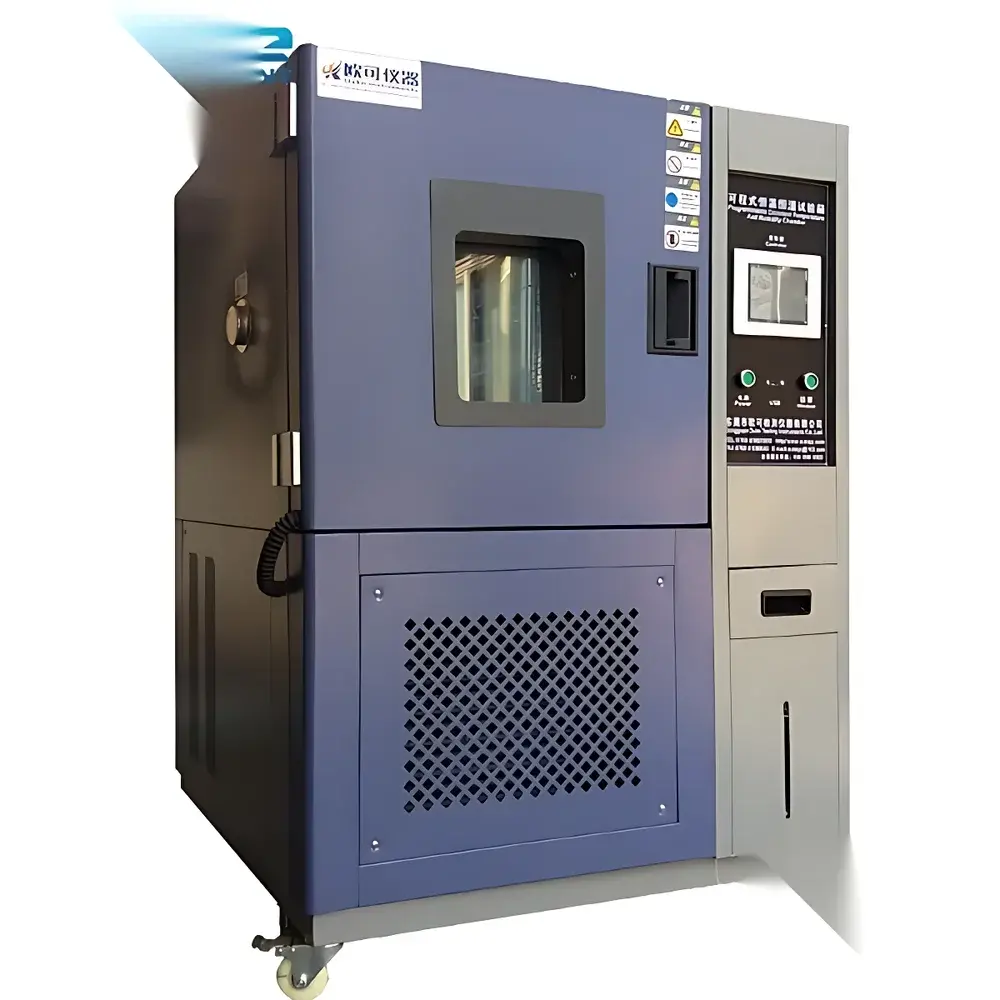
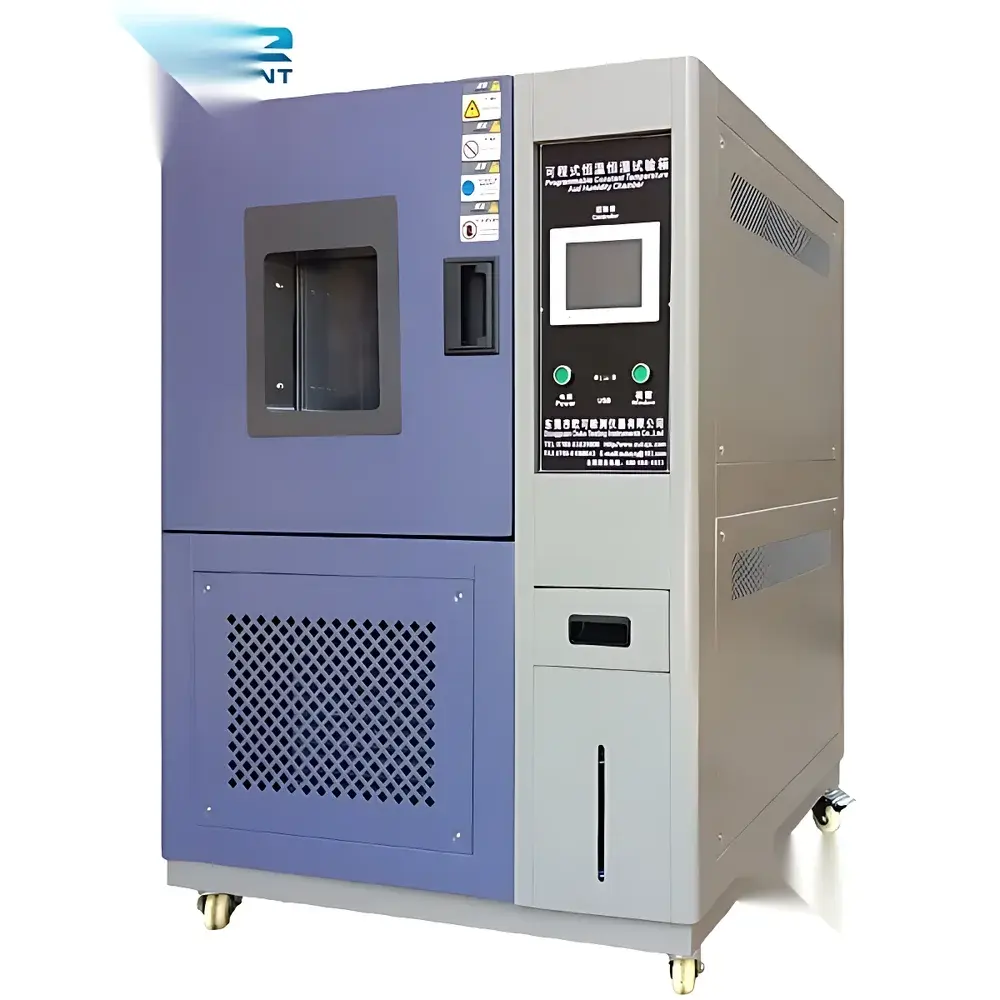
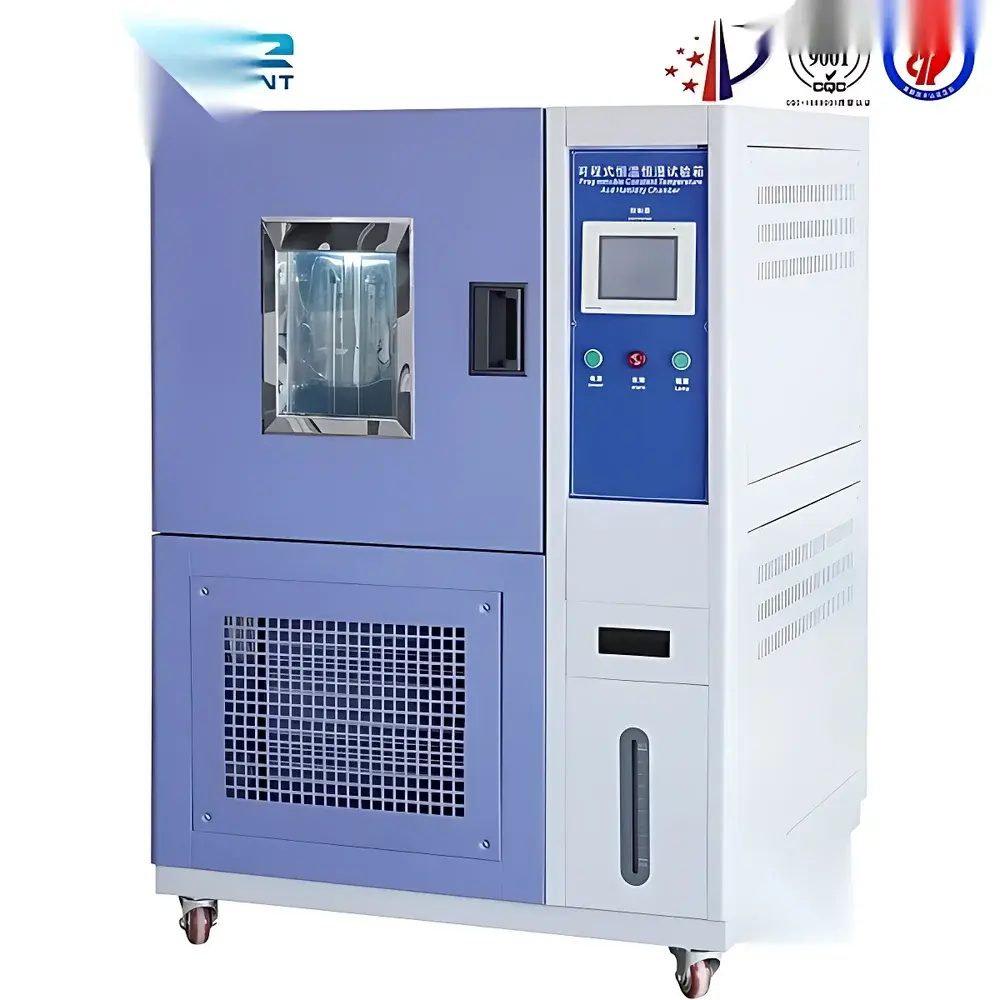
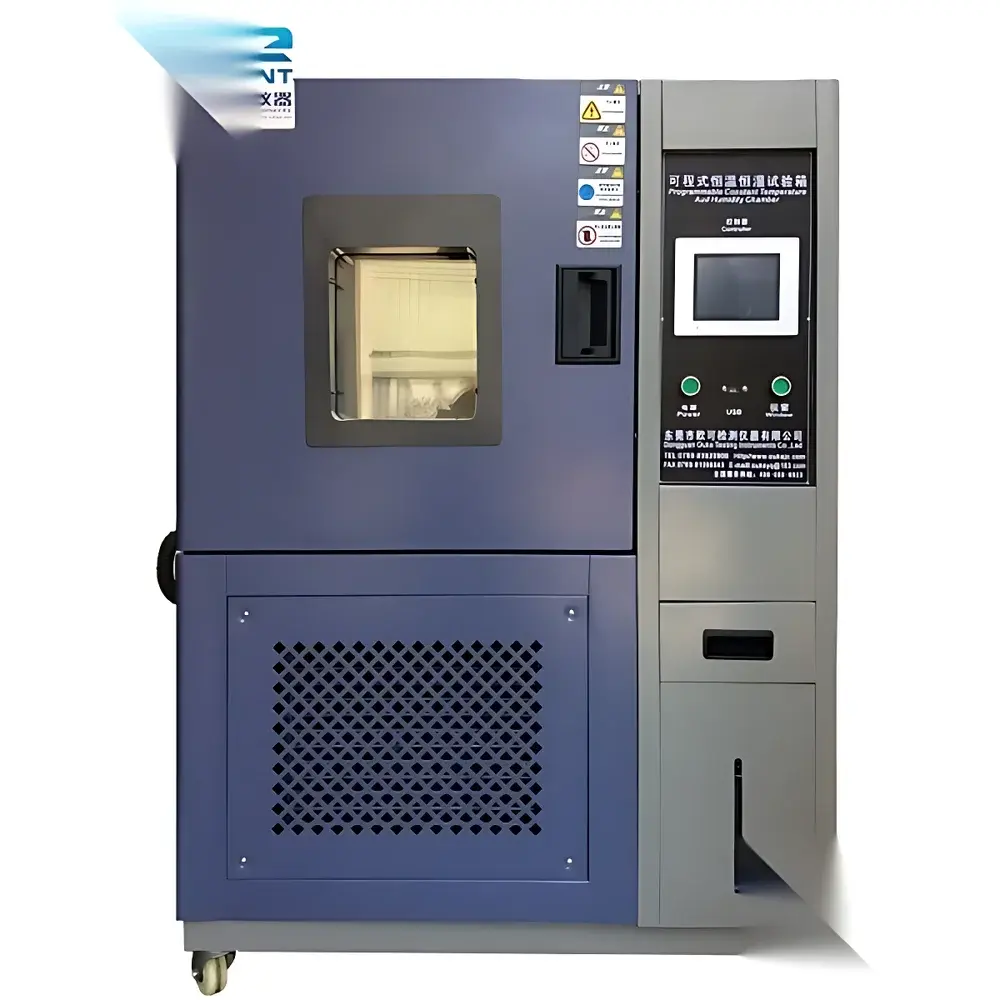
LED Temperature and Humidity Controlled Chamber
| Brand | OEM |
|---|---|
| Origin | Imported |
| Manufacturer Type | Authorized Distributor |
| Pricing | USD 2,650 (FOB) |
| Temperature Range | −40°C to +150°C |
| Humidity Range | 20%–98% RH |
| Control Accuracy | ±0.5°C / ±2.5% RH |
| Uniformity | ±1.5°C / ±3% RH |
| Ramp Rate (Typical) | 3–5°C/min (air average, unloaded, 25°C ambient) |
| Cooling Water Requirement | 10–28°C, 0.1–0.3 MPa |
| Refrigerant | R404A (CFC-free) |
| Compressor | Tecumseh/Taikang hermetic scroll type |
| Noise Level | <60 dB(A) |
| Compliance | GB/T 2423.1–2023, GB/T 2423.2–2023, IEC 60068-2-1:2022, IEC 60068-2-2:2022, GJB 1032A–2021, MIL-STD-2164A–2018 |
Overview
The LED Temperature and Humidity Controlled Chamber is an engineered environmental test system designed for precise, long-term simulation of climatic conditions in laboratory and industrial quality assurance settings. It operates on a balanced temperature and humidity control (BTHC) principle—utilizing proportional-integral-derivative (PID) algorithms to dynamically regulate heating, refrigeration, and steam-based humidification subsystems. This ensures thermal and hygric equilibrium by matching energy input to system heat/moisture loss, enabling stable, repeatable conditioning across defined operational envelopes. The chamber is purpose-built for environmental stress screening (ESS), accelerated life testing, and reliability validation of electronic components, automotive modules, aerospace hardware, and polymer-based assemblies under controlled thermal cycling and humidity exposure per internationally recognized test standards.
Key Features
- Robust safety architecture: dual independent overtemperature protection (mechanical & electronic), dry-run prevention for steam humidifier, low-water-level cutoff, compressor overload/overheat/overcurrent monitoring, high-pressure refrigerant cutout, molded-case circuit breaker, and residual-current device (RCD) for personnel protection.
- Optimized thermodynamic design: full-capillary tube expansion system with automatic capacity modulation—eliminating reliance on mechanical expansion valves for improved stability, faster ramp rates, and reduced maintenance intervals.
- High-efficiency operation: integrated distilled water recovery loop reduces consumable usage by up to 40%; optimized refrigeration circuitry achieves ≥30% lower power consumption versus legacy designs; auto-filtered municipal water feed eliminates dependency on deionized or distilled supply.
- Human-centric interface: ergonomic arc-shaped enclosure with non-slip, non-reactive door handle; 7-inch capacitive touchscreen controller supporting multi-language UI (English, German, French, Japanese, Chinese); programmable test profiles with up to 99 segments and 999 cycles.
- Acoustically refined construction: Taikang/Tecumseh hermetic scroll compressor with vibration-dampened mounting and insulated refrigerant lines—ensuring sustained operation at ≤60 dB(A) in standard lab environments.
Sample Compatibility & Compliance
The chamber accommodates standard test specimens up to 500 mm × 500 mm × 500 mm (W×D×H), with optional custom interior dimensions available upon engineering review. Two-tier stainless steel sample shelves (load capacity: 30 kg per shelf) support uniform airflow distribution. All units ship with factory-installed NIST-traceable third-party calibration certificate (covering temperature and humidity sensors across full operating range), ISO/IEC 17025-accredited, valid for 12 months. The system complies with mandatory requirements for GLP/GMP-aligned laboratories—including audit-ready event logging, user-access control levels, and electronic signature support when paired with optional 21 CFR Part 11-compliant software extension.
Software & Data Management
The embedded controller firmware supports real-time data acquisition at 1-second resolution, with internal storage for ≥30 days of continuous timestamped records (temperature, humidity, setpoint, alarm status). USB export enables CSV-compatible reporting for statistical process control (SPC) integration. Optional PC-based software provides remote monitoring via Ethernet/Wi-Fi, automated report generation (PDF/Excel), deviation alerting via email/SMS, and historical trend comparison across multiple test runs. All firmware updates are digitally signed and validated prior to installation to ensure integrity and regulatory traceability.
Applications
This chamber serves critical roles in qualification testing per MIL-STD-2164A (electronic ESS), GJB 1032A (military equipment screening), and IEC 60068-2 series (environmental testing of electrotechnical products). Typical use cases include: thermal shock preconditioning of PCBAs prior to HALT; humidity soak testing of conformal-coated sensors; accelerated corrosion evaluation of metal fasteners under cyclic damp heat; validation of packaging barrier performance for pharmaceutical primary containers; and verification of display module functionality under combined low-temperature/dry and high-temperature/high-humidity extremes.
FAQ
What is the maximum allowable load mass without compromising temperature/humidity uniformity?
For guaranteed uniformity within ±1.5°C / ±3% RH, total specimen mass should not exceed 25 kg. Load distribution must avoid blocking air inlet/outlet grilles.
Can the chamber operate continuously at 98% RH above 85°C?
Yes—continuous operation at 98% RH is supported up to +85°C. Above this temperature, maximum humidity is limited to 85% RH to prevent condensation-induced electrical hazards.
Is the calibration certificate issued by an ILAC-MRA signatory laboratory?
Yes—certificates are provided by CNAS-accredited labs (ISO/IEC 17025:2017) with direct traceability to NIM (National Institute of Metrology, China) and mutual recognition under APAC MRA.
Does the system support automated test sequencing across multiple chambers?
When equipped with optional LAN-enabled master-slave coordination module, up to 8 chambers can be synchronized for parallel profile execution and centralized data aggregation.
What maintenance schedule is recommended for optimal long-term performance?
Compressor oil analysis every 24 months; steam generator descaling every 6 months (using supplied citric acid solution); air filter replacement every 3 months; annual verification of PID tuning parameters and sensor drift compensation coefficients.



