
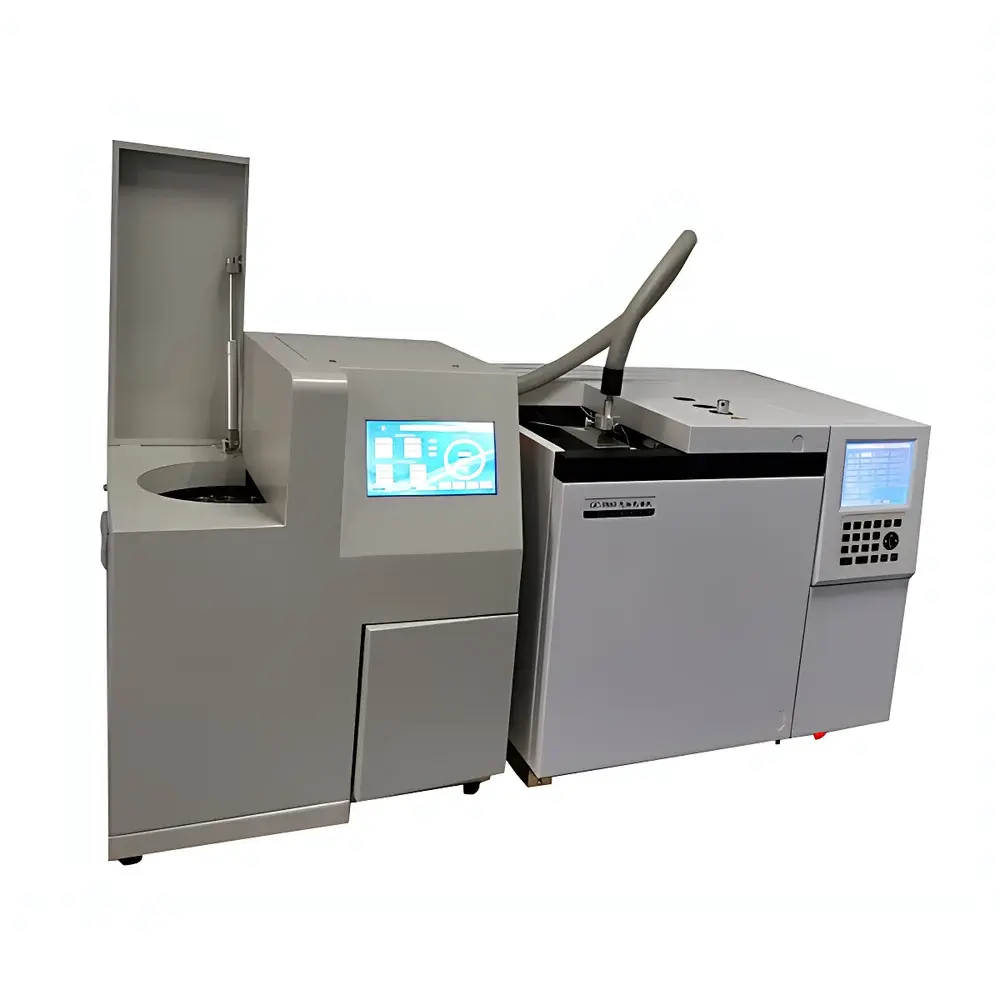
Beifen Sanpu A’HS-20A Plus Fully Automated Static Headspace Sampler for Waterborne Aromatic Hydrocarbons Analysis
| Brand | Beifen Sanpu |
|---|---|
| Origin | Beijing, China |
| Manufacturer | Beifen Sanpu Instruments Co., Ltd. |
| Model | A’HS-20A Plus |
| Instrument Type | Static Headspace Sampler |
| Automation Level | Fully Automatic |
| Vial Heating Range | Ambient to 200 °C (1 °C increments) |
| Valve & Transfer Line Temperature Control Range | 40–220 °C (±1 °C accuracy) |
| Sample Loop Volume | 1 mL |
| Sample Capacity | 20-position carousel |
| Compatible Vial Sizes | 10 mL or 20 mL vials |
| Compliance Standard | HJ 1067–2019 |
Overview
The Beifen Sanpu A’HS-20A Plus is a fully automated static headspace sampler engineered for precise, reproducible quantification of volatile aromatic hydrocarbons—including benzene, toluene, ethylbenzene, xylenes (o-, m-, p-), isopropylbenzene, and styrene—in aqueous environmental matrices. It operates on the principle of equilibrium static headspace sampling: aqueous samples are heated in sealed vials to promote partitioning of target analytes into the vapor phase above the liquid; once thermodynamic equilibrium is achieved, a precisely metered volume of headspace gas is transferred via a thermostatted valve and transfer line to a gas chromatograph (GC) equipped with a flame ionization detector (FID). This method eliminates solvent extraction and minimizes matrix interference, delivering high sensitivity and robustness for regulatory-grade analysis of trace-level VOCs in drinking water, surface water, groundwater, wastewater, and industrial effluents.
Key Features
- Fully automated 20-position sample carousel with programmable sequence control, enabling unattended overnight operation and improved laboratory throughput.
- Independent, high-stability temperature control for both vial oven (ambient to 200 °C, 1 °C resolution) and critical GC interface components—valve, loop, and transfer line (40–220 °C, ±1 °C accuracy)—ensuring quantitative transfer and preventing condensation or carryover.
- 1 mL fixed-volume sample loop designed for consistent injection volumes and minimized inter-run variability, supporting method reproducibility required by environmental testing protocols.
- Compatible with standard 10 mL and 20 mL crimp-top headspace vials, facilitating seamless integration with existing labware inventory and compliance with HJ 1067–2019 specifications.
- Robust stainless-steel fluidic path and inert surface treatment minimize adsorption losses of polar or reactive aromatics, preserving method recovery across extended calibration ranges.
- Embedded microprocessor with intuitive touchscreen interface supports full method parameter definition—including equilibration time, vial pressurization, loop fill/purge cycles, and GC trigger logic—without external PC dependency.
Sample Compatibility & Compliance
The A’HS-20A Plus is validated for use in accordance with the Chinese Environmental Protection Standard HJ 1067–2019, “Determination of Aromatic Hydrocarbons in Water by Headspace Gas Chromatography.” It meets all instrumental requirements for sample introduction specified in this method, including temperature control tolerances, vial capacity, and loop volume. While developed for domestic regulatory frameworks, its operational parameters align with internationally recognized practices for static headspace analysis per ISO 15681-2 (water quality — determination of volatile organic compounds — part 2: headspace/GC method) and supports data integrity requirements under GLP and ISO/IEC 17025 accredited laboratories. All thermal zones are calibrated traceable to NIST-certified references, and system suitability tests (SST) can be performed using certified benzene/toluene standard solutions to verify precision and detection capability at the method-defined reporting limits (LOD: 2–3 µg/L; LOQ: 8–12 µg/L at 10.0 mL sample volume).
Software & Data Management
The instrument integrates with standard GC data systems (e.g., Agilent OpenLab, Shimadzu LabSolutions, Thermo Chromeleon) via digital I/O or RS-232/USB communication. Method files include embedded audit trail metadata—user ID, timestamp, parameter set version, and run history—supporting basic 21 CFR Part 11 readiness when paired with compliant chromatography data systems (CDS). Full instrument logs (temperature profiles, valve actuation events, error codes) are stored internally and exportable as CSV for QA/QC review. Optional remote monitoring via Ethernet enables centralized fleet management in multi-instrument labs without compromising cybersecurity boundaries.
Applications
- Regulatory monitoring of drinking water sources for benzene (a known carcinogen) per national drinking water standards.
- Compliance testing of municipal and industrial wastewater discharges against local emission limits for BTEX compounds.
- Site assessment and remediation verification at former petrochemical facilities or underground storage tank sites.
- Method development and validation studies for emerging aromatic contaminants, including alkylated benzenes and styrene derivatives.
- Quality control of bottled water and beverage production lines where trace solvent migration may occur.
FAQ
What sample volume is required for HJ 1067–2019 compliance?
The standard specifies a 10.0 mL aqueous sample volume for optimal sensitivity and recovery; the A’HS-20A Plus accommodates both 10 mL and 20 mL vials without hardware modification.
Can the system be used with non-FID detectors?
Yes—while optimized for FID-based workflows per HJ 1067–2019, the sampler’s inert flow path and stable thermal performance support coupling with ECD, PID, or mass spectrometric detectors for enhanced selectivity or confirmation analysis.
Is method transfer from manual to automated headspace possible?
Absolutely—the A’HS-20A Plus replicates manual headspace parameters (equilibration temperature/time, pressure balance, injection volume) with higher repeatability; typical RSD for peak area is ≤3% across 10 replicate injections of 10 µg/L benzene standard.
Does the instrument require external gas supply for vial pressurization?
No—it utilizes carrier gas (typically nitrogen or helium) from the connected GC system for vial pressurization and loop filling, eliminating need for auxiliary gas cylinders or regulators.





