
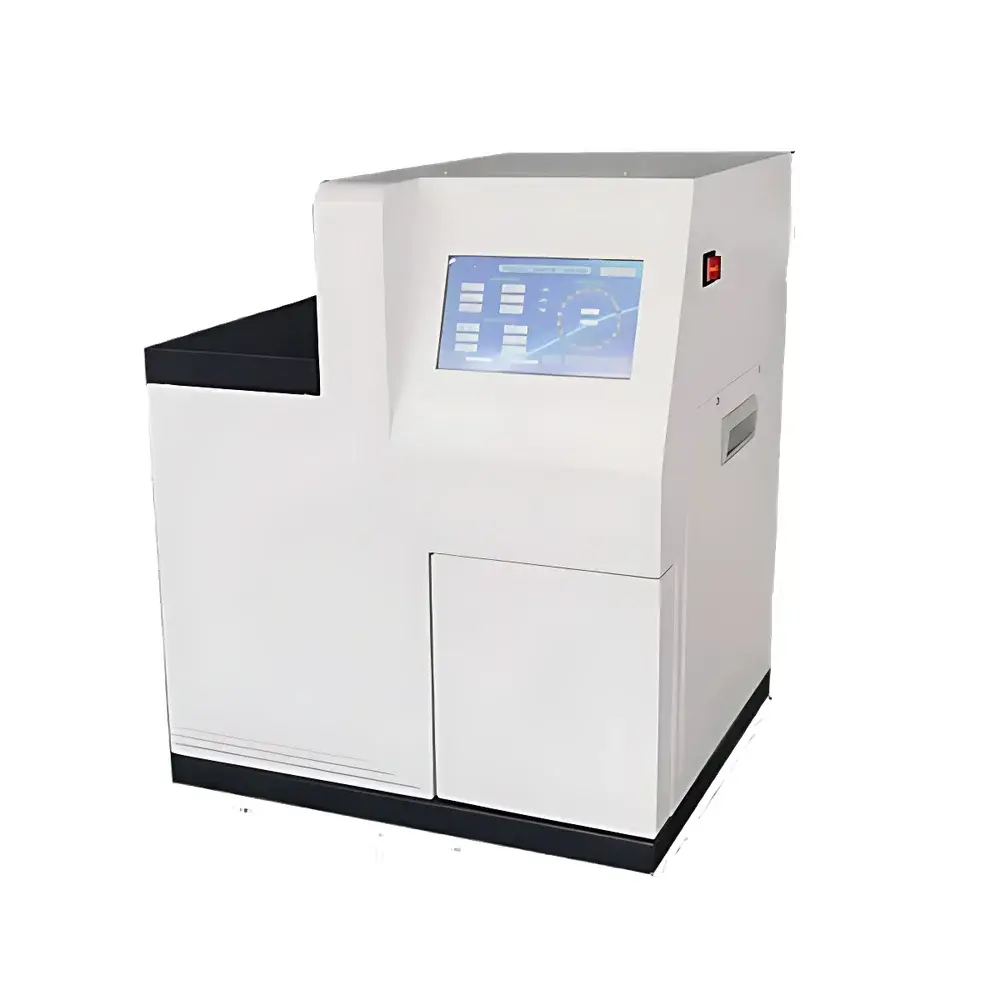
Beifen Sanpu AAHS-20A Plus Fully Automated Headspace Sampler
| Brand | Beifen Sanpu |
|---|---|
| Model | AAHS-20A Plus |
| Origin | Beijing, China |
| Manufacturer Type | Direct Manufacturer |
| Sample Positions | 20 |
| Heating Range (Sample/Valve/Transfer Line) | 40–220 °C (optional to 300 °C) |
| Temperature Accuracy | ±0.5 °C |
| Temperature Stability | < ±0.5 °C |
| Pressure Control Range | 0–0.25 MPa (continuously adjustable) |
| Pressurization Time | 0–999 s |
| Sampling Time | 0–30 min |
| Injection Time | 0–999 s |
| Purge Time | 0–30 min |
| Minimum Time Resolution | 1 ms |
| Quantitative Loop Volume | 1 mL (customizable: 0.5 / 2 / 5 mL) |
| Vial Capacity | 10 mL or 20 mL (customizable: 50 / 100 mL) |
| Simultaneous Heating | 1 or 2 vials |
| RSD | < 1.0% (for 100 ppm ethanol in water) |
| Purge Flow Rate | 0–100 mL/min (continuously adjustable) |
| Communication Interface | USB |
| Compliance | ASTM D6866, ISO 17025-compatible operation, GLP/GMP-ready audit trail via software logging |
Overview
The Beifen Sanpu AAHS-20A Plus Fully Automated Headspace Sampler is an engineered solution for precise, reproducible volatile organic compound (VOC) extraction from solid and liquid matrices prior to gas chromatographic analysis. It operates on the principle of equilibrium headspace sampling: a sealed sample vial is heated to promote partitioning of analytes into the vapor phase above the sample; after thermal equilibration, the headspace gas is pressurized, transferred via a high-inertness capillary path, and injected into the GC inlet using a temperature-controlled six-port valve and quantitative loop system. Designed for routine QC laboratories, environmental testing facilities, and pharmaceutical R&D units, the AAHS-20A Plus delivers robust automation without compromising analytical integrity—supporting method transfer, regulatory compliance, and long-term operational stability.
Key Features
- 20-position autosampler tray with automatic vial detection and collision-avoidance logic—skips empty positions and halts motion upon mechanical anomaly detection.
- Triple-zone independent temperature control: sample incubation oven, valve block, and transfer line—all heated to 40–220 °C (extendable to 300 °C upon request), eliminating cold spots and ensuring analyte integrity during transport.
- Positive-pressure sampling architecture: eliminates baseline drift associated with vacuum-based systems and enables direct compatibility with split/splitless GC inlets without modification.
- High-inertness fluidic pathway: all internal tubing, valves, and loops are passivated with Siltek® or equivalent deactivation technology—minimizing adsorption, carryover, and cross-contamination (RSD < 1.0% demonstrated for 100 ppm ethanol in aqueous matrix).
- Motor-driven actuation system: no external carrier gas or pneumatic supply required—reducing infrastructure dependency and improving lab safety.
- Seven-inch TFT LCD interface with animated workflow guidance; full parameter configuration possible locally or via USB-connected PC running Windows-compatible control software.
- Configurable injection protocols: single-vial multi-injection, single-shot per vial, or sequential multi-vial single-injection modes—optimized for throughput or method validation requirements.
- Integrated EPC (Electronic Pressure Control) option available for enhanced retention time stability and method ruggedness in regulated environments.
Sample Compatibility & Compliance
The AAHS-20A Plus accommodates standard 10 mL and 20 mL crimp-top headspace vials (custom formats up to 100 mL supported). It is validated for use with aqueous solutions, polymers, soils, foodstuffs, pharmaceutical excipients, and biological tissues. Its hardware architecture and firmware design support alignment with internationally recognized quality frameworks: instrument self-diagnostics—including power-on verification, positional encoder feedback, and real-time fault logging—facilitate GLP and GMP adherence. When paired with compliant chromatography data systems (CDS), audit trails for parameter changes, run sequences, and error events meet FDA 21 CFR Part 11 requirements for electronic records and signatures. Routine operation conforms to ASTM D6866 (biobased content), ISO 17025 clause 5.9 (method validation), and USP <467> residual solvents testing protocols.
Software & Data Management
Control is executed via a dedicated Windows application supporting method creation, sequence scheduling, real-time status monitoring, and event-triggered GC synchronization. All timing parameters—including equilibration, pressurization, sampling, injection, and purge intervals—are programmable with 1 ms resolution. The software logs timestamps, temperature profiles, pressure traces, and error codes in CSV or proprietary binary format, enabling retrospective analysis and deviation investigation. Remote access is supported via secure LAN deployment; integration with third-party CDS platforms (e.g., Thermo Chromeleon, Agilent OpenLab, Waters Empower) is achieved through standardized ASCII command sets or vendor-provided SDKs. Audit trail functionality includes user authentication, change history with operator ID, and immutable record archiving—essential for regulated pharmaceutical and contract testing laboratories.
Applications
- Residual solvent analysis in APIs and finished dosage forms per ICH Q3C guidelines.
- Volatile impurity profiling in polymer packaging materials (e.g., migration testing per EU 10/2011).
- BTEX and chlorinated hydrocarbon quantification in soil and groundwater per EPA Method 502.2 and 8260D.
- Alcohol content determination in beverages and disinfectants (AOAC 981.13, ISO 3696).
- Flavor and fragrance compound screening in food matrices using dynamic headspace coupling.
- Stability-indicating assays for oxidation-prone compounds where thermal degradation must be minimized during sample introduction.
FAQ
Is the AAHS-20A Plus compatible with non-Beifen Sanpu gas chromatographs?
Yes—it features universal analog/digital trigger outputs and RS-232/USB interfaces, enabling seamless synchronization with GC systems from Agilent, Thermo Fisher, Shimadzu, PerkinElmer, and others.
Can the instrument perform multiple injections from a single vial?
Yes—programmable “single-vial multi-injection” mode allows repeated sampling from one vial without re-equilibration, supporting calibration curve generation or replicate analysis.
What maintenance is required to sustain RSD < 1.0% performance?
Routine maintenance includes quarterly valve cleaning with methanol, annual replacement of septa and O-rings, and biannual verification of temperature uniformity across the sample block using NIST-traceable thermocouples.
Does the system support unattended overnight operation?
Yes—the 20-vial capacity, automated fault recovery, and power-fail resume capability enable fully unattended batch processing for up to 72 hours when integrated with appropriate GC column longevity and detector stability protocols.
Is EPC (Electronic Pressure Control) mandatory for regulatory submissions?
While not universally mandated, EPC is strongly recommended for FDA/EMA submissions requiring retention time repeatability < 0.02 min and peak area RSD < 2.0%—particularly in stability studies and bioequivalence testing.





