
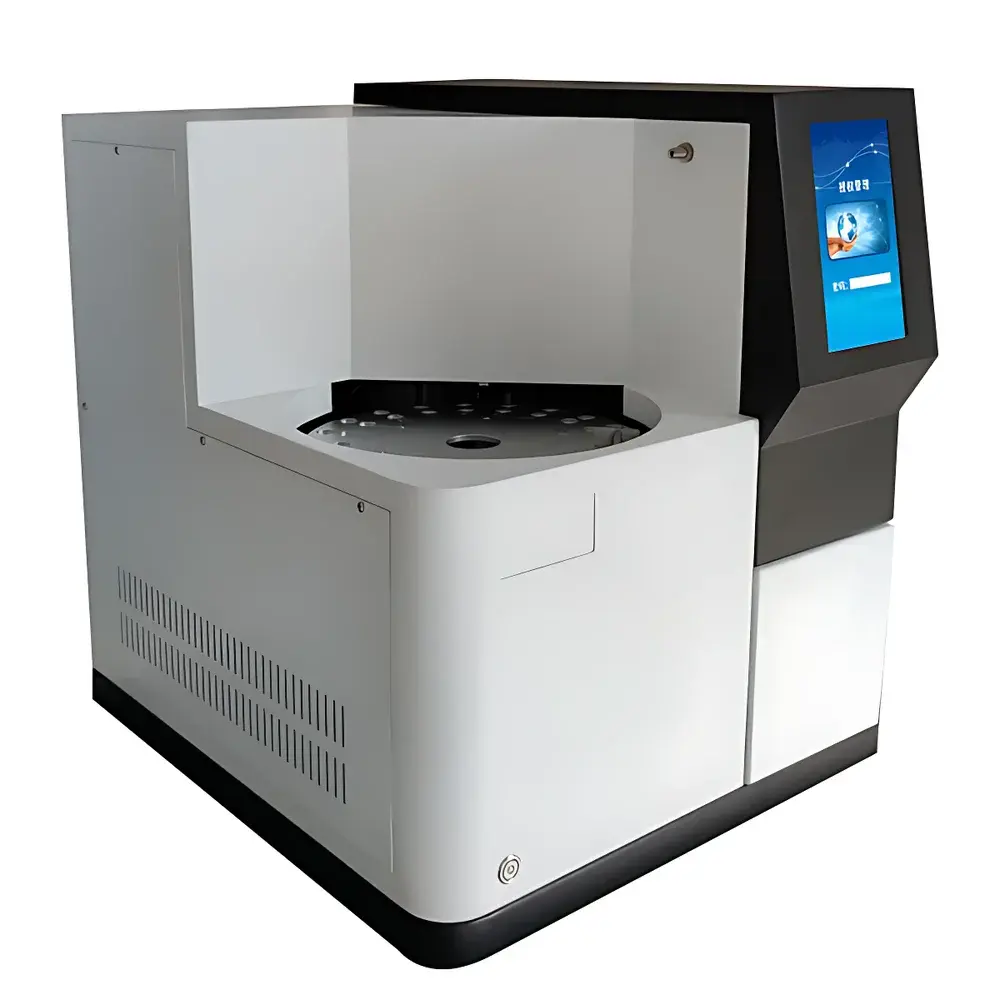
Beifen Sanpu ATDS-20B Automated Dual-Channel Secondary Thermal Desorber for Ambient Air Benzene Series Analysis
| Brand | Beifen Sanpu |
|---|---|
| Origin | Beijing, China |
| Manufacturer Type | Direct Manufacturer |
| Product Category | Domestic |
| Model | ATDS-20B |
| Instrument Type | Secondary Thermal Desorber |
| Desorption Temperature Range | Ambient to 450 °C |
| Cold Trap Temperature Range | −35 °C to Ambient |
| Desorption Recovery Rate | >99% |
| Sample Capacity | 40 tubes (dual 20-position carousel) |
Overview
The Beifen Sanpu ATDS-20B is an automated dual-channel secondary thermal desorber engineered for high-fidelity analysis of volatile organic compounds (VOCs), particularly benzene, toluene, ethylbenzene, xylenes (BTEX), and related aromatic hydrocarbons in ambient air, indoor air, and occupational environments. It operates on the principle of two-stage thermal desorption coupled with cryofocusing: adsorbed analytes are first thermally released from sorbent tubes under controlled inert gas flow (primary desorption), then refocused onto a cryogenically cooled trap (−35 °C), followed by rapid flash desorption into the gas chromatograph (GC) or GC–MS inlet. This architecture delivers narrow, symmetrical peaks, enhanced sensitivity, and quantitative reproducibility essential for compliance with regulatory methods including HJ 644–2013, HJ 583–2010, and GB/T 18883–2020. Designed as a standalone front-end module, the ATDS-20B interfaces seamlessly with all major domestic and international GC and GC–MS systems via standardized pneumatic and electronic protocols.
Key Features
- Automated dual 20-position sample carousel (40 total tubes) enabling unattended overnight operation without manual intervention
- Four independently controlled heating zones: primary desorption oven, six-port valve assembly, transfer line, and secondary desorption/focusing zone — each adjustable in 1 °C increments from ambient to 450 °C
- Electronic semiconductor-based cold trap with precise temperature control from −35 °C to ambient, ensuring efficient analyte focusing and minimal band broadening
- Programmable multi-step sequence including dry purge, sample draw, primary desorption, cryo-trapping, secondary flash desorption, and post-run valve/line backflush
- Passivated stainless-steel gas pathways and motor-driven six-port valve with automatic backflush (0–100 mL/min, continuously adjustable) to eliminate carryover between samples
- Integrated standard 1/4″ × 3.5″ (US EPA/ISO-compliant) tube format support; compatible with Tenax TA, Carbopack B/C, and multi-bed sorbents
- 7-inch capacitive touchscreen interface with real-time status animation, method storage (≥20 user-defined methods), and bilingual (English/Chinese) UI with role-based user management and audit-trail-enabled system logs
- USB communication interface for full PC-based method configuration, remote diagnostics, and synchronization with GC start signals or external LIMS triggers
Sample Compatibility & Compliance
The ATDS-20B accommodates standard 3.5-inch stainless-steel or glass sorbent tubes conforming to ASTM D6196, ISO 16017-1, and US EPA TO-17 specifications. Its validated recovery (>99% for BTEX at trace levels) and precision (RSD ≤2.5% at 0.05 μg benzene in methanol matrix) meet data quality objectives outlined in HJ 583–2010 and HJ 644–2013. The instrument supports full method validation workflows required under GLP and ISO/IEC 17025 frameworks, including calibration curve generation via integrated simulated sampling mode (0–160 mL/min adjustable flow). All thermal and timing parameters are digitally logged with timestamps, satisfying traceability requirements aligned with FDA 21 CFR Part 11 principles when used in regulated environmental testing laboratories.
Software & Data Management
Method development and execution occur through either the embedded touchscreen GUI or optional Windows-based control software (provided separately). Each method stores complete thermal profiles, valve timing sequences, gas flow settings, and calibration metadata. System logs record operator actions, error events, and hardware self-check results — exportable as CSV for QA review. The software supports scheduled runs, email alerts on completion/failure, and direct export of run parameters to common chromatography data systems (CDS) such as OpenLab CDS, Chromeleon, or Empower. Audit trail functionality captures user login/logout, method edits, and critical parameter changes — configurable for read-only access by QA personnel.
Applications
- Regulatory monitoring of ambient air VOCs per HJ 644–2013 (GC–MS) and HJ 583–2010 (GC–FID)
- Indoor air quality assessment per GB/T 18883–2020 and GB 50325–2020
- VOC emissions profiling from building materials, furniture, and automotive interiors (HJ/T 400–2007)
- Source emission testing from industrial stacks (HJ 734–2014) and fugitive emission surveys
- Workplace exposure monitoring for benzene and substituted benzenes under GBZ 159 and OSHA Method 52
- Method development and reference material certification in national metrology institutes and accredited environmental labs
FAQ
Is the ATDS-20B compatible with Agilent, Thermo Fisher, and Shimadzu GC systems?
Yes — it includes universal pneumatic connectors and TTL/relay-trigger interfaces for synchronized start/stop with all major GC platforms. Dedicated adapter kits are available for specific inlet configurations.
What sorbent tube formats does it support?
Standard 1/4″ OD × 3.5″ length metal or glass tubes meeting US EPA TO-17 dimensional and performance criteria; compatible with single- and multi-bed sorbents including Tenax TA, Carbopack B, Carbopack C, and Carbograph series.
Does it support 21 CFR Part 11 compliance?
While the base firmware provides audit-trail logging and user access controls, full Part 11 compliance requires deployment within a validated laboratory IT environment, including electronic signatures and secure network authentication — capabilities enabled via optional software modules and procedural SOP integration.
Can I perform method validation directly on this instrument?
Yes — built-in simulated sampling mode, programmable spike recovery tests, and RSD verification protocols support accuracy, precision, linearity, and limit-of-quantitation studies per ISO/IEC 17025 Annex A.2.
What maintenance intervals are recommended?
Valve seals and O-rings should be inspected every 500 runs; cold trap condenser cleaning is advised quarterly; annual calibration verification of all temperature zones using NIST-traceable probes is recommended for accredited use.
Related Products




