
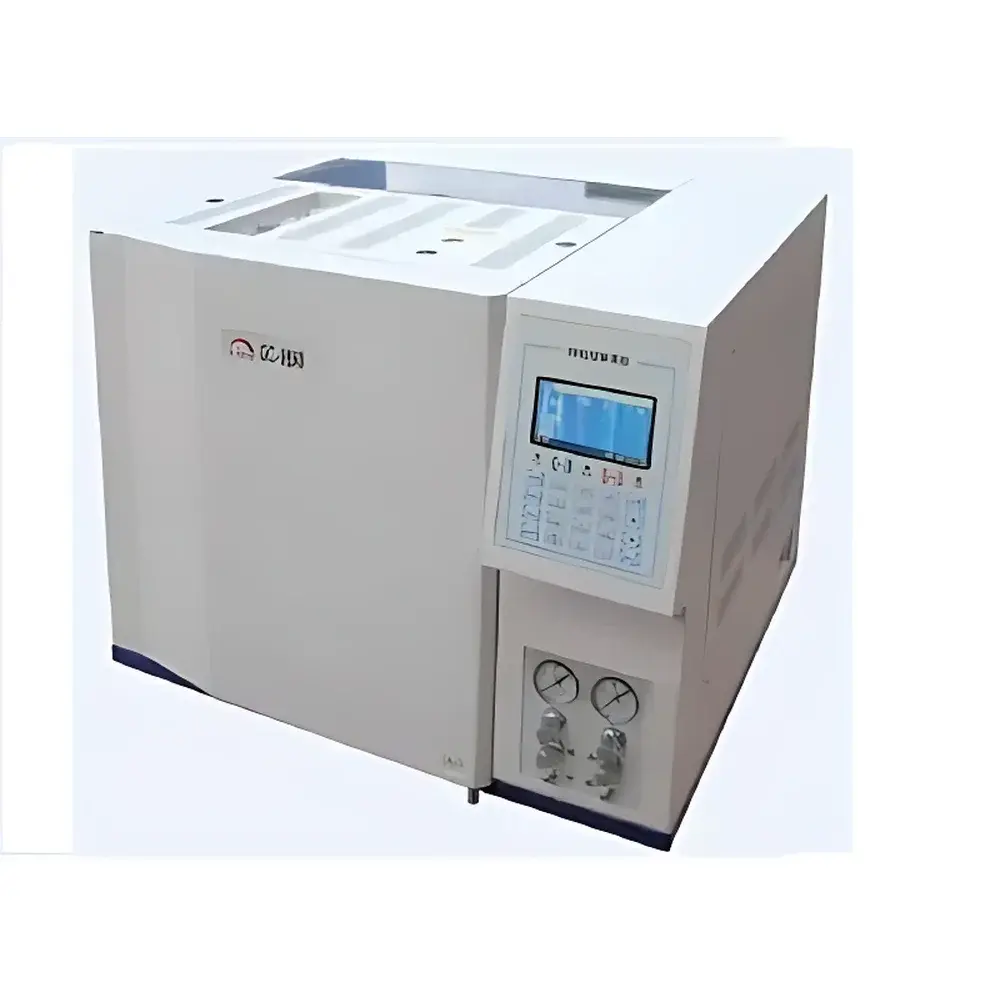
Beifen Sanpu GC-9860II Network-Enabled Gas Chromatograph
| Brand | Beifen Sanpu |
|---|---|
| Origin | Beijing, China |
| Manufacturer Type | Direct Manufacturer |
| Instrument Type | Laboratory Gas Chromatograph |
| Model | GC-9860II |
| Temperature Control Range | 4–450 °C |
| Oven Ramp Rate | 0.1–40 °C/min |
| Cooling Rate | 450 °C → 50 °C |
| Carrier Gas Pressure Control Range | 0–60 kPa |
| Carrier Gas Flow Control Range | 0–60 kPa |
| Injector Maximum Temperature | 450 °C |
| Injector Pressure Setting Range | 0–60 kPa |
| Injector Total Flow Setting Range | 0–1200 mL/min |
| Temperature Zones | 6 independent zones |
| Programmed Temperature Ramping | up to 8 steps |
| Detection Options | FID, TCD, ECD, FPD, NPD (up to 3 detectors simultaneously) |
| Interface | IEEE 802.3 Ethernet |
Overview
The Beifen Sanpu GC-9860II Network-Enabled Gas Chromatograph is a robust, modular laboratory gas chromatograph engineered for high-reproducibility separation and quantitative analysis of volatile and semi-volatile organic compounds across diverse sample matrices. Based on classical packed- and capillary-column gas chromatography principles, the system employs precise carrier gas flow and pressure regulation—via electronic pneumatic control (EPC)—to ensure retention time stability and method transferability. Its architecture supports simultaneous operation of up to three independently configurable detectors (FID, TCD, ECD, FPD, or NPD), enabling multi-analyte detection in a single run. Designed for routine QC/QA labs, environmental monitoring facilities, petrochemical testing centers, and academic research groups, the GC-9860II meets foundational requirements for method validation under ISO/IEC 17025 and supports audit-ready data handling when integrated with compliant chromatography data systems (CDS).
Key Features
- Six independently controlled temperature zones—including oven, up to three detector compartments, and dual inlet modules—each adjustable from 4 °C above ambient to 450 °C with ±0.1 °C thermal accuracy.
- Programmable oven ramping across eight heating/cooling segments, with linear ramp rates spanning 0.1–40 °C/min; rapid cool-down from 450 °C to 50 °C in ≤6 min under standard lab conditions.
- Full electronic pneumatic control (EPC) for carrier gas pressure (0–60 kPa) and total inlet flow (0–1200 mL/min), eliminating mechanical flow controllers and enhancing method reproducibility.
- Modular detector support: interchangeable FID, TCD, ECD (⁶³Ni source), FPD, and NPD units—each with factory-calibrated sensitivity specifications traceable to NIST SRMs.
- IEEE 802.3-compliant Ethernet interface enables remote instrument control, real-time status monitoring, and centralized fleet management via standard TCP/IP networks—compatible with LIMS integration and secure TLS-enabled CDS clients.
- Front-panel 192×64 dot-matrix LCD with Chinese/English bilingual interface; all method parameters stored internally with timestamped version history and user-access logging.
Sample Compatibility & Compliance
The GC-9860II accommodates a broad range of injection modalities—including split/splitless capillary injection, packed-column introduction, gas sampling via 6-port valve, and optional integration with third-party headspace autosamplers. This flexibility ensures compatibility with aqueous, solvent-based, gaseous, and solid-phase microextraction (SPME) extracts. The system complies with key regulatory frameworks governing analytical instrumentation: its temperature stability, detector linearity, and signal-to-noise performance align with ASTM D3606 (gasoline aromatics), EPA Method 8021B (halogenated organics), and USP Chromatography guidelines. When operated with validated methods and paired with 21 CFR Part 11–compliant software, the platform supports GLP and GMP environments requiring full audit trails, electronic signatures, and data integrity assurance per ALCOA+ principles.
Software & Data Management
Control and data acquisition are performed via PC-based chromatography data systems compatible with the GC-9860II’s native Ethernet protocol. Raw signal acquisition supports 100 Hz sampling resolution, baseline correction algorithms, peak integration using tangent skim or valley-to-valley methods, and customizable reporting templates (PDF, CSV, XML). All method files, sequence logs, and raw chromatograms are stored with embedded metadata—including operator ID, instrument serial number, calibration timestamps, and environmental sensor readings (if external sensors are connected). System-level security controls include role-based access permissions, encrypted database storage, and automatic backup to network-attached storage (NAS) or cloud repositories meeting ISO/IEC 27001 standards.
Applications
- Environmental analysis: quantification of BTEX, PAHs, chlorinated solvents, and pesticides in soil, water, and air samples per EPA SW-846 protocols.
- Petrochemical QA: hydrocarbon group-type analysis (HTA), gasoline oxygenate profiling (MTBE, ETBE), and refinery gas composition per ASTM D1945 and D1946.
- Pharmaceutical residual solvent testing: compliance with ICH Q3C guidelines for Class 1–3 solvents in APIs and finished dosage forms.
- Food safety: detection of flavor compounds, adulterants (e.g., melamine derivatives), and packaging migrants (e.g., toluene, xylene) at sub-ppm levels.
- Forensic toxicology: confirmation of volatile drugs of abuse (e.g., ethanol, methanol, isopropanol) and accelerants in arson investigations.
FAQ
Is the GC-9860II compatible with third-party chromatography data systems (CDS)?
Yes—the instrument exposes a documented TCP/IP command set and supports standard GC communication protocols (e.g., Agilent 6890 emulation mode), enabling interoperability with major CDS platforms including OpenLab CDS, Chromeleon, and Empower when configured with appropriate driver modules.
What maintenance intervals are recommended for the FID and ECD detectors?
FID jet cleaning and collector electrode inspection are advised every 200–300 sample injections; ECD ⁶³Ni source activity verification and cell cleaning should occur quarterly or after 500 injections, whichever comes first—per manufacturer service bulletins.
Can the GC-9860II operate unattended overnight?
Yes—equipped with automated shutdown sequences, thermal runaway protection, and Ethernet-based remote alarm notification, the system supports unattended operation for up to 72-hour sequences when paired with a certified autosampler and uninterrupted power supply (UPS).
Does the instrument meet CE or UL safety certification requirements?
The GC-9860II conforms to IEC 61010-1:2010 for electrical safety in laboratory equipment and carries CCC (China Compulsory Certification); CE marking is available upon request for export configurations meeting EU Machinery Directive 2006/42/EC and EMC Directive 2014/30/EU.





