
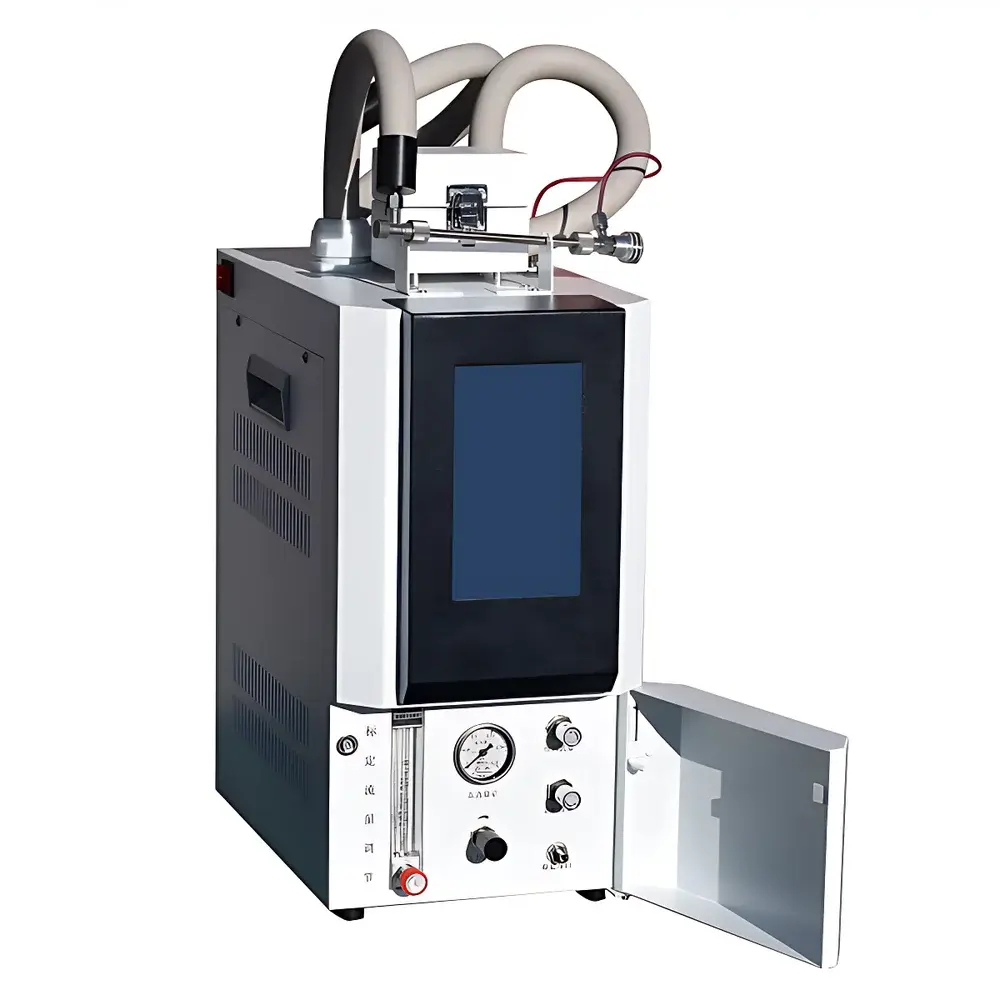
Beifen Sanpu TDAS-3430 Dual-Stage Thermal Desorber for GC/GC-MS
| Brand | Beifen Sanpu |
|---|---|
| Origin | Beijing, China |
| Manufacturer Type | Manufacturer |
| Product Category | Domestic |
| Model | TDAS-3430 |
| Price | USD 9,200 (approx.) |
| Instrument Type | Dual-stage thermal desorber |
| Desorption Temperature Range | Ambient to 450 °C |
| Cold Trap Temperature Range | −35 °C to ambient |
| Desorption Recovery Rate | >99% (compound-dependent) |
| Sample Position Capacity | 1 tube |
Overview
The Beifen Sanpu TDAS-3430 is a fully automated dual-stage thermal desorber engineered for high-fidelity sample introduction into gas chromatography (GC) and gas chromatography–mass spectrometry (GC-MS) systems. It operates on the principle of two-step thermal desorption: first, volatile organic compounds (VOCs) adsorbed onto solid sorbent tubes are thermally released in a controlled environment; second, the desorbed analytes are refocused in a cryogenically cooled trap (−35 °C to ambient), then rapidly injected as a narrow, solvent-free band into the GC column. This two-stage process minimizes band broadening, enhances sensitivity, and ensures reproducible quantitation—critical for compliance with environmental monitoring standards such as HJ 644–2013, HJ 583–2010, and GB 50325–2020. The system requires no hardware modification to existing GC instruments and maintains original GC operating parameters, enabling seamless integration across domestic and international platforms.
Key Features
- Integrated semiconductor cooling for cold trap operation—eliminates liquid nitrogen dependency and reduces operational cost.
- Four independently programmable heating zones: desorption furnace, valve oven, transfer line, and secondary desorption zone—ensuring zero cold spots and full analyte integrity.
- High-temperature (up to 240 °C) heated six-port valve with inert, de-activated stainless-steel flow path to prevent adsorption or degradation of thermally labile compounds.
- Automated time-sequence control for desorption, purge, re-desorption, injection, and back-flush—programmable via intuitive 7-inch touchscreen interface.
- Self-cleaning function: automatic back-flush of transfer line and valve using carrier gas to eliminate cross-contamination between samples.
- Modular design supports configuration as either ambient- or cryo-assisted secondary desorption unit, adaptable to method-specific requirements.
- Pre-calibrated internal standard simulation mode for rapid calibration curve generation without external gas standards.
- Universal GC interface compatibility—including dedicated adapters for Agilent, Thermo Fisher, Shimadzu, and PerkinElmer GC inlets.
Sample Compatibility & Compliance
The TDAS-3430 accepts standard 6 mm OD × 89 mm length sorbent tubes (e.g., Tenax TA, Carbopack B/C, Carboxen 1000) and supports single-tube analysis per run. It is validated for analysis of VOCs with boiling points up to 350 °C, including benzene, toluene, ethylbenzene, xylenes (BTEX), aldehydes, C2–C12 hydrocarbons, and semi-volatile organics under regulated environmental protocols. All thermal and timing parameters comply with ISO 16000-6:2011 (indoor air), ASTM D6196-21 (VOC sampling), and US EPA TO-17 methodology requirements. Data acquisition and audit trail functionality support GLP/GMP workflows and 21 CFR Part 11 readiness when paired with compliant chromatography data systems (CDS).
Software & Data Management
The instrument is controlled by embedded microprocessor firmware with real-time status visualization, method storage (≥100 methods), and event logging (temperature, valve actuation, pressure, timing). Method files include user-defined ramp rates, hold times, and temperature setpoints for each zone. Synchronization signals (TTL or RS-232) enable coordinated start/stop with GC autosamplers and data systems. Raw log files (CSV format) record all operational parameters and alarms for traceability. Firmware updates are performed via USB port, and system diagnostics include self-test routines for heater circuits, thermocouple validation, and valve position verification.
Applications
The TDAS-3430 is routinely deployed in accredited environmental laboratories for: indoor air quality assessment (GB/T 18883–2002); vehicle cabin emissions testing (HJ/T 400–2007); building material emission profiling (GB 50325–2020); ambient air VOC monitoring (HJ 644–2013, HJ 734–2014); and industrial stack gas analysis. Its narrow peak width (99%) make it suitable for low-level quantitation down to sub-ng/m³ levels when coupled with high-sensitivity mass spectrometers. The system also supports research applications in food aroma profiling, polymer off-gassing studies, and forensic ignitable liquid residue analysis.
FAQ
How often should the cold trap be cleaned or replaced?
Cold trap maintenance depends on sample matrix load. For routine environmental air analysis, inspect and clean the trap every 100–200 runs using inert solvent rinse; replace quartz or stainless-steel trap liners annually or after exposure to heavy particulate or condensable contaminants.
Is calibration required before each analytical batch?
Per ISO/IEC 17025 and EPA guidelines, initial system suitability testing (SST) is mandatory prior to sequence startup. Daily calibration verification using certified standard gas or spiked sorbent tubes is recommended for regulatory reporting.
Can the TDAS-3430 be operated remotely via network?
The current firmware supports local USB and RS-232 communication only. Ethernet or Wi-Fi remote control is not natively supported but can be implemented via third-party LabVIEW or Python-based automation bridges.
What is the maximum allowable moisture content in sampled air for reliable desorption?
For optimal performance, sampled air should contain <20 mg/m³ water vapor. Excess moisture may cause ice formation in the cold trap or reduce sorbent capacity—use of Nafion dryers or silica gel pre-traps is advised for humid environments.
Does the instrument meet electromagnetic compatibility (EMC) standards for laboratory use?
Yes. The TDAS-3430 complies with IEC 61326-1:2013 (industrial EMC) and has passed conducted/radiated emission and immunity testing per EN 61000-4 series, ensuring stable operation near sensitive GC-MS instrumentation.






