
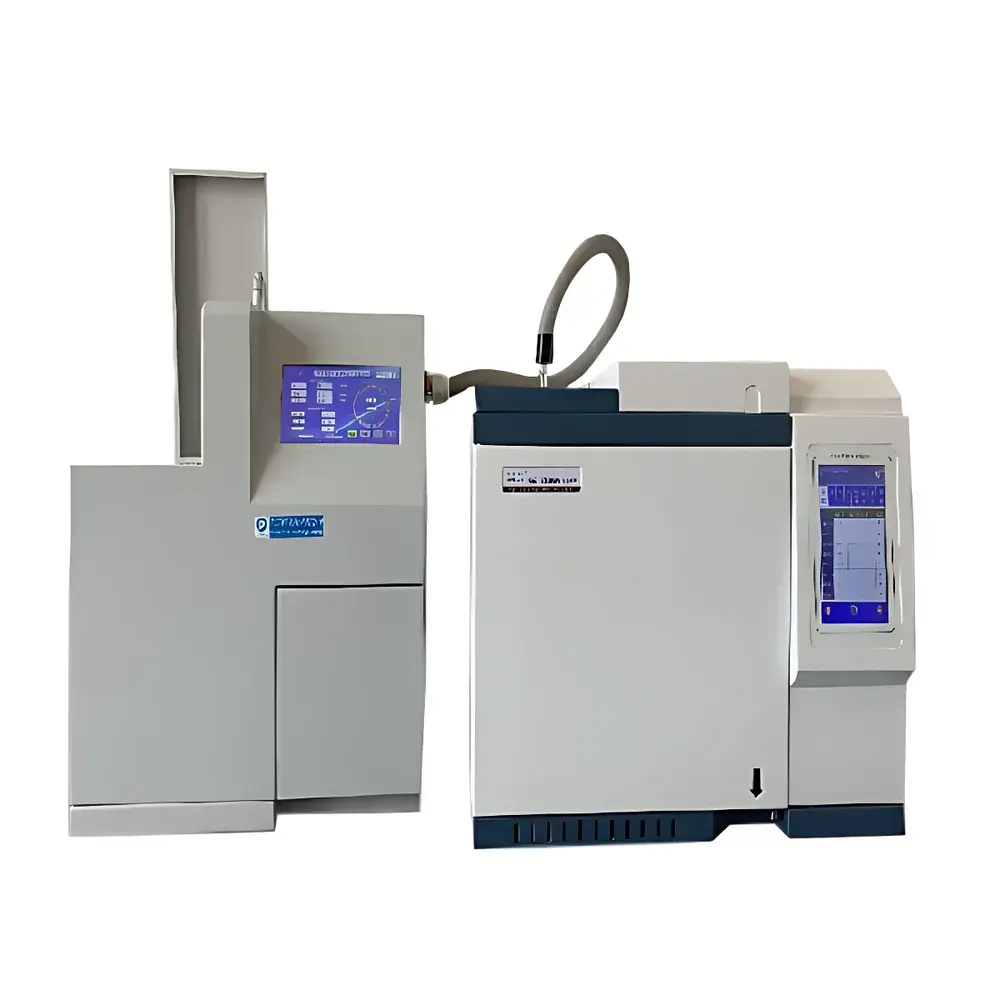
Beifen Sanpu AHS-20A Plus Fully Automated Headspace Sampler + GC-9860 Gas Chromatograph with FID
| Brand | Beifen Sanpu |
|---|---|
| Origin | Beijing, China |
| Manufacturer Type | Manufacturer |
| Instrument Type | Static Headspace Sampler |
| Automation Level | Fully Automated |
| Sample Vial Heating Range | Ambient to 200 °C (1 °C increment) |
| Valve & Transfer Line Temperature Range | 40–220 °C (±1 °C accuracy) |
| Quantitative Loop Volume | 1 mL |
| Vial Capacity | 20 positions |
| Vial Size Compatibility | 10 mL or 20 mL |
Overview
The Beifen Sanpu AHS-20A Plus Fully Automated Headspace Sampler coupled with the GC-9860 Gas Chromatograph represents a validated, integrated solution for trace-level volatile organic compound (VOC) analysis using static headspace gas chromatography (HS-GC). This configuration operates on the principle of phase equilibrium partitioning: solid or liquid samples are heated in sealed vials to establish vapor-phase equilibrium; the equilibrated headspace gas is then pressurized and transferred via a high-inertness six-port valve and heated transfer line directly into the GC injection port. The system is engineered for precision quantification of residual solvents—particularly ethylene oxide (EO)—in medical devices, pharmaceutical excipients, packaging materials, and environmental matrices. It complies with core regulatory frameworks including ISO 10993-7 (biological evaluation of medical devices), USP Residual Solvents, EP 2.4.24, and Chinese Pharmacopoeia (2020 Edition) General Chapter 0861, ensuring method robustness for GLP- and GMP-aligned laboratories.
Key Features
- Fully automated 20-position sample carousel with intelligent vial detection—skips empty positions and prevents mechanical collision during robotic arm movement.
- Triple-zone independent temperature control: sample vial oven (ambient–200 °C), six-port valve (40–220 °C), and transfer line (40–220 °C), all maintained within ±0.5 °C stability and 0.5% absolute accuracy.
- Pressurized headspace sampling using inert, electronically controlled pressure regulation (0–0.25 MPa, continuously adjustable), eliminating carrier gas interference and baseline drift.
- 1 mL fixed-volume quantitative loop constructed from deactivated fused-silica tubing; optional custom loops (0.5/2/5 mL) available for extended dynamic range.
- 7-inch full-color graphical LCD interface with animated workflow guidance; supports both front-panel and USB-connected PC parameter configuration.
- Comprehensive self-diagnostic suite: automatic sample tray homing, real-time fault logging for heater failure, valve actuation error, or communication timeout.
- EPC-compatible electronic pressure control (optional) for enhanced retention time reproducibility and method transferability across instruments.
Sample Compatibility & Compliance
The system accommodates standard 10 mL and 20 mL crimp-top headspace vials (custom sizes up to 100 mL available), compatible with aluminum seals and silicone/PTFE septa. It supports aqueous, polymeric, powdered, and semi-solid matrices—including sterilized PPE, IV bags, syringes, and pharmaceutical packaging films. Method validation adheres to ICH Q2(R2) guidelines for specificity, linearity (5–500 ppm EO), LOD/LOQ (<0.1 ppm), precision (RSD <1.0% at 100 ppm ethanol), and robustness. Regulatory alignment includes ASTM D6866-22 (bio-based content), EPA Method 502.2 (drinking water VOCs), HJ 642–2013 and HJ 643–2013 (soil/solid waste VOCs), and GB/T 16886.7–2015 (EO residue in medical devices).
Software & Data Management
Controlled via BF-2002 Chromatography Data System (CDS), the platform provides full audit trail functionality compliant with FDA 21 CFR Part 11 requirements—including electronic signatures, user access levels, and immutable raw data archiving. Sequence setup supports multi-method scheduling, dynamic parameter adjustment per vial (e.g., individual equilibration times), and synchronized GC start triggers. Peak integration follows AIA/ANDI standards; calibration curves support linear, quadratic, and weighted regression models. All method files, sequence logs, and audit reports are exportable in PDF, CSV, or XML formats for internal QA review or external regulatory submission.
Applications
Primary applications include residual EO quantification in Class I–III medical devices per ISO 10993-7; solvent residue testing in pharmaceutical primary packaging (e.g., blister foils, vial stoppers); VOC profiling in food contact materials (SN/T 4068–2014); and environmental screening of halogenated hydrocarbons in soil and water (HJ 736–2015, HJ 810–2016). Secondary use cases span flavor/aroma analysis in beverages and cosmetics, forensic toxicology (blood alcohol), and polymer outgassing studies in aerospace composites.
FAQ
Is this system compatible with third-party GCs beyond the GC-9860?
Yes—the AHS-20A Plus features universal TTL and RS-232 interfaces, enabling seamless synchronization with Agilent, Shimadzu, Thermo Fisher, and PerkinElmer GC platforms.
What maintenance intervals are recommended for long-term reliability?
Valve cleaning and septum replacement every 500 injections; quantitative loop bake-out at 250 °C for 30 minutes monthly; annual calibration verification using NIST-traceable EO standard solutions.
Can the system be validated for ISO/IEC 17025 accredited laboratories?
Absolutely—the instrument qualification package includes IQ/OQ documentation templates, performance verification protocols (e.g., carryover <0.1%, memory effect ≤0.5%), and traceable calibration certificates for all critical temperature and pressure sensors.
Does the software support 21 CFR Part 11-compliant electronic records?
Yes—BF-2002 CDS implements role-based permissions, encrypted audit trails, electronic signatures with biometric or token authentication, and automatic backup to network-attached storage (NAS) or LIMS-integrated repositories.




