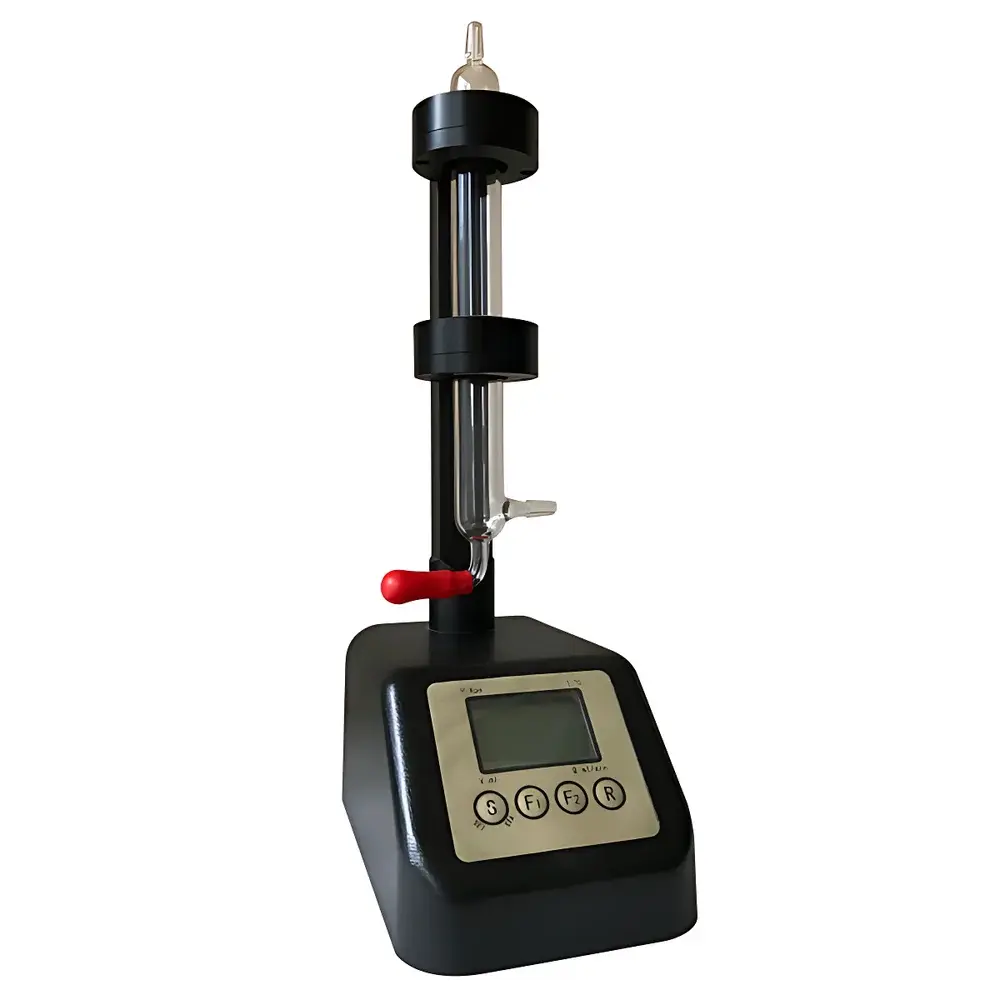
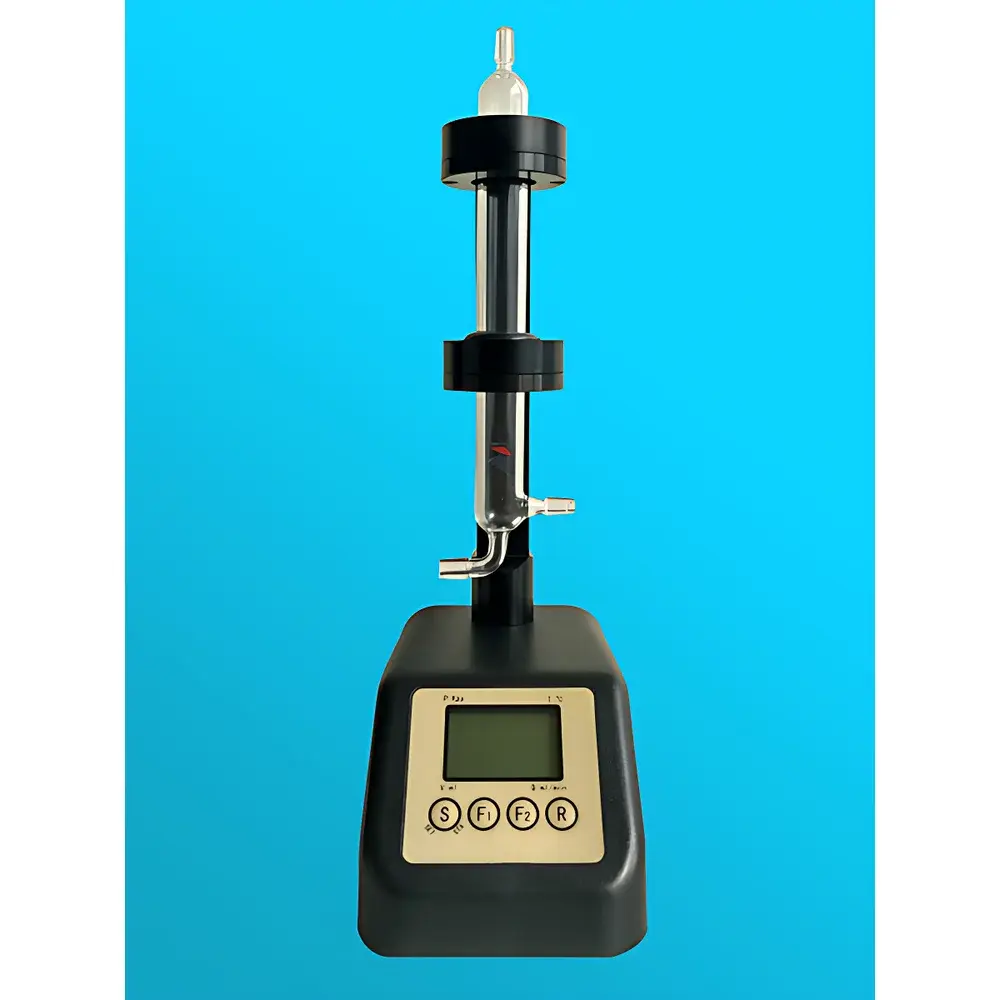
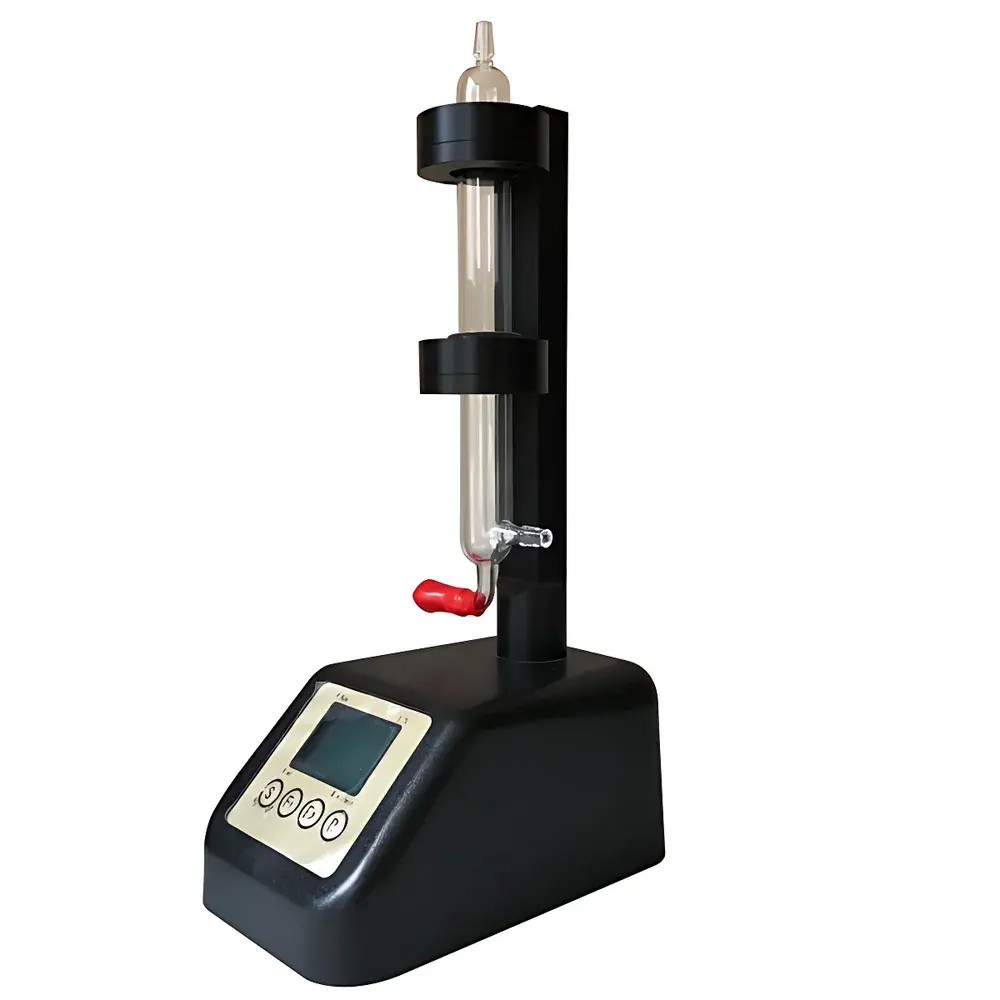
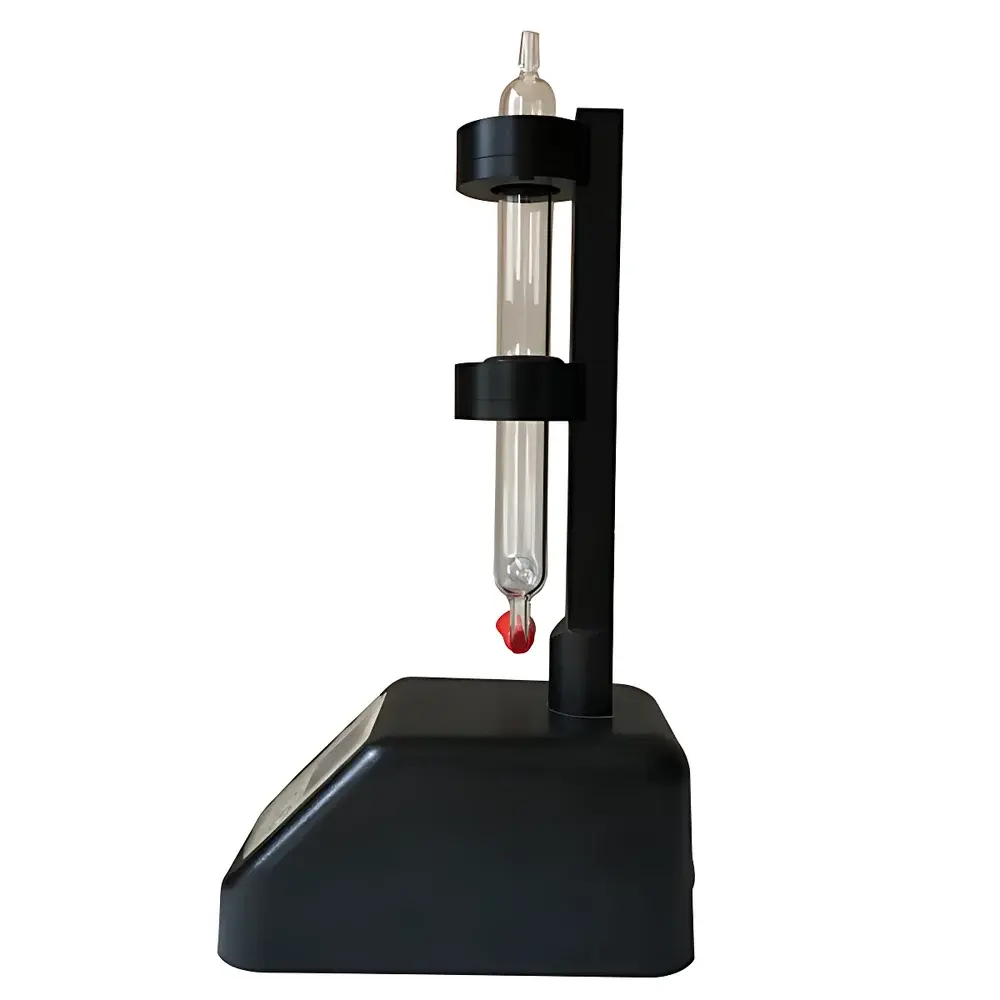
Beifen Sanpu GL-103A Electronic Soap Film Flowmeter
| Brand | Beifen Sanpu |
|---|---|
| Origin | Beijing, China |
| Manufacturer Type | Direct Manufacturer |
| Product Origin | Domestic (China) |
| Model | GL-103A |
| Price | USD 650 (approx.) |
| Flow Measurement Principle | Volumetric Displacement (Soap Film Method) |
| Flow Range | 2 mL/min to 2 L/min |
| Accuracy | ±1% of reading |
| Temperature & Pressure Compensation | Yes |
| Display | LCD with real-time P, T, V, Q readouts |
| Timing Resolution | 0.01 s (range: 0.1–600.0 s) |
| Power | Rechargeable 4.8 V / 700 mAh battery (standby >300 h |
Overview
The Beifen Sanpu GL-103A Electronic Soap Film Flowmeter is a precision volumetric flow measurement instrument engineered for trace-level gas and low-flow liquid calibration in laboratory, environmental monitoring, and analytical instrumentation validation environments. It operates on the well-established soap film displacement principle—where a thin, stable soap film is formed across the inner bore of a calibrated glass tube; as gas or liquid flows through the tube, the transit time of the film between two optically detected reference marks is measured with microsecond timing resolution. This direct volumetric method eliminates reliance on inferential sensing (e.g., thermal or pressure drop), delivering inherently high reproducibility and traceability to SI units without requiring periodic recalibration against master standards—provided proper film formation and ambient condition compensation are maintained.
Key Features
- Volumetric measurement principle compliant with ISO 4064-1 (water meters) and ASTM D2512 (gas flow calibration) foundational methodology for primary flow verification.
- LCD display showing real-time ambient temperature (°C), absolute pressure (kPa), displaced volume (mL), calculated flow rate (mL/min or L/min), and elapsed time (s) with 0.01 s internal resolution.
- Integrated temperature and pressure compensation algorithms enabling conversion between actual volumetric flow (Qact) and standardized volumetric flow (Qstd, e.g., at 25°C and 101.325 kPa) or mass flow (g/min) when gas composition is known.
- Three-button interface supporting single-measurement mode, five-point averaging (with statistical output: mean, SD, CV%), and manual zero/tare functions.
- Dual-power architecture: rechargeable 4.8 V / 700 mAh Ni-MH battery (≥300 h standby, >500 charge cycles) + field-replaceable 9 V DC input port that powers the unit and concurrently recharges the battery—enabling uninterrupted operation during extended field deployments.
- Robust borosilicate glass measurement tube with etched optical reference lines and optimized surfactant compatibility for consistent film formation across humidity and temperature gradients.
Sample Compatibility & Compliance
The GL-103A is validated for use with non-corrosive, non-particulate gases (e.g., N2, O2, air, CO2, He, Ar) and low-viscosity liquids (e.g., water, ethanol, IPA) within its specified 2 mL/min–2 L/min range. It is not suitable for vapors condensing below ambient temperature, aerosols, or fluids containing suspended solids >1 µm. The device meets mechanical and electrical safety requirements per GB/T 28290–2012 (Chinese national standard for laboratory flowmeters) and supports metrological traceability under ISO/IEC 17025:2017 when used with certified reference gases and documented environmental monitoring. While not intrinsically safe, it may be deployed in Class I, Division 2 environments with appropriate ventilation and surfactant selection.
Software & Data Management
The GL-103A operates as a standalone, embedded-system instrument with no proprietary software dependency. All measurements are stored locally in non-volatile memory (up to 99 readings), accessible via scroll navigation. Data export is manual: users record values directly from the LCD or integrate the flowmeter into larger QA/QC workflows using its analog-compatible timing outputs (TTL pulse on film break detection). For regulated laboratories, the device supports audit-ready documentation—each reading includes timestamp, ambient P/T, and user-initiated ID tag (via button sequence). When deployed in GLP or GMP settings, it satisfies FDA 21 CFR Part 11 requirements for electronic records only when paired with controlled procedural documentation (e.g., SOPs defining film preparation, calibration frequency, and environmental logging).
Applications
- Calibration and verification of low-flow gas delivery systems in GC carrier gas lines, purge-and-trap modules, and headspace autosamplers.
- Validation of environmental air samplers (e.g., SKC, Gilian) per EPA Method TO-11A and ISO 16000-22 for VOC sampling pumps.
- Verification of flow controllers and mass flow meters (MFMs) in cleanroom HVAC commissioning and semiconductor process tool qualification.
- Teaching and demonstration of fundamental fluid mechanics principles—including laminar flow behavior, compressibility effects, and gas law applications—in university analytical chemistry and chemical engineering labs.
- Field verification of portable emission analyzers (e.g., FTIR, electrochemical sensors) where portable, battery-operated primary standards are required.
FAQ
What is the recommended soap solution for optimal film stability?
A 0.5–1.0% aqueous solution of sodium dodecyl sulfate (SDS) or commercial bubble solution (low-foaming, glycerin-free) is recommended. Avoid surfactants containing alcohols or silicones, which degrade optical clarity and increase film rupture frequency.
Can the GL-103A measure humidified or saturated gas streams?
Yes—provided condensation does not form inside the tube. The integrated temperature/pressure compensation accounts for density changes due to humidity when using ideal gas law corrections; however, dew point must remain below the tube wall temperature.
Is the flow tube interchangeable between GL-103A and GL-103B models?
No. Each model uses a uniquely calibrated glass tube with distinct internal diameter and reference line spacing. Swapping tubes invalidates factory calibration and voids measurement accuracy claims.
How often should field verification be performed?
Per ISO/IEC 17025 and typical QC protocols, verify before each analytical session or at least every 2 hours during continuous use. A 3-point check (low/mid/high flow) using a traceable reference standard is advised quarterly.
Does the device support RS-232 or USB data output?
No. The GL-103A has no digital communication interface. Data acquisition requires manual transcription or integration via external photogate triggers synchronized to the internal timing circuit.