
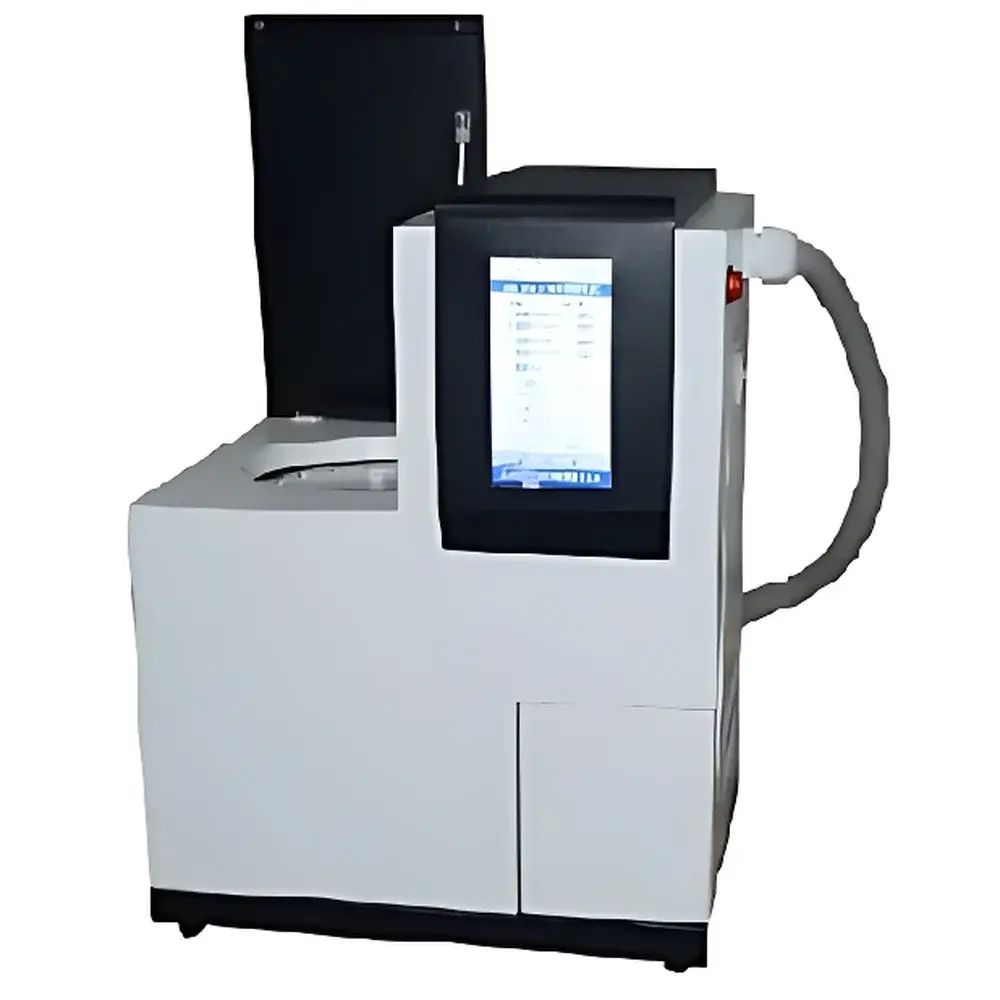
Beifen Sanpu STDA-20A Dual-Stage Thermal Desorber for GC Coupling
| Brand | Beifen Sanpu |
|---|---|
| Origin | Beijing, China |
| Manufacturer Type | OEM Manufacturer |
| Region Category | Domestic (China) |
| Model | STDA-20A |
| Instrument Type | Dual-Stage Thermal Desorber |
| Primary Desorption Temperature Range | Ambient to 400 °C |
| Secondary Desorption Temperature Range | 100–400 °C |
| Cold Trap Temperature Range | Down to −35 °C |
| Desorption Recovery Rate | >90% |
| Sample Capacity | 20 Adsorption Tubes |
Overview
The Beifen Sanpu STDA-20A Dual-Stage Thermal Desorber is an engineered sample introduction system designed for quantitative transfer of volatile and semi-volatile organic compounds (VOCs and SVOCs) from solid-phase adsorbent tubes into gas chromatography (GC) systems. It operates on the principle of two-stage thermal desorption: first, analytes are thermally released from the adsorbent matrix under controlled inert gas flow (primary desorption); second, the evolved vapors are cryogenically focused in a low-temperature cold trap (−35 °C), followed by rapid flash-heating (secondary desorption) to deliver a narrow, solvent-free analyte band into the GC inlet. This architecture ensures high sensitivity, minimal breakthrough, and reproducible peak shapes—critical for compliance with environmental monitoring standards such as EPA TO-17, ISO 16017-1, and EN 14662. The STDA-20A integrates primary furnace, secondary focusing trap, and large-volume syringe heater into a single compact chassis, eliminating dead volumes and reducing carryover risk—key factors influencing long-term instrument stability and analytical fidelity.
Key Features
- Dual-zone independent temperature control: primary desorption chamber (ambient to 400 °C) and secondary desorption zone (100–400 °C), each with ±0.5 °C accuracy and <1 °C uniformity across the tube bed
- Cryogenic cold trap capable of sustained operation at −35 °C, using Peltier-based cooling without liquid nitrogen dependency
- 20-position automated tube carousel with positive-locking tube holders and leak-tight sealing interface (metal-to-metal contact)
- Integrated large-volume syringe heater (up to 200 °C) enabling direct thermal desorption into split/splitless GC inlets or compatibility with valve-based interfaces
- Modular electrical architecture with isolated power supplies, conformal-coated PCBs, and IP20-rated enclosure for dust resistance and EMI suppression
- Self-diagnostics during startup: real-time verification of thermocouple integrity, cooling capacity, pressure sensor calibration, and valve actuation timing
Sample Compatibility & Compliance
The STDA-20A supports standard 1/4″ OD stainless steel or quartz adsorption tubes packed with common sorbents including Tenax TA, Carbopack B/C, Carboxen 1000, and multi-bed configurations (e.g., Tenax–Carbotrap–Carboxen). It accommodates both single-bed and dual-bed tubes up to 150 mm length. All thermal zones meet ASTM D6196-22 requirements for temperature accuracy and ramp linearity in VOC analysis. The system’s recovery rate (>90% for C2–C12 hydrocarbons and polar aromatics) complies with EPA Method TO-17 Annex B validation criteria. Data handling supports audit-trail generation per FDA 21 CFR Part 11 when operated with compliant LIMS or chromatography data systems (CDS). Routine maintenance logs—including tube bake-out cycles, cold trap regeneration events, and calibration certificate timestamps—are exportable in CSV format for GLP/GMP documentation.
Software & Data Management
The STDA-20A is controlled via a dedicated embedded HMI with 7″ capacitive touchscreen, running a deterministic real-time OS. Method parameters—including desorption hold times, trap cool-down duration, carrier gas flow profiles (He or N₂), and valve sequencing—are stored in encrypted binary files with SHA-256 checksum validation. Each run generates a timestamped metadata file (.tdr) containing ambient temperature, internal cabinet humidity, actual measured temperatures at all zones, and pressure transducer readings. Remote monitoring is supported via Ethernet (TCP/IP) using Modbus TCP protocol; integration with Agilent OpenLab, Thermo Chromeleon, or Waters Empower is achieved through vendor-provided drivers. All method changes require operator authentication (PIN + role-based access), and system events—including over-temperature alarms, cooling failure, or door-open interruptions—are logged with UTC timestamps and retained for ≥18 months.
Applications
The STDA-20A serves laboratories performing regulated and research-grade analysis across environmental, occupational health, materials science, and forensic domains. Typical use cases include: indoor air quality assessment per ISO 16000-6; workplace exposure monitoring per OSHA Method 52; polymer outgassing profiling in electronics manufacturing; residual solvent analysis in pharmaceutical packaging per USP ; and odor compound identification in food packaging migration studies. Its high recovery consistency enables reliable quantitation down to sub-ng levels for benzene, formaldehyde, and chlorinated solvents—even after repeated tube reuse (up to 50 cycles with proper conditioning). The absence of solvent injection eliminates column contamination risks associated with traditional liquid extraction workflows.
FAQ
How often should the cold trap be regenerated?
Regeneration is required after every 10–15 sample runs under typical environmental monitoring conditions (100 mL/min He flow, −35 °C trap temperature). The system automatically initiates a 5-minute purge-and-heat cycle upon completion of each sequence.
What maintenance intervals are recommended for optimal longevity?
Daily: visual inspection of tube seals and cooling fan intake; weekly: cleaning of cold trap surface with lint-free isopropanol swab; quarterly: thermocouple calibration verification and valve lubrication per manufacturer’s torque specification; annually: full electrical safety test (IEC 61010-1) and firmware update.
Can the STDA-20A be validated for GMP environments?
Yes—when paired with IQ/OQ protocols supplied by Beifen Sanpu and executed under qualified personnel supervision, the system meets baseline requirements for installation qualification (IQ), operational qualification (OQ), and performance qualification (PQ) per ISO/IEC 17025 and EU Annex 15.
Is remote diagnostics supported?
Yes—via secure SSH tunnel or VPN-connected Ethernet port, authorized service engineers can access diagnostic logs, perform firmware rollback, and verify sensor drift without physical site visit.
What happens if the primary furnace exceeds 400 °C unintentionally?
Hardware-independent thermal cut-off (K-type redundant thermocouple + mechanical bimetal switch) interrupts power within 200 ms; event is logged with fault code “THERM_OVR” and requires manual reset after root-cause investigation.




