
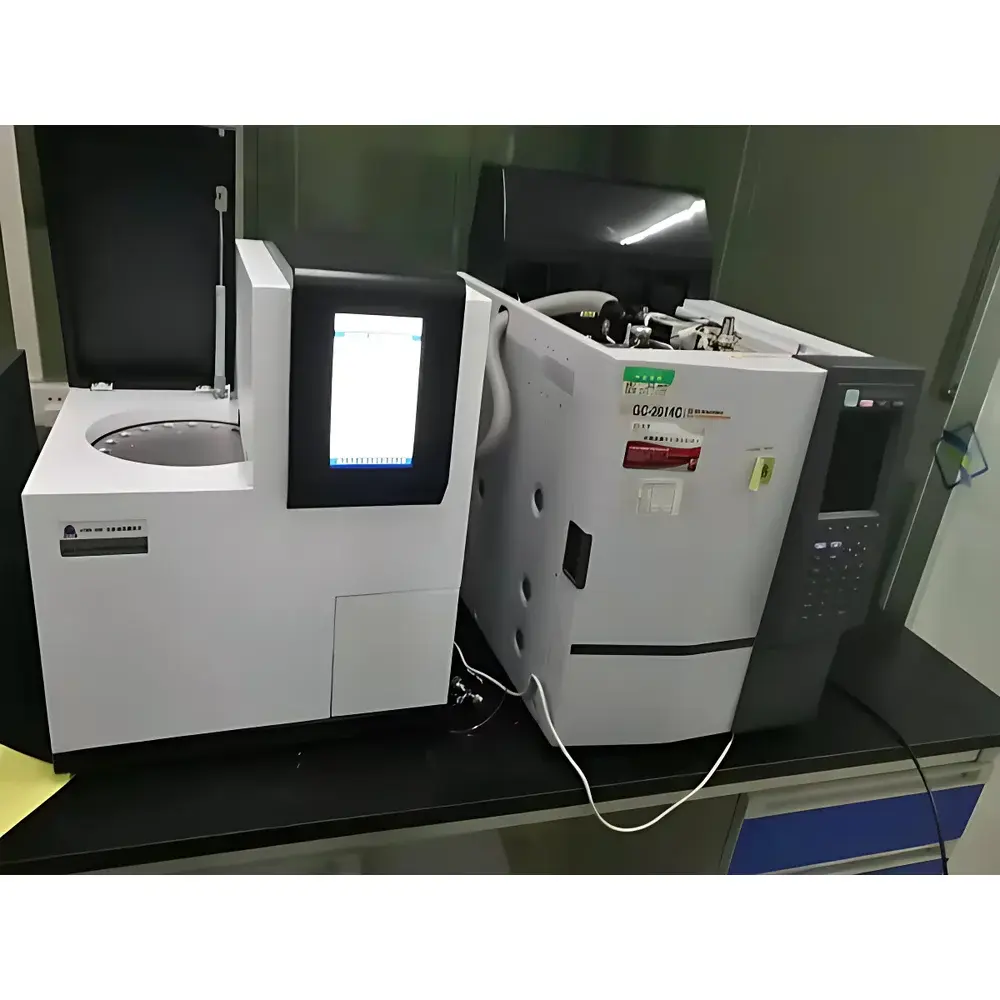
Beifen Sanpu ATDS-20A Automated Two-Stage Thermal Desorber for VOC and Semi-VOC Analysis
| Brand | Beifen Sanpu |
|---|---|
| Origin | Beijing, China |
| Manufacturer Type | Direct Manufacturer |
| Instrument Type | Two-Stage Thermal Desorber |
| Sample Capacity | 20 positions |
| Desorption Temperature Range | Ambient to 400 °C |
| Cold Trap Temperature Range | –40 °C to +40 °C |
| Desorption Recovery Rate | ≥95% (typical for C3–C16 hydrocarbons and halogenated VOCs) |
| Compliance Standards | HJ 644–2013, HJ 583–2010, HJ 734–2014, GB/T 18883–2002, GB 50325–2010 |
Overview
The Beifen Sanpu ATDS-20A Automated Two-Stage Thermal Desorber is an engineered solution for quantitative trace analysis of volatile and semi-volatile organic compounds (VOCs and SVOCs) in environmental, occupational health, and indoor air matrices. It operates on the principle of thermal desorption coupled with cryogenic focusing — a two-stage process where analytes are first thermally released from sorbent tubes under controlled inert gas flow (primary desorption), then refocused onto a cryogenically cooled trap (cold trap), and finally rapidly injected into a gas chromatograph (GC or GC–MS) as a narrow, solvent-free band. This architecture eliminates solvent use, minimizes breakthrough and carryover, and delivers high sensitivity (sub-ppt detection limits), reproducibility (<3% RSD for replicate standards), and robustness across diverse sample types — including humid air, soil headspace, polymer off-gas, and building material emissions.
Key Features
- 20-position automated sample carousel with barcode-ready tube identification support
- Independent temperature control for sample bed (ambient to 400 °C), transfer line (up to 350 °C), and cryogenic cold trap (–40 °C to +40 °C)
- Integrated pneumatic system combining servo-controlled electric valves and fast-response solenoid valves for precise timing of desorption, purge, trap cooling/focusing, and flash injection
- Synchronized TTL trigger output for seamless coordination with GC oven start, detector activation, and data acquisition software
- Programmable multi-step method sequences: tube bake-out, primary desorption, cold trap adsorption, secondary desorption (flash), and post-run tube purging
- Leak-tight stainless-steel flow path with electropolished internal surfaces to prevent analyte adsorption and memory effects
- Onboard diagnostics including pressure monitoring, temperature validation, valve actuation logging, and real-time status display via 5.7-inch color touchscreen interface
Sample Compatibility & Compliance
The ATDS-20A supports standard 6 mm OD × 110 mm sorbent tubes (e.g., Tenax TA, Carbopack B/C, Carboxen 1000) and is compatible with all major commercial tube formats, including ASTM D6196-compliant configurations. It meets method requirements for national and industry-standard protocols, including: HJ 644–2013 (ambient air VOCs by TD–GC–MS), HJ 583–2010 (benzene series in ambient air), HJ 734–2014 (fixed source emissions), GB/T 18883–2002 (indoor air quality), and GB 50325–2010 (civil engineering indoor pollution control). Its design accommodates high-moisture samples through integrated moisture management — either via dry purge pre-desorption or optional water trap integration — ensuring stable baseline performance and extended column lifetime. All thermal and pneumatic parameters are logged with timestamped audit trails, supporting GLP/GMP workflows and regulatory readiness.
Software & Data Management
The ATDS-20A operates via embedded firmware with intuitive touchscreen navigation and supports external control via RS-232 or Ethernet (TCP/IP) interfaces. It integrates natively with third-party chromatography data systems (CDS), including OpenLab CDS, Chromeleon, and Empower, enabling full method synchronization, sequence loading, and event-driven instrument triggering. Method files store complete thermal profiles, valve timing maps, and calibration metadata. System logs retain >10,000 cycles of operational history — including temperatures, pressures, valve states, and error codes — exportable as CSV for QA/QC review. The platform complies with FDA 21 CFR Part 11 requirements when used in conjunction with validated CDS environments featuring electronic signatures, audit trail preservation, and user access controls.
Applications
The ATDS-20A is routinely deployed in accredited environmental laboratories for compliance monitoring of benzene, toluene, ethylbenzene, xylenes (BTEX), aldehydes, chlorinated solvents, and polycyclic aromatic hydrocarbons (PAHs) in ambient air, workplace breathing zones, vehicle cabins, and indoor environments. It serves as a core front-end for forensic labs analyzing ignitable liquid residues (ILR), for food packaging migration studies, and for polymer degradation profiling in electronics and aerospace materials. Academic users apply it to method development for emerging contaminants (e.g., fluorotelomer alcohols, siloxanes), while regulatory agencies rely on its repeatability for inter-laboratory comparison studies and proficiency testing programs.
FAQ
Can the ATDS-20A be used with both GC and GC–MS systems?
Yes — it delivers sharp, reproducible injections compatible with capillary columns (0.18–0.53 mm ID) and all common detectors (FID, TCD, ECD, NPD, and mass spectrometers).
Does the system support unattended overnight operation?
Yes — the 20-tube carousel, non-volatile memory, and auto-recovery after power interruption enable fully unattended batch processing.
Is cold trap cryogen consumption required?
No — the unit employs thermoelectric (Peltier) cooling; no liquid nitrogen or compressed CO₂ is needed.
What sorbent tube specifications are supported?
Standard 6 mm OD × 110 mm tubes (e.g., 1/4″ × 3.5″) with packed beds of Tenax TA, Carbopack, or multi-bed configurations; custom tube adapters available upon request.
How is method validation performed?
System suitability tests include breakthrough volume verification, desorption efficiency (spike recovery), blank tube assessment, and retention time stability — all documented per ISO/IEC 17025 guidelines.





