
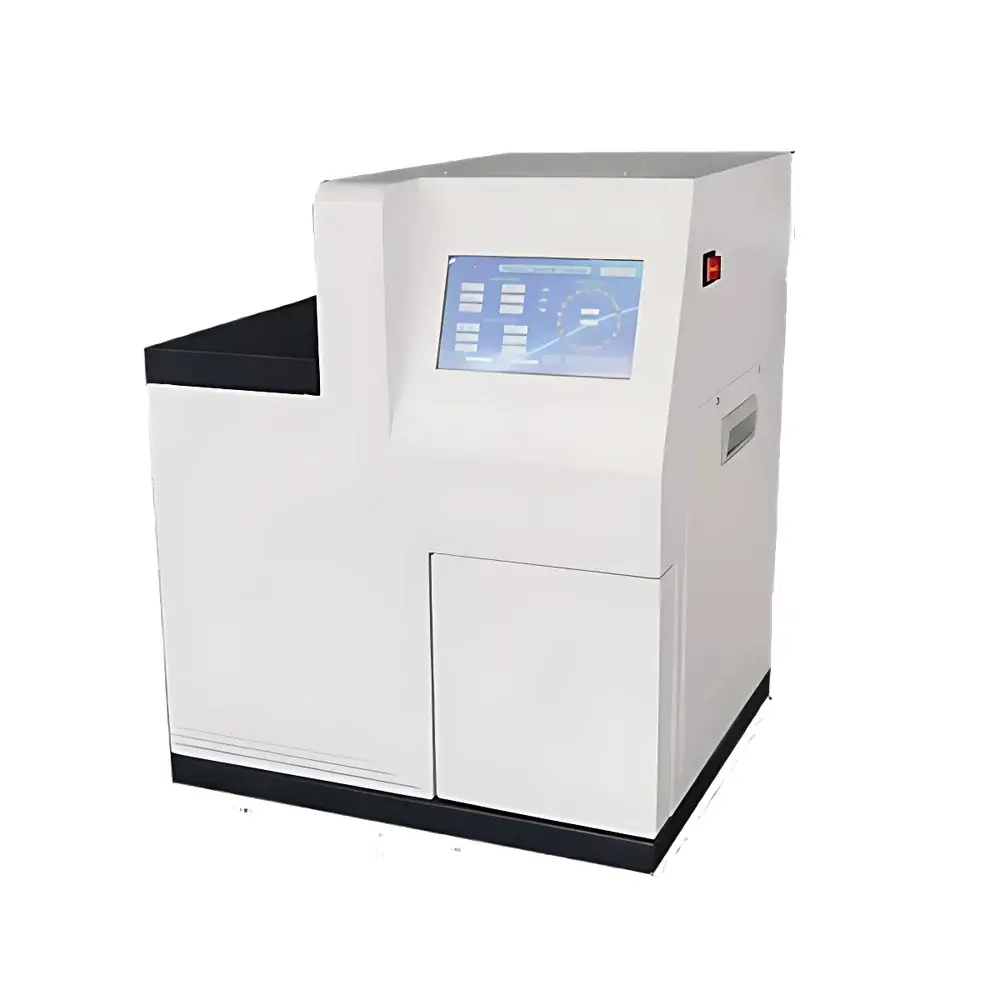
Beifen Sanpu AHS-20A Plus Fully Automated Headspace Sampler
| [Brand | Beifen Sanpu |
|---|---|
| Origin | Hebei, China |
| Manufacturer Type | Manufacturer |
| Model | AHS-20A Plus |
| Sample Capacity | 20 positions |
| Vial Size Compatibility | 10 mL and 20 mL (customizable up to 100 mL) |
| Quantitative Loop Volume | 1 mL (optional: 0.5 mL, 2 mL, 5 mL) |
| Oven Temperature Range | 40–220 °C (extendable to 300 °C on request), ±0.5 °C stability, 0.5% accuracy |
| Valve & Transfer Line Temperature Range | 40–220 °C (extendable to 300 °C), ±0.5 °C stability |
| Pressurization Time | 0–999 s |
| Sampling Time | 0–30 min |
| Injection Time | 0–999 s |
| Bake-out/Clean Time | 0–30 min |
| Minimum Time Resolution | 1 ms |
| Pressurization Pressure | 0–0.25 MPa (continuously adjustable) |
| Carrier Gas Flow Control | EPC-compatible (optional) |
| Rinse Flow Rate | 0–100 mL/min (adjustable) |
| RSD | <1.0% (for 100 ppm ethanol in water) |
| Interface | USB communication, GC trigger synchronization, external event input/output |
| Sample Handling | Motor-driven, gas-free operation |
| System Compliance | Designed for GLP/GMP environments |
Overview
The Beifen Sanpu AHS-20A Plus Fully Automated Headspace Sampler is a precision-engineered sample introduction system designed for quantitative volatile organic compound (VOC) analysis in gas chromatography (GC). It operates on the principle of equilibrium headspace sampling: a sealed vial containing liquid or solid sample is heated to establish vapor-phase equilibrium between the matrix and headspace gas. The instrument then introduces a precisely metered volume of this equilibrated headspace gas—via pressurized transfer and a high-inertness six-port valve—directly into the GC inlet. This method eliminates solvent interference, minimizes matrix effects, and ensures high reproducibility for trace-level VOC quantitation in complex matrices such as pharmaceuticals, environmental water, food packaging, forensic evidence, and polymer extracts.
Key Features
- 20-position carousel with automatic vial recognition and collision-avoidance logic—detects empty or misaligned positions and skips them without operator intervention.
- Triple-zone independent temperature control: sample oven, six-port valve, and transfer line—all maintained within ±0.5 °C stability and calibrated to 0.5% accuracy across 40–220 °C (configurable to 300 °C for high-boiling analytes).
- Motor-driven actuation system—no external compressed gas required—ensuring intrinsic safety, reduced infrastructure dependency, and consistent mechanical timing.
- High-inertness fluidic path: deactived fused-silica-lined stainless steel tubing and passivated quantitative loop (standard 1 mL, optional 0.5/2/5 mL) minimize adsorption, carryover, and cross-contamination.
- Heated valve manifold: the six-port valve and its connection points reside entirely within the thermal enclosure—eliminating cold spots and preserving analyte integrity during transfer.
- Positive-pressure sampling architecture enables reliable analysis of both aqueous and heterogeneous solid samples without baseline drift or inlet contamination.
- 7-inch graphical LCD interface with animated workflow guidance—supports standalone operation or full remote control via USB; all parameters—including time sequences, pressure setpoints, and temperature ramps—are configurable either locally or from PC-based CDS software.
Sample Compatibility & Compliance
The AHS-20A Plus accommodates standard 10 mL and 20 mL crimp-top or screw-cap headspace vials; custom configurations support 50 mL and 100 mL formats for low-concentration or regulatory-required dilution protocols. Its robust mechanical design and fault-detection algorithms—including automatic sample tray homing, real-time motor stall detection, and electrical continuity self-test—ensure operational continuity in unattended overnight runs. When integrated with validated chromatography data systems compliant with 21 CFR Part 11, the system supports electronic signatures, audit trails, and change-control logs—meeting GLP and GMP requirements for pharmaceutical stability testing (ICH Q5C), residual solvent analysis (USP <467>), and environmental monitoring (EPA Method 502.2, 8260D).
Software & Data Management
Native USB 2.0 interface enables bidirectional communication with major GC data systems (e.g., Agilent OpenLab, Thermo Chromeleon, Shimadzu GCsolution). The sampler accepts external TTL triggers for synchronized GC oven start, detector enable, and data acquisition initiation. All method parameters—including pressurization delay, equilibration time, fill time, injection duration, and post-run purge cycles—are stored as encrypted binary files with timestamped version history. Optional EPC (Electronic Pressure Control) integration allows dynamic carrier gas flow modulation during transfer—enhancing peak shape fidelity for early-eluting compounds. Raw status logs (temperature profiles, valve actuation timestamps, pressure transients) are exportable in CSV format for root-cause analysis during method validation or regulatory inspection.
Applications
- Residual solvent quantification in active pharmaceutical ingredients (APIs) and excipients per ICH Q3C guidelines.
- Volatile impurity profiling in medical device packaging materials (ISO 10993-18).
- BTEX (benzene, toluene, ethylbenzene, xylenes) and chlorinated hydrocarbon screening in drinking water and wastewater (EPA 524.4, 8260D).
- Flavor and fragrance compound release kinetics from food contact surfaces and polymer films.
- Decomposition gas analysis in lithium-ion battery electrolyte aging studies.
- Forensic toxicology screening for volatile drugs of abuse (e.g., ethanol, acetone, isopropanol) in blood and oral fluid specimens.
FAQ
What vial sizes does the AHS-20A Plus support natively?
Standard configuration supports 10 mL and 20 mL headspace vials. Custom trays for 50 mL and 100 mL vials are available upon request and require mechanical recalibration.
Can the system be validated for regulated laboratory use?
Yes—when operated with a 21 CFR Part 11-compliant CDS and documented IQ/OQ/PQ protocols, the AHS-20A Plus meets GLP/GMP requirements for method transfer, stability testing, and release assays.
Is EPC integration mandatory for routine operation?
No—EPC is an optional upgrade. The base system uses fixed-pressure pneumatic control; EPC adds dynamic flow regulation capability for advanced method development.
How is carryover mitigated between samples?
Through programmable high-flow nitrogen purge (0–100 mL/min) of the quantitative loop, valve, and transfer line after each injection—combined with ultra-low-dead-volume valve design and inert surface passivation.
Does the instrument support multi-step methods (e.g., multiple injections from one vial)?
Yes—method programming includes single-vial multi-injection, single-injection-per-vial, and sequential multi-vial modes, with independent parameter sets for each step.






