
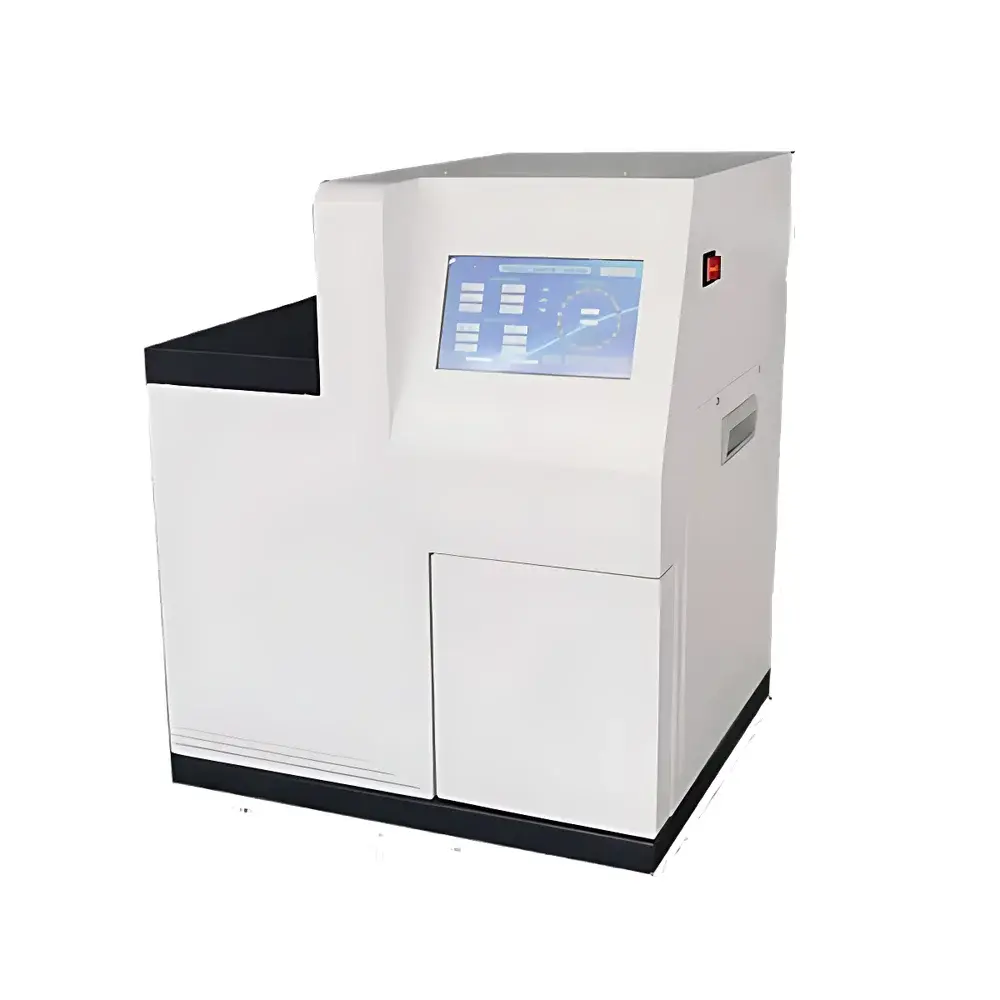
Beifen Sanpu AHS-20A Fully Automated Headspace Sampler
| Brand | Beifen Sanpu |
|---|---|
| Origin | Beijing, China |
| Manufacturer Type | Direct Manufacturer |
| Product Origin | Domestic (China) |
| Model | AHS-20A |
| Price Range | USD 7,000 – 14,000 |
| Automation Level | Fully Automated |
| Sample Tray Capacity | 20 positions |
| Vial Heating Range | Ambient +1°C to 200°C |
| Valve & Transfer Line Heating Range | Ambient +1°C to 200°C |
| Loop Volume | 1 mL |
| Compatible Vial Sizes | 10 mL and 20 mL |
Overview
The Beifen Sanpu AHS-20A Fully Automated Headspace Sampler is an engineered solution for quantitative volatile organic compound (VOC) analysis in solid, liquid, or semi-solid matrices using gas chromatography (GC). It operates on the principle of equilibrium headspace sampling—where analytes partition between the sample matrix and the vapor phase above it under controlled temperature and pressure conditions. The instrument employs pressure-balanced injection to ensure narrow peak profiles, high transfer efficiency, and minimal carryover. Designed for unattended operation, the AHS-20A supports full method automation—including vial heating, pressurization, loop filling, GC injection synchronization, and post-injection backflush—making it suitable for high-throughput QC laboratories, environmental testing facilities, and pharmaceutical stability studies requiring ISO/IEC 17025-compliant workflows.
Key Features
- Fully automated 20-position sample carousel with programmable tray indexing and auto-alignment verification at startup
- Independent, precision temperature control of three critical zones: sample oven (ambient +1°C to 200°C), injection valve (ambient +1°C to 200°C), and transfer line (ambient +1°C to 200°C), each with ±0.5°C accuracy and uniformity
- Pressure-balanced injection mechanism utilizing a fixed 1 mL sample loop, enabling reproducible analyte transfer without reliance on syringe mechanics
- Programmable pressurization range (0–0.4 MPa) and backflush flow (0–400 mL/min), both continuously adjustable for method optimization across diverse matrix types
- Integrated GC synchronization interface supporting TTL trigger output and external start command input—compatible with Agilent, Thermo Fisher, Shimadzu, and PerkinElmer GC systems via standardized analog/digital I/O
- Dedicated low-voltage power supply for the transfer line heater, meeting IEC 61010-1 safety requirements for laboratory equipment
- Touchscreen HMI with real-time graphical workflow visualization, method storage, and event logging including self-diagnostic alerts and error codes
Sample Compatibility & Compliance
The AHS-20A accommodates standard crimp-top headspace vials (10 mL and 20 mL), compatible with industry-standard septa and sealing caps. Its modular thermal architecture ensures consistent equilibration kinetics across heterogeneous samples—including aqueous solutions, polymers, soils, foodstuffs, and pharmaceutical formulations. The system meets functional requirements outlined in ASTM D6866, USP , and EP 2.4.24 for residual solvent analysis. While not pre-certified to FDA 21 CFR Part 11, its software architecture supports audit-trail-enabling configurations when deployed with validated LIMS or chromatography data systems (CDS) that provide electronic signature, user access control, and change history tracking per GLP/GMP expectations.
Software & Data Management
Control is executed via embedded microprocessor firmware with USB and RS-232 connectivity for remote configuration and monitoring. Method parameters—including equilibration time, oven ramp rates, valve timing sequences, and pressure profiles—are stored as ASCII-based protocol files for version control and backup. Raw operational logs (timestamped events, temperature setpoints, fault codes) are exportable in CSV format. The system does not include proprietary data acquisition software; instead, it interfaces seamlessly with third-party CDS platforms (e.g., OpenLab CDS, Chromeleon, Empower) through hardware-triggered acquisition initiation and status feedback signals. All firmware updates are delivered via secure offline package installation to maintain regulatory integrity in controlled environments.
Applications
- Residual solvent quantification in active pharmaceutical ingredients (APIs) and excipients per ICH Q3C guidelines
- VOC profiling in drinking water, wastewater, and soil extracts per EPA Methods 502.2, 524.4, and 8260D
- Flavor and fragrance compound analysis in beverages, dairy, and confectionery products
- Package leachables and extractables screening in medical device packaging validation studies
- Stability-indicating assays for oxidation-prone compounds where headspace minimizes column contamination risks
- Forensic toxicology screening for ethanol, acetone, and other volatiles in biological fluids
FAQ
Is the AHS-20A compatible with non-Beifen GC instruments?
Yes—it features universal mechanical and electrical interfaces for direct connection to all major GC manufacturers’ inlet ports and trigger inputs without hardware modification.
Can the instrument perform dynamic headspace or purge-and-trap?
The base configuration supports static headspace only; however, optional accessories enable dynamic headspace and purge-and-trap functionality via external gas routing and cold trap integration.
What is the typical repeatability performance under routine use?
RSD ≤1.5% (n=5) is demonstrated for 200 ppm ethanol in water under optimized equilibration and injection conditions—consistent with ISO 5725-2 precision criteria for intermediate precision.
Does the system support method validation documentation packages?
While the instrument itself does not generate IQ/OQ/PQ reports, its deterministic thermal and pressure control, traceable calibration routines, and event-logged operation provide foundational evidence required for vendor-supported qualification protocols.
How is cross-contamination mitigated between sequential samples?
Automated high-flow nitrogen backflush of the sample loop, valve internal pathways, and transfer line occurs after every injection—programmable up to 400 mL/min—and is verified during daily system suitability checks.




