
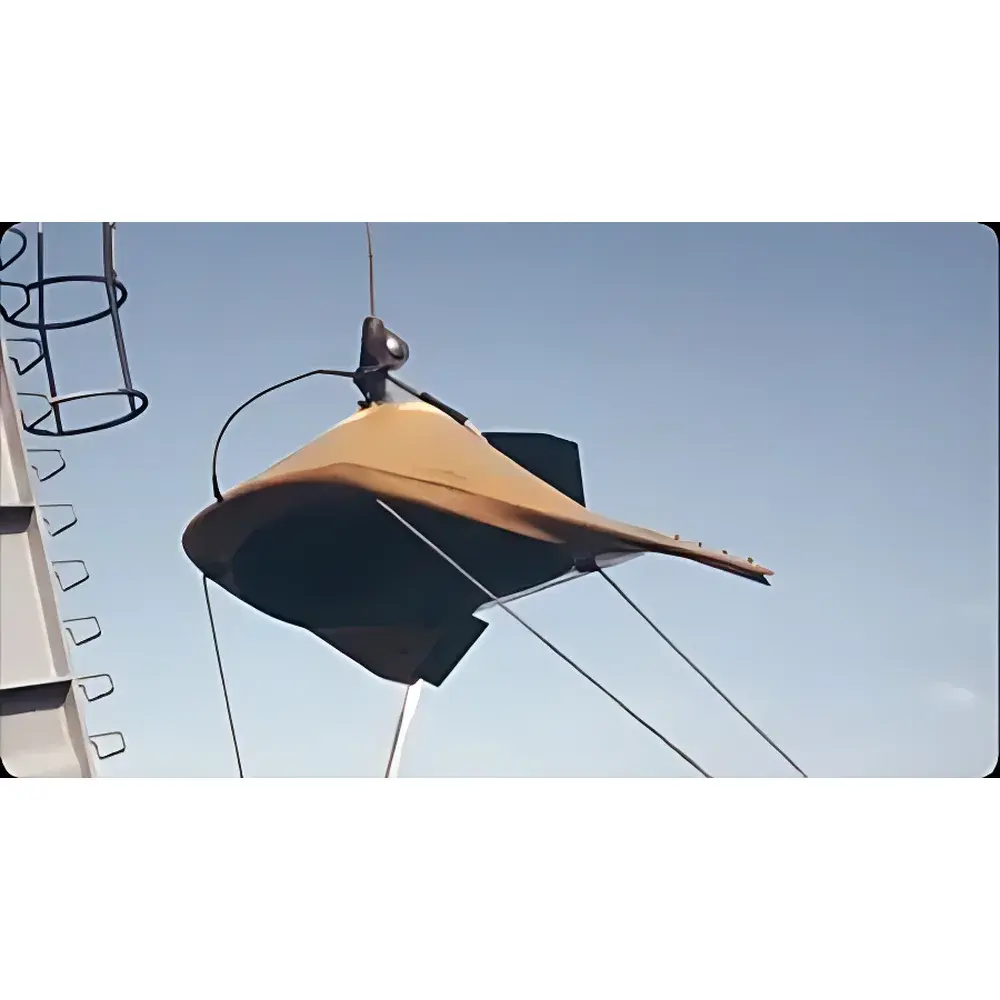
VASS Universal Acoustic Source System
| Brand | CTG |
|---|---|
| Origin | United Kingdom |
| Manufacturer Type | Authorized Distributor |
| Origin Category | Imported |
| Model | VASS |
| Pricing | Upon Request |
Overview
The VASS (Universal Acoustic Source System) is a high-fidelity, field-deployable underwater acoustic test platform engineered for rigorous performance evaluation of active and passive sonar systems. Operating on the principles of calibrated electro-acoustic transduction and real-time digital signal synthesis, VASS delivers traceable, repeatable, and spectrally programmable acoustic outputs across a broad frequency continuum—from 300 Hz to 200 kHz. Its architecture supports both source-driven testing (e.g., transducer calibration, beam pattern verification) and receiver-centric validation (e.g., detection threshold assessment, false alarm rate characterization). Designed for operational realism, VASS integrates synchronized telemetry, multi-channel monitoring, and dynamic Doppler emulation—enabling simulation of moving targets with velocity profiles up to ±40 knots and range rates exceeding 90 km/h. The system complies with NATO STANAG 4585 (Acoustic Calibration Procedures) and supports traceability to UK National Physical Laboratory (NPL) standards via factory-applied hydrophone calibration certificates.
Key Features
- Multi-mode acoustic generation: Source output, echo repeater, acoustic transponder, pulse sequence generator, and real-time receiver monitoring
- Programmable transmission bandwidth: 300 Hz – 200 kHz, with selectable band-limited operation across four discrete transducer bands (300–17.5 kHz, 17.5–50 kHz, 50–110 kHz, 111–200 kHz)
- Source level up to 180 dB re 1 µPa @ 1 m (4–200 kHz), omnidirectional in free-field configuration
- Flexible pulse definition: Pulse duration from 10 ms to 10 s (CW supported below 17.5 kHz); up to 1000 pulses per sequence; inter-pulse interval up to 60 s
- Doppler-shifted echo replay with user-defined velocity (±40 kt), intensity offset (−30 to +40 dB), and relative delay (up to 200 ms)
- Real-time telemetry integration: Depth, pitch, roll, heading, and temperature continuously logged and displayed in surface control cabin
- Three deployment configurations: Surface-operated containerized system (ISO 3.0 × 2.4 × 2.4 m), research-grade portable version, and battery-powered buoy-deployable variant with wireless PC control
Sample Compatibility & Compliance
VASS accommodates diverse underwater acoustic measurement scenarios—including open-ocean trials, harbor-based acceptance testing, and shallow-water sonar operator training. Its transducer and hydrophone arrays are compatible with standard IEC 60565-2 hydrophone calibration protocols and support compliance with ISO/IEC 17025 accredited laboratories. All signal generation and acquisition functions meet MIL-STD-461G (EMI/EMC) requirements for naval environments. The system’s data logging architecture adheres to GLP-compliant audit trails, with timestamped metadata embedded in every recorded file. Firmware and software updates are validated against DEF STAN 00-55 (UK MoD Software Safety Standards), ensuring long-term operational integrity in defense-critical applications.
Software & Data Management
Control and configuration are executed via a Windows-based GUI (originally developed for Windows XP but fully compatible with Windows 10 LTSB and Windows 11 IoT Enterprise). The interface enables offline experiment design—allowing full test plan definition, parameter validation, and error-checking prior to deployment—thereby eliminating costly misconfigurations during at-sea calibration. Signal synthesis employs FPGA-accelerated DSP modules (CTG proprietary firmware v4.3+), supporting LFM/LPM sweeps, AM/FM modulation, pseudo-random noise bursts, and user-defined tone stacks (up to 24 simultaneous frequencies). All raw and processed data are stored in HDF5 format with embedded metadata (transducer ID, calibration date, environmental conditions), facilitating interoperability with MATLAB, Python (SciPy/Hydrogen), and commercial sonar analysis suites such as SonarQ.
Applications
- Sonar system calibration and performance verification (ASTM E2915-22 compliant)
- Underwater target signature simulation (acoustic, Doppler, and reverberation characteristics)
- Naval sonar operator training under realistic acoustic conditions
- Maritime acceptance testing for new-build vessels and ASW platforms
- Broadband acoustic propagation studies in variable bathymetry environments
- Passive sonar receiver sensitivity mapping and false-alarm profiling
- Environmental noise baseline monitoring in sensitive marine habitats (per ICES Code of Conduct for Acoustic Monitoring)
FAQ
Is VASS compliant with NATO or US Navy sonar test standards?
Yes—VASS meets STANAG 4585 (Calibration of Underwater Acoustic Sources) and supports US Navy NAVSEA SW020-AG-SAF-010 (Sonar Test Equipment Requirements).
Can VASS operate autonomously on a moored buoy?
Yes—the Remote Deployment System (RDS) variant is battery-powered, buoy-mountable, and controllable via encrypted Wi-Fi or RF telemetry up to 5 km line-of-sight.
What hydrophone calibration standards are applied to VASS transducers?
All transmitting transducers and receiving hydrophones are supplied with NPL-traceable calibration certificates (valid for 24 months), referenced to IEC 60565-2 reciprocity methods.
Does the system support FDA 21 CFR Part 11 or equivalent audit trail requirements?
While not a medical device, VASS’s logging architecture implements electronic signatures, immutable timestamps, and role-based access control—meeting equivalent data integrity criteria for defense and environmental regulatory audits.
How is depth and attitude telemetry integrated into the acoustic signal chain?
Telemetry sensors (depth, IMU, temperature) feed directly into the DSP subsystem; their values are time-synchronized to acoustic events at 100 µs resolution and embedded in HDF5 metadata headers.
Related Products







