
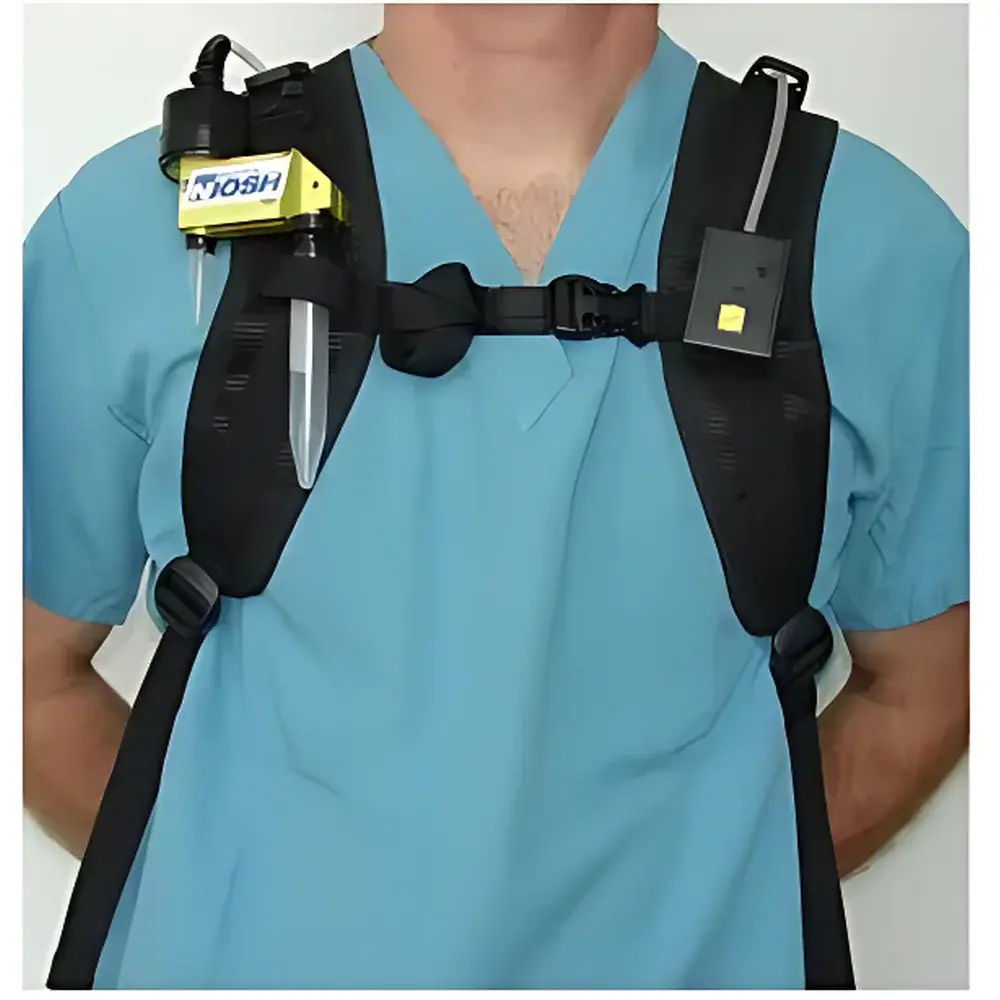
Tisch TE-BC251 NIOSH-Approved Wearable Bioaerosol Cyclone Sampler
| Brand | Tisch |
|---|---|
| Origin | USA |
| Manufacturer | Tisch Environmental, Inc. |
| Model | TE-BC251 |
| Sampling Principle | Inertial Impaction via Multi-Stage Cyclonic Separation |
| Nominal Flow Rate | 3.5 L/min |
| Cut-Point Diameters (aerodynamic) | Stage 1: 4.9 µm, Stage 2: 1.7 µm, Stage 3: <0.4 µm |
| Compliance | Designed to NIOSH BC 251 Protocol |
Overview
The Tisch TE-BC251 is a NIOSH-developed, field-deployable, multi-stage cyclonic bioaerosol sampler engineered for personal, wearable monitoring of airborne microbial agents—including influenza virus, SARS-CoV-2, bacterial endotoxins, and fungal spores—in occupational and clinical environments. Unlike single-stage impactors or filter-based samplers, the TE-BC251 employs inertial separation physics within three concentric cyclonic stages to fractionate aerosols by aerodynamic diameter in real time. This design enables simultaneous collection of viable and non-viable particles across three physiologically relevant size fractions: inhalable (dae > 100 µm), thoracic (dae < 10 µm), and respirable (dae < 4 µm)—with precise cut-points validated per NIOSH BC 251 performance criteria. Its compact, low-mass housing (≤120 g) and standardized 37-mm cassette interface ensure compatibility with widely used personal sampling pumps (e.g., SKC AirChek, Gilian GilAir), making it suitable for extended-shift exposure assessment without compromising worker mobility or task performance.
Key Features
- NIOSH-validated three-stage cyclonic architecture delivering reproducible aerodynamic size classification at 3.5 L/min nominal flow rate
- Pre-calibrated cut-point diameters: Stage 1 = 4.9 µm (inhalable–thoracic boundary), Stage 2 = 1.7 µm (thoracic–respirable boundary), Stage 3 = <0.4 µm (deep lung penetrants)
- Chemically inert anodized aluminum body with stainless-steel internal surfaces—minimizing particle adhesion and enabling ethanol-compatible decontamination between uses
- No consumable filters required; collection substrates (e.g., agar plates, liquid impingers, or sterile filters) are user-selectable per analytical endpoint (culture, PCR, ELISA, or metagenomic sequencing)
- Integrated flow calibration port compatible with primary standards (e.g., Gilian calibrators) for on-site verification prior to and after sampling
- CE-marked and compliant with ISO 14644-1 cleanroom classification protocols when deployed in controlled healthcare settings
Sample Compatibility & Compliance
The TE-BC251 supports direct coupling to standard 37-mm filter cassettes, SKC BioSampler™ impingers, or custom liquid collection vials. It has been empirically verified for quantitative recovery of MS2 bacteriophage (>85% at 3.5 L/min) and Bacillus atrophaeus spores across all three stages. Regulatory alignment includes adherence to NIOSH Manual of Analytical Methods (NMAM) Method 0600 for bioaerosol sampling, ASTM D6300 for precision requirements in environmental air testing, and ISO 14698-1:2003 for microbiological contamination control in cleanrooms. While not a medical device under FDA 21 CFR Part 820, its data output meets GLP audit requirements for occupational exposure records under OSHA 1910.134 and EU Directive 2004/37/EC (CARCINOGENS AND MUTAGENS).
Software & Data Management
The TE-BC251 operates as a hardware-only sampling platform—no embedded firmware or onboard software. However, it integrates seamlessly into laboratory workflows using industry-standard pump controllers (e.g., Thermo Scientific AirChek TOUCH) that log time-weighted average (TWA) flow, total volume, and pump runtime with UTC timestamps. Raw sample data—including stage-specific particle mass distribution and culture colony-forming unit (CFU) counts—are entered into LIMS systems compliant with ISO/IEC 17025:2017. For regulatory submissions, metadata fields support 21 CFR Part 11–compliant electronic signatures when paired with validated electronic lab notebooks (e.g., LabArchives, Benchling).
Applications
- Healthcare epidemiology: Real-time monitoring of airborne influenza and RSV shedding in patient rooms, triage zones, and negative-pressure isolation units
- Pharmaceutical manufacturing: Validation of HVAC filtration efficiency against viable bioburden during aseptic processing line qualification
- Occupational hygiene: Quantifying respirable fungal hyphae exposure in agricultural processing facilities and composting operations
- Vaccine development labs: Assessing aerosolized adenoviral vector containment during upstream bioreactor maintenance
- Public health response: Rapid deployment during outbreak investigations to map spatial gradients of airborne pathogen concentration
FAQ
What pump flow rate must be maintained for valid cut-point performance?
A stable 3.5 ± 0.1 L/min is required; deviations exceeding ±5% invalidate stage-specific aerodynamic diameter assignments per NIOSH BC 251 protocol.
Can the TE-BC251 be used for non-biological aerosols such as welding fume or diesel particulate?
Yes—its inertial separation principle applies universally to solid and liquid aerosols; however, particle recovery efficiency and viability preservation are not guaranteed outside biological matrices.
Is calibration traceable to NIST standards?
Flow calibration is traceable to NIST-traceable primary standards (e.g., dry calibrators certified to ISO 6145-1); cyclone dimensional tolerances are verified per ASME B46.1 surface finish specifications.
How often should the cyclone be cleaned between samples?
Between each use, rinse internal surfaces with 70% ethanol followed by filtered compressed air; validate cleanliness via blank agar plate exposure prior to high-sensitivity assays.
Does the TE-BC251 meet ISO 15202 for workplace aerosol measurement?
It satisfies the sampling component of ISO 15202-1:2018 (instrumental methods for aerosol mass concentration) when coupled with gravimetric or optical analysis of stage-collected material.







