
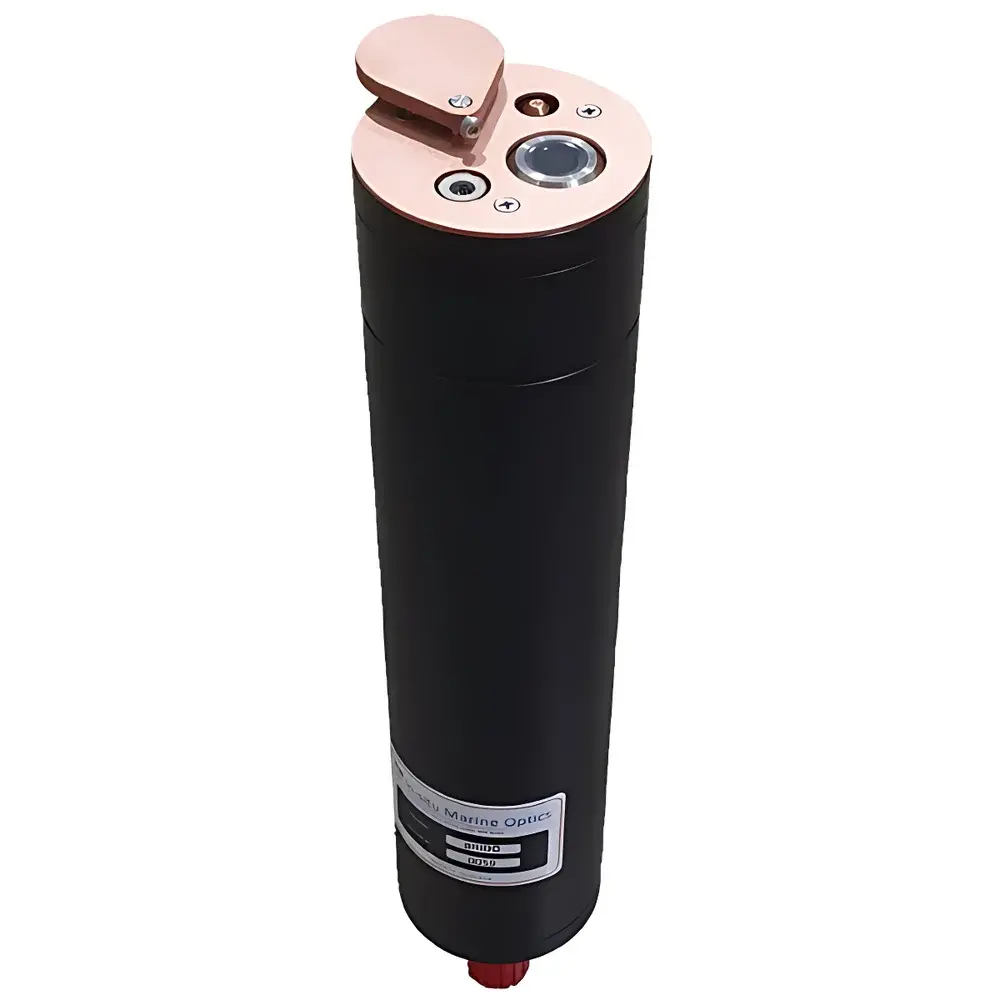
In-situ Marine pHiDO Integrated pH and Optical Dissolved Oxygen Sensor
| Brand | In-situ Marine |
|---|---|
| Origin | Australia |
| Manufacturer Type | Authorized Distributor |
| Origin Category | Imported |
| Model | pHiDO |
| Pricing | Upon Request |
Overview
The In-situ Marine pHiDO is a rigorously engineered, dual-parameter submersible sensor designed for long-term, autonomous deployment in diverse aquatic environments—from estuarine systems and coastal seawater to freshwater reservoirs and wastewater treatment basins. It integrates two independently validated measurement principles into a single robust housing: a glass-membrane pH electrode with Ag/AgCl reference system (KCl-filled), and a phase-modulation-based optical dissolved oxygen (DO) sensor utilizing luminescence quenching by molecular oxygen. This co-located architecture eliminates spatial decoupling errors common in multi-sensor arrays, ensuring synchronized, time-aligned pH and DO data critical for biogeochemical process studies, corrosion monitoring, and regulatory compliance reporting. The sensor operates under continuous power or low-duty-cycle sampling regimes and supports seamless integration into telemetry platforms via its RS-232 ASCII protocol—making it suitable for both fixed-station networks and mobile platforms such as buoys, AUVs, and profiling systems.
Key Features
- Co-integrated pH and optical DO sensing in a single pressure-rated housing (150 m depth rating), eliminating inter-sensor drift and alignment uncertainty.
- Marine-optimized mechanical design featuring integrated copper brush wiper and copper guard plate to mitigate biofouling in high-biomass environments without consumable reagents or moving parts beyond the brush.
- Onboard environmental monitoring suite: internal real-time clock (RTC) with battery backup, 3-axis tilt sensor for orientation validation, and high-stability thermistor for simultaneous temperature logging.
- Temperature, pressure, and conductivity compensation algorithms embedded in firmware for DO; automatic temperature compensation (ATC) for pH—both compliant with ISO 7888 and ASTM D1293 standards.
- RS-232 ASCII serial interface with user-configurable baud rates (up to 115.2 kbps); MCBH6M wet-mateable connector ensures reliable underwater mating in field deployments.
- Low-power architecture: 90 mA during sampling, 350 mA during active cleaning cycle—optimized for solar- or battery-powered remote stations operating under IEC 62443-3-3 constraints.
Sample Compatibility & Compliance
The pHiDO is validated for use across full salinity ranges (0–45 PSU) and meets IP68 ingress protection requirements per IEC 60529. Its acetal (polyoxymethylene) housing provides chemical resistance to chlorinated disinfectants, humic acids, and sulfide-rich anaerobic zones. The optical DO sensor avoids oxygen consumption artifacts inherent in Clark-type electrochemical cells, delivering stable performance in low-flow or stagnant conditions. Calibration traceability aligns with NIST-traceable pH buffer standards (DIN 19266, ISO 10523) and Winkler titration reference methods (ISO 5814). Device firmware supports audit-ready calibration logging—including timestamped probe replacement events—meeting GLP and EPA Method 160.1 documentation expectations.
Software & Data Management
Raw output follows a documented ASCII frame structure with CRC-16 checksums, enabling direct ingestion into SCADA, MQTT brokers, or time-series databases (e.g., InfluxDB, TimescaleDB). In-situ’s proprietary configuration utility (Windows/Linux CLI) allows field-adjustable parameters: sampling interval, cleaning frequency, temperature compensation coefficients, and alarm thresholds. All calibration constants—including slope, offset, and DO quenching polynomial coefficients—are stored in non-volatile memory with write-protection logic. Full data provenance is preserved via embedded RTC stamps and tilt-derived deployment status flags (e.g., “tilt >15°” triggers diagnostic alert), supporting 21 CFR Part 11-compliant electronic records when paired with validated acquisition software.
Applications
- Regulatory water quality monitoring per EU WFD Annex V and US Clean Water Act Section 304(h) protocols.
- Real-time hypoxia event detection in aquaculture ponds and coastal dead zones.
- Corrosion potential assessment in drinking water distribution networks using pH-DO covariance analysis.
- Long-term biogeochemical flux modeling in wetlands and sediment-water interfaces.
- Calibration reference node in multi-sensor observatory arrays (e.g., IOOS, EMODnet).
FAQ
What is the recommended calibration interval for the pH and DO sensing elements?
pH electrode replacement is recommended annually; optical DO membrane cap replacement is also scheduled yearly—both intervals assume continuous operation in moderate-fouling environments. Field recalibration using certified buffers (pH 4.01/7.00/10.01) and zero-oxygen or air-saturated standards is advised quarterly.
Can the pHiDO operate in ice-covered freshwater lakes?
Yes—the sensor is rated for 0–50 °C operation and features thermal hysteresis compensation; however, mechanical ice impact must be mitigated via protective cage or mooring design to prevent housing deformation.
Is pressure compensation for DO fully automated?
Yes—integrated pressure transducer output feeds real-time barometric and hydrostatic correction into the DO algorithm, satisfying ISO 5814:2012 requirements for depth-resolved saturation calculations.
Does the device support Modbus RTU or SDI-12 protocols?
No—only RS-232 ASCII is natively supported. Protocol translation requires external gateway hardware compliant with IEC 61158.
How is fouling mitigation verified during deployment?
The copper brush activation cycle is logged with timestamps and current draw signatures; tilt sensor data confirms brush contact angle, while baseline DO response time trending serves as an indirect fouling index per ASTM D8087.







