
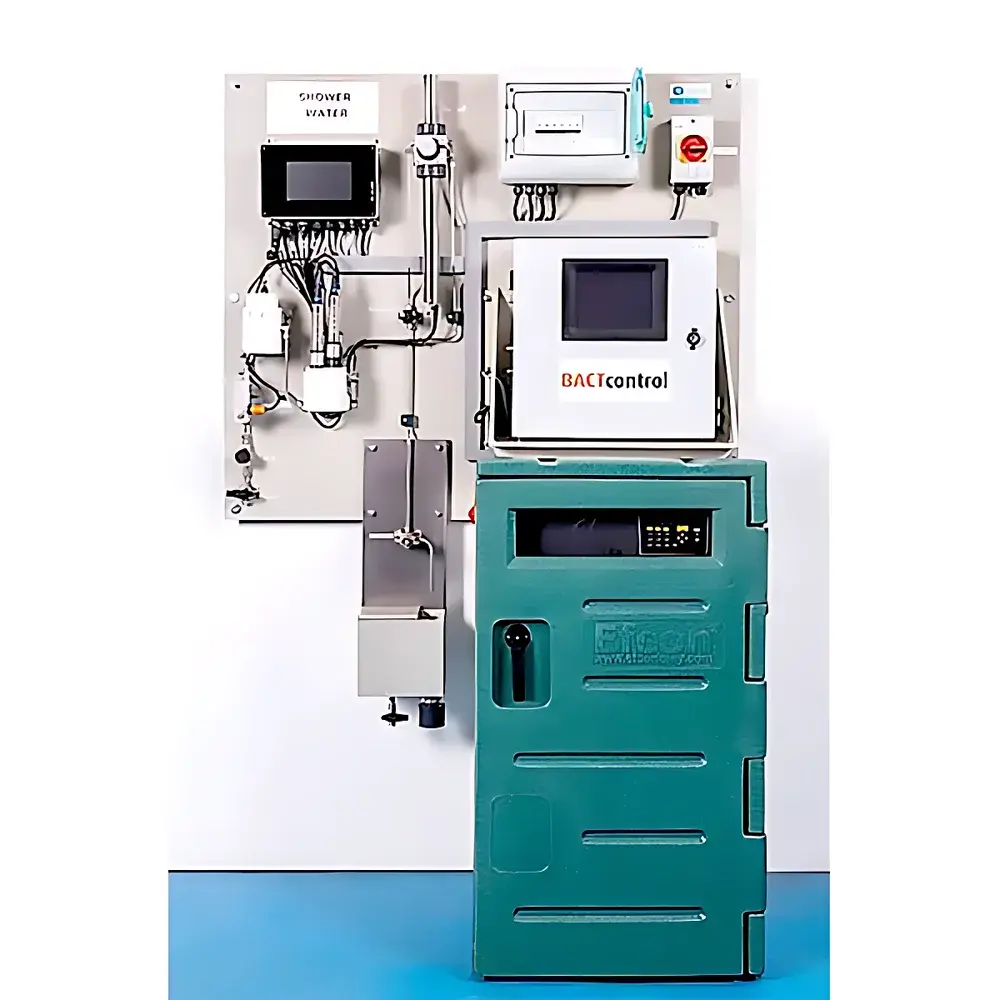
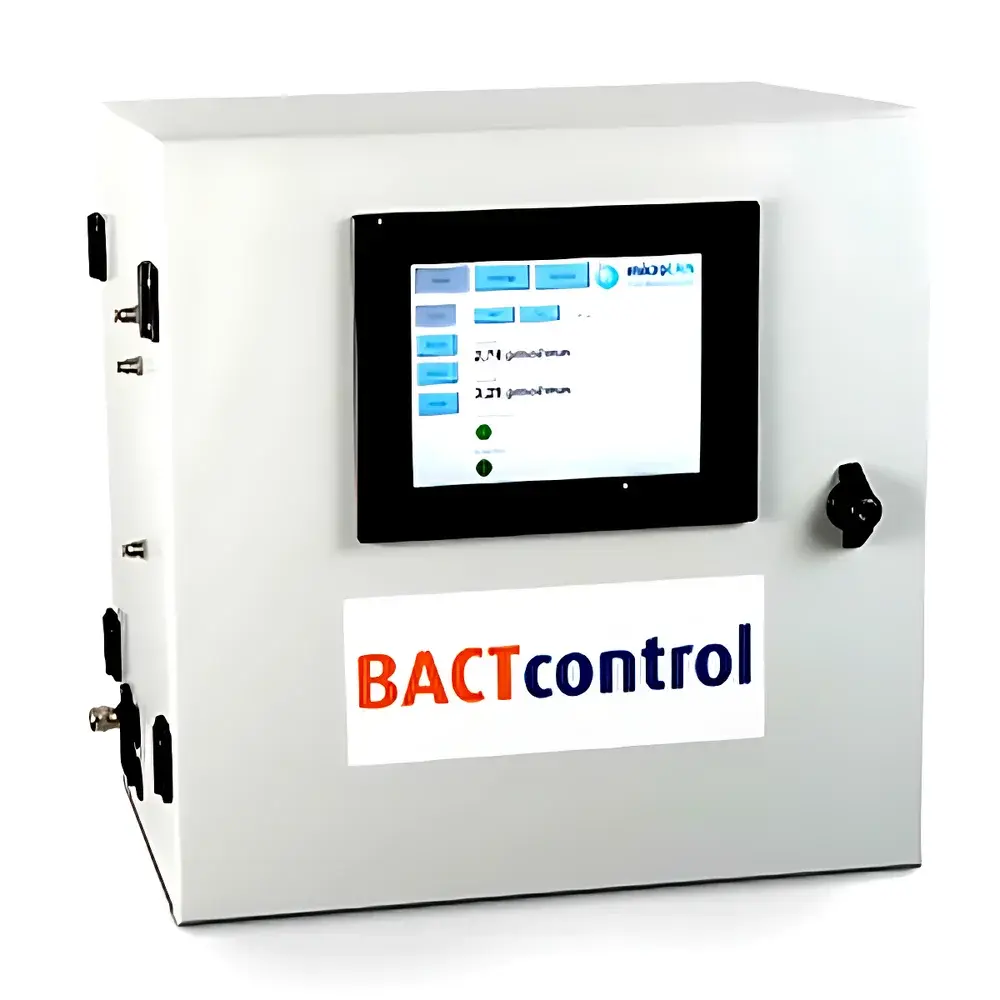
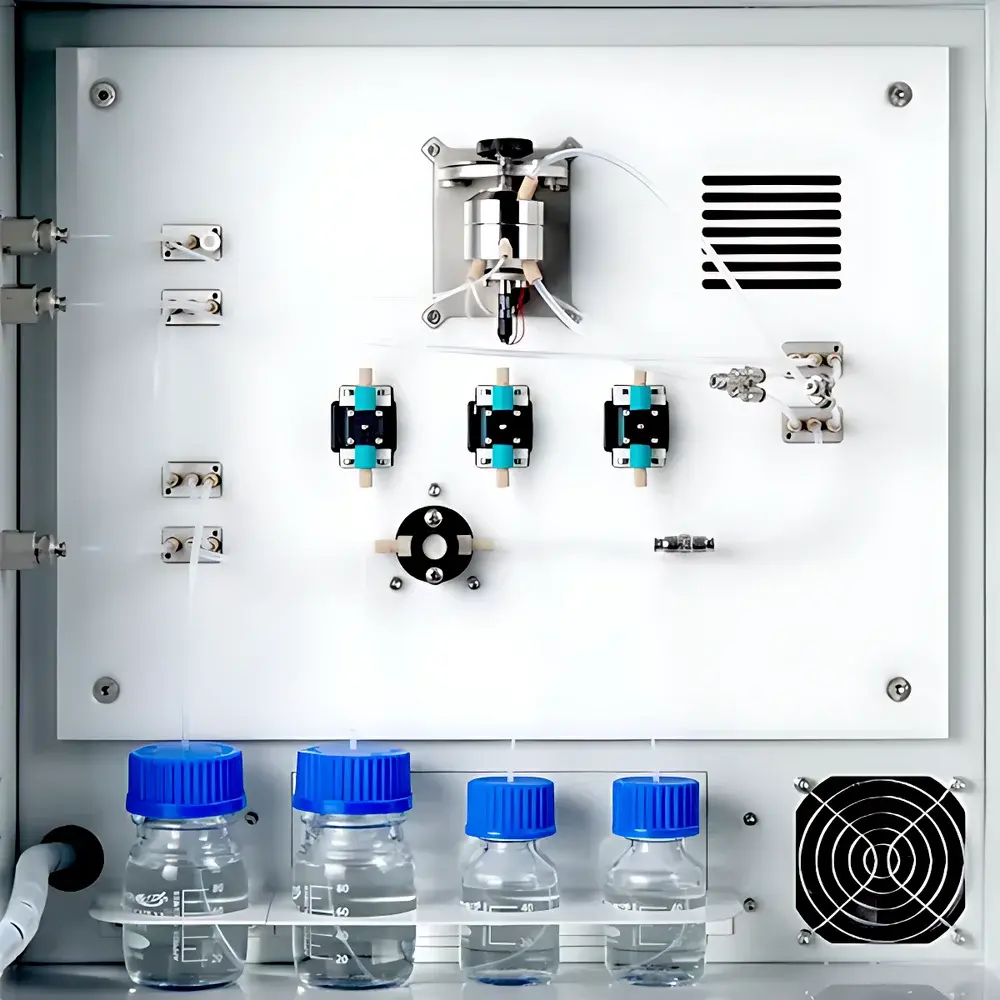
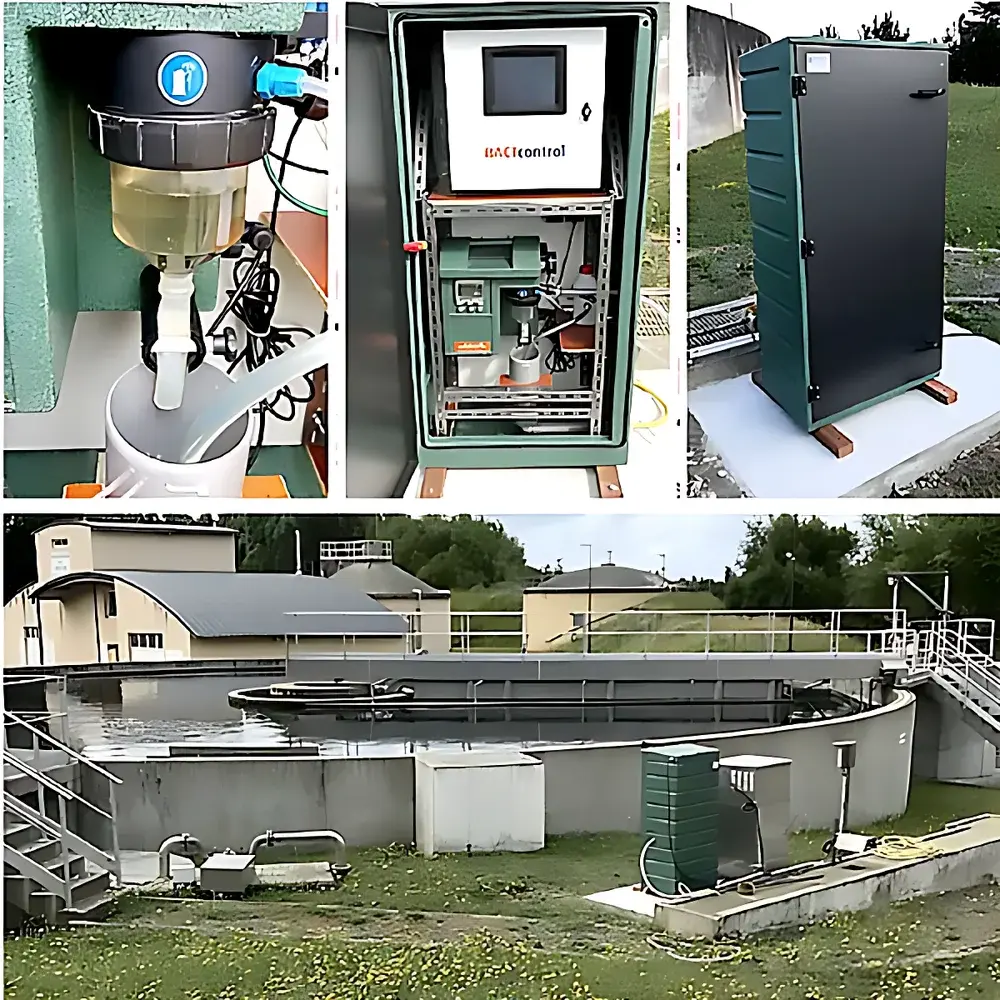
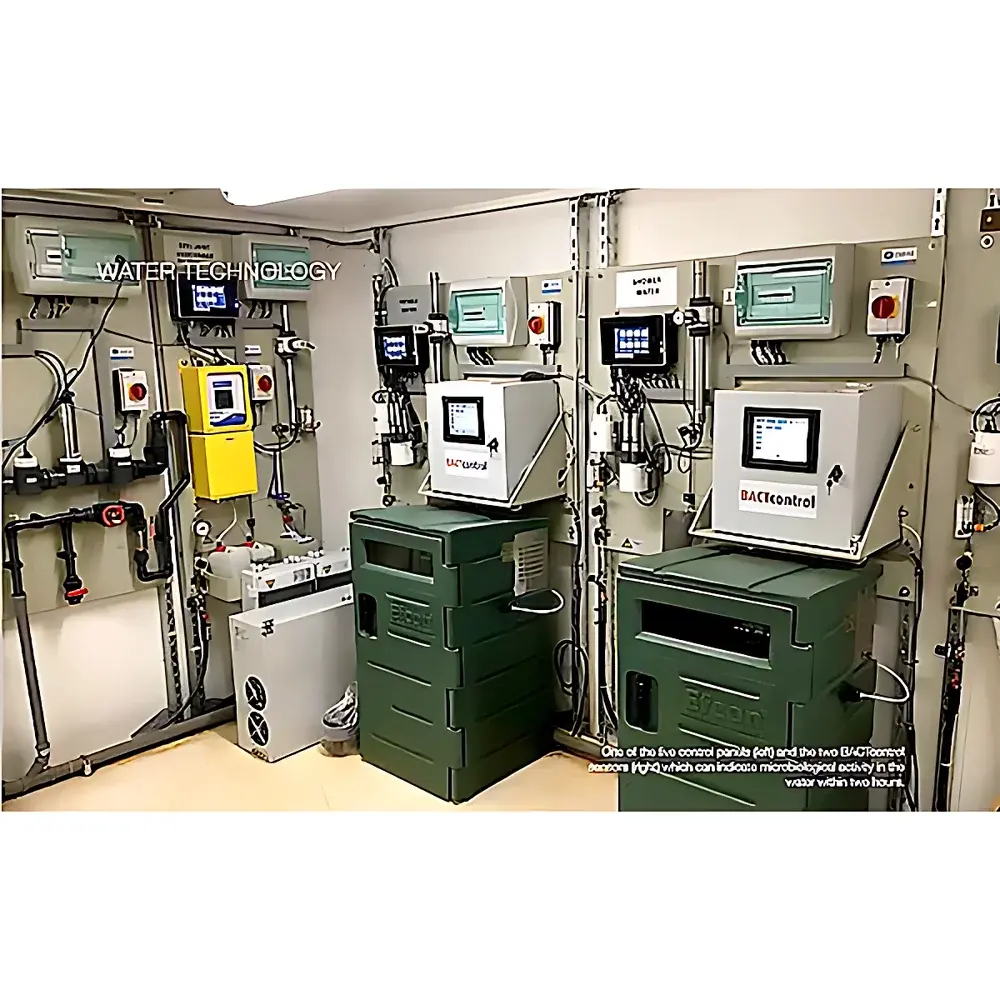
microLAN BACTcontrol Online E. coli and Total Coliform Activity Analyzer
| Brand | microLAN |
|---|---|
| Country of Origin | Netherlands |
| Model | BACTcontrol |
| Measurement Principle | Enzymatic Fluorescence Assay |
| Target Analytes | β-Galactosidase (coliforms), β-Glucuronidase (E. coli), Alkaline Phosphatase (total viable biomass) |
| Measurement Cycle | 1–2 h |
| Detection Method | Substrate-specific fluorogenic enzymatic reaction |
| Sample Flow Rate | 3 L/h |
| Sample Temperature Range | 10–35 °C |
| Ambient Operating Temperature | 15–30 °C |
| Power Supply | 220 V / 50 Hz or 110 V / 60 Hz |
| Power Consumption | <100 W |
| Enclosure Rating | IP54 (optional IP65) |
| Dimensions (H×W×D) | 460 × 450 × 321 mm |
| Weight | 25 kg |
| Housing Material | Aluminum |
| Max. Sample Pressure | 0.05 bar |
| Interface | 2× USB 2.0 (Type A), 2× Gigabit Ethernet (RJ45), Modbus TCP/RTU, 2× digital inputs, 2× relay outputs, 1× 4–20 mA analog output |
| Optional | UMTS/ISDN modem slot, dual-sample inlet with auxiliary cleaning module, climate control unit (>30 °C ambient), automated NaOCl-based cleaning system (≤0.05% active chlorine) |
Overview
The microLAN BACTcontrol Online E. coli and Total Coliform Activity Analyzer is a fully automated, real-time enzymatic fluorescence platform engineered for continuous microbial activity monitoring in water systems. Unlike culture-based methods requiring 24–48 hours for colony formation, the BACTcontrol delivers quantitative results within 1–2 hours by measuring the catalytic activity of three key hydrolytic enzymes—β-galactosidase (indicative of total coliforms), β-glucuronidase (specific to Escherichia coli), and alkaline phosphatase (correlating with total viable biomass). This enzyme-substrate approach leverages fluorogenic substrates that emit measurable fluorescence upon enzymatic cleavage, enabling direct, non-culturable assessment of metabolic activity. The system operates on the principle of kinetic enzymology under controlled flow conditions, ensuring high reproducibility and minimal interference from turbidity, color, or suspended solids—critical advantages in raw surface water or secondary effluent applications. Designed for unattended operation over extended periods, the BACTcontrol functions as an early-warning layer aligned with regulatory frameworks recognizing enzymatic activity as a complementary indicator to ISO 9308-1, EPA Method 1604, and EU Drinking Water Directive Annex I parameters.
Key Features
- Fully autonomous operation with integrated sample handling, reagent dosing, optical detection, and self-cleaning cycles—no manual intervention required between maintenance intervals.
- Turbidity-immune measurement architecture: fluorescence detection is unaffected by particulate load up to 100 NTU, eliminating pre-filtration needs in most field deployments.
- Rapid response capability: detects acute contamination events within 60–120 minutes, supporting incident response protocols in drinking water distribution networks and wastewater outfalls.
- Multi-parameter output: simultaneous quantification of E. coli-specific activity, total coliform activity, and total viable biomass via orthogonal enzymatic assays.
- Modular hardware design: aluminum enclosure rated IP54 (upgradable to IP65), climate-controlled option for installations above 30 °C, and optional dual-inlet configuration for comparative sampling or cross-validation.
- Low operational cost: consumables limited to fluorogenic substrates and sodium hypochlorite cleaning solution (<0.05% active chlorine); no sterile media, incubators, or trained microbiologists required.
Sample Compatibility & Compliance
The BACTcontrol is validated for use across diverse water matrices including raw surface water (rivers, lakes, reservoirs), treated drinking water (source, treatment train, distribution network), wastewater influent/effluent, and process water in food, pharmaceutical, and semiconductor manufacturing. It complies with methodological principles endorsed by the European Committee for Standardization (CEN/TR 16870) for rapid enzymatic detection of fecal indicators. While not a replacement for ISO/IEC 17025-accredited culture methods for regulatory reporting, its data supports GLP-aligned trend analysis, alarm-triggered verification sampling, and operational decision-making under ISO 22000 and WHO Water Safety Plans. The system’s Modbus TCP interface enables seamless integration into SCADA environments compliant with IEC 62443-3-3 security standards.
Software & Data Management
Control and visualization are managed via a Windows-based graphical user interface with touchscreen support, accessible locally or remotely over LAN/WAN. The embedded software logs all measurements with timestamp, assay type, calibration status, and system diagnostics—including cleaning cycle execution, reagent level tracking, and optical path integrity checks. Audit trails meet FDA 21 CFR Part 11 requirements when deployed with appropriate IT governance (user access controls, electronic signatures, immutable log archiving). Data export supports CSV, XML, and OPC UA formats; historical datasets can be synchronized with LIMS or cloud-based analytics platforms for predictive modeling of microbial risk.
Applications
- Drinking water utilities: source water early warning, disinfection efficacy verification, and distribution system integrity monitoring.
- Wastewater treatment plants: real-time assessment of biological treatment performance and effluent compliance trending.
- Food & beverage facilities: rinse water validation in dairy, juice, and bottling lines; cooling tower surveillance per ASHRAE Guideline 12.
- Pharmaceutical manufacturing: monitoring of purified water (PW) and water-for-injection (WFI) loops per USP and EU GMP Annex 1.
- Recreational water management: automated compliance checking for swimming pools and splash pads against EN 15288-1.
- Environmental agencies: long-term ecological health assessment of freshwater ecosystems using enzymatic activity as a proxy for organic loading.
FAQ
How does the BACTcontrol differ from ATP-based rapid tests?
The BACTcontrol measures specific enzymatic activities linked to viable coliform physiology—not total cellular ATP—which improves taxonomic resolution and reduces false positives from dead-cell debris.
Can it replace ISO 9308-1 for regulatory reporting?
No—it serves as a complementary screening tool; confirmatory testing must follow standardized membrane filtration or MPN methods per national regulations.
What maintenance is required beyond routine cleaning?
Annual optical alignment verification and quarterly calibration with certified enzyme activity standards are recommended; no consumable sensors require replacement.
Is remote firmware update supported?
Yes—over secure HTTPS or VPN tunnel, with rollback capability and version-controlled deployment logs.
Does it support integration with third-party SCADA systems?
Yes—via native Modbus TCP/RTU, OPC UA, or custom API development using documented REST endpoints.







