
Tisch TE-20-800 Andersen Eight-Stage Impactor Aerosol Sampler
| Brand | Tisch |
|---|---|
| Origin | USA |
| Model | TE-20-800 |
| Sampling Flow Rate | 28.3 L/min (optional 60 L/min and 90 L/min) |
| Aerodynamic Diameter Range | >9.0 µm to <0.3 µm |
| Stage Count | 8 |
| Collection Substrate | 81 mm filter or stainless steel plates |
| Pre-separator Cut-point | ≥10.0 µm |
| Compliance | US Federal Reference Method for PM10/PM2.5, EPA/OSHA/ACGIH inhalable & thoracic fraction criteria, ISO 21501-4, ASTM D7251 |
Overview
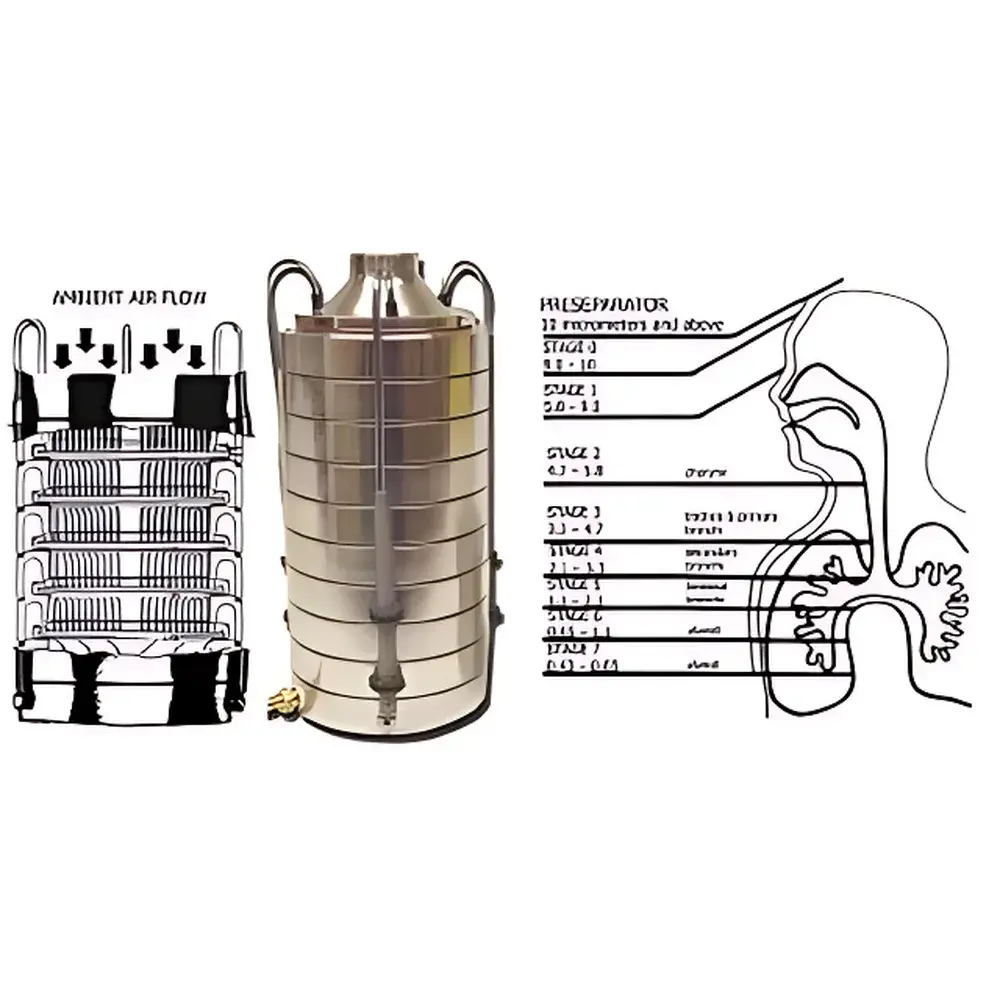
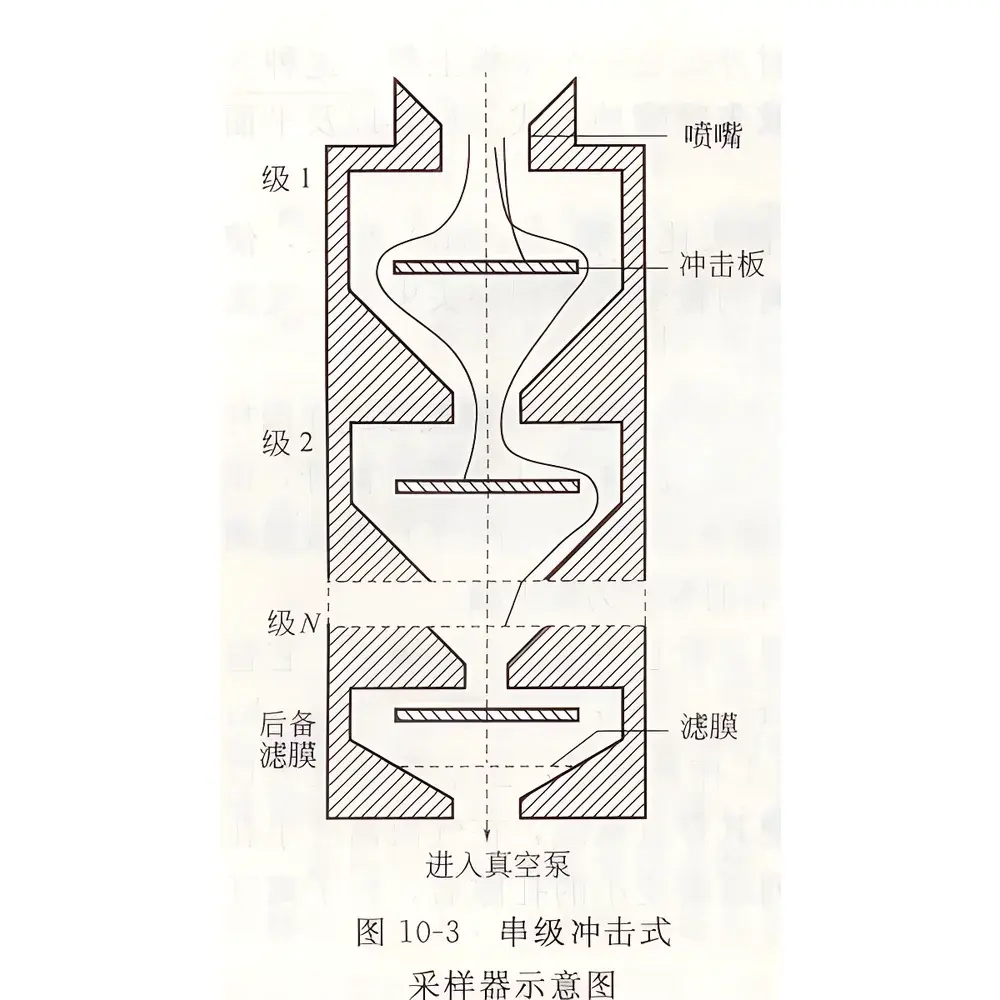
The Tisch TE-20-800 Andersen Eight-Stage Impactor Aerosol Sampler is a precision-engineered inertial impactor designed for quantitative size-fractionated collection of airborne particulate matter in environmental, occupational health, and research settings. Based on the well-established Anderson cascade impactor principle, it separates aerosol particles by aerodynamic diameter through successive stages of jet orifice arrays operating under controlled laminar flow conditions. Each stage features progressively smaller nozzle diameters and higher jet velocities, enabling inertial impaction of particles onto polished stainless steel collection plates or standard 81 mm membrane filters. The instrument replicates human respiratory tract deposition patterns—particularly the extrathoracic, tracheobronchial, and alveolar regions—making it indispensable for inhalation toxicology, exposure assessment, and regulatory compliance sampling. Its design adheres to the physical principles outlined in ISO 21501-4 (determination of particle size distribution by light scattering) and aligns with the aerodynamic cut-point definitions adopted by the U.S. Environmental Protection Agency (EPA), Occupational Safety and Health Administration (OSHA), and the American Conference of Governmental Industrial Hygienists (ACGIH) for inhalable, thoracic, and respirable fractions.
Key Features
- Eight-stage inertial cascade impactor with calibrated jet orifices delivering precise aerodynamic cut-points at 28.3 L/min nominal flow (e.g., Stage 0: ≥10.0 µm; Stage 1: 9.0 µm; Stage 2: 5.8 µm; Stage 3: 4.7 µm; Stage 4: 3.3 µm; Stage 5: 2.1 µm; Stage 6: 1.1 µm; Stage 7: 0.7 µm; Stage 8: <0.3 µm)
- Integrated pre-separator removes coarse particles (>10 µm) prior to entry into the main impactor stack, minimizing overloading and enhancing resolution in fine-mode fractions
- High-efficiency particle capture with minimized bounce and re-entrainment, achieved via electrostatically neutralized aluminum alloy stages, silicone O-rings, and polished stainless steel collection substrates
- Modular construction with eight anodized aluminum impactor stages, eight stainless steel collection plates, and standardized 81 mm filter support capability
- Compatible with volumetric flow controllers and certified vacuum pumps (e.g., diaphragm or rotary vane types) to maintain stable, traceable sampling rates per ISO 5801 and EPA Method IO-3.2
- Rugged, field-deployable architecture: compact footprint (20.3 × 58.4 × 33.0 cm), lightweight (9.5 kg), and supplied with protective transit case, 11 silicone O-rings, and calibration documentation
Sample Compatibility & Compliance
The TE-20-800 accommodates both gravimetric and analytical downstream workflows. Collected particles may be quantified by microbalance weighing (per ISO 12103-1 and EPA Method 201A), extracted for chemical speciation (e.g., ICP-MS, GC-MS, ion chromatography), or processed for microbiological culture and DNA sequencing in bioaerosol studies. It meets U.S. Federal Reference Method (FRM) requirements for PM10 and PM2.5 monitoring when operated with appropriate inlet configurations and flow calibration. The impactor’s stage-specific cut-points are validated against NIST-traceable polystyrene latex (PSL) aerosols and comply with EPA/OSHA/ACGIH definitions for inhalable (≤100 µm), thoracic (<10 µm), and respirable (<4 µm) mass fractions. All wetted surfaces are corrosion-resistant anodized aluminum or passivated stainless steel, ensuring long-term stability in high-humidity or chemically aggressive sampling environments.
Software & Data Management
While the TE-20-800 operates as a passive mechanical collector requiring no embedded electronics, its data integration follows GLP/GMP-aligned laboratory practices. Flow rate validation must be performed pre- and post-sampling using primary standards (e.g., bubble meters, critical orifice calibrators) traceable to NIST. Digital flow meters with data-logging capability (e.g., DryCal® units) are recommended to record time-stamped flow profiles for audit readiness. Sample metadata—including pump serial number, calibration certificate expiry, ambient temperature/pressure, total sampling duration, and gravimetric weight differentials—is structured to support 21 CFR Part 11–compliant electronic lab notebooks (ELNs) and LIMS integration. Tisch provides detailed SOP templates aligned with ISO/IEC 17025 quality management requirements for aerosol measurement laboratories.
Applications
- Ambient air quality monitoring for regulatory PM characterization (PM10, PM2.5, ultrafine fractions)
- Workplace exposure assessment in mining, pharmaceutical manufacturing, nanomaterial handling, and spray coating facilities
- Indoor air quality investigations in healthcare settings, schools, and office buildings
- Bioaerosol research including fungal spore, bacterial endotoxin, and viral particle size distribution analysis
- Filter efficiency testing and aerosol generation system validation
- Toxicological dose-response modeling based on deposited mass in anatomically relevant lung regions
FAQ
What is the recommended calibration frequency for the TE-20-800 impactor?
Calibration of the impactor’s aerodynamic performance is not required under normal use; however, flow rate verification must be conducted before and after each sampling event using NIST-traceable instrumentation.
Can the TE-20-800 be used for viable bioaerosol collection?
Yes—when paired with nutrient-coated collection plates or sterile 81 mm membranes (e.g., polycarbonate or gelatin filters), it supports culturable microorganism recovery with minimal shear-induced damage.
Is the TE-20-800 compliant with current EPA methods for PM monitoring?
It satisfies the physical design and cut-point criteria referenced in EPA Method IO-3.2 and serves as a reference-grade sampler for method development and validation—not as a direct FRM replacement without full system certification.
What maintenance procedures are required between sampling runs?
Stages and collection plates must be cleaned ultrasonically in low-residue solvents (e.g., isopropanol), dried in particle-free air, and inspected for nozzle deformation or surface pitting prior to reuse.
Does the unit include a vacuum pump?
No—the TE-20-800 is supplied as a sampling head only; users must select and validate a compatible vacuum source meeting flow stability and pulsation specifications defined in ISO 5801.
Related Products







