
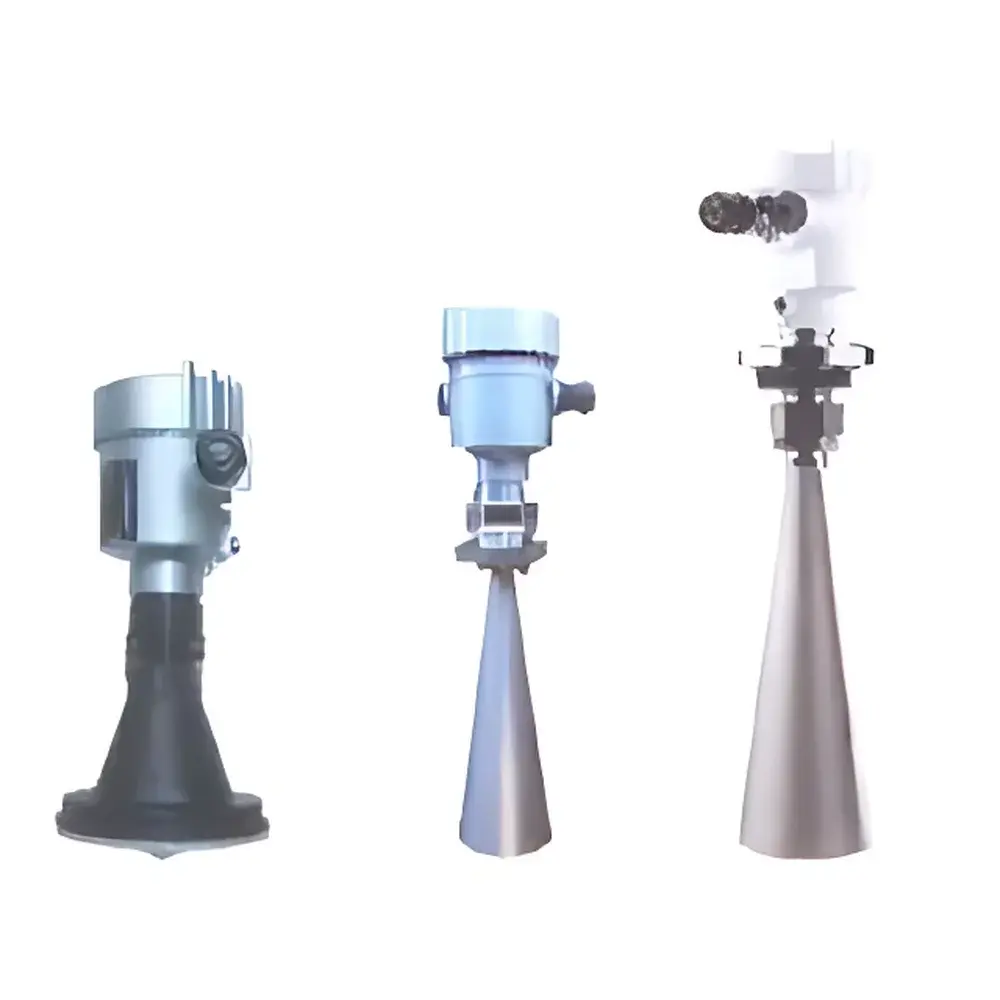
SEBA SEBAPULS Series Pulse Radar Level Transmitter
| Brand | SEBA |
|---|---|
| Origin | Germany |
| Model | SEBAPULS |
| Technology | 26 GHz Pulse Radar |
| Accuracy | ±3 mm (SEBAPULS 30), ±5 mm (SEBAPULS 20), ±15 mm (SEBAPULS 70) |
| Measuring Range | 0–20 m / 0–30 m / 0–70 m |
| Operating Temperature | −40 °C to +80 °C |
| Output | 4–20 mA (standard), optional voltage output & remote telemetry (GSM/GPRS, satellite, landline) |
| Antenna Type | Plastic horn (SEBAPULS 20), stainless steel horn (SEBAPULS 30/70) |
| Housing | Aluminum enclosure, IP66 |
| Minimum Distance to Surface | 50 mm |
| Minimum Distance to Mounting Bracket | 20–30 cm |
| Power Consumption | Low-power design optimized for solar/battery operation |
Overview
The SEBA SEBAPULS Series is a family of non-contact, 26 GHz pulse radar level transmitters engineered for continuous, high-reliability monitoring of surface water levels in open-channel and free-surface applications. Based on time-of-flight (ToF) principle, the device emits short-duration electromagnetic pulses toward the water surface; the elapsed time between transmission and reception of the reflected signal is precisely measured and converted into distance using the speed of light. This physics-based measurement approach ensures immunity to environmental variables such as suspended solids, floating debris, surface foam, corrosive media, temperature gradients, humidity fluctuations, and atmospheric pressure changes—critical advantages in unattended field deployments across rivers, irrigation canals, reservoirs, lakes, and tidal zones. Unlike ultrasonic or hydrostatic sensors, pulse radar technology eliminates mechanical wear, requires no calibration drift correction due to medium properties, and operates reliably under adverse weather conditions including heavy rain, fog, ice formation, or dust-laden air.
Key Features
- True non-contact measurement with no wetted parts—eliminates fouling, corrosion, and maintenance associated with submersible or float-based systems
- 26 GHz high-frequency pulse radar architecture enables narrow beam angle (<10°), minimizing interference from nearby structures, vegetation, or bank obstructions
- Low power consumption compatible with solar-charged battery systems for remote, off-grid installations
- Robust aluminum housing rated IP66 for protection against dust ingress and powerful water jets
- Configurable measurement intervals—from seconds to hours—enabling adaptive data logging strategies aligned with hydrological event detection requirements
- Factory-calibrated zero point and linear scaling; no field recalibration required under normal operating conditions
- Integrated diagnostics including signal strength monitoring, echo quality assessment, and self-test routines compliant with IEC 61508 functional safety principles
Sample Compatibility & Compliance
The SEBAPULS series is specifically designed for open-surface liquid level measurement and does not require direct contact with the medium. It is suitable for natural and engineered water bodies containing suspended sediment, organic matter, algae, oil films, or industrial effluents—provided surface reflectivity remains sufficient for radar return (typical minimum dielectric constant >15). The instrument complies with EN 61326-1 (EMC for industrial environments), EN 61000-6-2/-6-3 (immunity/emission standards), and meets RoHS and WEEE directives. Its intrinsic safety profile supports deployment in Zone 2 hazardous locations when installed with appropriate barriers. While not certified to SIL2/SIL3, its diagnostic coverage and hardware fault tolerance align with IEC 61511 Annex H guidance for low-demand safety-related functions in water infrastructure.
Software & Data Management
Configuration and diagnostics are performed via SEBA’s proprietary PC-based software suite, supporting parameter setup, firmware updates, and real-time echo curve analysis. All models support HART protocol overlay on the 4–20 mA analog output for digital configuration without interrupting primary signal transmission. Optional telemetry modules enable integration into SCADA, Telemetry, or IoT platforms via Modbus RTU/TCP, MQTT, or proprietary protocols over GSM/GPRS, satellite (e.g., Iridium), or PSTN landline connections. Data logging functionality includes timestamped level values, signal quality metrics, and system health flags—structured to support audit-ready records per ISO/IEC 17025 and GLP-aligned QA/QC workflows. Remote access capabilities facilitate predictive maintenance planning and reduce site visit frequency in distributed monitoring networks.
Applications
- River and stream gauging for flood forecasting and hydrological modeling
- Canal and aqueduct level control in irrigation and water distribution networks
- Reservoir and dam level surveillance for operational safety and regulatory reporting
- Lake and pond level trend analysis in ecological monitoring programs
- Tidal gauge stations requiring long-term stability and salt-spray resistance
- Wastewater treatment plant influent/effluent channel monitoring under variable flow regimes
- Climate research networks requiring autonomous, low-maintenance instrumentation in remote terrain
FAQ
What is the minimum measurable distance from the antenna face to the water surface?
The minimum standoff distance is 50 mm—this ensures optimal near-field performance and avoids blind-zone errors inherent in pulse radar systems.
Can the SEBAPULS operate in freezing conditions or during snow accumulation?
Yes—the housing and electronics are rated for continuous operation from −40 °C to +80 °C; however, snow or ice buildup on the antenna aperture must be prevented via mechanical shielding or periodic inspection.
Is the 4–20 mA output intrinsically safe for use in hazardous areas?
The base transmitter is not intrinsically safe by default; however, it may be deployed in Zone 2 environments when connected through an approved galvanic isolator or Zener barrier meeting IEC 60079-11 requirements.
How does beam divergence affect accuracy in narrow channels or vegetated banks?
With a typical beam angle of ≤10° at −3 dB, the SEBAPULS maintains focused targeting even at maximum range; mounting alignment and bracket clearance (20–30 cm minimum to adjacent structures) are critical to avoid side-lobe interference.
Does the device support MODBUS RTU communication natively?
MODBUS RTU is supported only when equipped with the optional digital telemetry module; the standard analog output requires external protocol conversion for integration into MODBUS-based SCADA systems.
Related Products







