
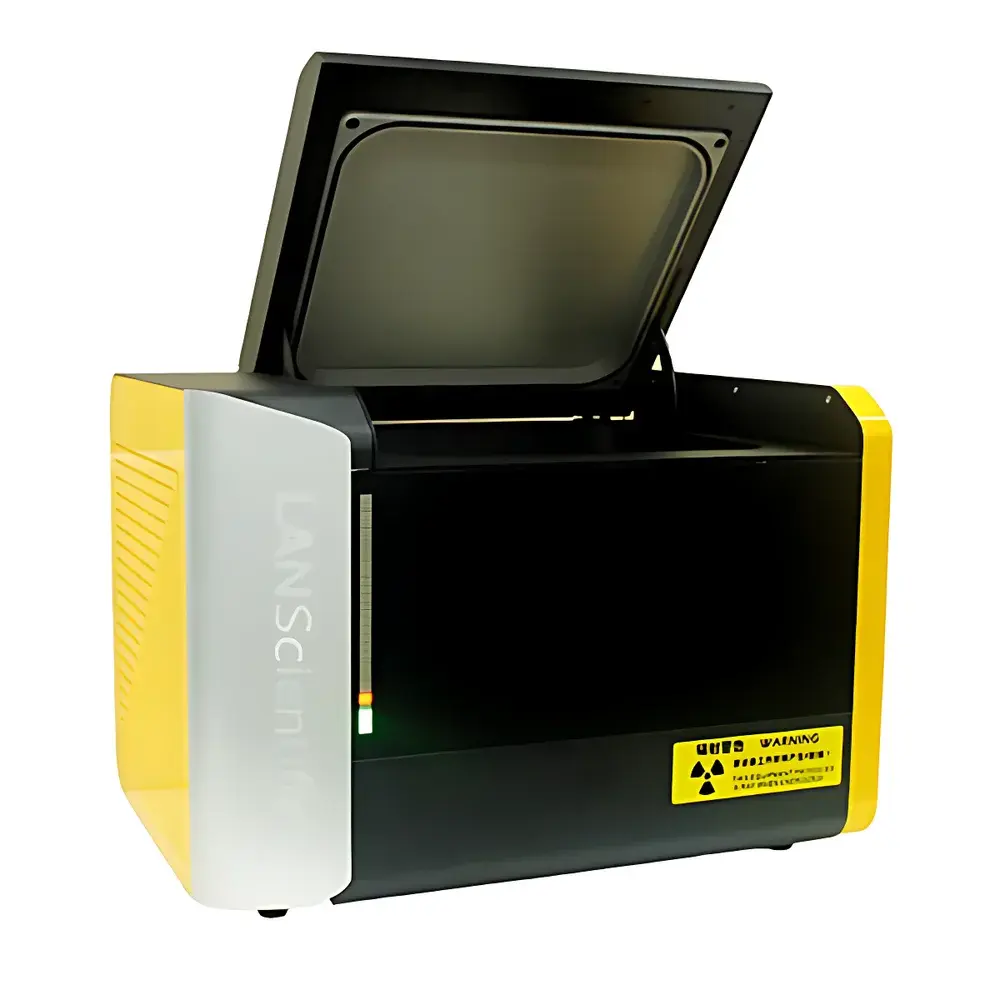
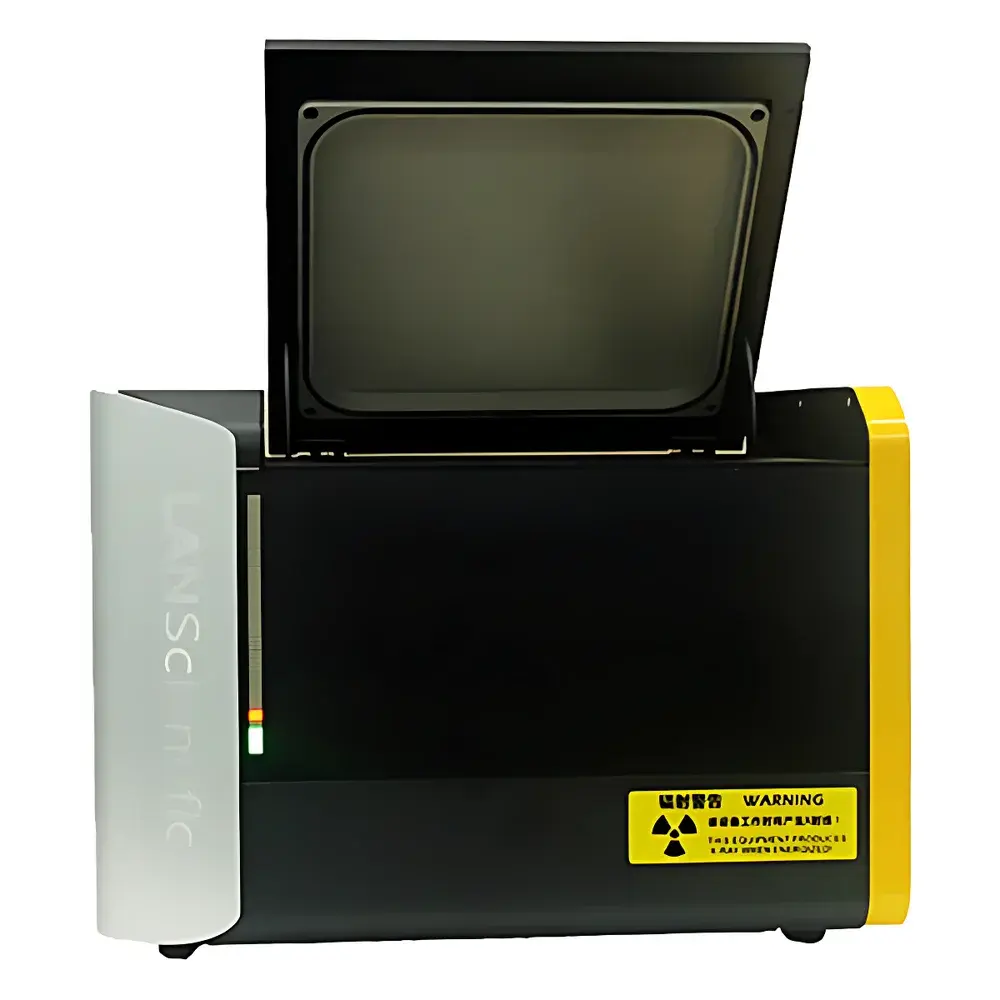
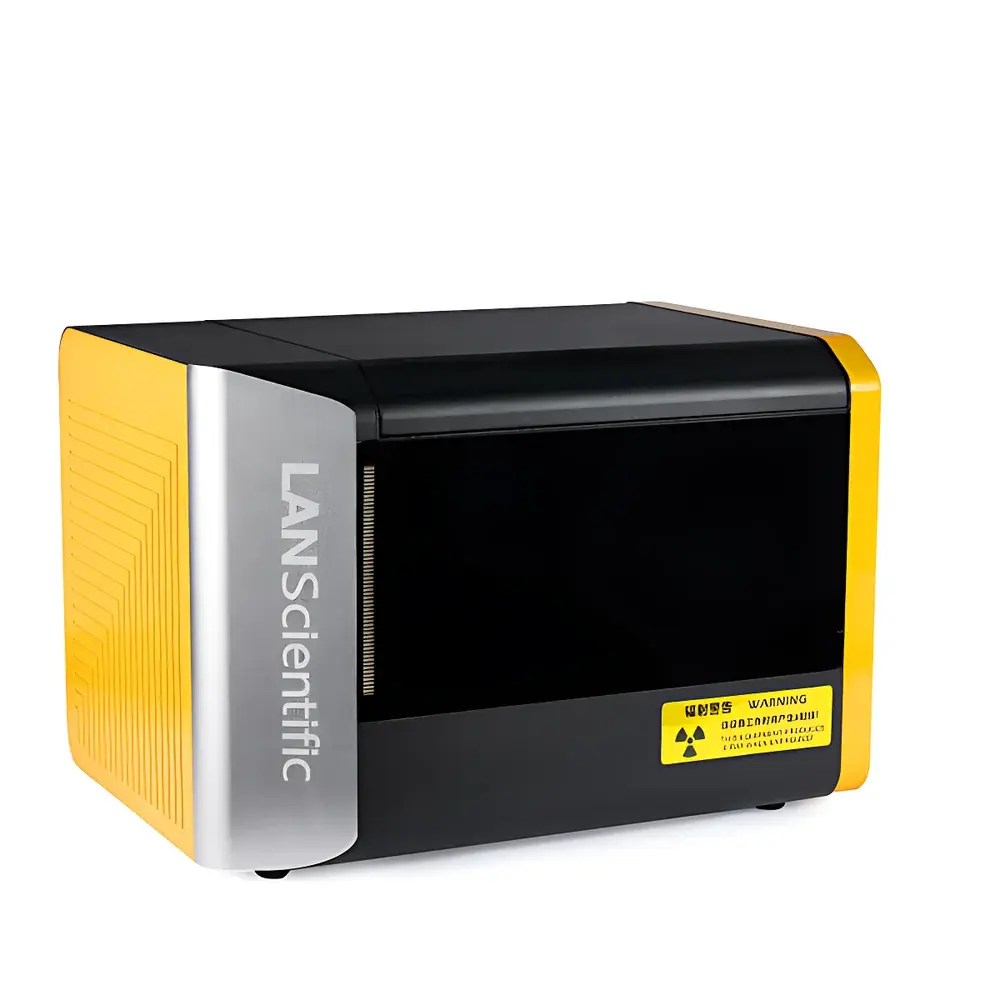
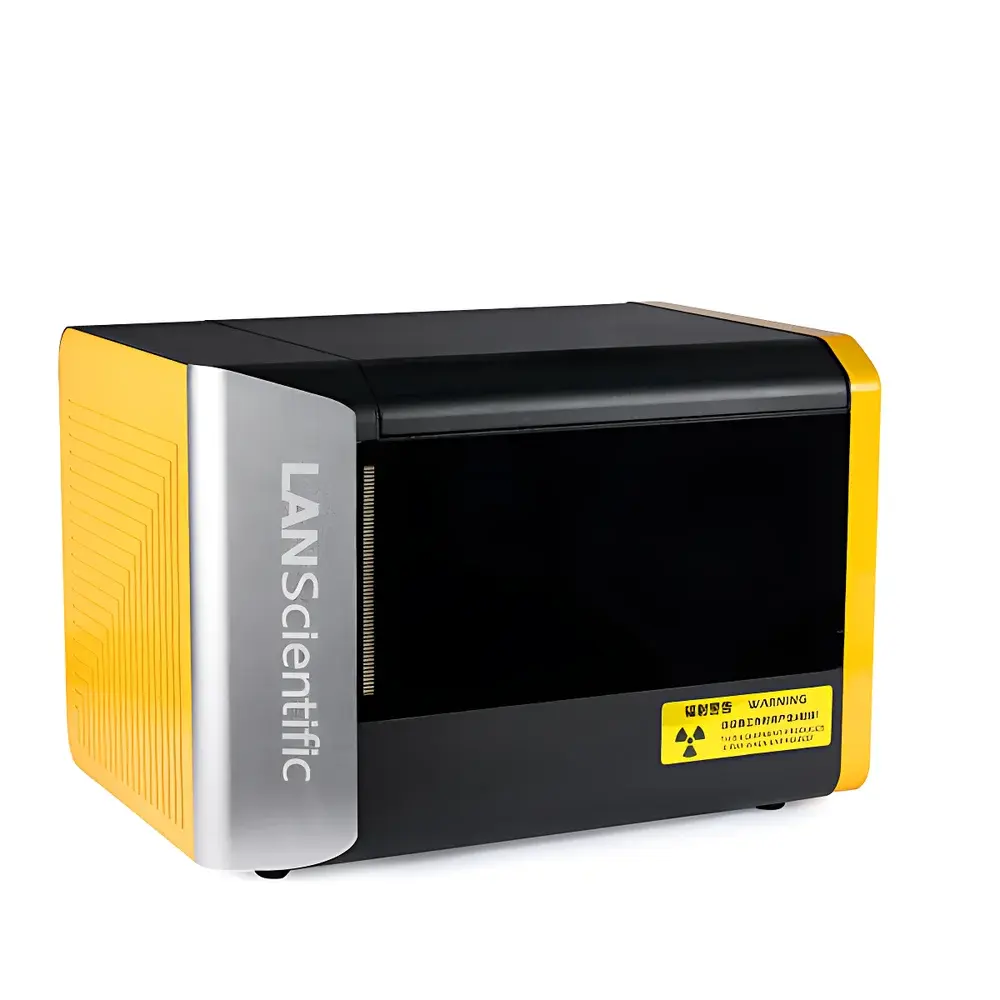
LANScientific ScopeX Desktop Energy Dispersive X-Ray Fluorescence Spectrometer for Ca, Mg, Si Analysis
| Brand | LANScientific |
|---|---|
| Origin | Jiangsu, China |
| Manufacturer Type | Direct Manufacturer |
| Regional Classification | Domestic (China) |
| Model | ScopeX ED-XRF |
| Form Factor | Benchtop |
| Instrument Type | Conventional ED-XRF |
| Industry-Specific Design | Geological & Mineralogical Applications |
| Elemental Range | Na (11) to U (92) |
| Detection Limit | Sub-ppm to % level (matrix-dependent) |
| Light Element Capability | Optimized for Mg, Al, Si, P, S via vacuum-assisted low-energy excitation |
| Detector | Peltier-cooled Silicon Drift Detector (SDD) |
| Collimators | 5 mm, 3 mm, 1 mm, 0.5 mm (motorized auto-switching) |
| Filters | Multiple primary beam filters (software-selectable) |
| Sample Chamber | Large-volume, multi-geometry compatible (solid, powder, liquid, thin film, irregular shapes) |
| Data Interfaces | USB 3.0, Wi-Fi 5 (802.11ac), Bluetooth 5.0 |
| Report Output | Customizable EXCEL, PDF with spectral overlays, logo insertion, and metadata fields |
| Safety Compliance | Fully shielded metal enclosure with interlocked door, radiation leakage <1 µSv/h — compliant with GB18871-2002 and GBZ115-2002 |
Overview
The LANScientific ScopeX is a benchtop energy dispersive X-ray fluorescence (ED-XRF) spectrometer engineered for rapid, non-destructive elemental quantification—specifically optimized for routine analysis of calcium (Ca), magnesium (Mg), and silicon (Si) in geological, mineralogical, and industrial raw material matrices. Operating on the fundamental principle of X-ray fluorescence, the instrument irradiates samples with a focused X-ray beam, ejecting inner-shell electrons from constituent atoms. As outer-shell electrons transition to fill these vacancies, they emit characteristic secondary X-rays whose energies are uniquely tied to atomic number (Z), enabling unambiguous elemental identification. Intensity of emitted fluorescence correlates linearly with elemental concentration under controlled conditions, allowing quantitative analysis across a broad dynamic range—from trace-level ppm concentrations to major-element weight percentages. The ScopeX integrates a low-power microfocus X-ray tube with vacuum-enhanced excitation pathways, significantly improving sensitivity for light elements (Na–Cl), including Mg and Si, which are traditionally challenging in air-path ED-XRF systems.
Key Features
- Light element optimization: Integrated vacuum chamber and low-energy X-ray tube enable robust detection of Mg (Z=12), Al (Z=13), Si (Z=14), P (Z=15), and S (Z=16) without cryogenic cooling.
- Peltier-cooled Silicon Drift Detector (SDD): Delivers high count-rate capability (>100,000 cps) and energy resolution <125 eV at Mn Kα, ensuring precise peak deconvolution in complex mineral spectra.
- Motorized collimator and filter carousel: Four precision collimators (5 mm, 3 mm, 1 mm, 0.5 mm) and multiple primary beam filters are automatically selected via software to match sample geometry and analytical requirements—maximizing signal-to-background ratio and minimizing matrix effects.
- Large-volume sample chamber: Accommodates heterogeneous specimens up to 300 × 300 × 150 mm (W × D × H), supporting bulk rocks, core sections, pressed pellets, loose powders, and coated substrates without reconfiguration.
- Zero-consumable operation: No liquid nitrogen or helium required; Peltier cooling ensures stable detector performance with minimal maintenance and no operational downtime for refills.
- Radiation safety architecture: Full-metal enclosure with dual-interlock door mechanism, real-time dose monitoring, and automatic beam cutoff—certified to Chinese national standards GB18871-2002 (basic safety) and GBZ115-2002 (industrial X-ray equipment).
Sample Compatibility & Compliance
The ScopeX supports direct analysis of solid, powdered, fused bead, liquid, and thin-film samples without digestion or derivatization. Its flexible sample interface accommodates irregular geometries common in field-collected rock chips, drill core fragments, slag chunks, and ceramic tiles. For geological applications, it meets methodological expectations aligned with ASTM D7359–22 (standard test method for elemental analysis of petroleum products by ED-XRF) and ISO 22053:2021 (XRF analysis of cement and related materials). While not pre-certified for GLP/GMP environments, its audit-ready data logging, user-access controls, and electronic signature support align with FDA 21 CFR Part 11 principles when deployed with validated SOPs. Traceability is ensured via embedded timestamps, operator ID tagging, and immutable spectral file archiving (CAB/RAW formats).
Software & Data Management
The proprietary ScopeX Control Suite provides full instrument control, qualitative screening, and quantitative calibration using fundamental parameters (FP) and empirical coefficient methods. It supports creation of multi-point calibrations for geological reference materials (e.g., USGS standards AGV-2, BCR-2, NIST SRM 278). Spectral processing includes background subtraction, peak fitting (Gaussian/Lorentzian hybrid), interference correction (e.g., Si Kβ overlap on Ca Kα), and matrix normalization (e.g., Compton normalization for variable density). Reports export natively to Excel (.xlsx) and PDF with embedded spectra, calibration curves, uncertainty estimates (k=2), and customizable headers—including company logos, QA/QC flags, and analyst annotations. All data transfers—local export, network upload, or remote diagnostics—are encrypted over TLS 1.2 via Wi-Fi or USB.
Applications
The ScopeX serves as a primary screening tool in exploration geochemistry labs for rapid assessment of CaO–MgO–SiO₂ ratios in carbonate-rich sediments, ultramafic intrusions, and lateritic profiles. It supports quality assurance in cement manufacturing (clinker composition), refractory production (silica-alumina balance), and metallurgical feedstock evaluation (gangue mineral quantification). In environmental geology, it enables field-deployable analysis of heavy metal contaminants (Pb, As, Cd) co-located with silicate hosts. Routine use extends to academic teaching laboratories for hands-on XRF methodology instruction, where its intuitive interface and visual spectral feedback reinforce core concepts in atomic physics and analytical chemistry.
FAQ
Does the ScopeX require external cooling or consumables?
No—it uses solid-state Peltier cooling for the SDD detector and operates without liquid nitrogen, helium, or vacuum pumps.
Can it analyze powdered samples without pelletization?
Yes; loose powders can be analyzed in shallow cups with Mylar film backing, though pressed pellets yield improved reproducibility for quantitative work.
Is spectral library matching supported for unknown mineral identification?
The software includes a built-in mineral phase database (e.g., quartz, olivine, calcite, dolomite) for semi-quantitative phase screening based on elemental stoichiometry.
How is calibration maintained across long-term operation?
Drift correction is performed using internal reference standards and optional daily check standards; full recalibration is recommended every 3–6 months depending on usage intensity.
What regulatory documentation is provided for installation qualification?
Factory calibration certificates, radiation safety test reports (GB-compliant), and IQ/OQ protocol templates are supplied upon delivery.
Related Products






