
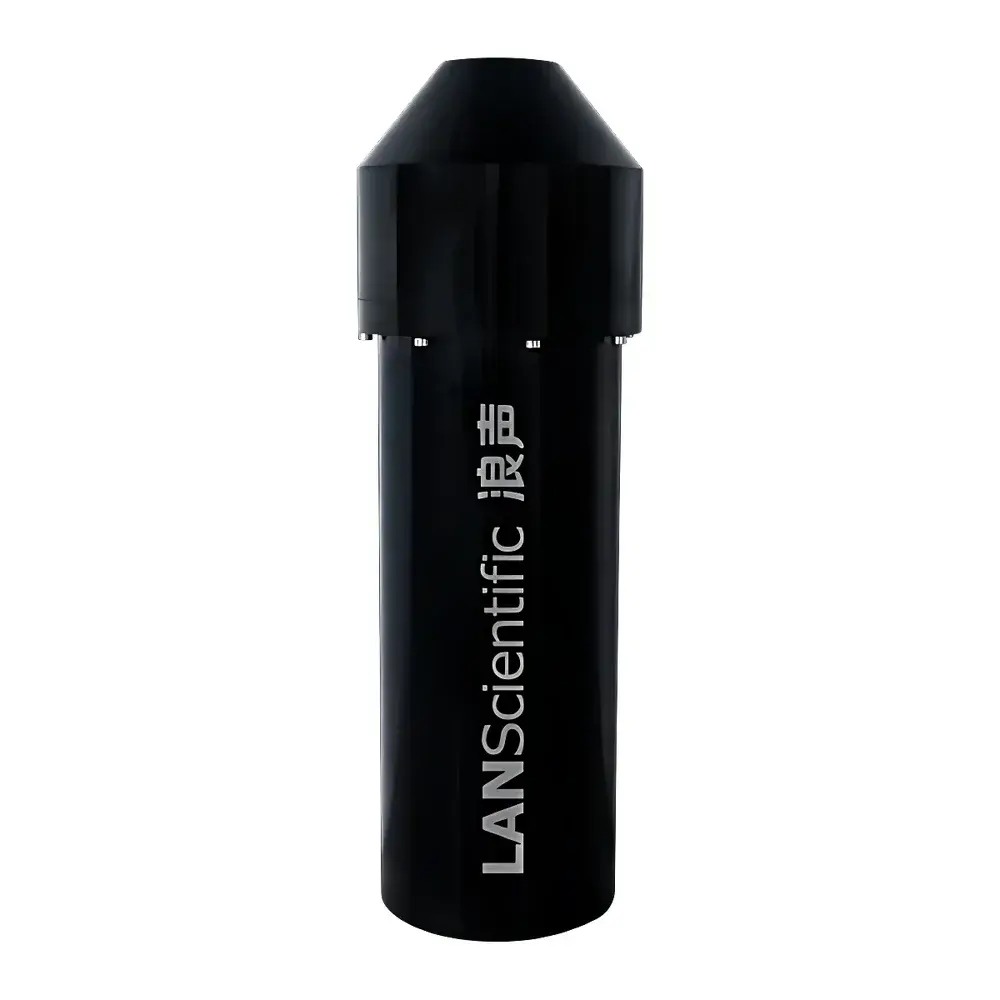
LANScientific IP68 Submersible Multi-Element XRF Analyzer
| Brand | LANScientific |
|---|---|
| Origin | Jiangsu, China |
| Manufacturer Type | Manufacturer |
| Domestic/Imported | Domestic |
| Model | IP68 |
| Application | Handheld / Submersible |
| Instrument Type | Conventional Energy Dispersive X-Ray Fluorescence (ED-XRF) Spectrometer |
| Ingress Protection Rating | IP68 |
| Operational Depth | Up to 10 m underwater |
| Measurement Mode | In-situ, non-destructive elemental analysis |
| Data Transmission | Real-time wireless telemetry to surface control unit |
Overview
The LANScientific IP68 Submersible Multi-Element XRF Analyzer is an engineered solution for in-situ, real-time elemental characterization of submerged solid and semi-solid matrices—including seafloor sediments, mineral crusts, archaeological artifacts, infrastructure surfaces, and contaminated substrates—without sample retrieval or laboratory preparation. Built upon energy-dispersive X-ray fluorescence (ED-XRF) spectroscopy principles, the instrument emits a focused X-ray beam onto the target surface underwater; characteristic secondary X-rays emitted by constituent elements are collected by a high-resolution silicon drift detector (SDD), enabling quantitative and semi-quantitative determination of elemental composition from sodium (Na) to uranium (U). Unlike conventional benchtop or handheld XRF systems, the IP68 integrates pressure-resistant mechanical architecture, corrosion-inhibiting housing materials (316L stainless steel and marine-grade polymer composites), and submersible optical coupling to maintain spectral fidelity at hydrostatic pressures up to 100 kPa (equivalent to 10 m seawater depth). Its operation complies with ISO 22154:2021 (XRF spectrometry — General requirements) and supports trace-level detection in heterogeneous aquatic environments where matrix effects, water attenuation, and signal scattering pose persistent analytical challenges.
Key Features
- IP68-rated hermetic sealing validated per IEC 60529, enabling continuous operation at depths up to 10 meters in freshwater and seawater
- In-situ, non-destructive measurement—eliminates sampling bias, oxidation artifacts, and contamination risks associated with ex-situ handling
- Optimized X-ray optics and collimation system designed to minimize water-path attenuation and enhance signal-to-background ratio underwater
- Real-time spectral acquisition and onboard elemental quantification using fundamental parameter (FP) algorithms with matrix-matched calibration libraries
- Integrated inertial measurement unit (IMU) and depth sensor for georeferenced data logging synchronized with spectral acquisition
- Wireless telemetry via 2.4 GHz spread-spectrum RF or optional fiber-optic tether for secure, low-latency data transmission to surface-based control stations
- Ruggedized ergonomic form factor (280 × 120 × 95 mm; <2.1 kg) compatible with manual deployment, ROV manipulator arms, and AUV mounting fixtures
Sample Compatibility & Compliance
The IP68 analyzer is validated for direct contact analysis of consolidated sediments, ferromanganese nodules, hydrothermal sulfides, calcareous concretions, metallic corrosion layers, ceramic/glass artifact surfaces, and polymer-coated infrastructure. It does not require vacuum or helium purge—enabling immediate deployment in ambient water. Analytical performance meets ASTM D7215–19 (Standard Practice for Field Screening of Sediments Using Portable XRF) for screening-level quantification and supports method validation under EPA Method 6200 (Field Portable X-Ray Fluorescence Spectrometry) when coupled with site-specific calibration. All firmware and data handling modules conform to GLP-compliant audit trail requirements, including timestamped operator ID, instrument configuration logs, and raw spectrum archiving. The device is CE-marked for electromagnetic compatibility (EN 61326-1) and marine environmental safety (IEC 60068-2-17 for salt mist resistance).
Software & Data Management
The companion software suite—LANScientific AquaXRF Suite v3.2—runs on Windows-based surface terminals and provides full spectral visualization, peak deconvolution, interference correction (e.g., Cl–Kα overlap on K–Kα), and empirical calibration management. Data files adhere to ASTM E1357–22 (Standard Format for XRF Spectral Data Exchange) and export natively to CSV, .rxf, and .cdf formats. Each measurement record includes embedded metadata: GPS coordinates (via external NMEA 0183 input), depth, temperature, acquisition time, tube current/voltage, live time, and detector resolution (FWHM ≤ 145 eV at Mn–Kα). Audit trails are immutable and support 21 CFR Part 11-compliant electronic signatures when deployed in regulated environmental monitoring or nuclear facility maintenance programs.
Applications
- Oceanographic resource assessment: Rapid mapping of Co–Ni–Cu–Mn ratios in polymetallic nodules and rare earth element (REE) distribution in deep-sea clays
- Environmental forensics: In situ detection of Pb, As, Hg, Cd, and Cr(VI) speciation proxies in sediment porewater interfaces during spill response
- Underwater cultural heritage: Non-invasive provenance analysis of bronze patina composition or glass alkali metal ratios to inform conservation strategies
- Infrastructure integrity monitoring: Quantitative tracking of Fe loss, Zn depletion, and chloride-induced alloy degradation on submerged bridge pilings or offshore wind turbine foundations
- Regulatory compliance surveys: Pre-dredging sediment screening per OSPAR Commission guidelines or USACE ERDC protocols without costly core recovery logistics
FAQ
What is the maximum operational depth, and how is pressure tolerance verified?
The IP68 analyzer is rated for continuous operation at 10 m depth (100 kPa gauge pressure), validated through hydrostatic pressure cycling (3× full-depth immersion over 72 hours) per ISO 17713:2016 Annex B.
Can it analyze elements lighter than titanium in aqueous environments?
Yes—optimized vacuum-path geometry and low-noise SDD enable reliable detection of Mg, Al, Si, P, and S in dry or thin-film substrates; quantification of Na and Mg requires post-acquisition water-path correction models.
Is spectral data stored onboard if wireless transmission fails?
Yes—internal 32 GB industrial-grade microSD card retains raw spectra, metadata, and processed reports with automatic failover and cyclic overwrite protection.
Does the system comply with marine biofouling mitigation standards?
The titanium-reinforced housing and anti-adhesive polymer coating meet IMO MEPC.207(62) guidance for short-term submersion without biocide leaching.
How is calibration maintained across varying water temperatures and salinities?
Onboard thermistor and conductivity sensor feed real-time environmental parameters into FP algorithm corrections; factory calibrations include salinity-dependent attenuation coefficients for 0–40 ppt range.
Related Products






