
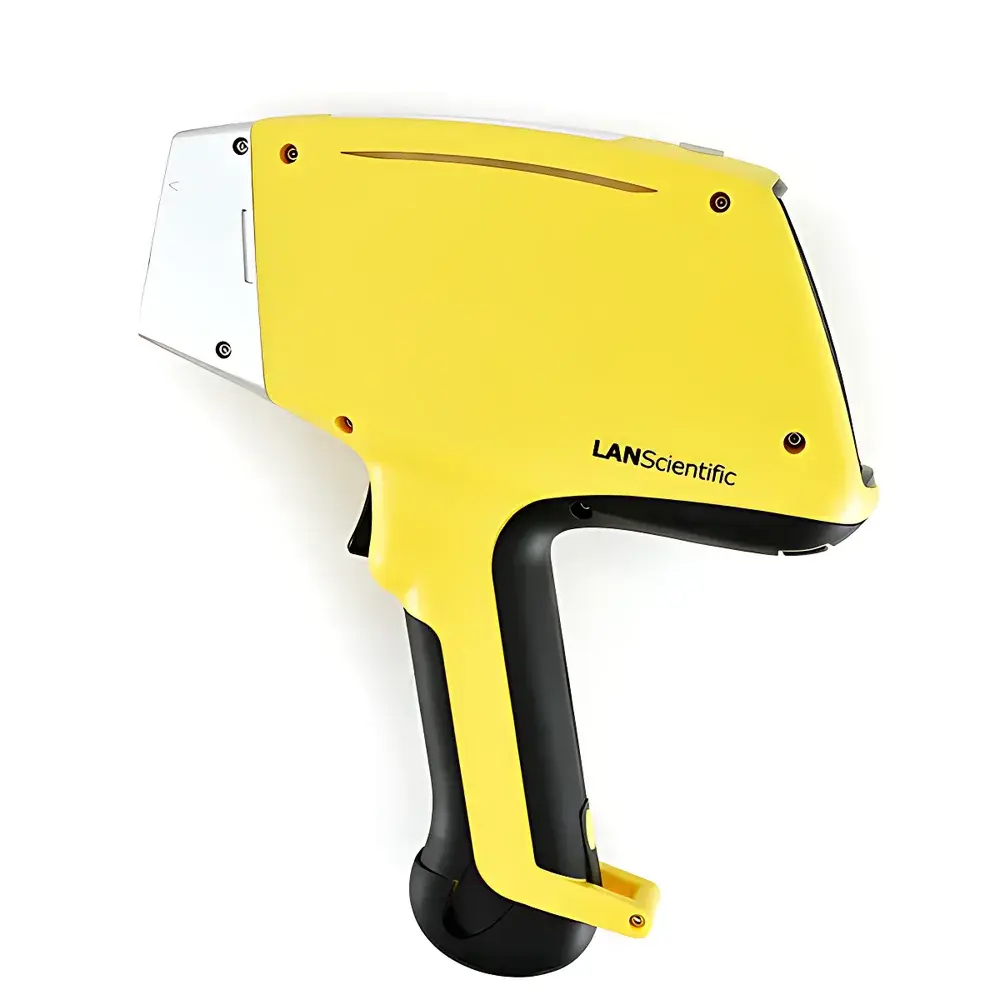
Brookfield LANScientific TrueX 960 Portable Energy Dispersive X-Ray Fluorescence (EDXRF) Spectrometer
| Brand | LANScientific |
|---|---|
| Origin | Jiangsu, China |
| Manufacturer Type | Direct Manufacturer |
| Product Category | Domestic |
| Model | TrueX 960 |
| Application | Handheld / Portable |
| Instrument Type | Conventional |
| Industry Use | General-Purpose |
| Elemental Range | Mg to U |
| Quantitative Range | 1 ppm – 99.99% |
| Energy Resolution | <140 eV |
| Repeatability | 0.1% |
| Detector | High-Resolution Silicon Drift Detector (SDD) |
Overview
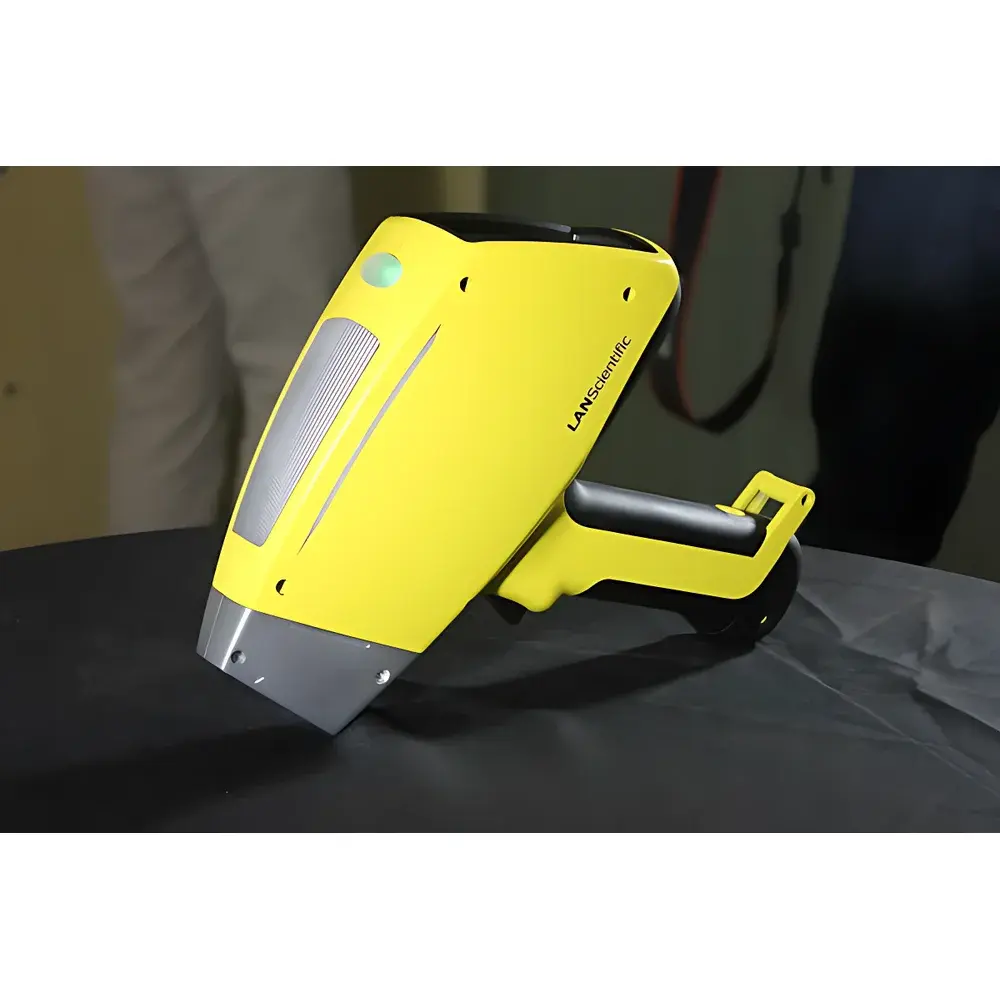
The Brookfield LANScientific TrueX 960 is a field-deployable, handheld energy dispersive X-ray fluorescence (EDXRF) spectrometer engineered for rapid, non-destructive elemental analysis of geological and metallurgical materials. Based on fundamental EDXRF physics—where primary X-rays excite characteristic secondary (fluorescent) X-rays from sample atoms—the instrument delivers quantitative and semi-quantitative composition data in seconds without chemical digestion or vacuum requirements. Its compact form factor, integrated radiation shielding, and ruggedized industrial design meet IEC 62471 safety standards for Class 3B laser product equivalence and comply with national radiation safety regulations for portable XRF devices (e.g., CNCA-C11-01). Designed for real-time decision-making across the mineral value chain, the TrueX 960 bridges the gap between laboratory-grade accuracy and field operational efficiency.
Key Features
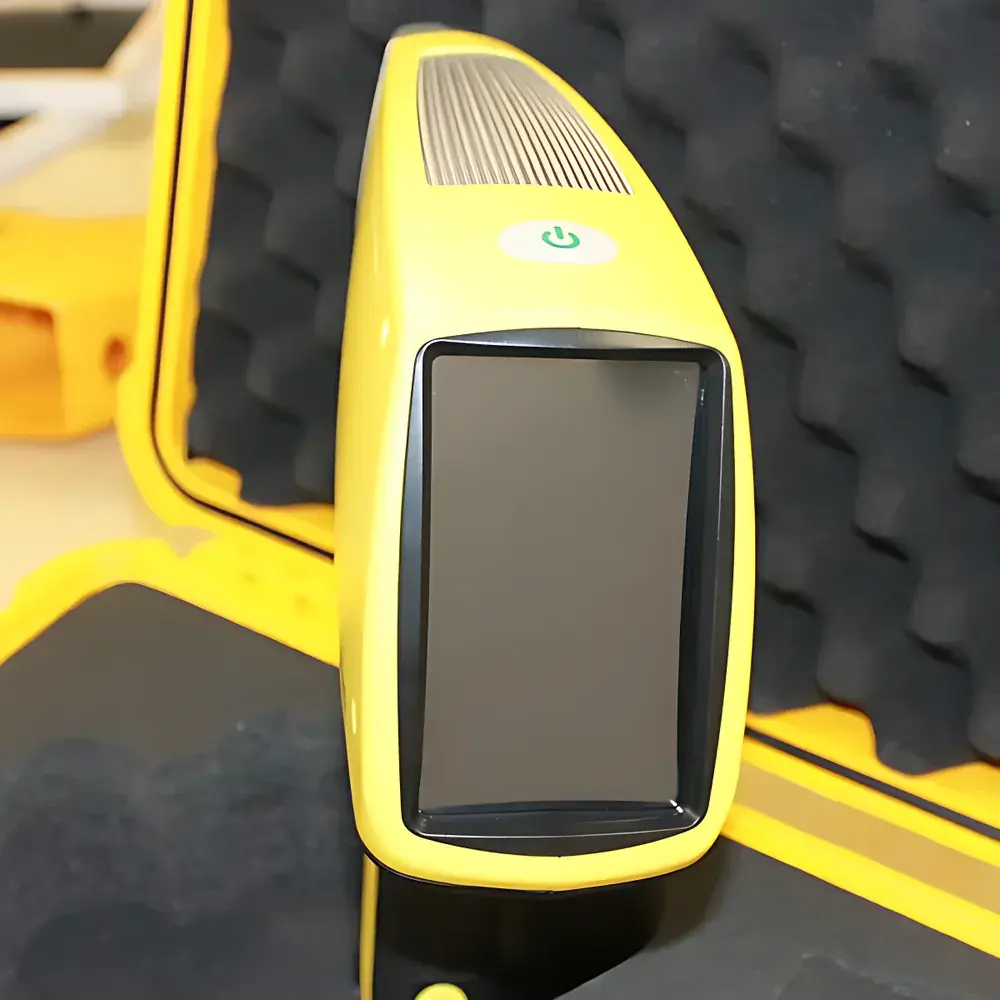
- Industrial-grade 4.3-inch resistive touchscreen display with high-luminance backlighting—optimized for readability under direct sunlight and compatible with gloved operation in cold, dusty, or wet environments.
- High-performance micro-focus X-ray tube with selectable kV/mA settings and a large-area silicon drift detector (SDD) enabling high count-rate throughput and sub-140 eV Mn Kα energy resolution at room temperature.
- Digital pulse processing architecture with real-time dead-time correction and peak deconvolution algorithms, ensuring robust spectral fidelity across complex matrices including sulfides, oxides, silicates, and mixed ores.
- Built-in GPS module recording latitude, longitude, and altitude metadata synchronized with each spectrum—enabling georeferenced data export for GIS integration (e.g., QGIS, ArcGIS) and spatial interpolation of elemental distributions.
- Fully customizable reporting engine supporting user-defined templates with embedded company logos, address blocks, sample descriptors (e.g., batch ID, location tag), spectral overlays, and tabular concentration outputs compliant with internal QA/QC documentation workflows.
Sample Compatibility & Compliance
The TrueX 960 accommodates heterogeneous solid samples—including drill cores, rock chips, crushed ore, slag fragments, tailings, and soil matrices—without grinding, pressing, or binder addition. Surface geometry and particle size effects are mitigated via built-in fundamental parameter (FP) calibration models validated against certified reference materials (CRMs) such as USGS GSP-2, NIST SRM 278, and CANMET geochemical standards. Instrument firmware supports ASTM E1621–22 (Standard Guide for XRF Analysis of Metals and Alloys) and ISO 22057:2021 (Geological materials — Determination of major and minor elements by EDXRF) methodologies. All measurement protocols adhere to GLP principles, with full audit trail logging enabled for traceability in regulated exploration or environmental remediation projects.
Software & Data Management
TrueX Connect software (Windows-based, v3.2+) provides instrument control, spectral acquisition, FP-based quantification, and multi-sample batch processing. Data files (.trux) store raw spectra, acquisition parameters, GPS coordinates, operator ID, and timestamped metadata—each encrypted and checksum-verified to prevent tampering. Export options include CSV, PDF, and XML formats compatible with LIMS integration. For regulatory compliance, optional 21 CFR Part 11 mode enables electronic signatures, role-based access control, and immutable audit logs—supporting FDA-auditable workflows in mining-related environmental monitoring programs.
Applications
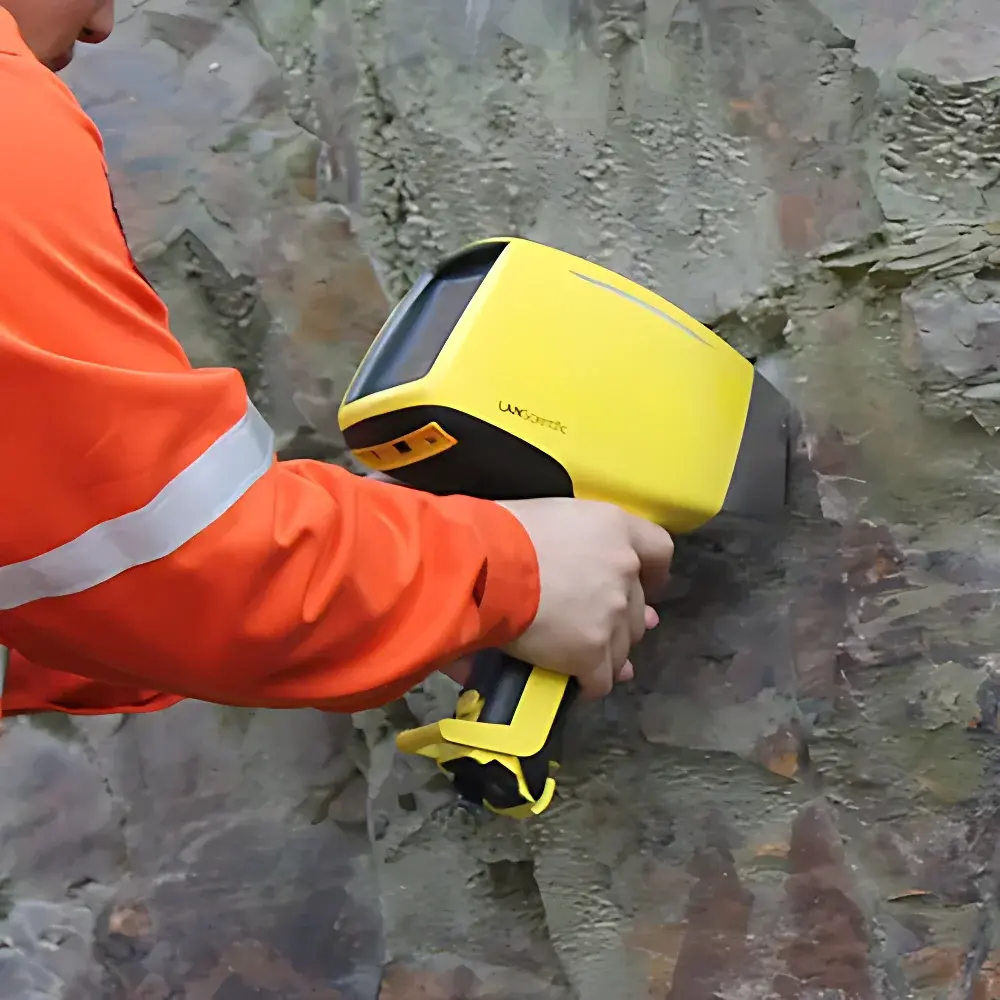
- Exploration-stage reconnaissance mapping of pathfinder elements (e.g., As, Sb, Bi) and base metal indicators (Cu, Zn, Pb) across outcrops and trench walls.
- In-pit grade control during open-cast operations, enabling dynamic cut-off grade adjustments based on real-time Cu/Au/Fe assays.
- Mineral processing optimization through rapid on-belt analysis of feed, concentrate, and tailings streams.
- Tailings dam stability assessment via quantification of leachable heavy metals (Cd, Cr, Ni, Pb) and acid-generating potential indicators (S, Fe).
- Post-mining environmental site assessment, including soil screening for legacy contamination and verification of remediation endpoints per EPA Method 6200.
FAQ
Is the TrueX 960 certified for use in hazardous locations (e.g., ATEX/IECEx)?
No—it is not intrinsically safe certified; operation in explosive atmospheres requires additional engineering controls per local HSE regulations.
Does the instrument require annual recalibration by an authorized service center?
Field recalibration using factory-supplied CRMs is recommended every 90 days; full system verification (tube output, detector gain, resolution) is advised annually.
Can the TrueX 960 quantify light elements below magnesium (e.g., Na, O, C)?
No—its optimized Be window and SDD configuration limit reliable detection to Mg (Z=12) and heavier elements under standard atmospheric conditions.
What is the typical measurement uncertainty for major elements in homogeneous ore samples?
At 95% confidence, relative standard deviation is ≤2% for elements ≥1 wt% in matrix-matched CRMs; precision improves with longer counting times (30–60 s).
How is radiation exposure managed during routine operation?
The instrument features dual interlock systems (beam shutter + proximity sensor), automatic beam termination upon lift-off, and dose rate <1 µSv/h at 5 cm—well below ICRP occupational limits.




