
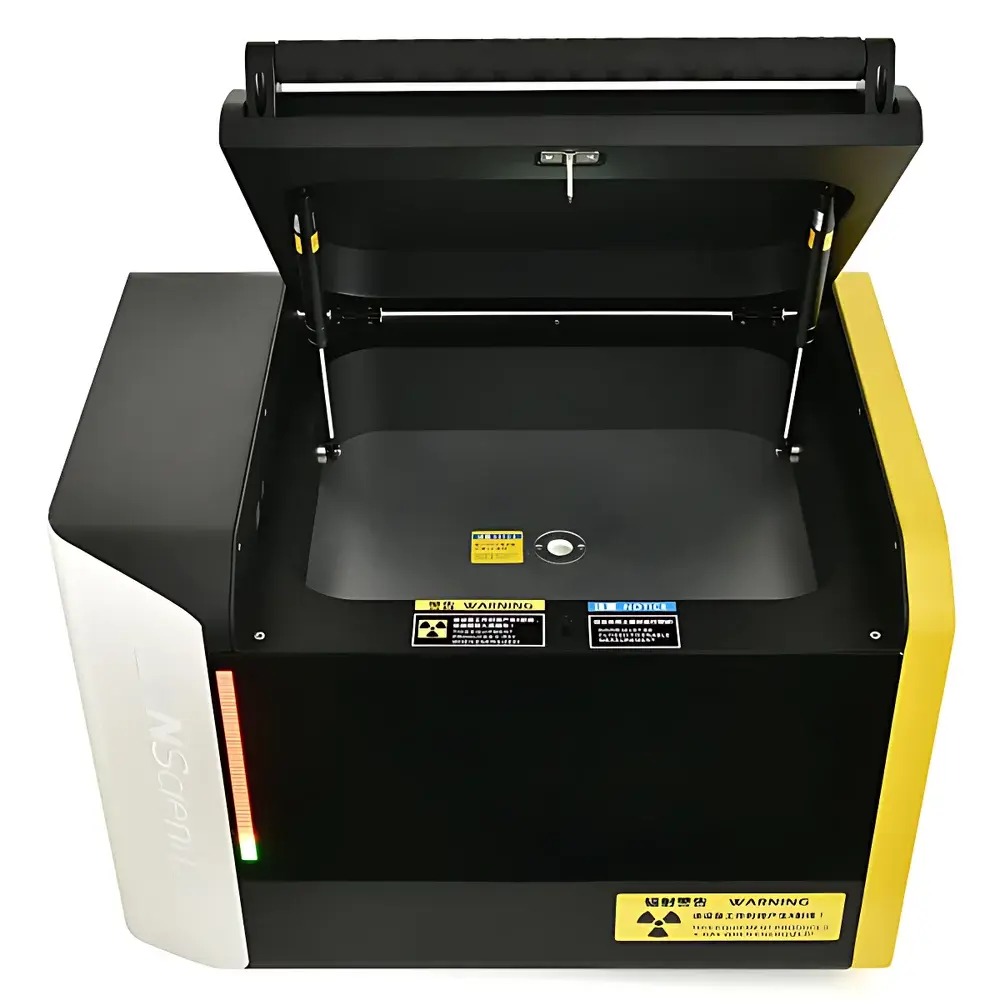
Brookfield ScopeX G59 Benchtop Precious Metals ED-XRF Analyzer
| Brand | LANScientific |
|---|---|
| Origin | Jiangsu, China |
| Manufacturer Type | Direct Manufacturer |
| Regional Classification | Domestic (China) |
| Model | ScopeX G59 |
| Form Factor | Benchtop / Floor-Standing |
| Instrument Type | Conventional ED-XRF Spectrometer |
| Industry-Specific Use | Non-Ferrous Metals & Precious Metals |
| Elemental Range | Na (11) – U (92) |
| Detection Limit for Ag/Cu | ≤10 ppm |
| Quantitative Accuracy | ±0.001% for Au (i.e., 99.999 wt% Au with 10 ppm total impurities) |
| Analysis Time | 5–120 s per measurement |
| Detector | Large-Area Silicon Drift Detector (SDD) |
| Excitation Source | Rhodium (Rh) anode X-ray tube |
| Software | LANScientific XRF Analysis Suite (FP + Calibration Curve hybrid quantification) |
Overview
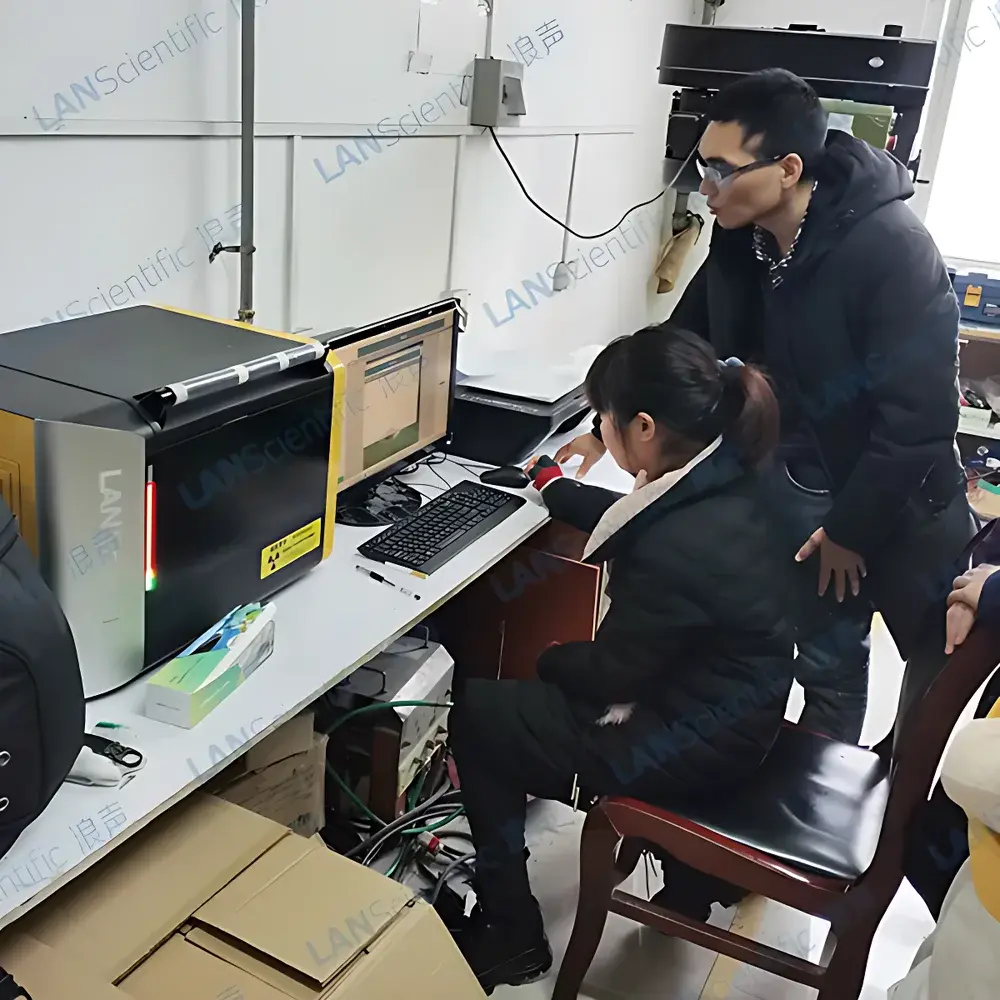
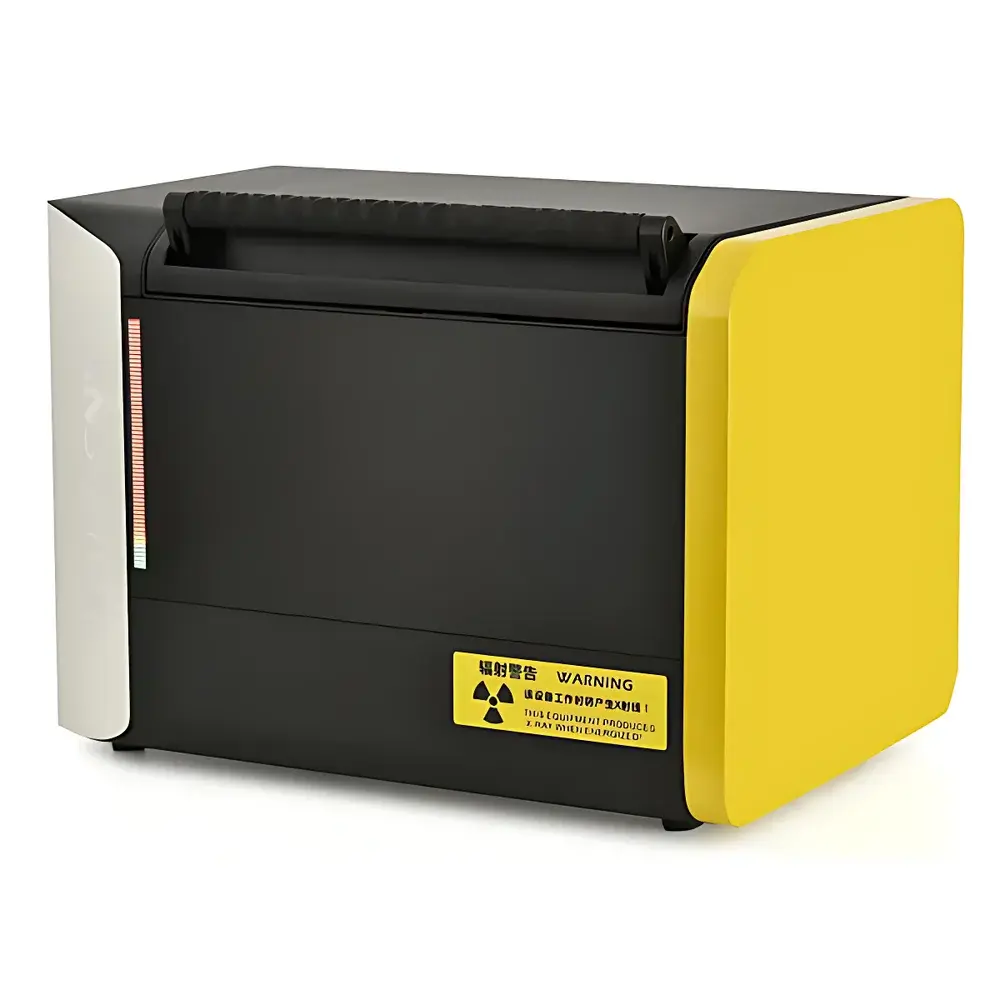
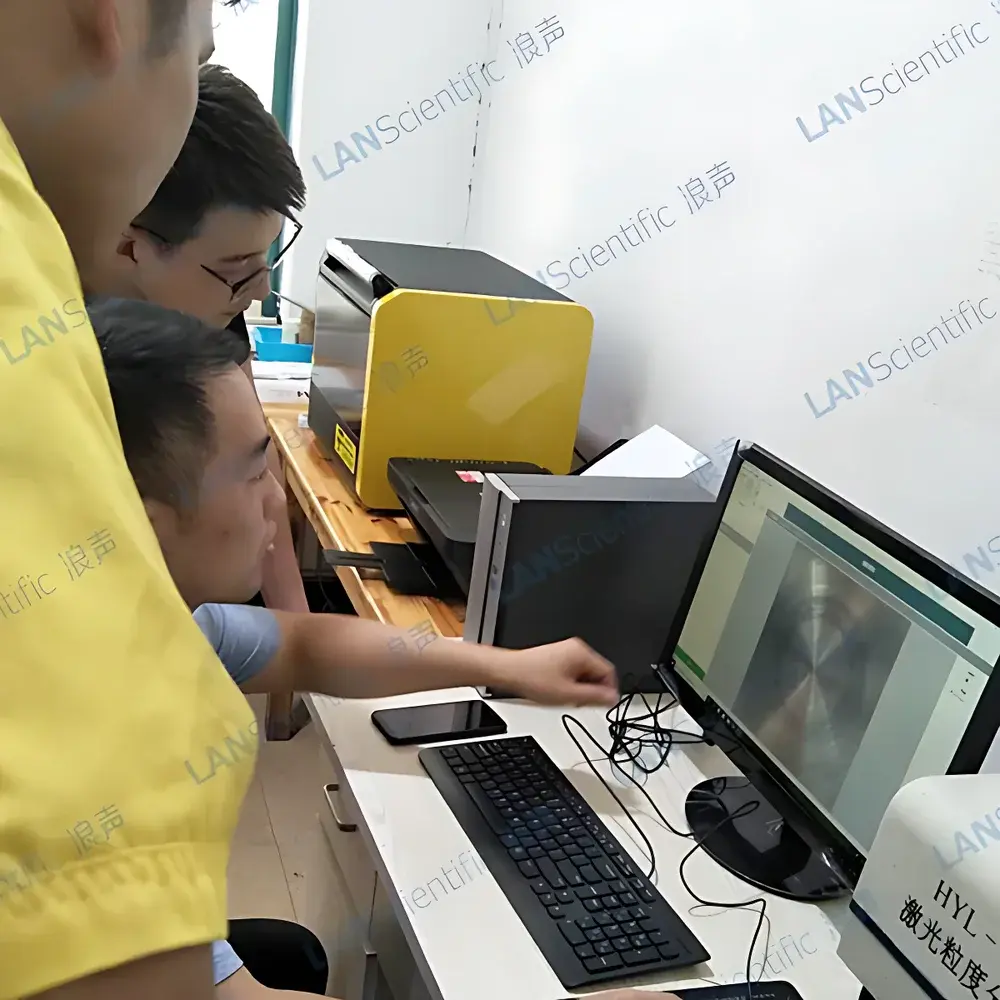
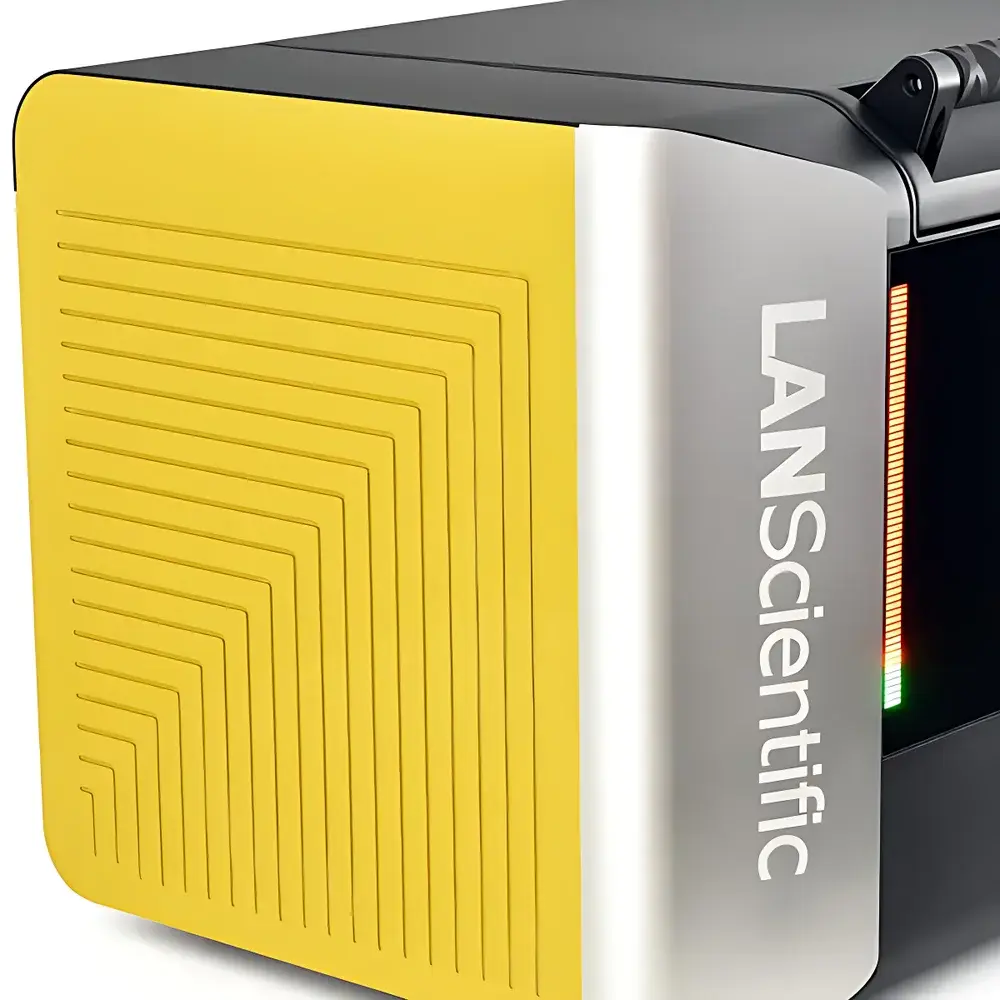
The Brookfield ScopeX G59 is a high-performance benchtop Energy Dispersive X-Ray Fluorescence (ED-XRF) spectrometer engineered specifically for precision assay of precious metals—particularly gold (Au), silver (Ag), and copper (Cu)—in jewelry manufacturing, retail display environments, and bullion verification workflows. Operating on the fundamental principle of X-ray fluorescence, the instrument irradiates solid samples with primary X-rays from a Rh-target microfocus tube; characteristic secondary X-rays emitted by constituent elements are collected by a large-area silicon drift detector (SDD), enabling simultaneous multi-element detection across the Na–U range. Its vertically oriented optical path minimizes geometric scattering effects and enhances signal-to-noise ratio—critical for resolving trace-level Ag and Cu impurities (<10 ppm) in ultra-high-purity gold (≥99.999 wt%). Designed to meet the metrological demands of AU99999 (99.999% pure gold) certification, the ScopeX G59 delivers certified-grade repeatability and reproducibility under ISO 8596 and ASTM E1621-compliant measurement conditions.
Key Features
- Vertical-beam excitation geometry optimized for flat, irregular, and high-density precious metal samples—including rings, ingots, bars, and granular scrap.
- Large-area SDD detector (≥50 mm² active area) with Peltier cooling, delivering high count-rate capability (>100,000 cps) and energy resolution ≤125 eV at Mn Kα.
- Multi-aperture collimation system (Ø0.2 mm, Ø0.5 mm, Ø1.0 mm, Ø3.0 mm) enabling spatially resolved analysis of features as small as 200 µm without sample destruction.
- Automated filter wheel with five selectable primary beam filters (Al, Cu, Ti, Mo, Rh) for matrix-specific excitation optimization and spectral deconvolution enhancement.
- Integrated thermal-stabilized X-ray tube (40 kV / 1.0 mA max) with real-time power regulation to maintain consistent photon flux across extended operation cycles.
- Built-in thermal printer supporting direct output of ASTM E1361-compliant assay reports—including elemental concentrations, uncertainty estimates, measurement time, and operator ID.
Sample Compatibility & Compliance
The ScopeX G59 accommodates samples up to 300 mm × 300 mm × 120 mm (L×W×H) within its motorized, light-tight sample chamber. It supports heterogeneous alloys, plated items, soldered joints, and surface-treated substrates without preparation—fully compliant with non-destructive testing (NDT) requirements per ISO/IEC 17025:2017 Clause 7.2.2. Method validation documentation—including limit of detection (LOD), limit of quantification (LOQ), linearity (R² ≥ 0.9995 over 0.1–100 wt%), and long-term stability (RSD < 0.8% over 8-hour drift test)—is provided with each unit. The system meets electromagnetic compatibility (EMC) standards IEC 61326-1 and radiation safety requirements IEC 61010-1. For regulated environments, optional audit-trail-enabled firmware supports 21 CFR Part 11 compliance when paired with LANScientific’s secure network deployment package.
Software & Data Management
The LANScientific XRF Analysis Suite v5.3 provides dual-quantification engine support: Fundamental Parameters (FP) modeling for unknown or complex matrices, and empirical calibration curve fitting for routine production control. All spectra are stored in vendor-neutral .rtd format (compatible with SpectraSuite and PyMCA), with metadata embedded per ISO/IEC 17025 traceability requirements. Database export supports CSV, XML, and SQL formats; integration with LIMS via ODBC is available. User access levels (Operator, Supervisor, Administrator) enforce role-based permissions. Full audit trail logs include timestamped records of method edits, calibration updates, result overrides, and user logins—retained for ≥36 months per GLP/GMP archival policy.
Applications
- Raw material screening in gold refinery feedstock and alloy master batch verification.
- In-line process monitoring during jewelry casting, rolling, and electroplating operations.
- Final product certification for AU9999 (99.99%) and AU99999 (99.999%) grade bullion and investment-grade coins.
- Retail point-of-sale authentication in luxury jewelry boutiques and pawn shops—supporting real-time customer-facing reporting.
- Scrap gold sorting and valuation in recycling facilities, including multi-layered e-waste PCBs and dental alloys.
- Research applications in metallurgical phase mapping, diffusion layer analysis, and plating thickness estimation (via FP-based depth profiling).
FAQ
What is the minimum detectable concentration for silver and copper in gold?
The instrument achieves ≤10 ppm detection limits for both Ag and Cu in Au-rich matrices under standard 60-second measurement conditions using the Ø0.5 mm collimator and Rh-filtered excitation.
Does the ScopeX G59 require external cooling or vacuum pumping?
No. The SDD detector uses solid-state Peltier cooling; no liquid nitrogen or mechanical pump is required. Ambient air convection suffices for thermal management.
Can it analyze plated or coated samples?
Yes—the vertical geometry and variable collimation allow controlled-depth excitation. Layer thickness estimation down to ~0.1 µm is feasible using FP-based attenuation modeling.
Is software validation documentation included?
Yes. IQ/OQ/PQ protocols, along with full software verification reports (including algorithm accuracy benchmarks against NIST SRM 1112a and 1138b), are supplied with each delivery.
What regulatory standards does the system support for quality assurance?
It supports method validation per ASTM E1621, ISO 8596, and GB/T 18043–2013. Optional 21 CFR Part 11 mode enables electronic signature and audit trail compliance for pharmaceutical or regulated assay labs.
Related Products




