
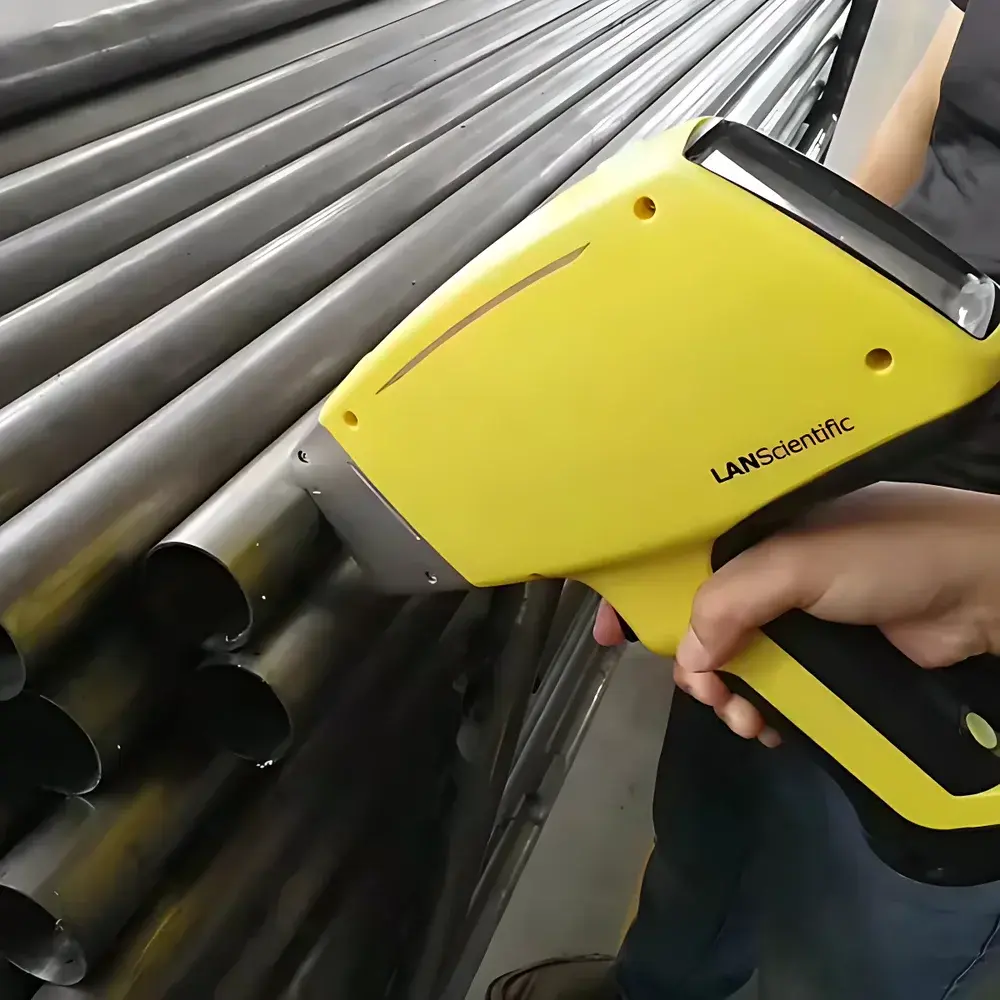
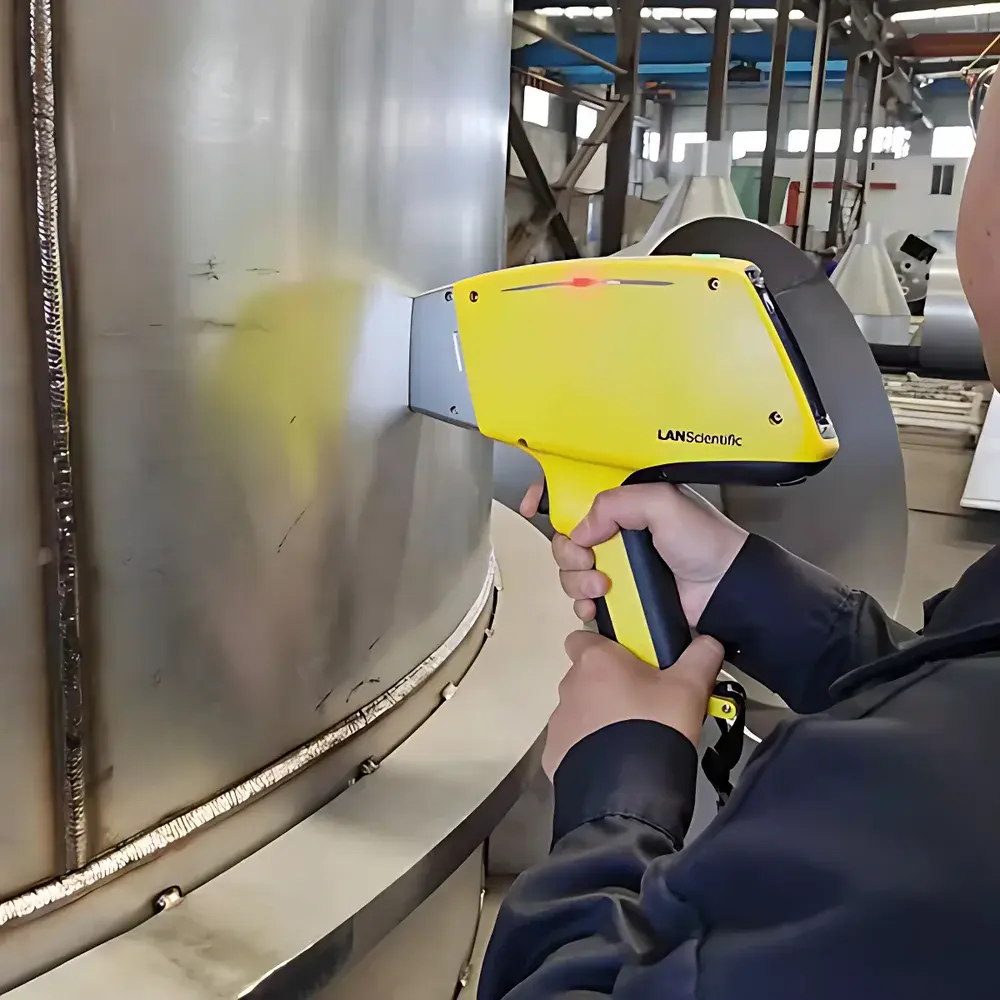
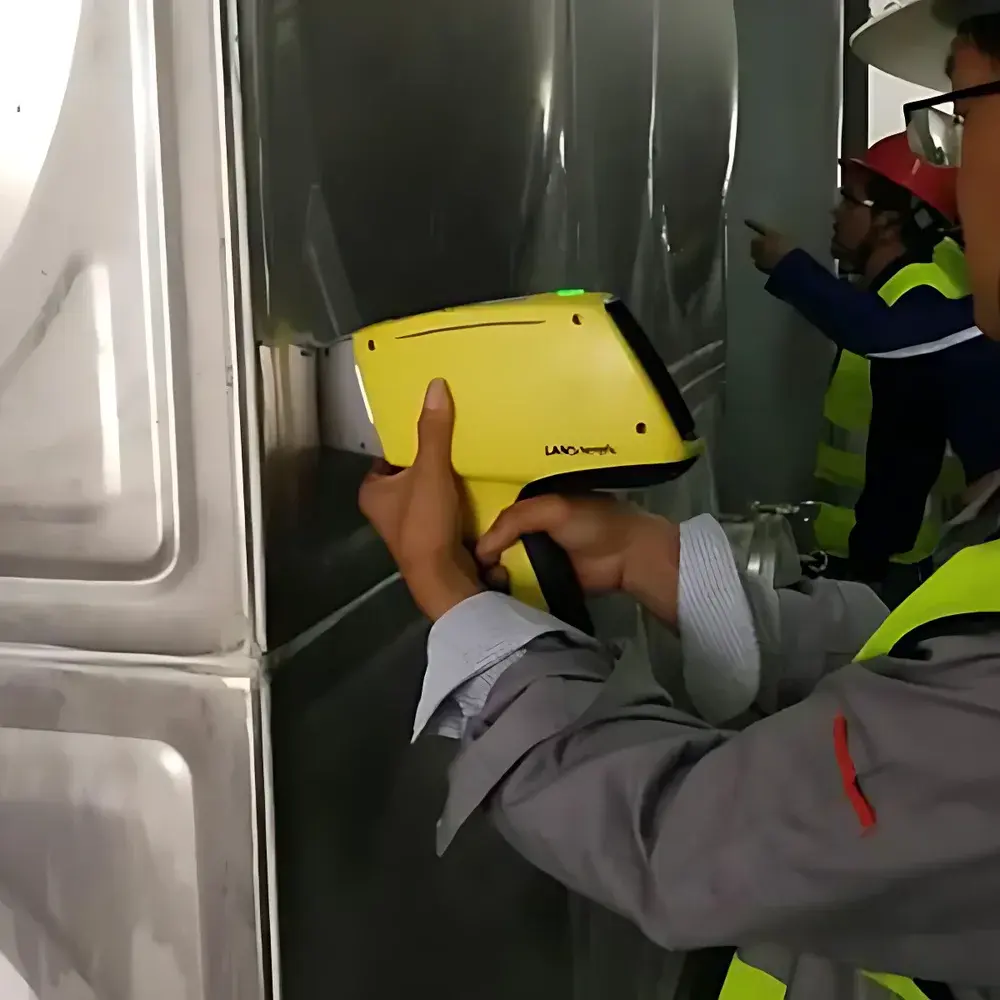
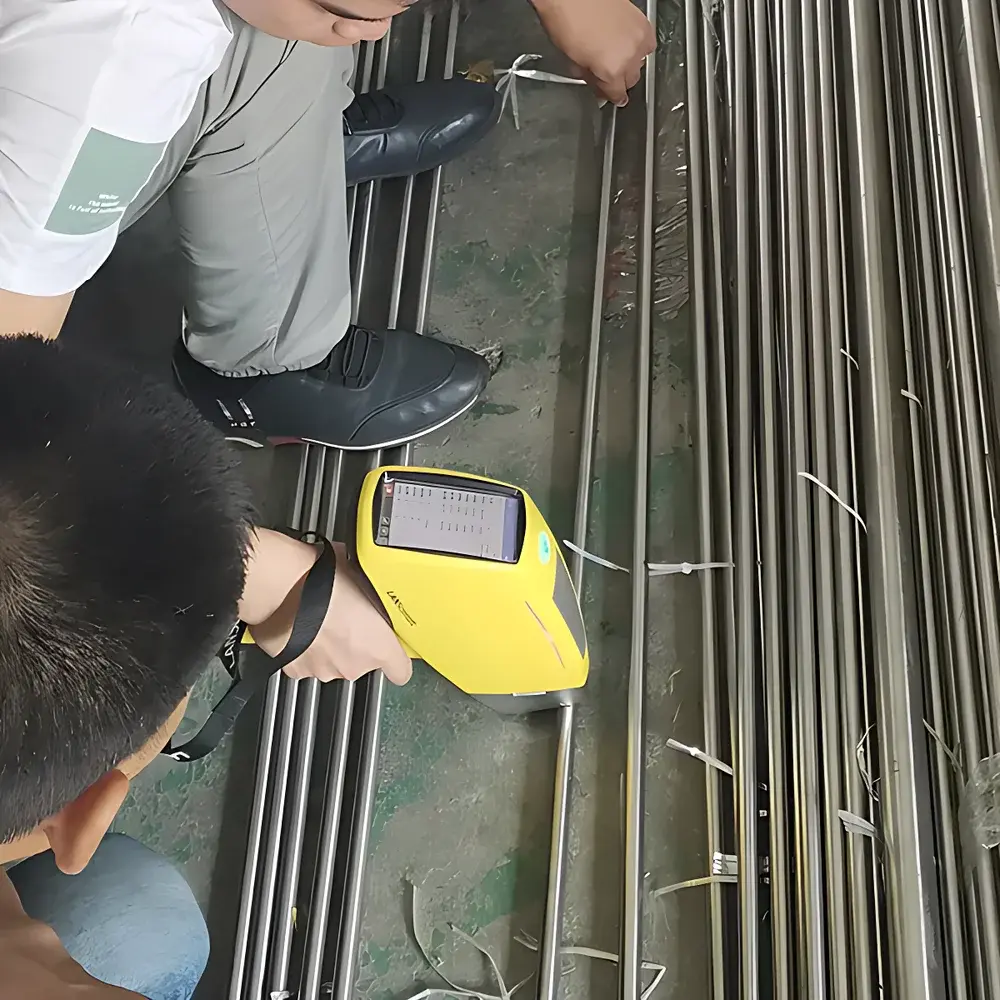
Brookfield LANScientific TrueX 800 Portable Energy Dispersive X-Ray Fluorescence (EDXRF) Spectrometer for Stainless Steel Grade Identification
| Brand | LANScientific |
|---|---|
| Origin | Jiangsu, China |
| Manufacturer Type | Direct Manufacturer |
| Product Category | Domestic |
| Model | TrueX 800 |
| Application | Handheld / Portable |
| Instrument Type | Conventional EDXRF |
| Industry-Specific Use | Non-Ferrous & Ferrous Alloys |
| Elemental Range | Mg to U |
| Quantification Range | 1 ppm – 99.99 wt% |
| Energy Resolution | <140 eV (at Mn Kα) |
| Repeatability | ≤0.1% RSD for major elements |
| Detector | Si-PIN Semiconductor Detector |
Overview
The Brookfield LANScientific TrueX 800 is a handheld energy dispersive X-ray fluorescence (EDXRF) spectrometer engineered for rapid, non-destructive elemental analysis and alloy grade identification in industrial field environments. Based on fundamental XRF physics—where primary X-rays excite characteristic secondary (fluorescent) X-rays from sample atoms—the instrument quantifies elemental composition by measuring the energy and intensity of emitted photons. Its optimized excitation geometry, high-efficiency Si-PIN detector, and low-noise electronics enable reliable detection of light elements down to magnesium (Mg) and trace-level quantification (1 ppm) across the full Mg–U range. Designed specifically for metallurgical QA/QC workflows, the TrueX 800 delivers laboratory-grade compositional data on-site, eliminating the need for time-consuming lab submissions during incoming inspection, scrap sorting, or positive material identification (PMI) audits.
Key Features
- True portable architecture: Weighing under 1.5 kg with integrated battery, ergonomic grip, and IP54-rated enclosure for dust/moisture resistance—enabling operation in foundries, power plants, offshore platforms, and recycling yards.
- High-fidelity spectral resolution: <140 eV energy resolution at Mn Kα ensures clear peak separation for overlapping transitions (e.g., Cr Kβ/Si Kα, Ni Kα/Fe Kβ), critical for distinguishing 304 (18–20% Cr, 8–10.5% Ni) from 316 (16–18% Cr, 10–14% Ni, 2–3% Mo) stainless steels.
- Super-FP quantitative algorithm: A proprietary fundamental parameters (FP) engine with net-intensity fitting eliminates manual mode switching; automatically corrects for matrix effects, inter-element absorption, and enhancement—delivering consistent accuracy across diverse alloy families without calibration standards.
- Dual-grade verification: Simultaneous comparison against built-in ASTM, ISO, GB, JIS, and UNS alloy libraries (380+ preloaded grades), with user-expandable database supporting >600 alloy types and >10,000 material specifications.
- Robust NDT compliance: Fully non-invasive measurement—no surface preparation, no consumables, no sample destruction—validated for use under ambient temperatures from –10 °C to 50 °C and in high-humidity or particulate-laden atmospheres.
Sample Compatibility & Compliance
The TrueX 800 accommodates solid metallic samples of varied geometry—including pipes, plates, welds, fasteners, castings, and shredded scrap—with minimal surface flatness requirements. It complies with IEC 62471 (photobiological safety), meets CE marking directives for electromagnetic compatibility (EMC) and low-voltage equipment, and supports audit-ready documentation per ISO/IEC 17025 and ASTM E1621 (standard guide for XRF analysis of metals). While not FDA 21 CFR Part 11–certified out-of-the-box, its software architecture permits integration with validated LIMS environments requiring electronic signature, audit trail, and data integrity controls.
Software & Data Management
The bundled TrueX Manager software provides secure, role-based access control via configurable password policies and optional Windows domain authentication. Users generate customizable PDF reports—including company logo, test ID, operator name, timestamp, GPS coordinates, and full spectral overlays—with export options to CSV, XML, and SPC-compliant formats. All raw spectra, calibration logs, and result histories are stored with immutable timestamps and SHA-256 hash verification, enabling full traceability for internal QA reviews or third-party certification audits.
Applications
- Positive Material Identification (PMI): Verification of stainless steel grades (e.g., 304 vs. 316L) in pressure vessels, piping systems, and pharmaceutical wetted parts per ASME B31.3 and FDA guidance.
- Scrap Recycling & Sorting: Real-time discrimination of austenitic, ferritic, duplex, and super-austenitic stainless alloys to optimize feedstock value and prevent cross-contamination.
- Incoming Inspection & Supplier Qualification: Rapid screening of raw materials against purchase specifications (e.g., ASTM A240, EN 10088-1) prior to processing.
- Weld Overlay & Cladding Verification: Detection of dilution effects and intermixing at fusion boundaries in multi-layered components.
- Failure Analysis Support: On-site elemental mapping of corrosion products, inclusions, or heat-affected zones to inform root cause investigations.
FAQ
Does the TrueX 800 require external calibration standards for stainless steel analysis?
No—its Super-FP algorithm uses first-principles physics and factory-characterized excitation/detection response functions. Only periodic verification with certified reference materials (e.g., NIST SRM 1250a) is recommended for long-term drift monitoring.
Can it differentiate between 316 and 316L stainless steel?
Yes—by quantifying carbon content (C ≤ 0.03 wt% in 316L vs. ≤ 0.08 wt% in standard 316) and detecting trace nitrogen, provided the surface is clean and measurement time exceeds 15 seconds for optimal C precision.
Is spectral data export compliant with ISO 14836 for uncertainty estimation?
Raw intensity data and acquisition parameters are fully exportable; users may apply ISO 14836–aligned uncertainty models externally using certified CRM datasets and documented counting statistics.
What maintenance is required beyond routine cleaning?
Annual detector performance verification (energy calibration, resolution check) and X-ray tube output validation are advised; no consumables or vacuum pumps are involved.
How does it handle painted or oxidized stainless surfaces?
Thin organic coatings (<50 µm) and stable oxide layers (e.g., passive Cr₂O₃ film) introduce negligible bias for Cr/Ni/Mo quantification; thicker corrosion products require mechanical cleaning per ASTM E1764 before analysis.






