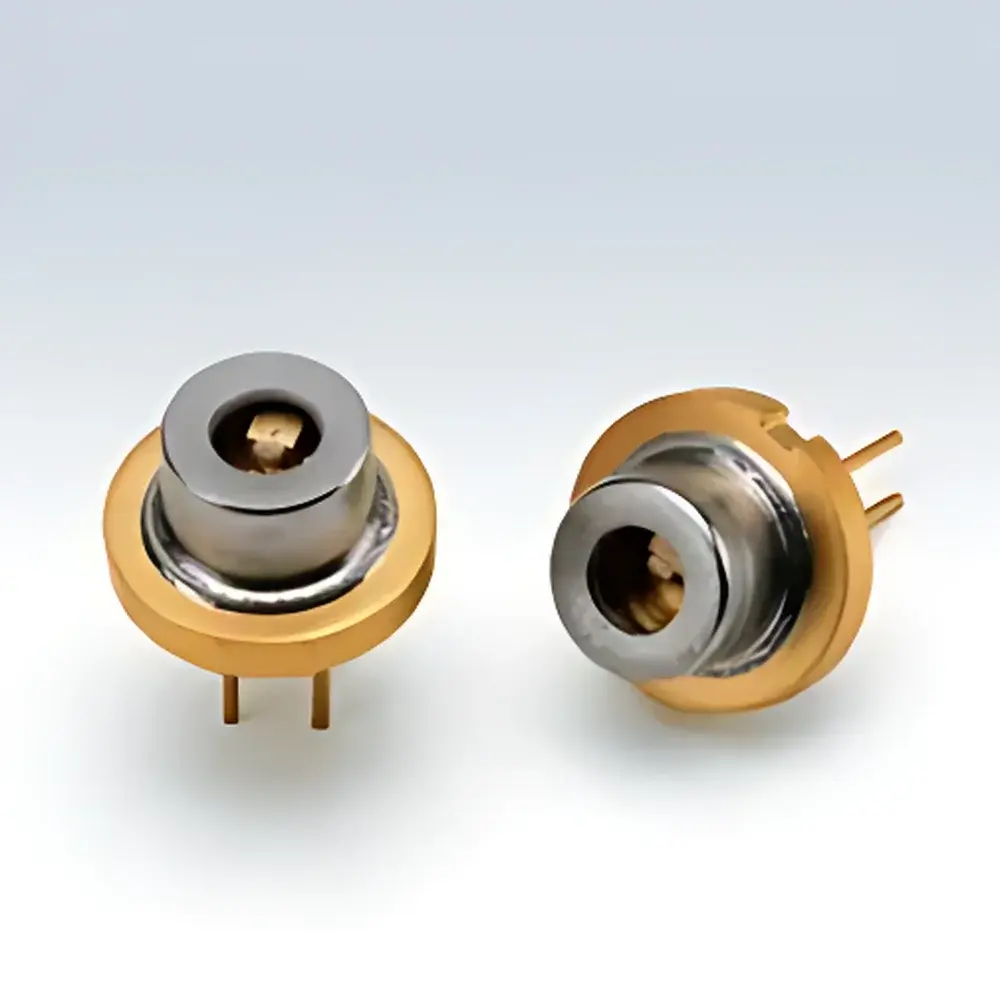
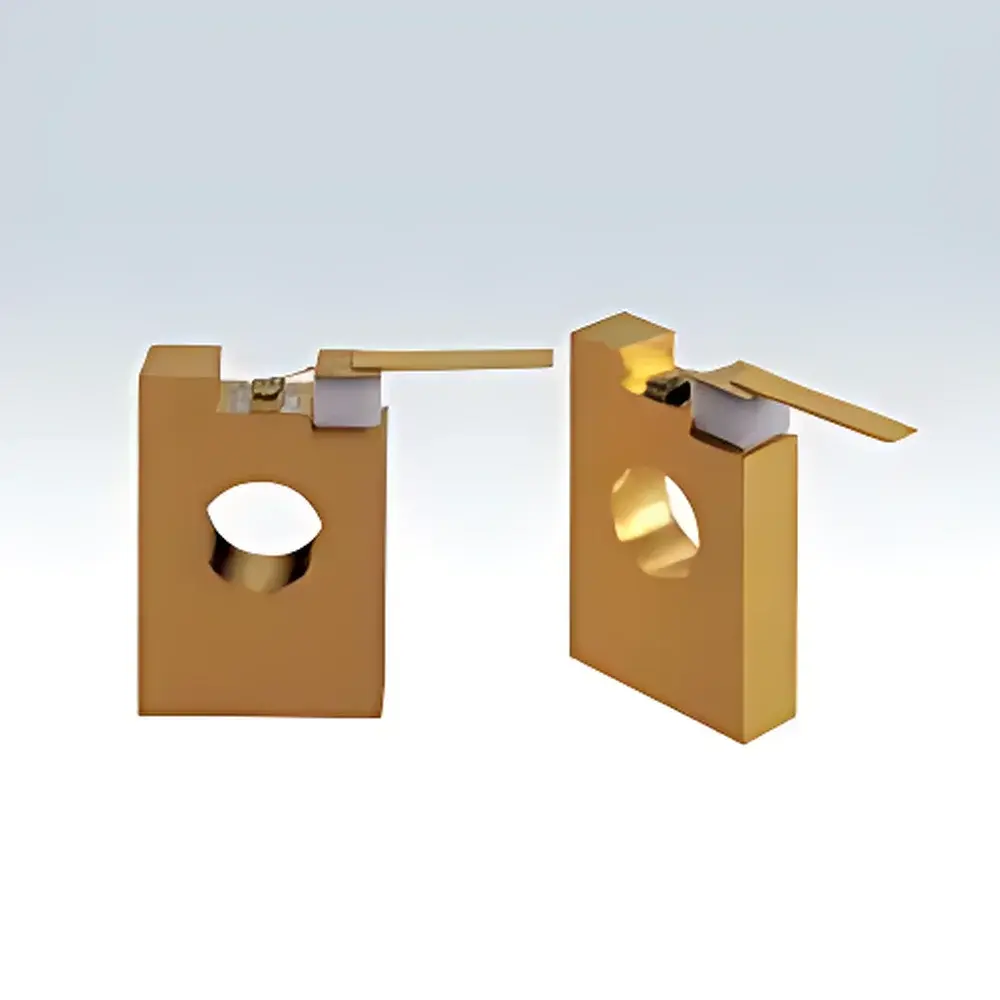
Hamamatsu L9 Series Continuous-Wave Laser Diodes
| Brand | Hamamatsu |
|---|---|
| Origin | Japan |
| Manufacturer Type | Original Equipment Manufacturer (OEM) |
| Import Status | Imported |
| Model Series | L9 |
| Output Power Range | 20 mW to 5 W |
| Typical Wavelengths | 808 nm, 830 nm, 850 nm, 915 nm, 940 nm, 980 nm |
| Package Types | C-mount (dia. 9.0 mm), Side-out Optical Heat Sink (OHS, 2 mm or 3 mm thickness), Head-out OHS, High-Heat-Load (HHL) package |
Overview
The Hamamatsu L9 Series Continuous-Wave (CW) Laser Diodes are precision-engineered semiconductor light sources designed for stable, long-term operation in demanding optical instrumentation and industrial applications. Operating on the principle of stimulated emission in III–V compound semiconductor heterostructures, these diodes deliver highly coherent, spectrally narrow output with minimal mode hopping under constant-current drive conditions. Unlike pulsed laser diodes, the L9 series maintains a steady-state optical power output—enabling reliable performance in applications requiring temporal stability, such as spectroscopic excitation, interferometric sensing, optical pumping, and alignment systems. Each device is fabricated using Hamamatsu’s proprietary epitaxial growth and facet passivation technologies, ensuring high wall-plug efficiency, low threshold current, and extended operational lifetime (>10,000 hours under rated conditions). The series supports multiple standard wavelengths across the near-infrared (NIR) spectrum, optimized for compatibility with common photodetectors, fiber couplers, and gain media including Nd:YAG, Yb-doped fibers, and Ti:sapphire crystals.
Key Features
- Stable continuous-wave (CW) output with low relative intensity noise (RIN) < −120 dB/Hz typical
- Multiple wavelength options: 808 nm, 830 nm, 850 nm, 915 nm, 940 nm, and 980 nm—each selected for optimal absorption in specific target materials or gain media
- Output power range spanning 20 mW to 5 W, enabling scalability from low-power alignment to high-flux optical pumping
- Thermally robust packaging: C-mount (9.0 mm diameter), side-emitting OHS (2 mm and 3 mm base thickness), head-emitting OHS, and high-heat-load (HHL) configurations for enhanced thermal dissipation
- Integrated thermistor and monitor photodiode options available on select models for closed-loop temperature and power control
- Hermetically sealed packages compliant with JEDEC J-STD-020 moisture sensitivity level (MSL) 1 specifications
- Designed for integration into ISO/IEC 17025-accredited calibration setups and GLP-compliant optical test benches
Sample Compatibility & Compliance
The L9 Series is engineered for compatibility with standard optical mounting interfaces—including SM1 (1.035″-40) lens tubes, kinematic mounts, and OEM driver modules adhering to IEC 61000-6-3 EMC emission limits. All devices meet RoHS Directive 2011/65/EU and REACH Regulation (EC) No. 1907/2006 requirements. For laser safety compliance, each unit is classified per IEC 60825-1:2014 and FDA 21 CFR Part 1040.10 standards; appropriate labeling (Class 3B or Class 4 depending on output configuration) and interlock-ready pinouts are provided. When integrated into analytical instruments, the L9 series supports traceable calibration workflows aligned with ISO/IEC 17025 Clause 5.10 and ASTM E275–22 (Standard Practice for Describing and Measuring Performance of UV–Vis–NIR Spectrophotometers).
Software & Data Management
While the L9 diodes operate as analog-driven components, Hamamatsu provides comprehensive driver interface documentation—including TTL-compatible modulation inputs, analog current control (0–5 V), and thermistor resistance lookup tables—for seamless integration with LabVIEW, MATLAB, Python-based instrument control frameworks (e.g., PyVISA), and industrial PLC environments. Optional evaluation boards (e.g., C11522 series) include USB-controlled current and temperature regulation with real-time logging of forward voltage, photodiode current, and heatsink temperature—supporting audit trails required under FDA 21 CFR Part 11 for electronic records and signatures. Firmware logs retain timestamps, operating parameters, and thermal history for GMP-aligned maintenance tracking.
Applications
- Optical pumping of solid-state and fiber lasers (e.g., Nd:YVO₄, Yb:fiber, Er:YAG)
- Photothermal spectroscopy and lock-in detection systems
- Industrial machine vision illumination at NIR wavelengths for silicon wafer inspection
- Benchtop Raman excitation sources (especially 830 nm and 850 nm variants for reduced fluorescence interference)
- Calibration references in radiometric and photometric transfer standards
- Gas sensing via tunable diode laser absorption spectroscopy (TDLAS) when combined with external cavity or temperature-tuning modules
- Biomedical instrumentation including flow cytometry excitation and optical coherence tomography (OCT) swept-source seed lasers
FAQ
What is the maximum allowable case temperature for continuous operation?
The absolute maximum case temperature is 50 °C for C-mount variants and 60 °C for OHS/HHL packages—exceeding these values may accelerate degradation of the facet coating and reduce lifetime.
Are spectral linewidth and beam divergence specified for these diodes?
Spectral full-width at half-maximum (FWHM) ranges from 1.5 nm to 3.5 nm depending on wavelength and drive current; fast-axis divergence is typically 25°–35°, slow-axis 6°–10°—collimation optics are recommended for most precision applications.
Can these diodes be operated in pulsed mode?
Yes—though not optimized for nanosecond pulsing, they support quasi-CW modulation up to 10 kHz with appropriate driver design; duty cycle must remain ≤50% to avoid thermal accumulation beyond datasheet limits.
Is there a calibrated power measurement certificate available?
Hamamatsu offers optional NIST-traceable calibration certificates (per ISO/IEC 17025) for output power at specified drive currents and heatsink temperatures, valid for 12 months from date of issue.
How does the L9 series differ from Hamamatsu’s pulsed laser diode offerings?
The L9 series uses CW-optimized epitaxial structures with lower capacitance and higher thermal mass; pulse-capable diodes (e.g., L9826 series) feature different facet coatings and junction designs to withstand transient thermal stress and achieve sub-nanosecond rise times.