
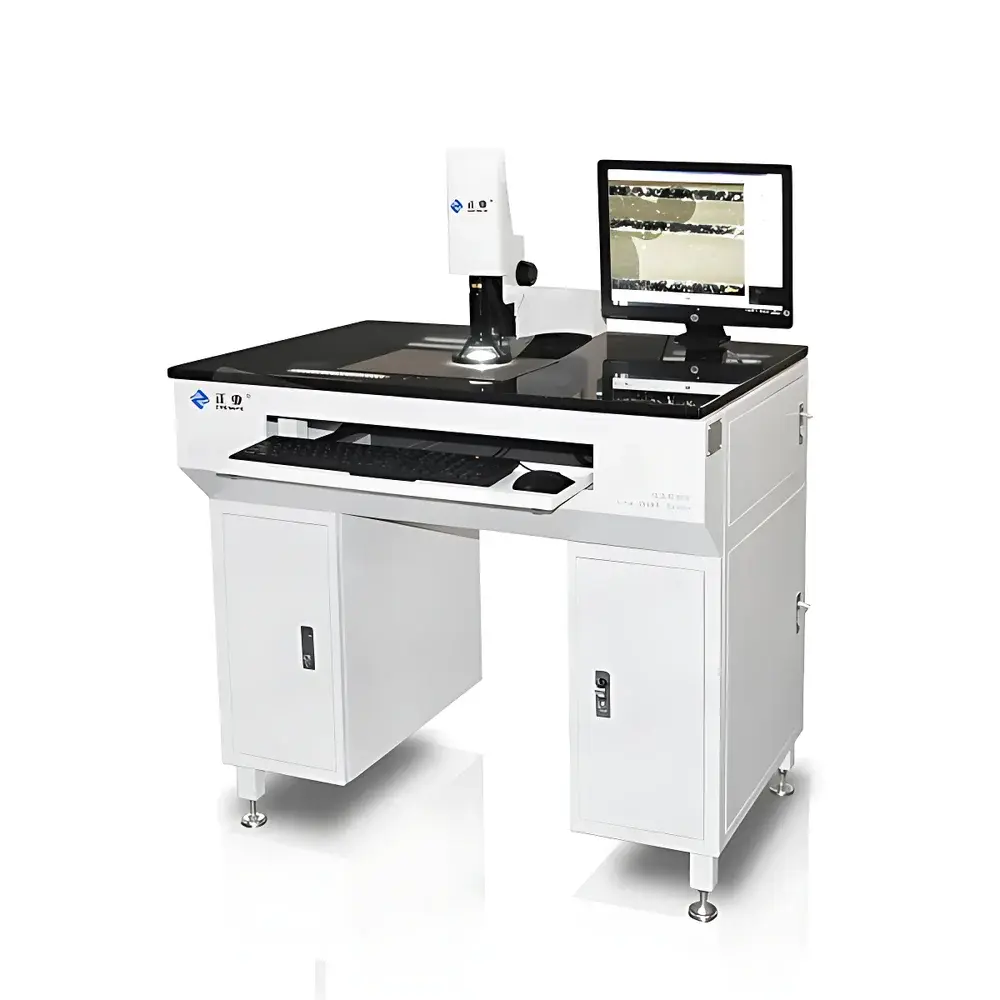
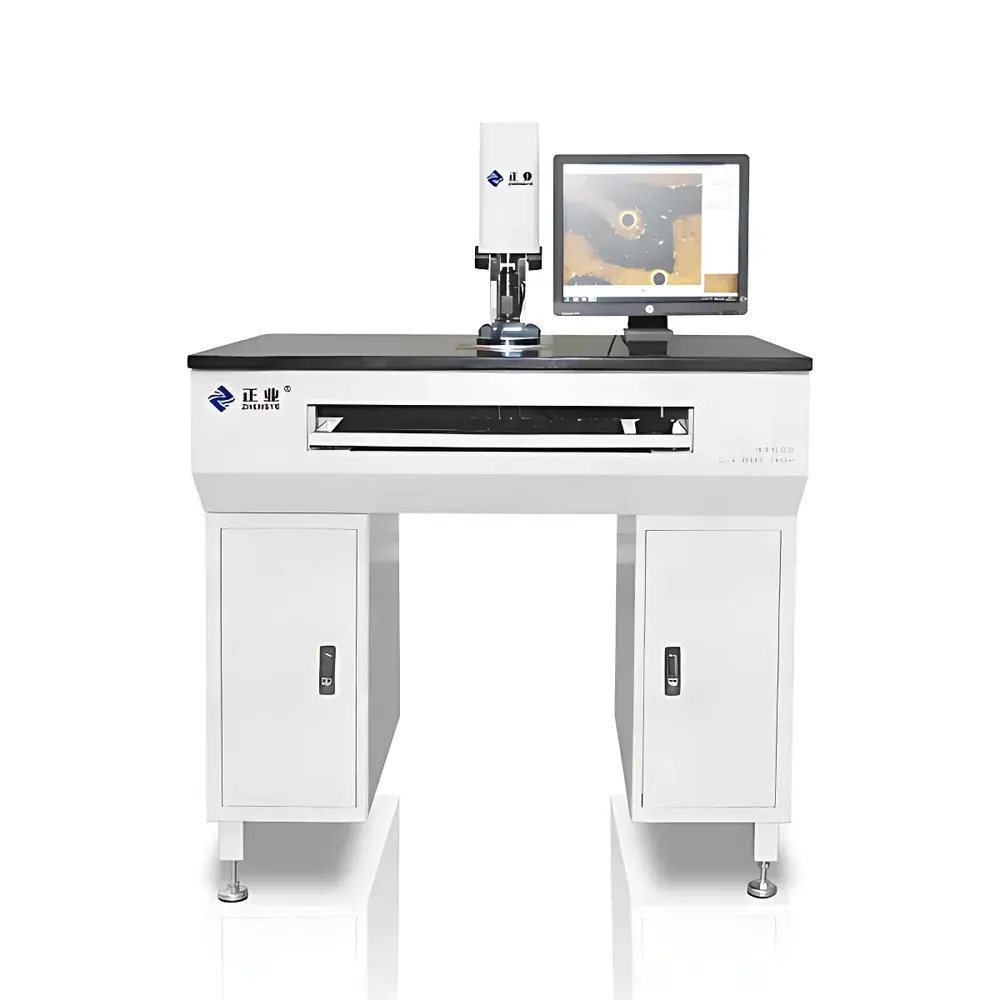
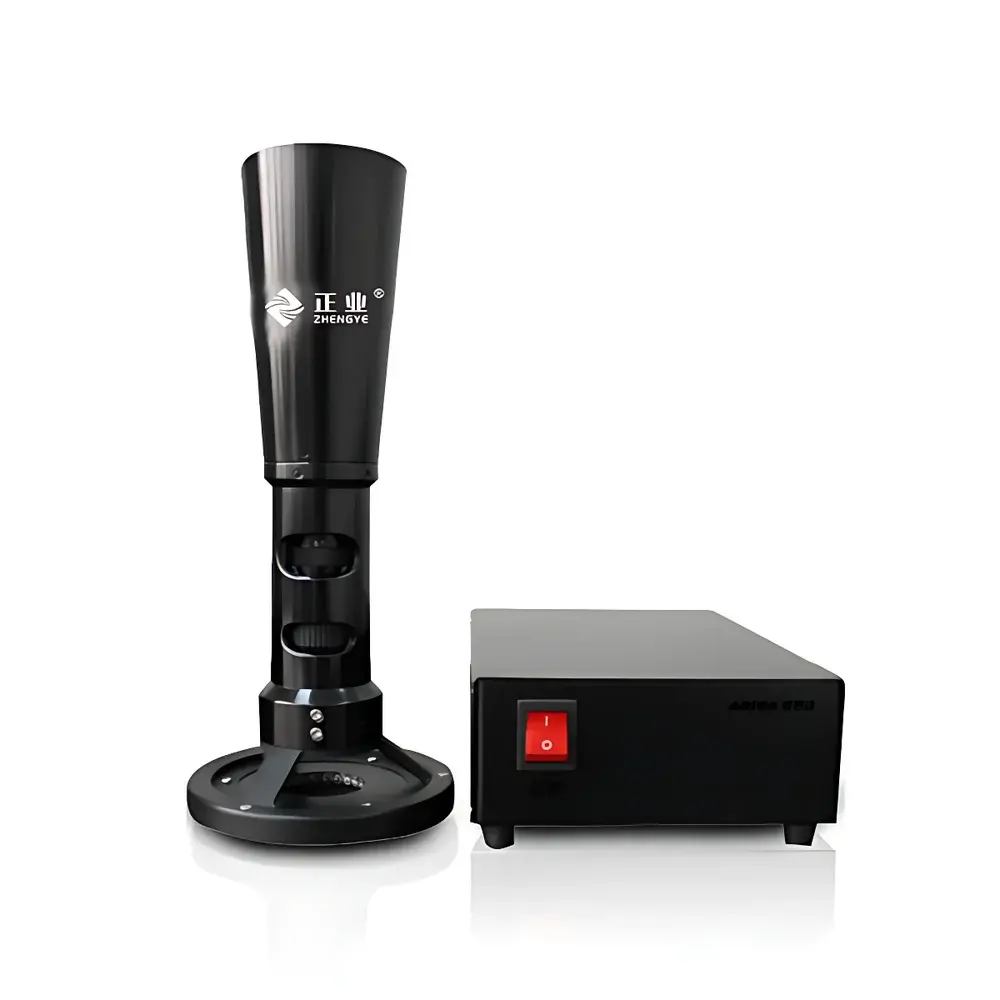
Zhengye XK25/XK16 Line Width Measurement System
| Brand | Zhengye |
|---|---|
| Origin | Guangdong, China |
| Manufacturer Type | OEM Manufacturer |
| Region Category | Domestic (China) |
| Model | XK25 / XK16 |
| Price Range | USD 14,000 – 72,000 |
| Measurement Principle | High-Resolution CCD-Based Optical Metrology with Sub-Pixel Edge Detection |
| Optical Magnification | 1.4×–9× Continuous |
| Total Magnification | 70×–450× |
| Measurement Accuracy | ±1 µm |
| Pixel Resolution | 0.4–2.7 µm/pixel (XK25), 0.7–5.2 µm/pixel (XK16) |
| Field of View | 0.53 mm × 0.4 mm to 3.4 mm × 2.5 mm |
| Maximum Board Width | ≤760 mm |
| Line Width Range | 20–1200 µm |
| Dimensions (XK16/XK25, excl. PC) | 135×135×310 mm / 960×780×1280 mm |
| Weight (excl. PC) | 15.2 kg / 145 kg |
Overview
The Zhengye XK25/XK16 Line Width Measurement System is a high-precision, non-contact optical metrology platform engineered for automated dimensional inspection of micro-scale conductive features in printed circuit board (PCB) fabrication, semiconductor packaging, flat-panel display (LCD/OLED) manufacturing, and thin-film electronics. Based on calibrated CCD imaging combined with telecentric optics and sub-pixel edge localization algorithms, the system quantifies critical geometry parameters—including line width (upper/lower profile), line spacing, pad-to-line distance, via-to-trace clearance, circular/elliptical hole diameter, and arc radius—with traceable repeatability under controlled illumination conditions. Designed for integration into front-end process control workflows—particularly post-etch and pre-solder mask stages—the instrument supports deterministic quality verification aligned with IPC-6012, IPC-A-600, and JEDEC J-STD-020 requirements.
Key Features
- Sub-pixel edge detection engine: Implements adaptive thresholding, gradient-based contour extraction, and least-squares curve fitting to resolve feature boundaries at <1 µm uncertainty—validated per ISO 10360-8 for optical coordinate measuring systems.
- Continuous zoom optical path: Motorized 1.4×–9× objective with parfocal design ensures consistent focus depth across magnification ranges; total system magnification spans 70×–450× with calibrated pixel scale mapping.
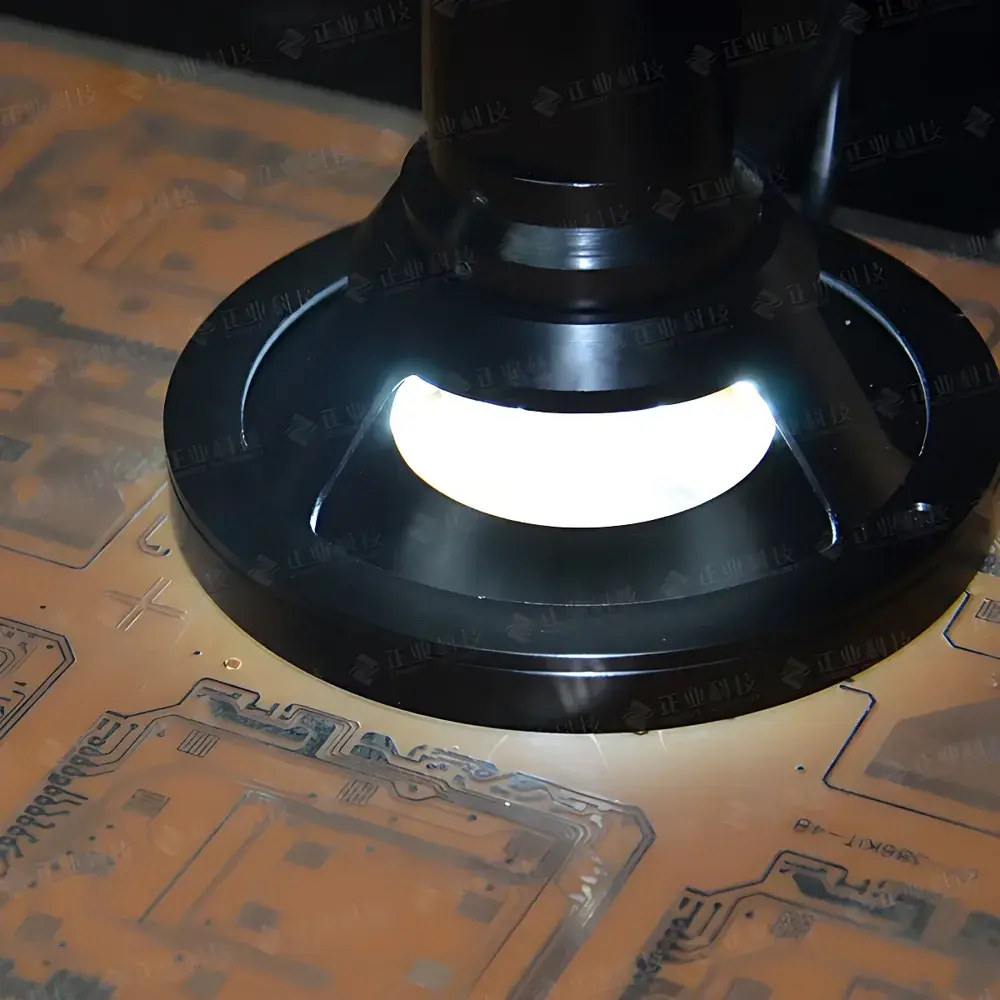
- Red LED coaxial alignment illumination: Integrated structured lighting enables rapid operator-assisted positioning and eliminates shadow artifacts during oblique-angle measurement of stepped copper profiles.
- SPC-ready data acquisition: Real-time statistical process control output includes X̄-R charts, Cp/Cpk indices, histogram distribution analysis, and outlier flagging—all exportable in CSV, XML, or PDF formats compliant with ISO 22514-2.
- Dual-platform configuration: XK16 optimized for R&D labs and small-batch validation (compact footprint, 15.2 kg); XK25 engineered for inline production environments with extended Z-axis travel, reinforced granite base, and vibration-damped isolation mounts.
Sample Compatibility & Compliance
The system accommodates rigid and flexible PCB substrates up to 760 mm wide, including FR-4, polyimide, ceramic, and glass-reinforced laminates. It supports both bare copper and solder-masked panels, with automated compensation for surface reflectivity variation and minor topographic tilt (±3°). Measurement protocols are compatible with ASTM E29, ISO/IEC 17025 calibration traceability frameworks, and GLP/GMP documentation requirements—including audit trails, user access logs, and electronic signature support when paired with validated software modules. All hardware components meet CE electromagnetic compatibility (EMC) Directive 2014/30/EU and RoHS 2011/65/EU material restrictions.
Software & Data Management
Bundled Zhengye VisionMaster v4.x software provides a validated, 21 CFR Part 11-compliant environment for measurement definition, recipe management, and report generation. The interface supports multi-layer image registration, cross-sectional profile slicing, and batch-mode analysis of up to 200 fields-of-view per job. Raw image metadata—including timestamp, lens ID, exposure settings, and environmental sensor readings (ambient temperature/humidity)—is embedded in TIFF exports. Audit logs record all user actions (e.g., parameter edits, calibration events, report approvals) with immutable timestamps and operator identifiers. Data integrity is enforced via SHA-256 hashing and optional SQL Server database archiving with role-based permissions.
Applications
- PCB inner/outer layer etch verification: simultaneous upper/lower line width quantification to assess undercut and sidewall angle consistency.
- IC substrate trace inspection: measurement of redistribution layer (RDL) linewidths down to 20 µm with ±1 µm confidence interval.
- LCD TFT array metrology: pitch, gate/data line uniformity, and contact hole roundness assessment on ITO/glass stacks.
- Fine-pitch flex circuit qualification: bend-induced line deformation analysis using sequential image capture and displacement vector mapping.
- Process capability studies: correlation of line width variability with plating thickness, etchant concentration, and conveyor speed parameters.
FAQ
What standards does the XK25/XK16 comply with for measurement traceability?
The system’s optical calibration is traceable to NIST SRM 2051 and certified per ISO/IEC 17025 by an ILAC-accredited laboratory; measurement uncertainty budgets include contributions from lens distortion, thermal drift, and pixel interpolation error.
Can the system measure non-planar or warped boards?
Yes—autofocus routines coupled with Z-stage feedback enable accurate profiling across ±1.5 mm height variation; optional laser triangulation add-on extends range to ±5 mm.
Is remote diagnostics and firmware update supported?
Yes—via secure TLS 1.2 encrypted connection; all updates undergo SHA-256 signature verification prior to installation.
How is user training delivered for production floor operators?
Zhengye provides on-site SOP development, hands-on operation workshops, and customizable e-learning modules aligned with ASQ CQE certification domains.
Does the system support integration with MES or factory automation platforms?
Native OPC UA server implementation enables bidirectional communication with Siemens SIMATIC IT, Rockwell FactoryTalk, and custom SCADA systems using standardized data tags and alarm notifications.





