
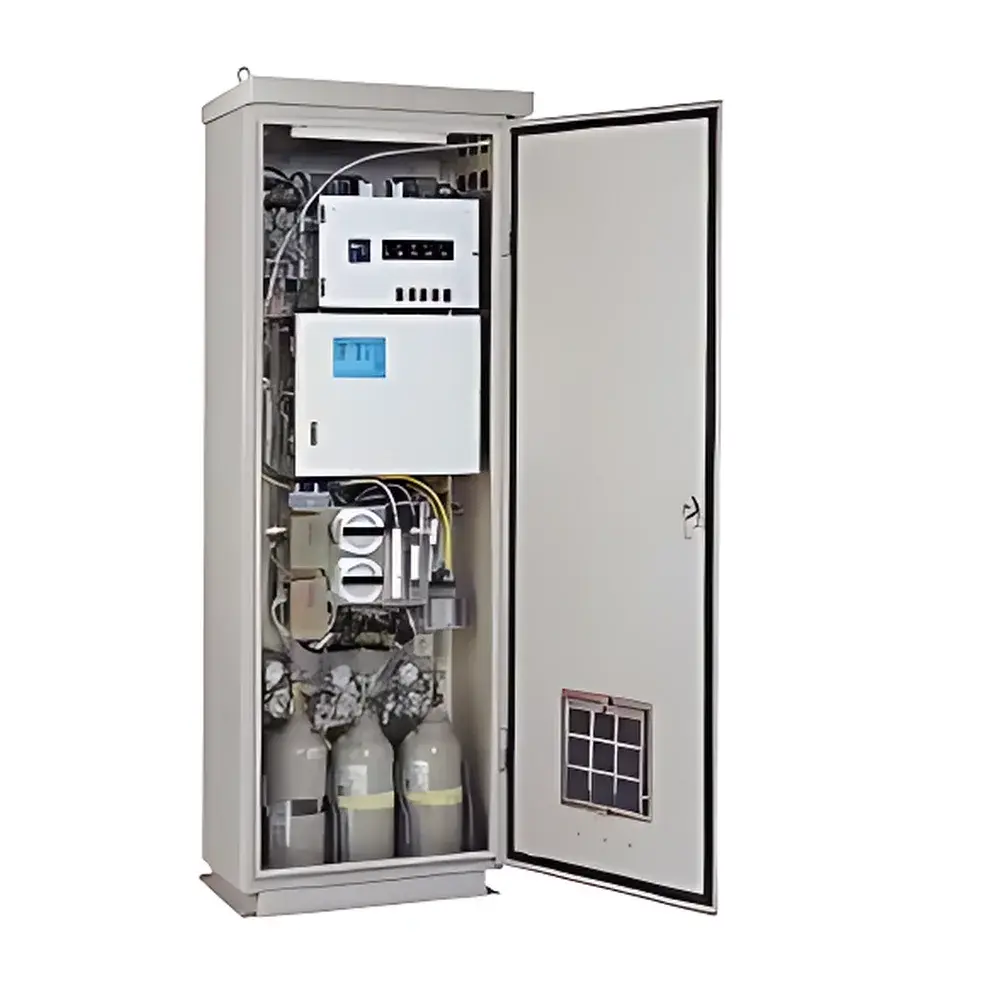
HORIBA ENDA-600ZG Series Continuous Emission Monitoring System (CEMS) for Flue Gas Analysis
| Brand | HORIBA |
|---|---|
| Origin | Japan |
| Model | ENDA-600ZG Series |
| Instrument Type | Continuous Emission Monitoring System (CEMS) |
| Accuracy | ±1.0 %F.S. |
| Repeatability | ±0.5 %F.S. |
| Response Time (SO₂) | 60–240 s |
| Stability | ±2.0 %F.S./week |
Overview
The HORIBA ENDA-600ZG Series is a compact, high-integrity Continuous Emission Monitoring System (CEMS) engineered for regulatory-compliant, long-term online measurement of key flue gas constituents—including NOx, SO2, CO, CO2, and O2—in demanding industrial exhaust streams. Designed to meet stringent environmental reporting requirements under ISO 14064, EN 15267, and EPA Performance Specification 3/PS-4/PS-5, the system employs dual physical detection principles: alternating-flow non-dispersive infrared (NDIR) spectroscopy for NOx, SO2, CO, and CO2, and magnetic pressure (paramagnetic) detection for O2. This hybrid architecture eliminates optical drift, removes dependency on carrier gases (e.g., N2), and ensures zero-point stability through synchronized 1-second alternation between sample and reference gas paths. The system’s core design philosophy centers on metrological robustness—achieving ±1.0 %F.S. accuracy without routine optical realignment—and operational resilience in high-dust, high-moisture, and corrosive environments typical of waste incineration, coal-fired power generation, steelmaking, and sulfuric acid production.
Key Features
- Single-analyzer multi-component capability: Simultaneous real-time quantification of up to five regulated gases (NOx, SO2, CO, CO2, O2) within one compact housing—reducing footprint, calibration complexity, and lifecycle maintenance cost.
- Drift-free NDIR architecture: Alternating-flow modulation eliminates zero drift and minimizes span drift; no manual optical adjustment required after transport, service, or environmental vibration.
- Magnetic pressure O2 sensor: Measures O2 without consumable gases or catalytic surfaces; ambient air serves as reference—eliminating N2 supply infrastructure and associated operating expenses.
- Integrated interference compensation: Dedicated H2O and CO2 correction channels with proprietary interference filter technology mitigate cross-sensitivity effects, particularly critical for NOx and SO2 quantification in humid, variable-composition flue streams.
- Ultra-compact form factor: Overall analyzer volume reduced by 50% vs. predecessor models; wall-mountable auto-blowback controller (350 × 550 × 180 mm) occupies 23% less space—enabling installation in constrained mechanical rooms or retrofitted stacks.
- Accelerated dry calibration: SO2 span verification completed in ≤3 minutes using certified dry standard gas—versus 15 minutes required for legacy wet-calibration protocols—minimizing downtime during QA/QC procedures.
Sample Compatibility & Compliance
The ENDA-600ZG Series integrates a modular, application-tailored sampling system validated for heterogeneous flue conditions across multiple sectors. For waste-to-energy plants, a chlorine scrubber and three-stage thermoelectric cooling (primary + dual secondary chillers) suppress SO3 condensation and minimize aqueous-phase loss of SO2 and NO2. In coal-fired power stations, optional NH3 removal prevents sulfamic acid formation during SO2 analysis, while high-efficiency NOx converters ensure full NO2 → NO conversion at elevated temperatures. All sampling trains include direct-coupled probe/filters, automated particulate blowback control, and SO3-resistant demisters. The system complies with EN 14181 (QAL1–QAL3), ISO 12039, and supports audit-ready data integrity per FDA 21 CFR Part 11 when paired with HORIBA’s optional secure logging software.
Software & Data Management
The embedded 10.1-inch capacitive touchscreen interface provides intuitive, role-based navigation—displaying live concentration trends, alarm status, calibration history, and O2-corrected emission values (e.g., NOx @ 6% O2) without external PCs. Firmware supports configurable output protocols including 4–20 mA analog (up to 12 channels), Modbus TCP/RTU, and Ethernet/IP. Data logging captures second-by-second raw signals, dynamic 1-hour rolling averages, and event-triggered diagnostic logs (e.g., filter clogging, cooler failure). Optional HORIBA CEMS Manager software enables remote configuration, electronic signature-enabled calibration records, and automated report generation aligned with EU IED and US Clean Air Act Title V submission formats.
Applications
- Thermal power generation: Continuous monitoring of coal, biomass, and natural gas combustion emissions for regulatory compliance and boiler efficiency optimization.
- Waste incineration: Robust handling of high-chlorine, high-acid-gas flue streams with integrated Cl2 abatement and low-T90 response (≤90 s for SO2 with scrubber).
- Iron & steel manufacturing: Monitoring sinter plant, blast furnace, and coke oven gas with high particulate tolerance and corrosion-resistant wet-end components.
- Chemical process industries: Sulfuric acid production (SO2/O2 ratio control), glass melting furnaces (CO/CO2 combustion profiling), and cement kilns (NOx reduction verification).
- Marine auxiliary engines: Tier III NOx compliance verification via portable or permanently installed configurations meeting IMO MARPOL Annex VI requirements.
FAQ
What regulatory standards does the ENDA-600ZG Series comply with?
It meets EN 15267-3 (QAL1 certification), EN 14181 (QAL2/QAL3), ISO 12039, and EPA PS-3/PS-4/PS-5 for NOx/SO2/O2 CEMS applications.
How is zero drift prevented in long-term operation?
Through synchronous 1-second alternation between sample and reference gas paths in the NDIR module—eliminating thermal and optical drift without manual intervention.
Does the system require external nitrogen or other carrier gases?
No. The magnetic pressure O2 sensor uses ambient air as reference gas; NDIR modules operate without purge or balance gases.
Can the analyzer handle high-moisture, high-dust flue gas without frequent maintenance?
Yes—integrated thermoelectric cooling, automatic filter blowback, SO3-resistant demisters, and corrosion-resistant sampling materials enable >6-month mean time between maintenance (MTBM) in typical industrial installations.
Is remote diagnostics and firmware update supported?
Yes—via secure HTTPS web interface or Modbus TCP; all updates are version-locked, digitally signed, and log auditable per GLP/GMP traceability requirements.







