
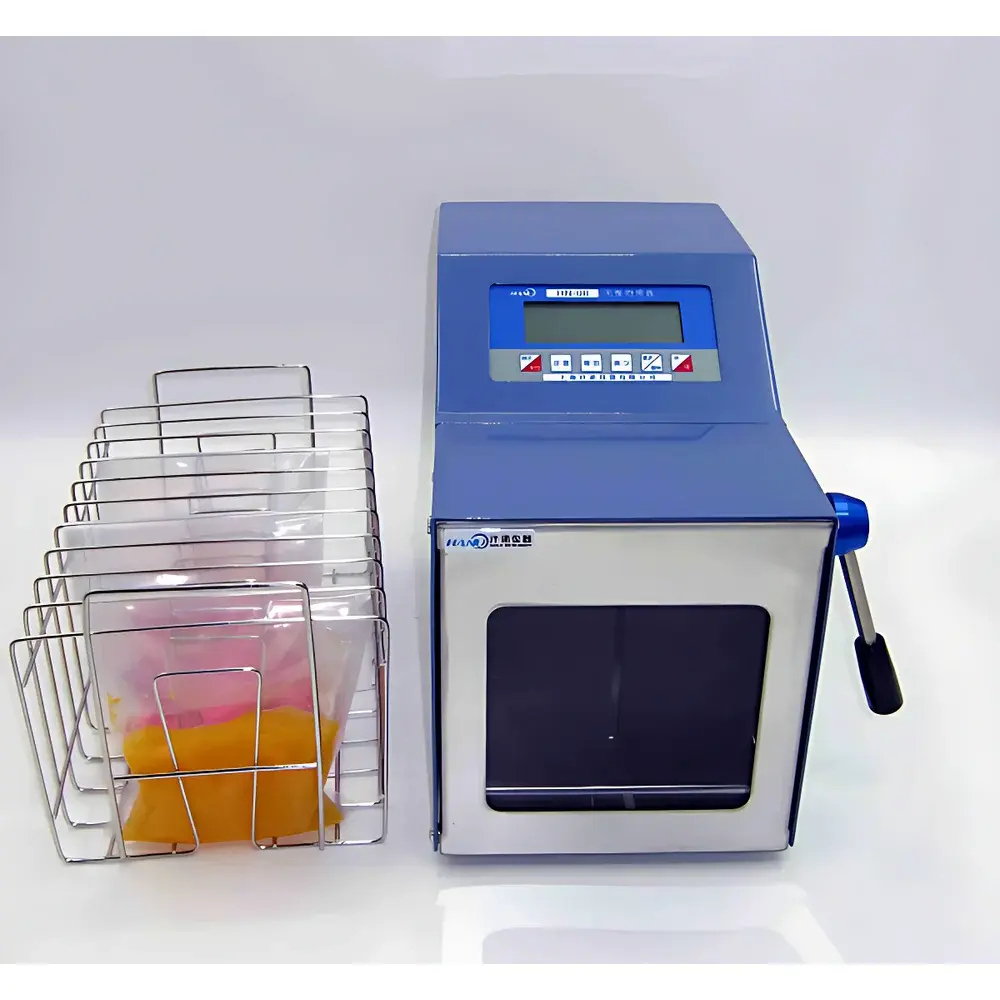
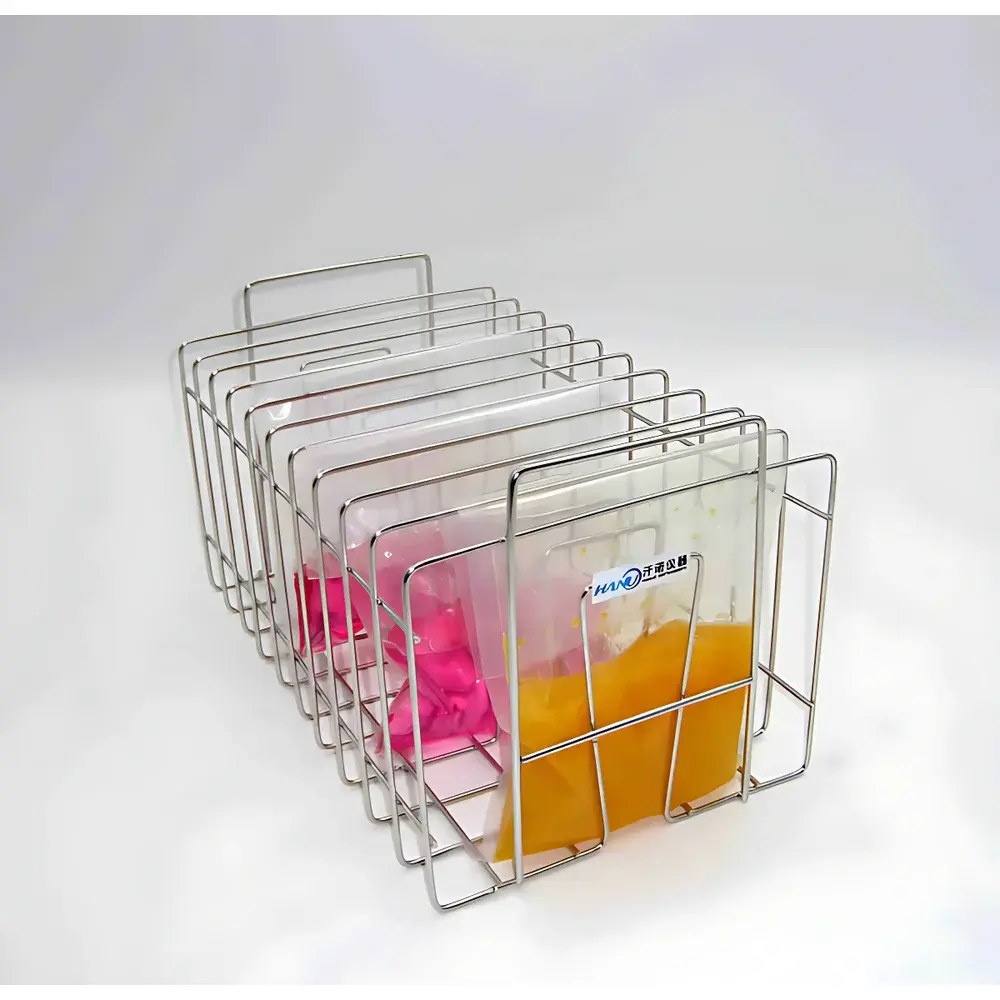
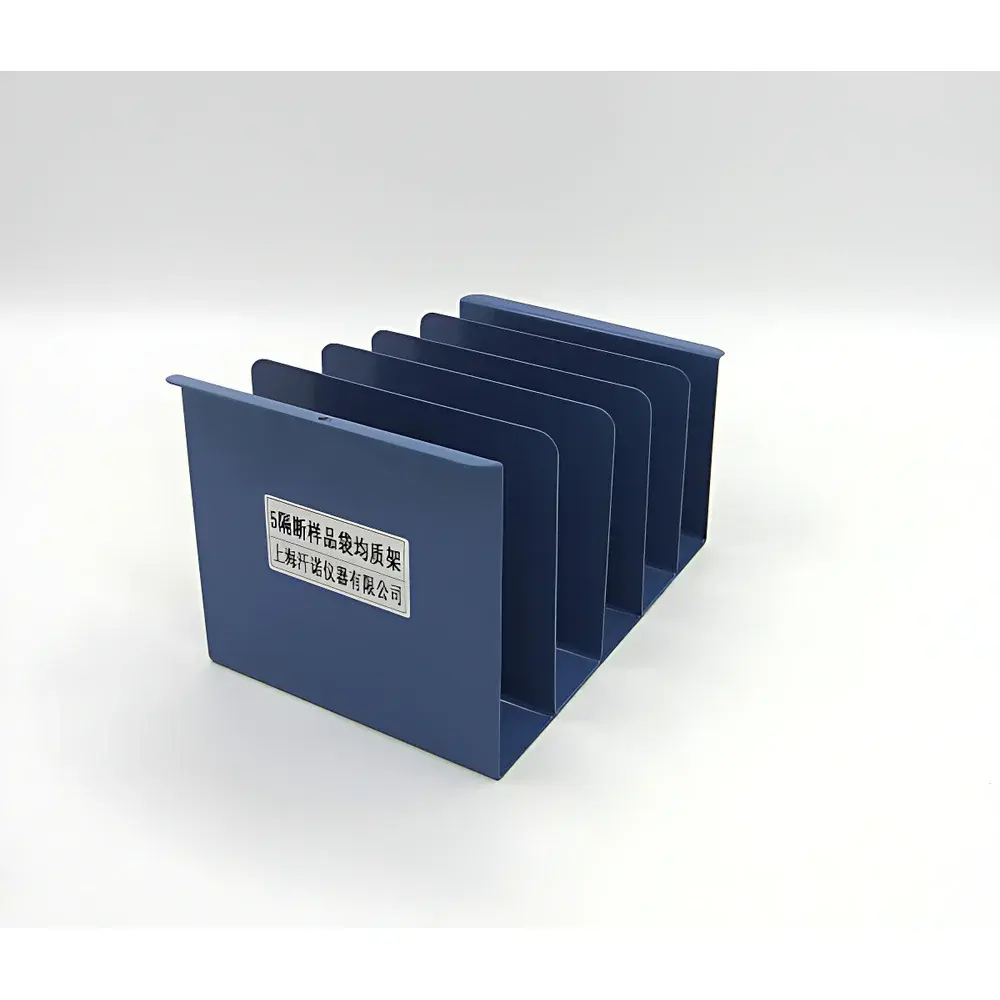
Hanuo HN-08 Pulsed-Action Homogenizer
| Brand | Hanuo |
|---|---|
| Origin | Shanghai, China |
| Manufacturer Type | Authorized Distributor |
| Country of Origin | China |
| Instrument Type | Pulsed-Action (Stomacher-Type) |
| Model | HN-08 |
| Price | USD 1,250 (FOB Shanghai) |
| Dimensions (W×D×H) | 380 × 280 × 330 mm |
| Sample Volume Range | 3–400 mL |
| Display | Large LCD with Microprocessor Control |
| Programmable Stages | Up to 3 independent programs |
| Pulsing Time Range | 0.1–99 min 59 sec or continuous mode |
| Pulsing Frequency | 3–12 cycles/sec |
| Adjustable Pulsing Gap | 0–50 mm |
| Bag Size Compatibility | 17 × 30 cm sterile bags |
| Chamber Material | Stainless steel body with anti-corrosive epoxy coating |
| Viewing Window | Removable tempered glass safety door |
| Safety Features | Soft-start activation, pause function, auto-stop upon lid opening or jam detection |
| Power Supply | 220 VAC, 50 Hz |
| Rated Power | 200 W |
| Net Weight | 20 kg |
| Sterility Support | Designed for use with certified single-use sterile sample bags (ISO 11737-1 compliant) |
Overview
The Hanuo HN-08 Pulsed-Action Homogenizer is a precision-engineered laboratory instrument designed for the mechanical disruption and homogenization of biological, environmental, and food samples using controlled percussive shear forces. Operating on the stomacher principle—where sample suspension is subjected to rhythmic, bidirectional impact between two parallel plates—the HN-08 delivers reproducible cell lysis, microbial dispersion, and particle size reduction without significant thermal buildup or chemical contamination. Unlike rotor-stator or ultrasonic systems, this device maintains sample integrity in temperature-sensitive applications by eliminating frictional heating; it is particularly suited for quantitative microbiological analysis (e.g., colony-forming unit enumeration per ISO 6887-1, FDA BAM Chapter 3), tissue dissociation prior to DNA/RNA extraction, and uniform suspension of particulates in suspension-based assays.
Key Features
- Microprocessor-controlled operation with intuitive large LCD interface supporting up to three independently stored multi-stage programs—including customizable pulsing time, frequency, and gap distance.
- Adjustable pulsing gap (0–50 mm) enables optimization across diverse sample viscosities and bag thicknesses, ensuring consistent energy transfer regardless of volume (3–400 mL).
- Stainless steel homogenization chamber with corrosion-resistant epoxy coating ensures long-term durability and compatibility with disinfectants used in GLP/GMP environments.
- Tempered glass safety door with interlock mechanism halts operation immediately upon lid displacement—meeting IEC 61010-1 requirements for laboratory equipment safety.
- Soft-start motor control minimizes mechanical shock during initiation, extending drive train longevity and reducing noise emission (<65 dB(A) at 1 m).
- Integrated jam detection and auto-stop functionality prevents motor overload and safeguards both operator and sample integrity.
Sample Compatibility & Compliance
The HN-08 accommodates standard 17 × 30 cm sterile polyethylene or nylon-reinforced sample bags conforming to ISO 11737-1 sterility assurance requirements. It supports aqueous suspensions, soft tissues, biofilms, soil slurries, and powdered food matrices. Its non-invasive, bag-based workflow eliminates cross-contamination risks and simplifies cleaning validation—a critical advantage in regulated QC laboratories performing environmental monitoring (ISO 14644), pharmaceutical water testing (USP ), or AOAC-certified pathogen recovery protocols. While the unit itself does not incorporate active cooling, its low-duty-cycle pulsing architecture inherently limits temperature rise to ≤2 °C over typical 2-minute runs—satisfying stability criteria outlined in CLSI M22-A3 for bacterial suspension homogenization.
Software & Data Management
The HN-08 operates as a standalone instrument with embedded firmware supporting audit-trail-capable parameter logging (time stamp, program ID, cycle count). Though no external PC connectivity is provided, all executed programs—including start/stop timestamps and fault events—are retained in non-volatile memory for retrospective review. When deployed within validated workflows, users may integrate run records into broader LIMS or ELN platforms via manual entry or barcode-scanned batch identifiers. The device complies with basic data integrity expectations under ALCOA+ principles when operated within documented SOPs, including change control for program modifications and periodic verification of timer accuracy per ISO/IEC 17025 Clause 6.5.2.
Applications
- Quantitative microbial recovery from food, feed, and environmental swabs per ISO 6887-1 and FDA Bacteriological Analytical Manual guidelines.
- Preparation of homogeneous suspensions for ATP bioluminescence assays (ISO 22000 Annex A.7) and flow cytometry sample loading.
- Disaggregation of frozen or fresh tissue specimens prior to nucleic acid isolation (e.g., QIAamp DNA Mini Kit protocols).
- Dispersion of agglomerated nanoparticles in formulation development studies where shear-sensitive surfactants are present.
- Routine QC homogenization of reference standards and calibration suspensions in accredited testing labs (ISO/IEC 17025).
FAQ
What sterile bag formats are compatible with the HN-08?
Standard 17 × 30 cm stomacher bags—whether gamma-irradiated PE, nylon-laminated, or filter-vented—are fully supported. Custom bag dimensions require mechanical clearance verification against the 50 mm maximum gap setting.
Does the HN-08 meet regulatory requirements for pharmaceutical microbiology?
Yes—it supports validated workflows aligned with USP , , and EU Ph. Eur. 2.6.12 when used with qualified bags and calibrated timers; however, full system qualification (IQ/OQ/PQ) must be performed by the end user per their internal validation protocol.
Can pulsing frequency be adjusted during an active run?
No—frequency is fixed per selected program. Real-time adjustment would compromise repeatability and invalidate method equivalence per ISO 5725-2; users must define all parameters prior to initiation.
Is routine maintenance required beyond cleaning?
Yes—bi-weekly inspection of the rubber impact pad for compression set, quarterly torque verification of chamber fasteners (5.5 N·m), and annual calibration of the onboard timer against a traceable time standard (e.g., NIST SP 250-103) are recommended for sustained accuracy.



