
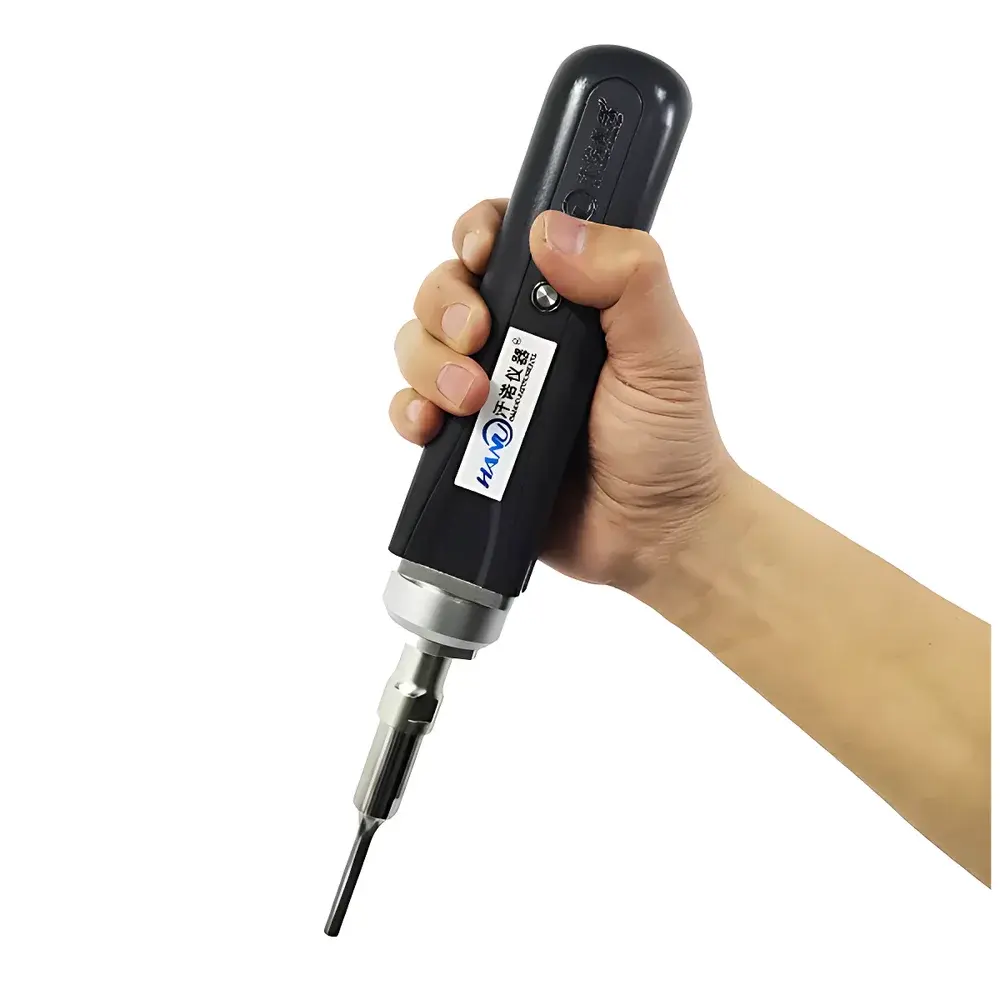
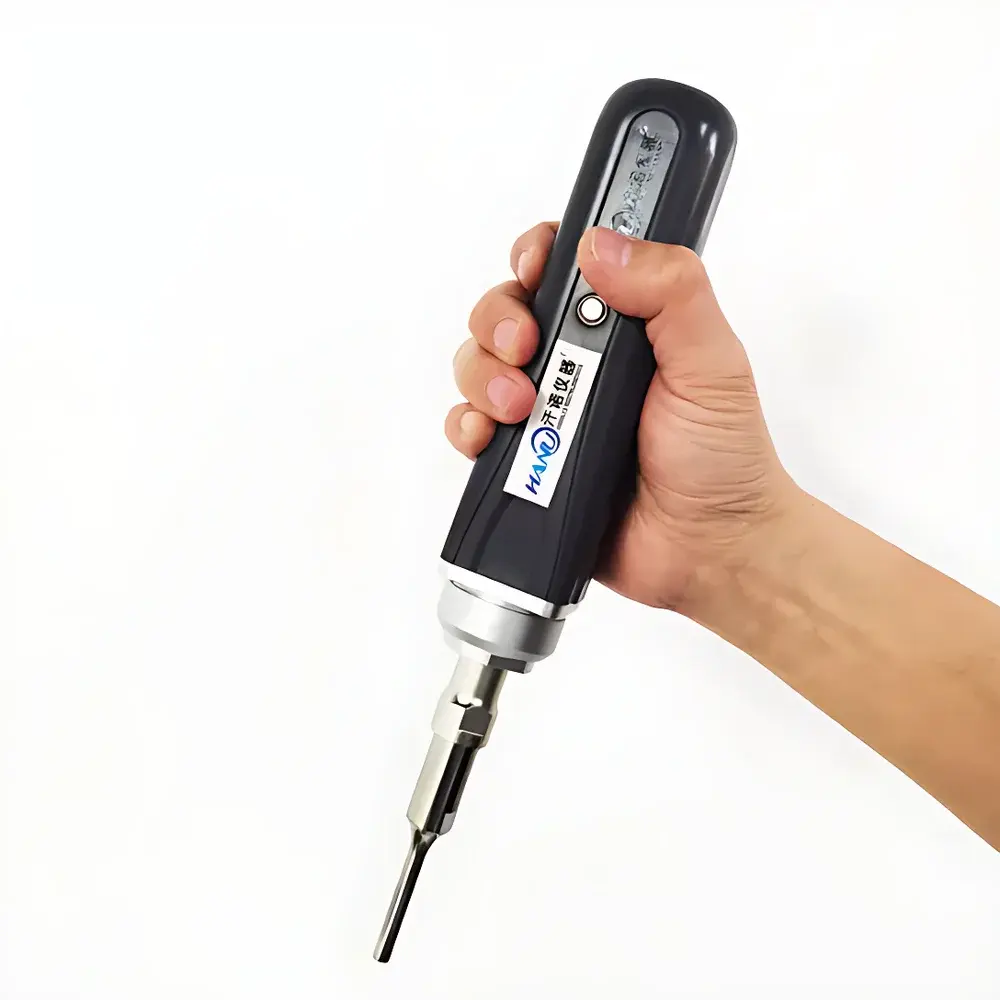
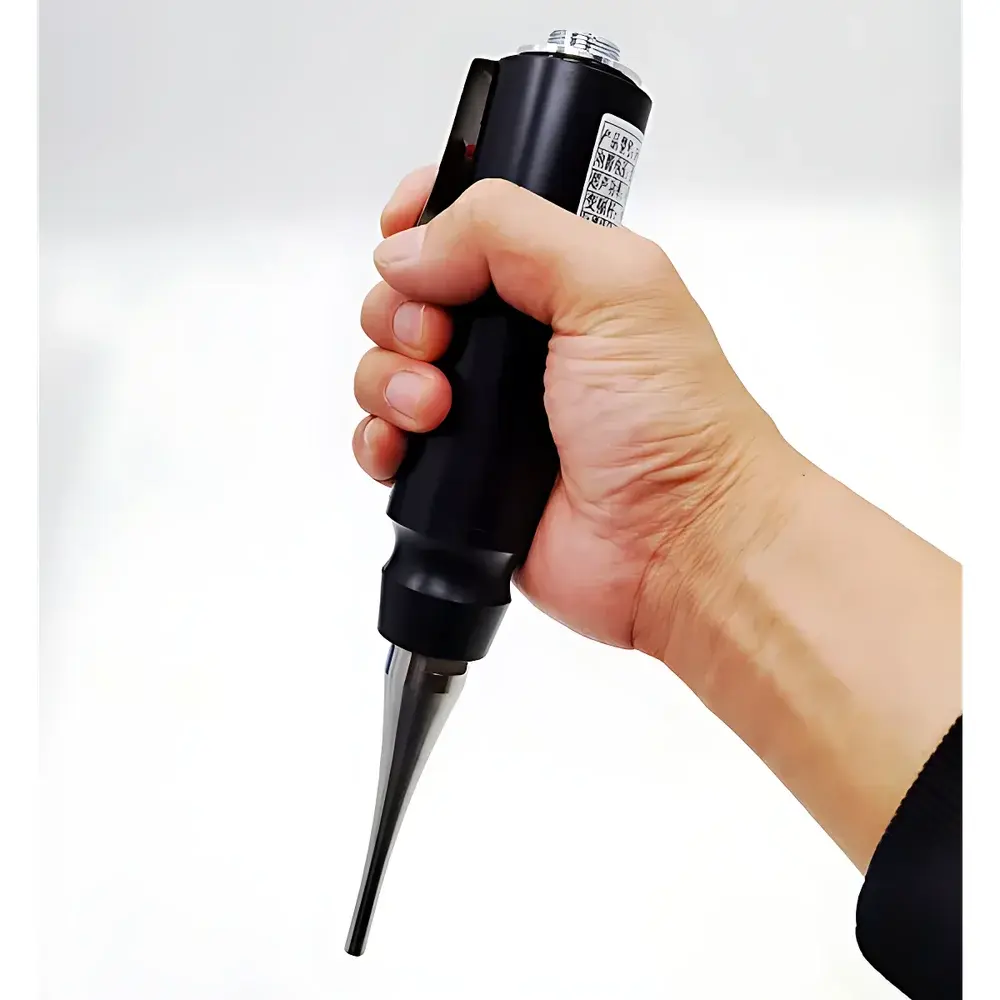
Hanuo Dalxuot-300M Handheld Ultrasonic Cell Disruptor
| Brand | Hanuo |
|---|---|
| Origin | Shanghai, China |
| Model | Dalxuot-300M |
| Instrument Type | Ultrasonic Cell Disruptor |
| Operating Frequency | 28–30 kHz |
| Ultrasonic Power Output | 30–300 W (adjustable) |
| Sample Volume Capacity | 0.1–300 mL |
| Sample Throughput | Single-sample processing |
| Input Power | 100–230 V AC, 50–60 Hz or 12–24 V DC |
| Weight | 0.5 kg |
| Dimensions (L×W) | 300 × 43 mm |
| Transducer Material | 7075 Aluminum Alloy |
| Horn Material | TC4 Titanium Alloy |
| Housing Material | ABS + Flame-Retardant Additive |
| Operating Temperature | 5–30 °C |
| Relative Humidity | ≤70% RH |
| Standard Probe Diameter | Ø6 mm |
| Optional Probes | Ø2 mm (0.1–5 mL), Ø6 mm (5–100 mL), Ø8 mm (50–300 mL) |
| Continuous Sonication Duration | <40 min |
| Control Mode | Manual push-button activation (momentary contact) |
| Display | DC input voltage only |
| Optional Accessory | Adjustable transducer support stand (300 × 225 × 320 mm) |
Overview
The Hanuo Dalxuot-300M Handheld Ultrasonic Cell Disruptor is an engineered solution for rapid, localized mechanical lysis of biological cells, microbial cultures, and soft tissue samples in benchtop, glovebox, and field-deployable settings. It operates on the principle of high-intensity ultrasonic cavitation: electrical energy is converted into longitudinal acoustic waves via a piezoelectric transducer, transmitted through a titanium alloy horn (sonotrode), and coupled into liquid media where transient microcavities form and collapse asymmetrically near solid–liquid interfaces. This implosive collapse generates localized shear forces, microstreaming, and shockwaves—sufficient to disrupt cell membranes, solubilize inclusion bodies, and disperse nanomaterials without significant thermal accumulation when operated within duty-cycle limits. Unlike benchtop ultrasonicators requiring fixed immersion tanks or cup horns, the Dalxuot-300M’s host-free architecture eliminates centralized electronics and cooling systems, enabling direct handheld operation inside anaerobic chambers, biosafety cabinets, or laminar flow hoods with minimal footprint and zero cross-contamination risk from shared reservoirs.
Key Features
- True handheld design: Integrated transducer–horn assembly weighs only 0.5 kg; no external generator or water bath required.
- Momentary-contact activation: Press-and-hold operation provides immediate start/stop control—eliminates unintended exposure and improves reproducibility in time-sensitive protocols.
- Titanium TC4 horn construction: Offers superior acoustic transmission efficiency, corrosion resistance against organic solvents and mild acids, and thermal stability up to 120 °C during intermittent use.
- Adjustable power output (30–300 W): Enables optimization across sample viscosity, volume, and cellular robustness—e.g., low-power mode for fragile primary mammalian cells, higher power for Gram-positive bacteria or yeast.
- Three interchangeable probe options (Ø2 mm, Ø6 mm, Ø8 mm): Matched to standard labware including microcentrifuge tubes, Eppendorf tubes, and narrow-neck culture flasks—ensuring efficient energy coupling without splashing or aerosol generation.
- Wide input compatibility: Supports both AC mains (100–230 V, 50–60 Hz) and low-voltage DC (12–24 V), facilitating integration with portable power stations or battery packs for off-grid applications.
Sample Compatibility & Compliance
The Dalxuot-300M is validated for use with aqueous suspensions, buffered saline solutions, and low-viscosity organic-aqueous mixtures commonly employed in molecular biology workflows—including lysis buffers containing Triton X-100, NP-40, or CHAPS. It accommodates volumes from 100 µL (with Ø2 mm probe) to 300 mL (with Ø8 mm probe), supporting single-tube processing per cycle to minimize inter-sample carryover. While not certified under ISO 13485 or FDA 21 CFR Part 11, its manual operation mode and absence of embedded software ensure full user control over process parameters—aligning with GLP-compliant documentation practices where operator logs serve as primary audit trail. All materials contacting samples (TC4 horn, stainless steel coupler interface) comply with USP Class VI biocompatibility standards for short-term exposure.
Software & Data Management
The Dalxuot-300M operates exclusively in manual mode with no onboard firmware, memory, or digital interface. Power level is adjusted via analog potentiometer; real-time status is limited to LED indicators and DC input voltage readout. This architecture intentionally omits data logging, remote control, or network connectivity—reducing validation burden in regulated environments where electronic records must meet ALCOA+ principles. Users record operational parameters (probe type, power setting, duration, sample ID) manually in laboratory notebooks or LIMS-compatible spreadsheets. Optional transducer support stand includes calibrated height adjustment to maintain consistent immersion depth—a critical factor for amplitude reproducibility across operators.
Applications
- Preparative lysis of bacterial (E. coli, Bacillus spp.), yeast (S. cerevisiae), and insect cell cultures prior to protein extraction or plasmid isolation.
- Homogenization of plant leaf tissue and animal liver biopsies for metabolite profiling and RNA stabilization.
- Nanoparticle dispersion in drug delivery formulations, including liposomes, polymeric micelles, and exosome suspensions.
- Chromatin shearing for ChIP-seq library preparation—when combined with optimized buffer composition and pulse-duration control.
- In situ cell disruption within inert-atmosphere gloveboxes during anaerobic microbiome studies or oxygen-sensitive enzyme assays.
FAQ
Is the Dalxuot-300M suitable for continuous operation beyond 40 minutes?
No. Sustained operation >40 min at maximum power may exceed thermal dissipation capacity of the transducer housing, risking piezoelectric element degradation. Duty cycles of 5–10 s ON / 10–15 s OFF are recommended for extended protocols.
Can the Ø2 mm probe be used with viscous lysates such as mammalian brain homogenates?
Not recommended. The Ø2 mm probe delivers high amplitude but low total energy transfer; viscous samples attenuate cavitation efficiency and increase heat buildup. Use Ø6 mm or Ø8 mm probes with pulsed mode for such applications.
Does the device include calibration documentation traceable to NIST standards?
No. As a Class I non-medical ultrasonic device operating below 500 W, it does not require mandatory metrological certification. Users may verify amplitude consistency using calorimetric methods per ASTM E2810-11.
Is the ABS+flame-retardant housing compliant with UL 94 V-0?
Yes. The enclosure meets UL 94 V-0 rating for vertical burning resistance, supporting safe use in laboratories with solvent storage or fume hood integration.




